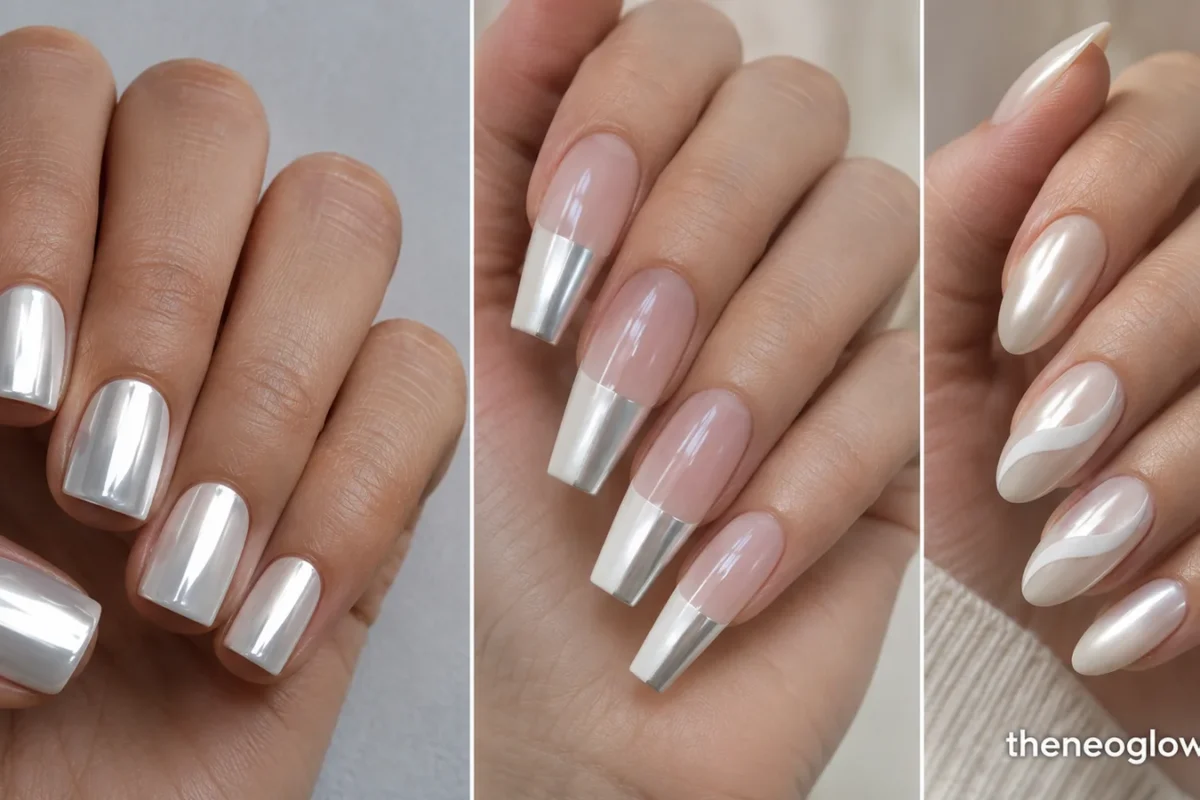
White chrome nails can be nearly transparent, softly pearled, or reflective enough to resemble polished metal. The white underneath changes the result as much as the chrome itself: a thin milk-white wash leaves the natural nail visible, while an opaque porcelain base makes the reflection brighter and more graphic. These 21 designs compare both approaches, then move into precise French edges, tonal geometry, and a few decorative accents. Each idea specifies enough color, length, and placement to work as a distinct manicure reference—not just another picture of shiny white nails.
White Chrome vs. Pearl Polish: What You’re Actually Seeing
Chrome is a light-reflecting pigment effect, commonly made by burnishing fine powder onto a compatible prepared coating and sealing it. A pearl-chrome powder gives a diffused luminous veil; a stronger silvery-white powder produces a more continuous mirror-like reflection. Neither creates a magnetic cat-eye beam: that directional effect comes from magnetically responsive pigment in a different polish system.
A pearl or glaze lacquer topper can look similar in a photo, but it is a different application route. For a broader comparison of colored chrome, metallic finishes, and placement, NeoGlow’s chrome nails guide covers the entire finish family. Here, every design keeps white as its main color or visible foundation.
| White foundation | Finished appearance | Better starting ideas | Main tradeoff |
|---|---|---|---|
| Translucent milk | Natural nail softly visible beneath pearl reflection | 1, 4, 18 | Nail-bed color affects the final white |
| Opaque porcelain | Crisp white with stronger reflected highlights | 2, 8, 11 | Small surface imperfections show more |
| Creamy ivory | Warm, candlelit pearl rather than icy silver | 3, 17, 21 | Can look beige in warm lighting |
| Cool ice-white | Blue-leaning pearl without becoming blue polish | 5, 13, 19 | Lighting can exaggerate the cool cast |
| White with localized mirror | Defined chrome areas instead of uniform shine | 6–10, 12–16 | Boundaries need more detailed work |
Five White Bases, Five Different Reflections
1. Misty Milk-Glass Rounds
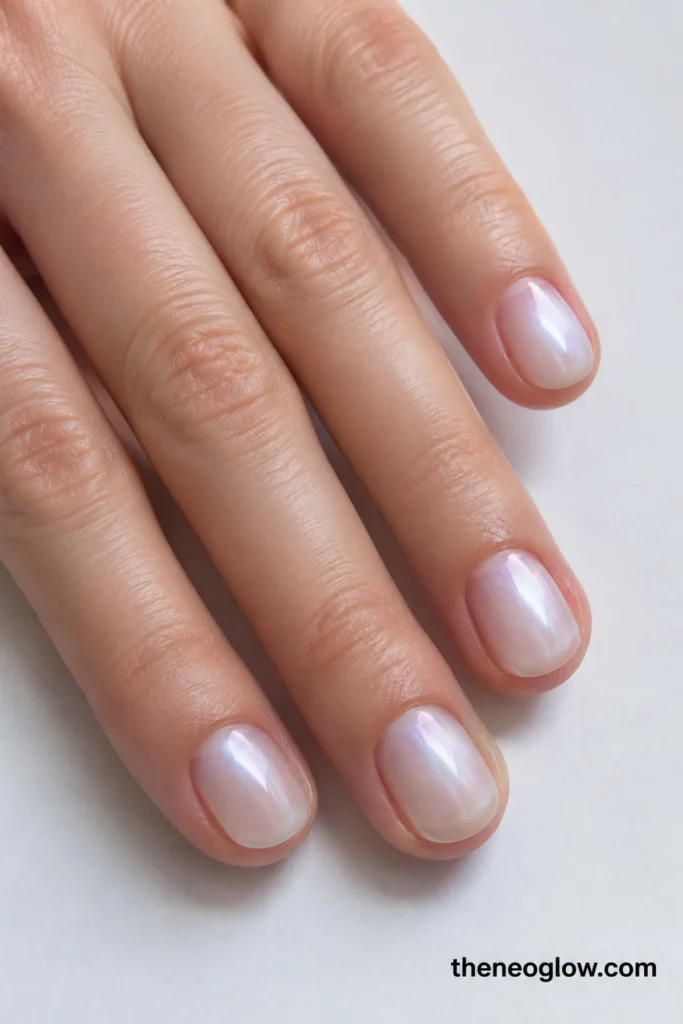
Very short, natural round nails get two thin-looking layers of translucent cool milk-white, followed by an exceptionally soft pearl-chrome veil across every nail. The free edges remain faintly visible beneath the finish. This is the quietest route when you want a luminous manicure without a solid white block or a pronounced silver flash.
2. Porcelain-Mirror Short Squares
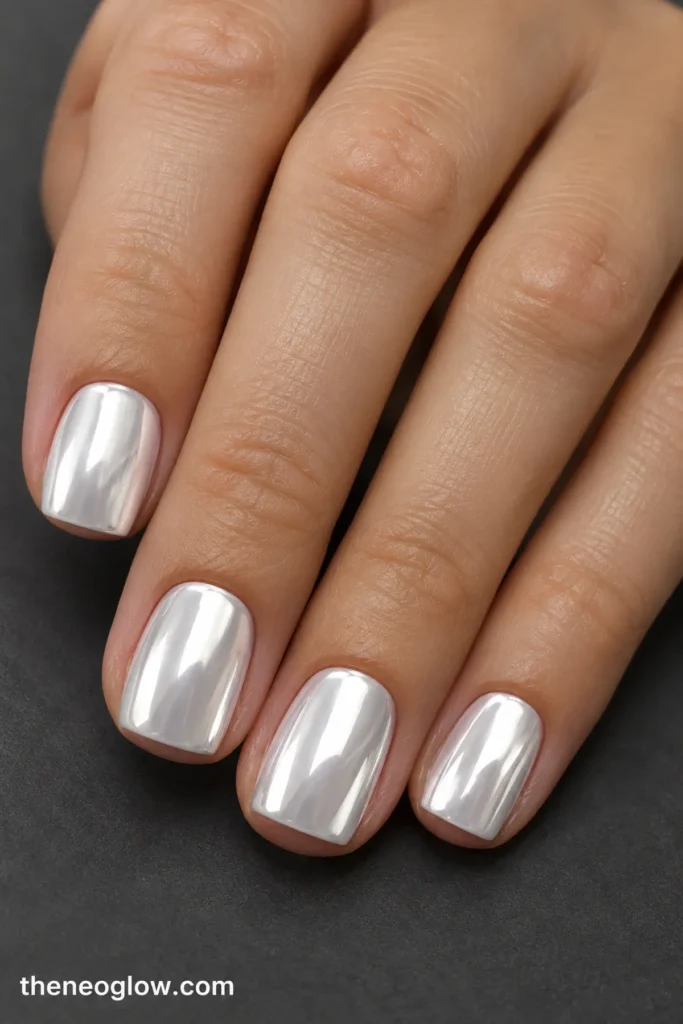
Make short square nails fully opaque with a neutral, clean white foundation. A high-reflection silvery-white chrome layer creates smooth, almost mirror-bright highlights across the flat plates. Keep the sides parallel and the tips straight; chips and ridges interrupt this polished surface more visibly than they do with sheer glaze.
3. Candlelit Ivory Coffins
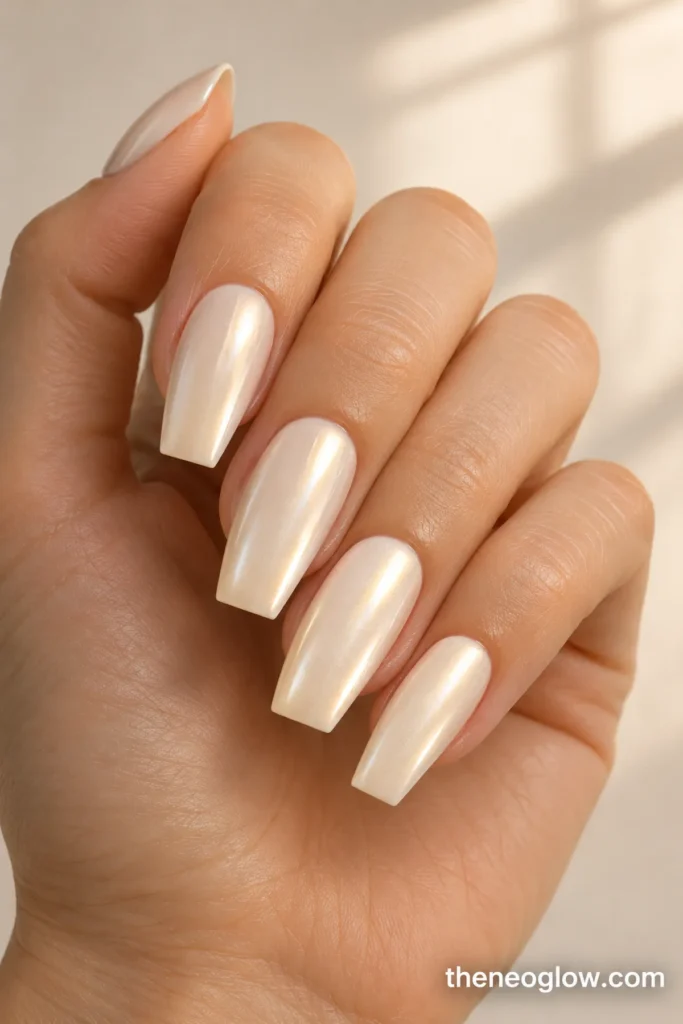
Medium coffin nails have genuinely tapered sidewalls and flat ends, finished in opaque cream-ivory beneath a warm ivory-pearl chrome. The reflection should be soft champagne-white, not yellow gold or bronze. It is a gentler choice beside warm metals or cream clothing, but the ivory must remain visibly lighter than beige.
4. Rose-Milk Opal Ovals
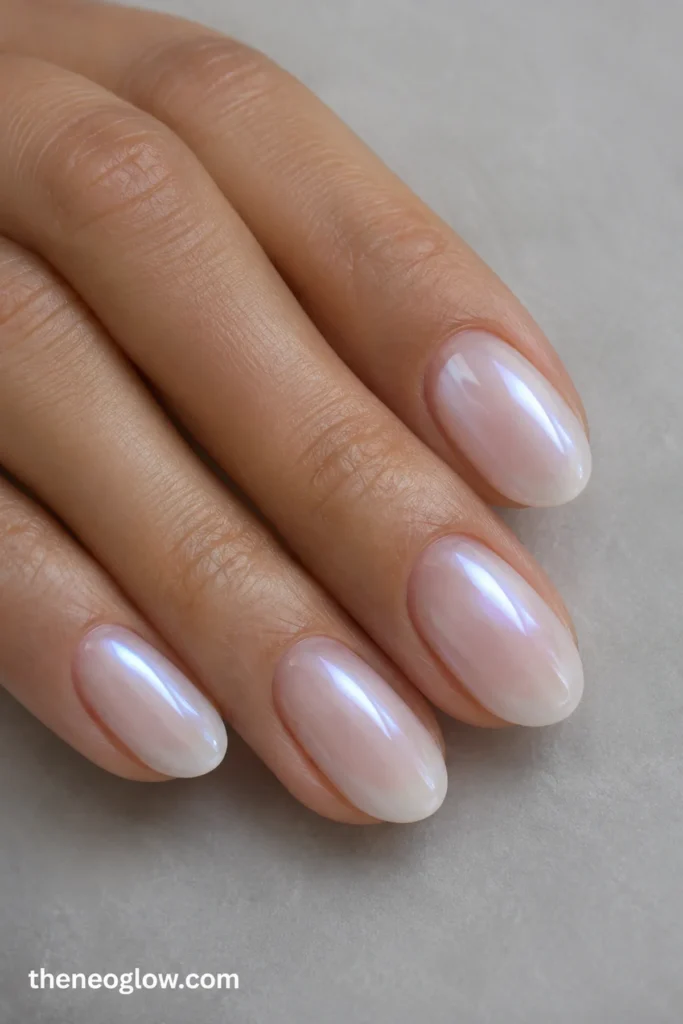
On short ovals, layer a translucent rose-tinted white foundation with a delicate cool-white chrome sheen. The nails look pale pink at the center but distinctly milky along the edges. The tint is part of the foundation, not a separate pink pattern; compare this against Idea 1 if you prefer a warmer-looking nail bed.
5. Polar White-Blue Almonds
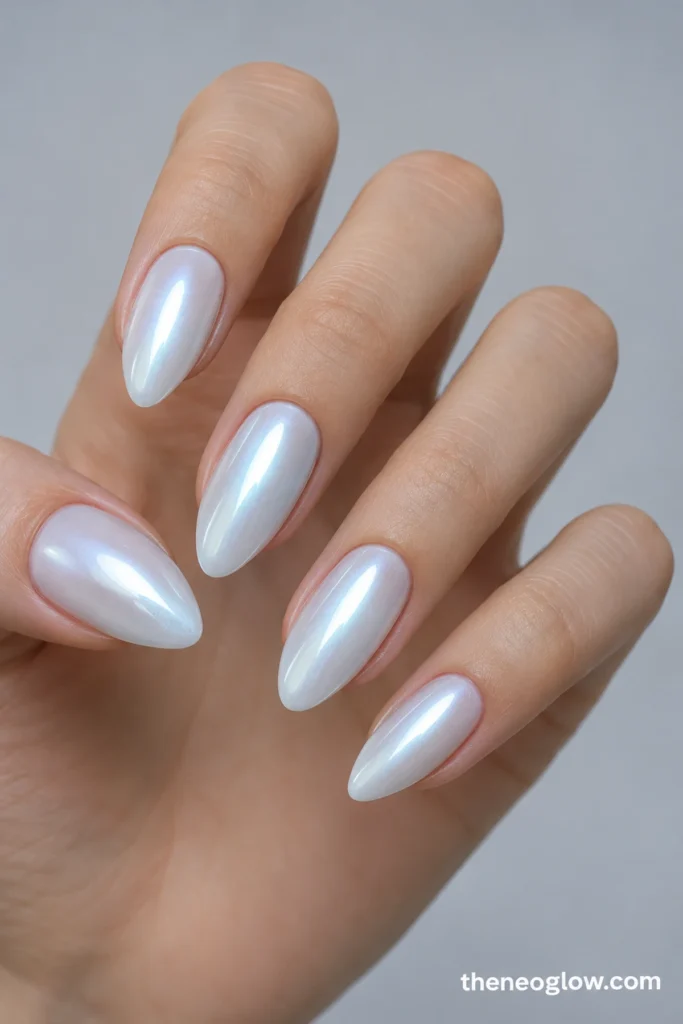
Medium almond nails take a very pale, opaque blue-white—closer to snow in shade than a baby-blue manicure. Add a fine, icy pearl chrome that reflects a restrained blue-silver cast under light. Avoid a concentrated diagonal glow: this is even chrome reflection, never a magnetic cat-eye stripe.
White Chrome French Tips and Mirror Edges
6. Silver-Underlined White Chrome French
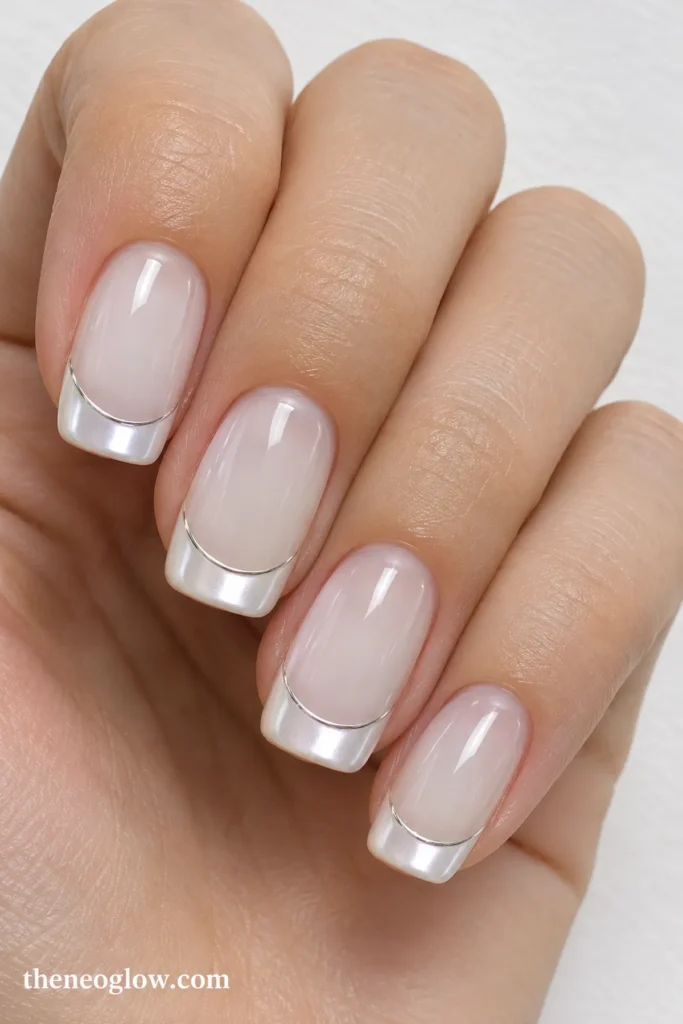
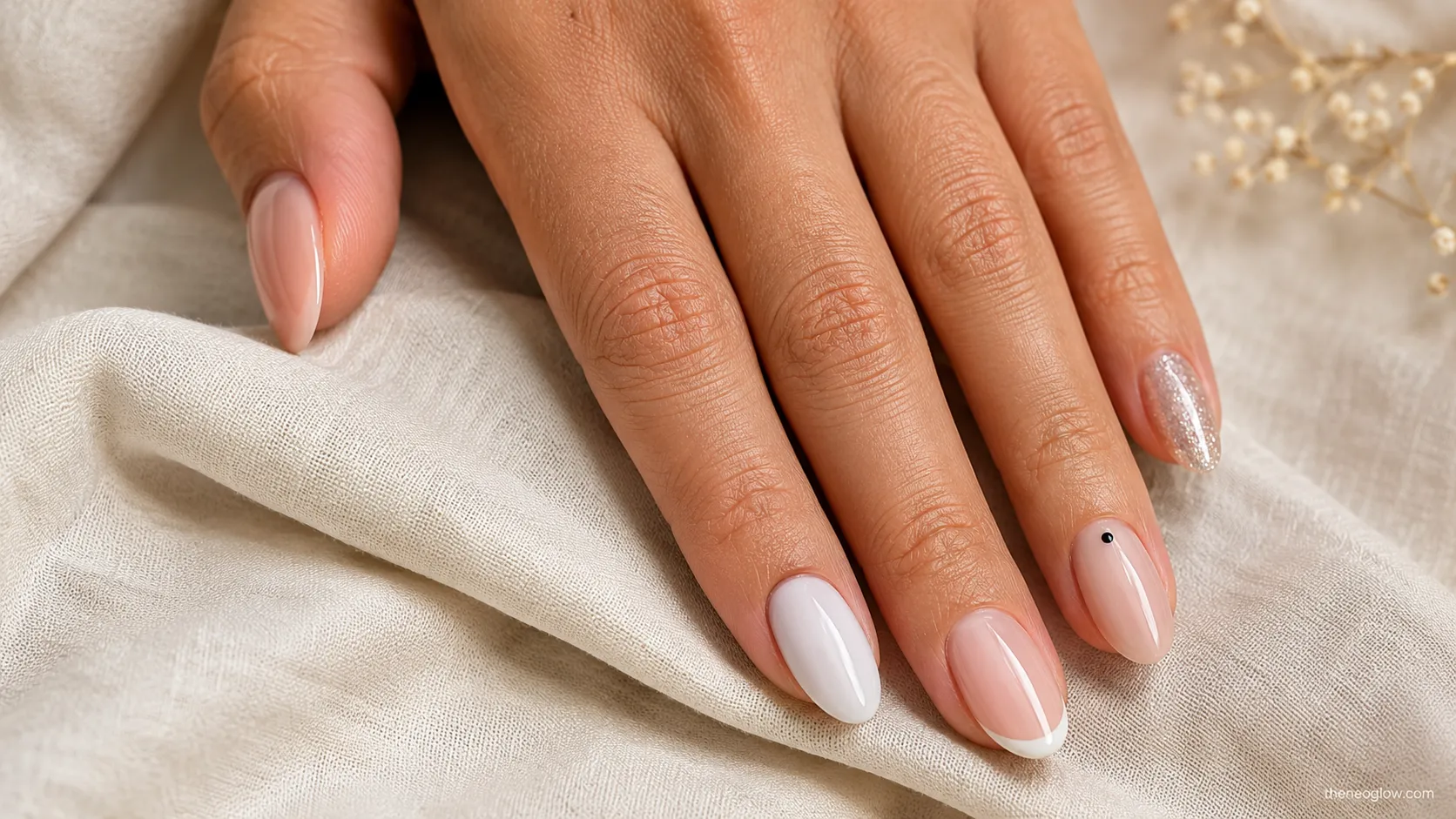
Medium soft-square nails begin with a translucent milk-white bed. The curved free-edge caps are opaque white with a pearl-chrome finish, while a single hair-fine cool-silver line follows the lower smile boundary. The distinct lower outline makes these more graphic than a basic white French; keep the silver from spreading onto the main nail bed.
7. Diagonal Pearl Cape Tips
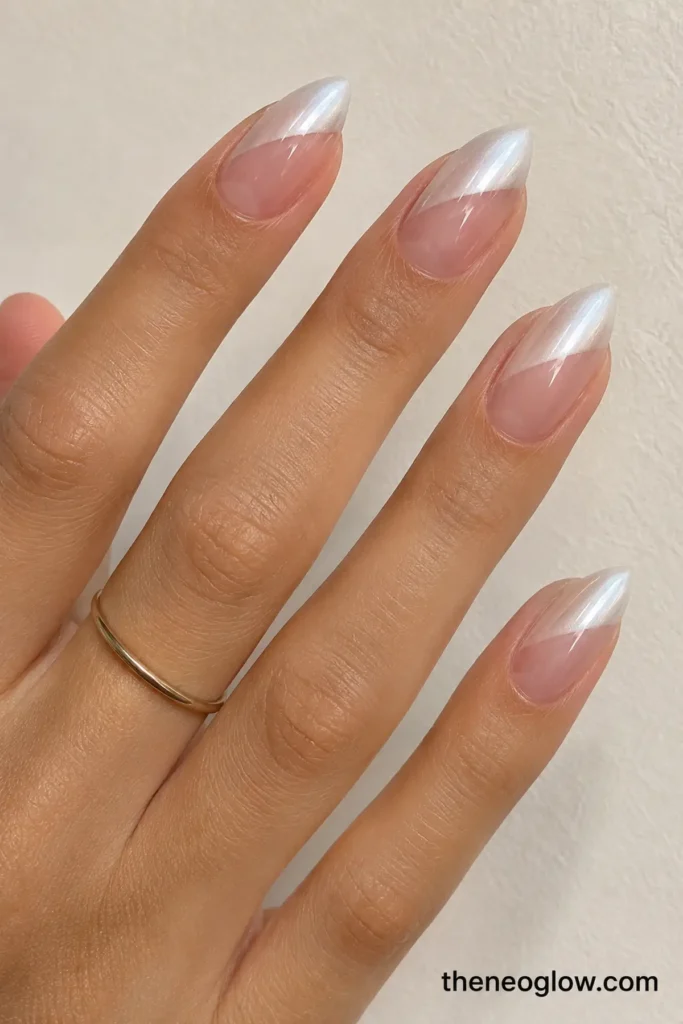
On medium almond nails, a sheer cool-blush base meets a broad pearl-white chrome French area angled from the left sidewall to the opposite tip corner. The white still occupies the actual free edge, so this reads as a French tip rather than a stripe through the middle. One clean diagonal gives the shine its direction without magnetic pigment.
8. Chalk-Rimmed Chrome French on White
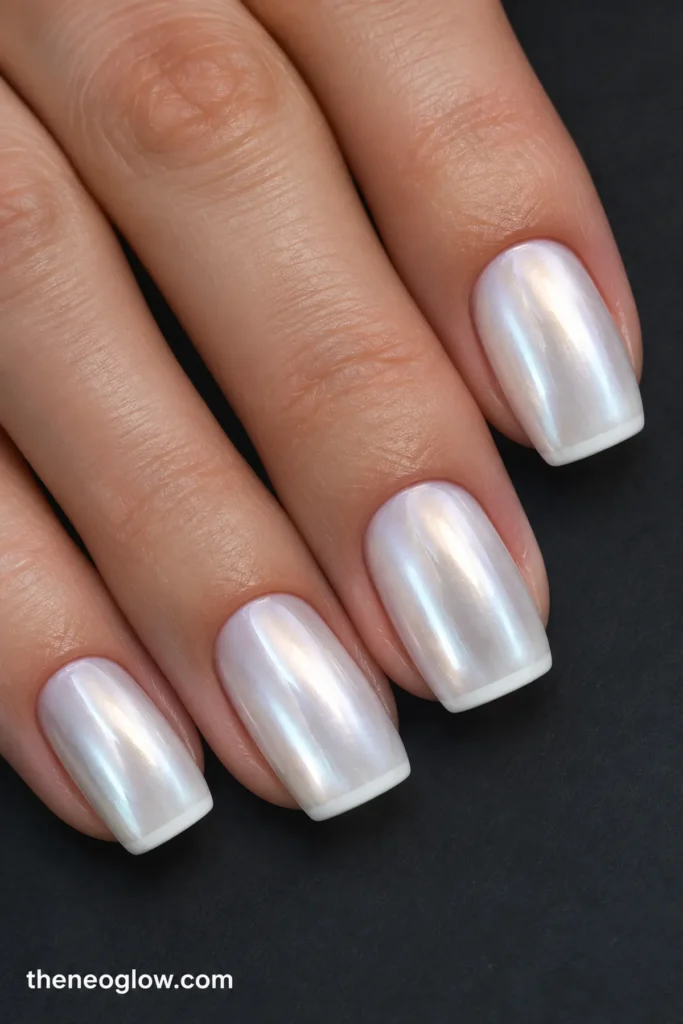
Medium squoval nails receive opaque white pearl chrome over the full plate. Trace only the very outer free edge with a narrow, non-chrome matte-white rim, so the brighter chrome remains visible immediately behind it. Unlike a French manicure built over pink, this white-on-white design relies on surface contrast, not a dramatic color change.
9. Mirror Chevron Apertures
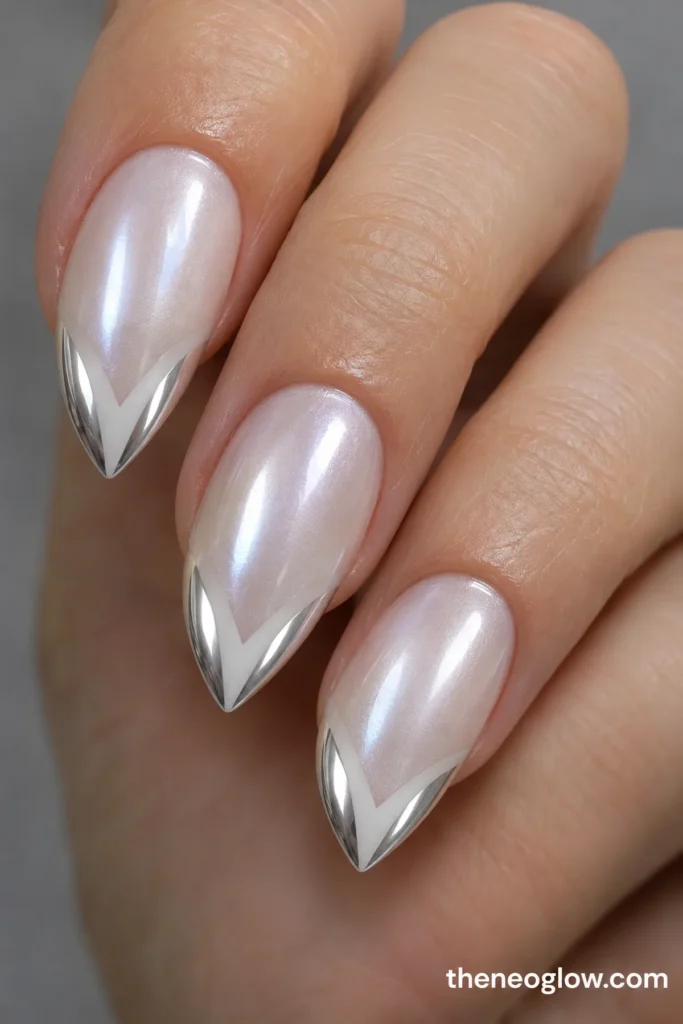
On medium almond nails, cover the entire surface with satin white pearl chrome. Near each pointed tip, leave one slender opaque chalk-white V between two brighter mirror-chrome triangular wings. The V reaches the actual free edge; the shiny wings stay symmetrical. This creates a reflective cutout rather than a conventional filled white chevron.
10. Split-Finish Coffin Tip Shields
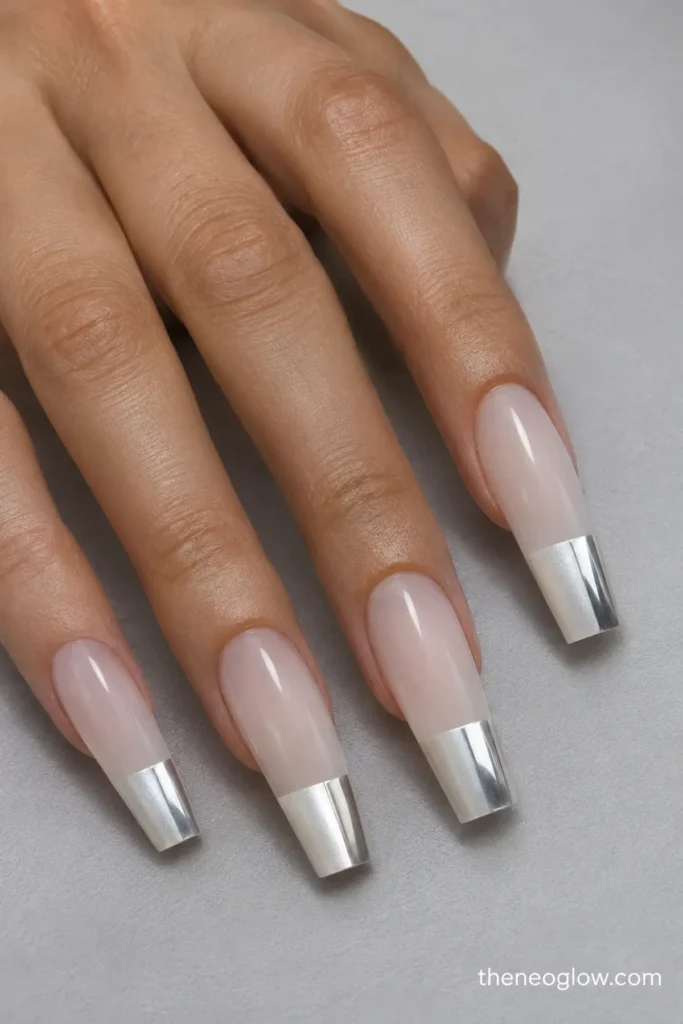
Long coffin nails show a translucent milky-white bed and a broad, straight French cap. Divide each cap down the center: left half in pearl-white chrome, right half in cool silver-white mirror chrome. Leave the bed untouched by chrome. You get a visibly two-reflection tip, not two different polish colors painted across the entire nail.
For a deeper explanation of smile lines, open tips, and how French width changes with shape, NeoGlow’s white French tip nails ideas focus on that construction. The designs here keep chrome reflection central.
Graphic White Chrome Nail Designs
11. Longitudinal Chalk-and-Chrome Split
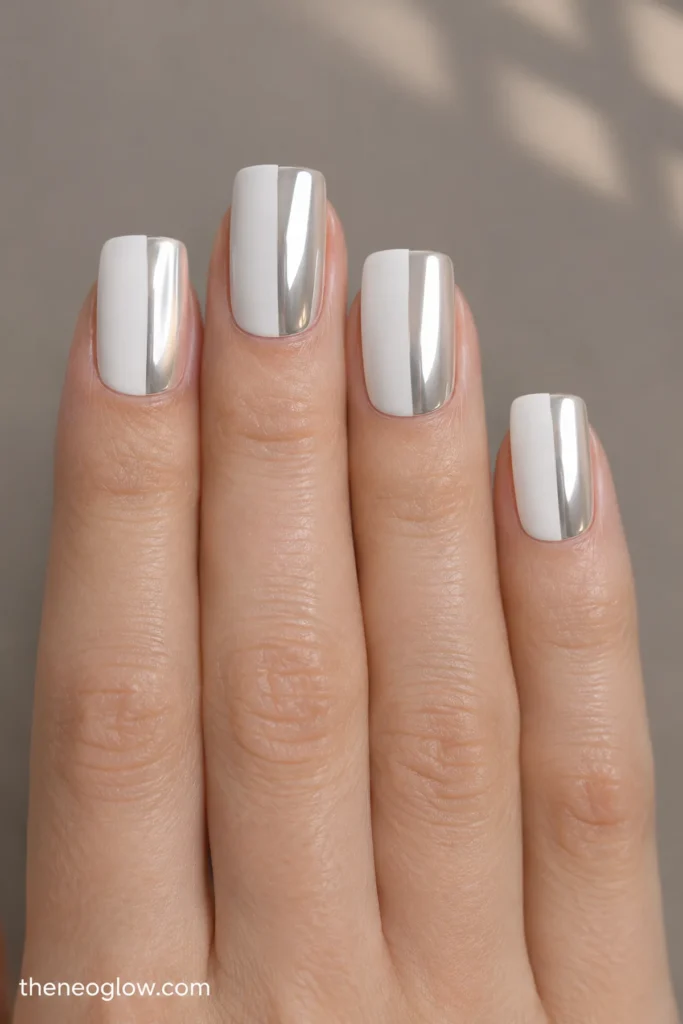
Divide every medium square nail into equal vertical halves, using opaque matte chalk-white on the left and continuous white mirror chrome on the right. There is no silver divider and no diagonal angle. The finish boundary—not a second color—is the focus, and it makes the difference between diffuse and sharp reflection easy to see.
12. Floating Chrome Brushstrokes
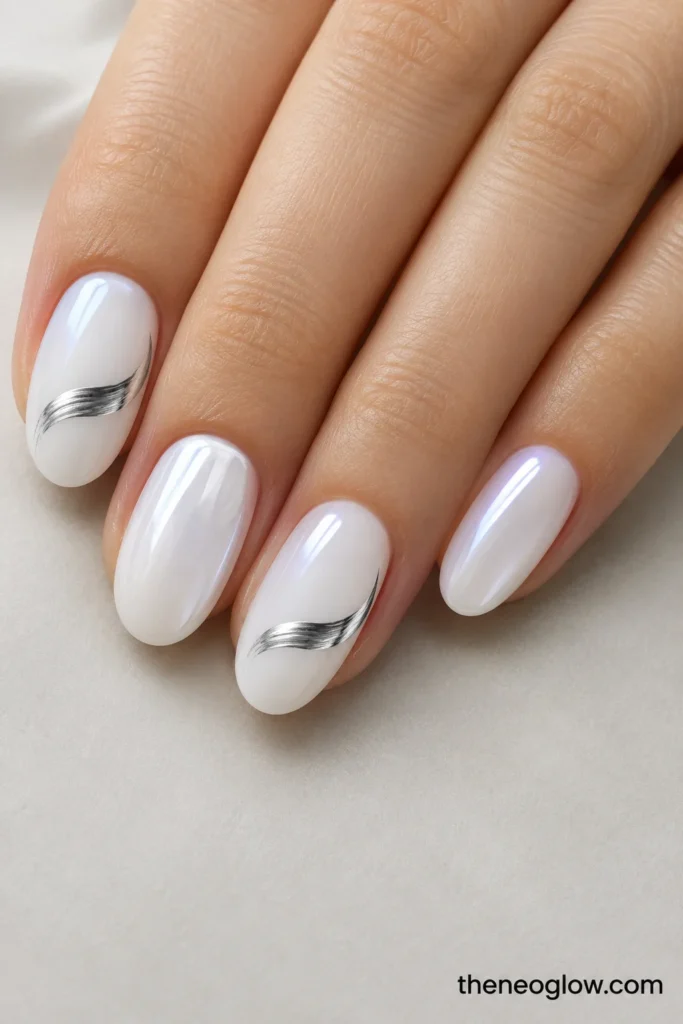
Begin with glossy, opaque marshmallow-white medium ovals. On the index and ring fingers, place one broad curved silvery-white chrome brushstroke across the lower third, with plain white visible above and below it. The remaining nails keep a delicate pearl veil. This is a fixed reflective mark, not glitter, foil, or a moving magnetic beam.
13. Frosted Triangle Keyholes
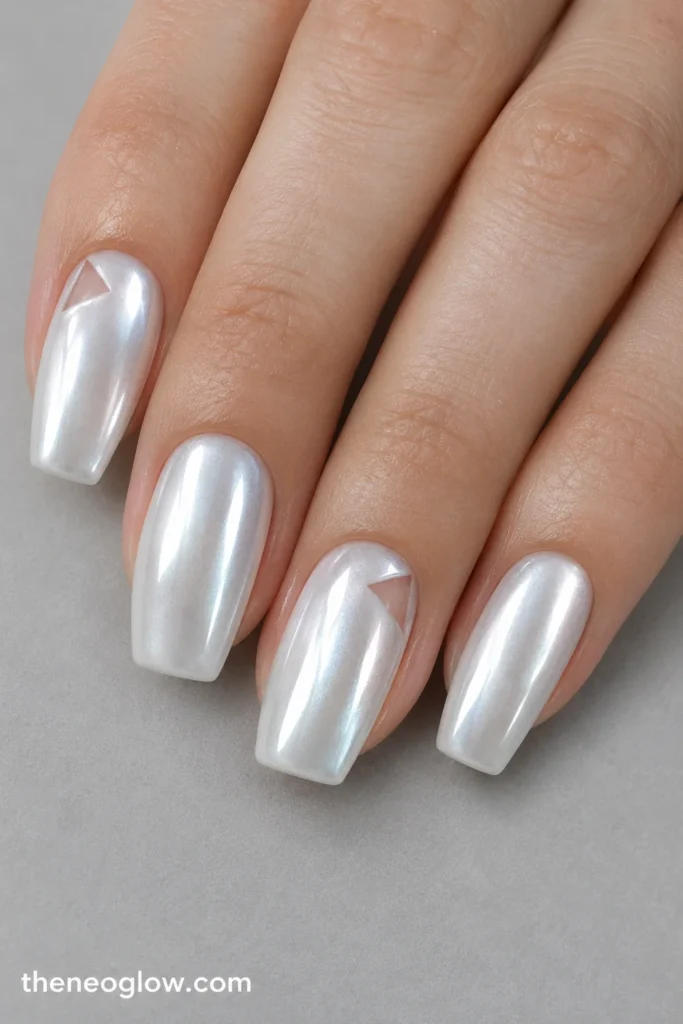
Medium tapered-square nails get an opaque ice-white chrome finish. At the lower outside corner of the index and ring nails, preserve one small clear triangular window with all three edges visible; the other fingers stay fully reflective. Unlike a French gap at the tip, these little openings interrupt the chrome close to the cuticle without creating a half-moon.
14. Two Square Mirror Windows
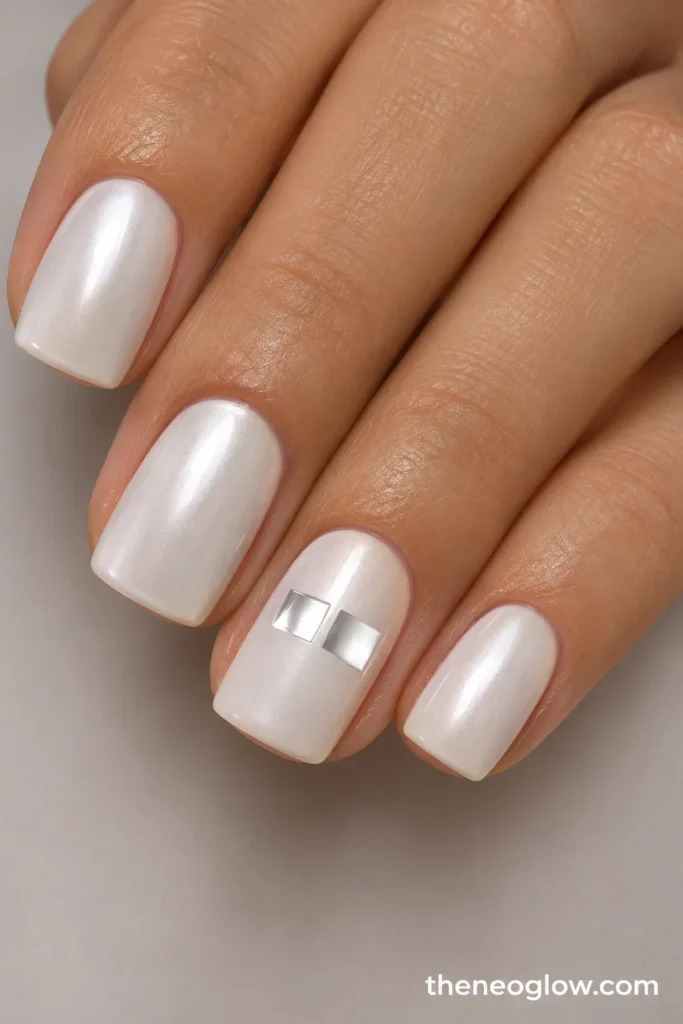
On short soft-square nails, use opaque satin ivory-white. Position two separated, flat mirror-white chrome squares side by side near the center of each ring nail, with a narrow ivory gap between them. All other nails have a light pearl reflection only. The pair of reflective tiles gives small nails a recognizable accent without an entire mirror surface.
15. Thin Chrome Stitch Lines
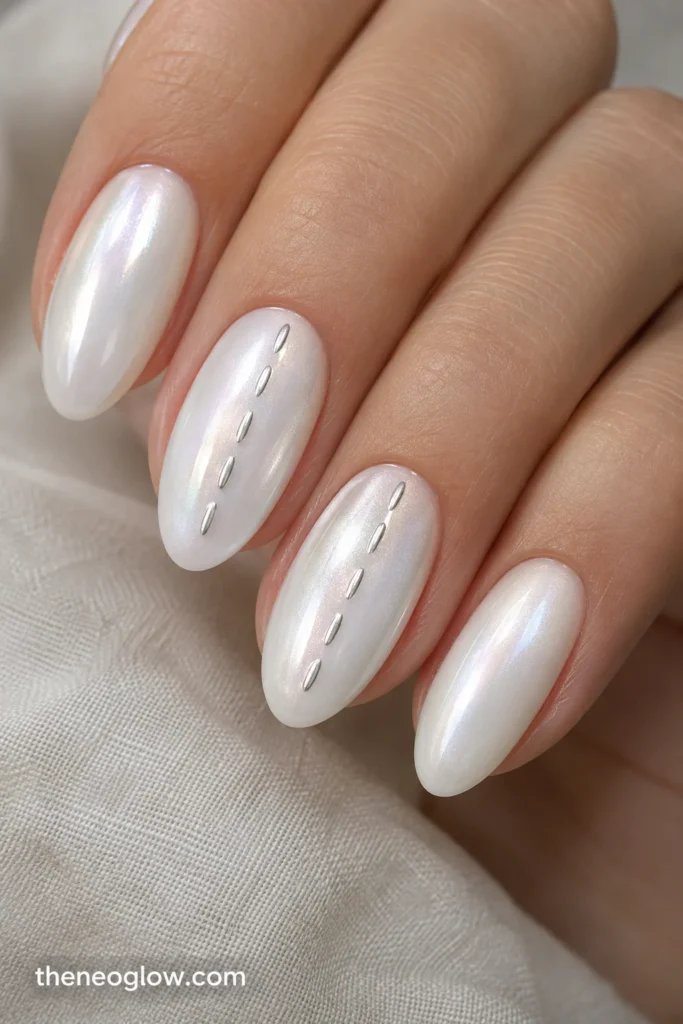
Give medium almond nails a creamy white pearl-chrome base. On the middle and ring fingers, arrange five tiny, disconnected silver-white mirror dashes in one neat vertical line, beginning just above the cuticle and ending before the tip. The marks have flat ends and deliberate gaps; they are not a continuous pinstripe or a row of rhinestones.
16. Pearl Rising From the Roots
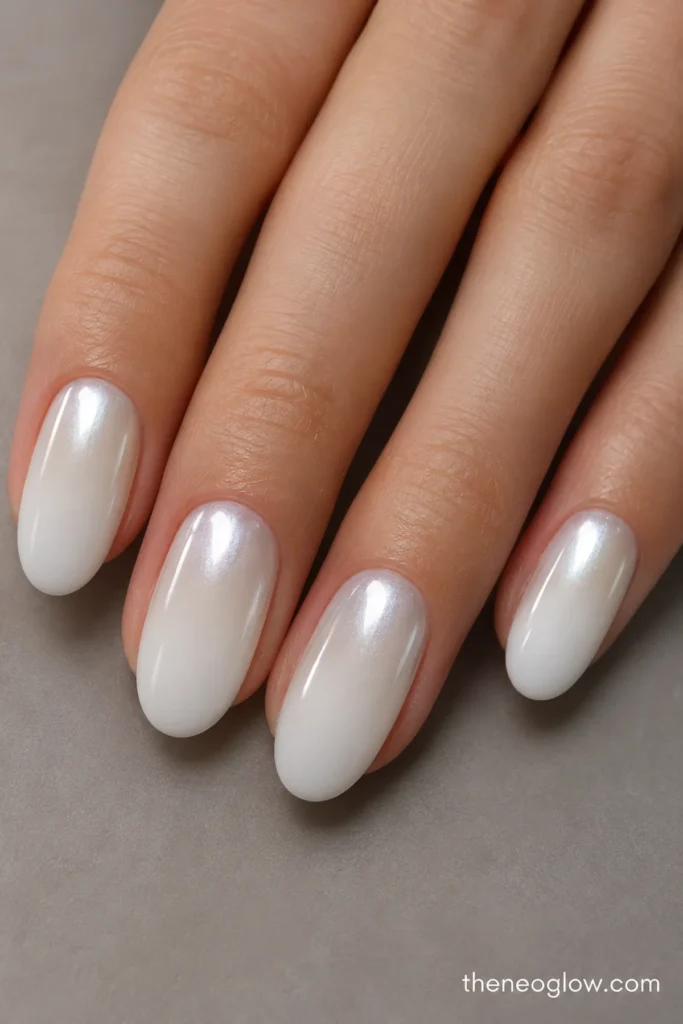
Medium oval nails begin with smooth opaque milk-white. Place a denser pearl-chrome reflection close to each cuticle and blend it out before the final third, leaving the tips looking like simple glossy white polish. This is the reverse of a chrome tip fade; the pale boundary stays soft rather than becoming a sharply painted crescent.
If your reference looks more like uninterrupted liquid silver than reflective white, compare NeoGlow’s silver nail finishes and designs before choosing a powder. White should remain the dominant field in this collection.
Pearl Accents, Marbling, and Dressier Looks
17. Oyster-Ribbon Marble
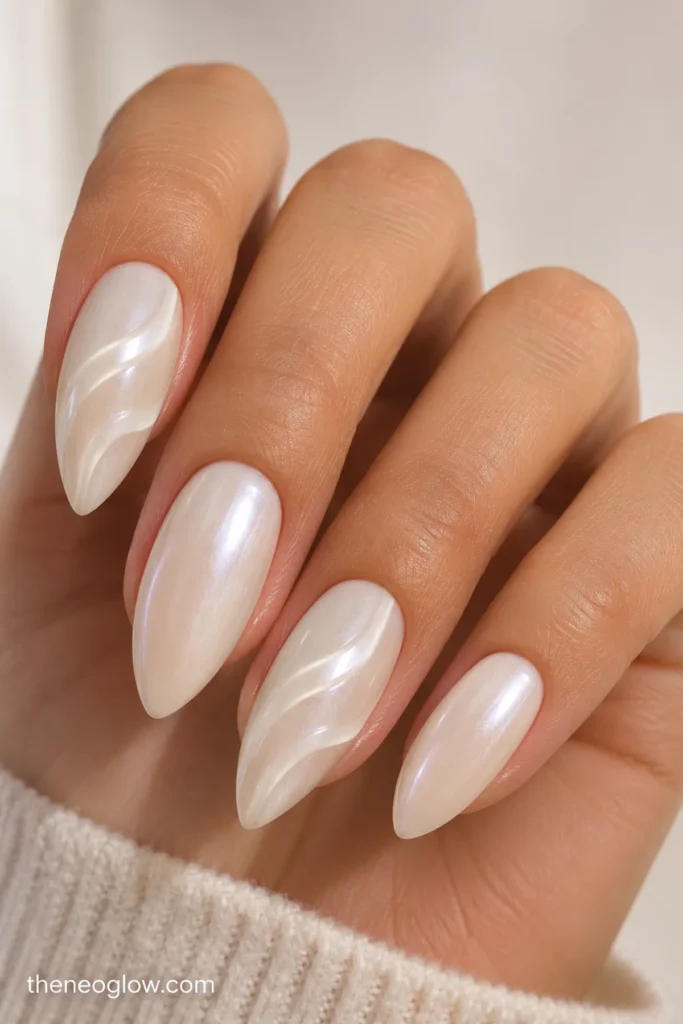
Medium almond nails wear an opaque warm oyster-white base with two softly curved, translucent ivory ribbons traveling lengthwise on the index and ring. A fine pearl-chrome veil crosses the entire surface, including the ribbons, so the pattern appears beneath reflected light. Keep the veins broad and sparse rather than adding gray marble cracks.
18. Milky-to-Porcelain Pearl Skittle
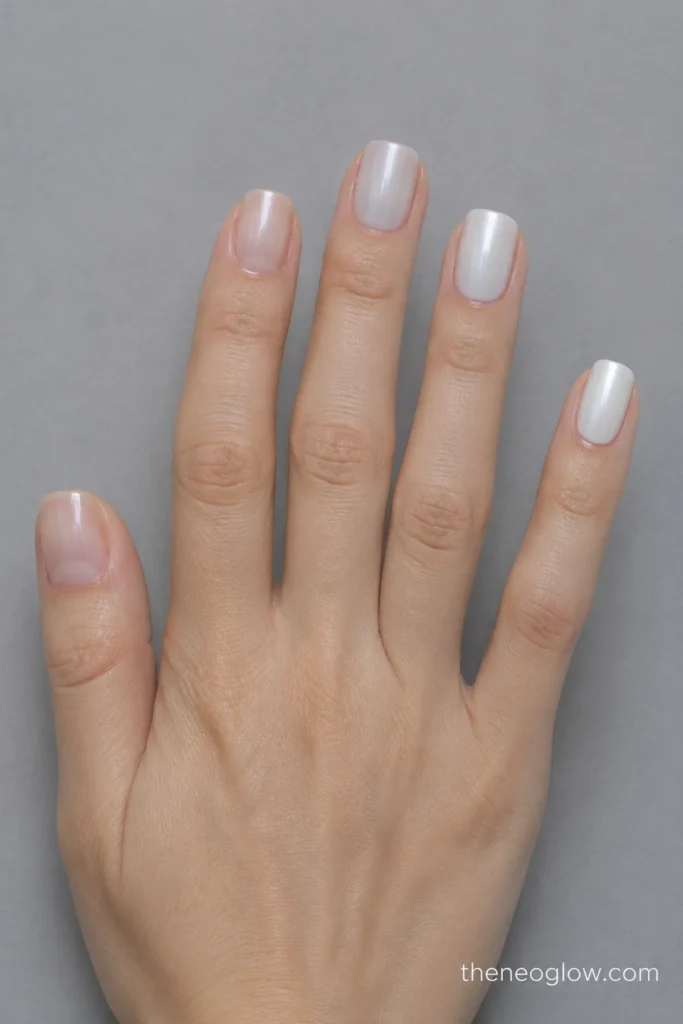
Across one hand of short squovals, progress from sheer milky white on the thumb to fully opaque porcelain on the pinky, with three clearly different opacity steps between them. Every nail receives the same gentle white chrome powder effect. The sequence lets you compare how one reflection changes when the underlying white becomes more solid.
19. Clear Teardrop Inset Coffins
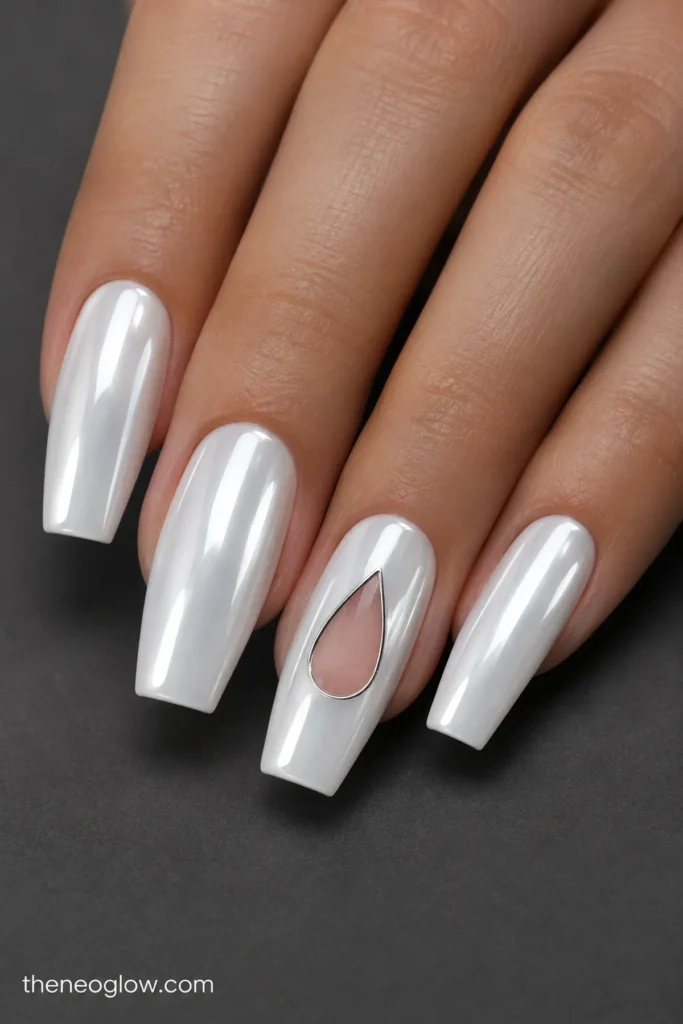
Medium coffins are coated in high-reflection cool-white chrome, except for one sharply defined, flat clear teardrop near the center of each ring fingernail. A hair-thin silver outline marks the opening; the other nails are uninterrupted chrome. There is no raised droplet: the contrast comes from transparent space surrounded by continuous reflection.
20. Seed-Pearl Corner Cluster
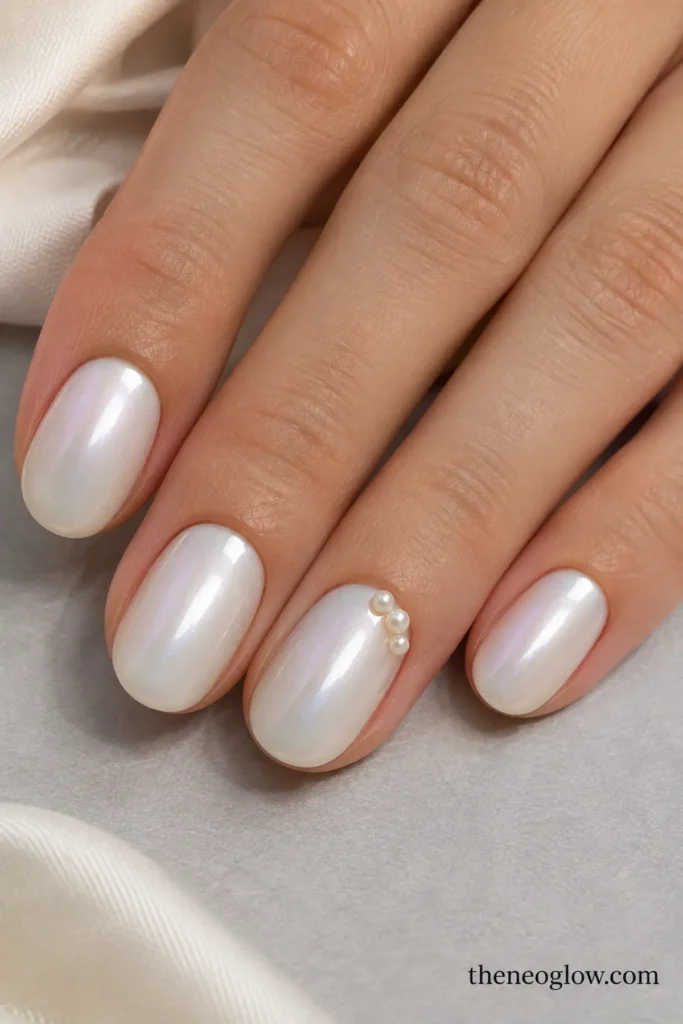
Short oval nails wear opaque creamy white under a softly reflective pearl-chrome finish. Add three tiny, low-profile ivory pearl embellishments near the outer cuticle corner of each ring nail, leaving the other nails completely smooth. This is the tactile option in the set; skip the raised pieces if they would snag on clothing or interfere with daily tasks.
21. Bridal Satin Flourish
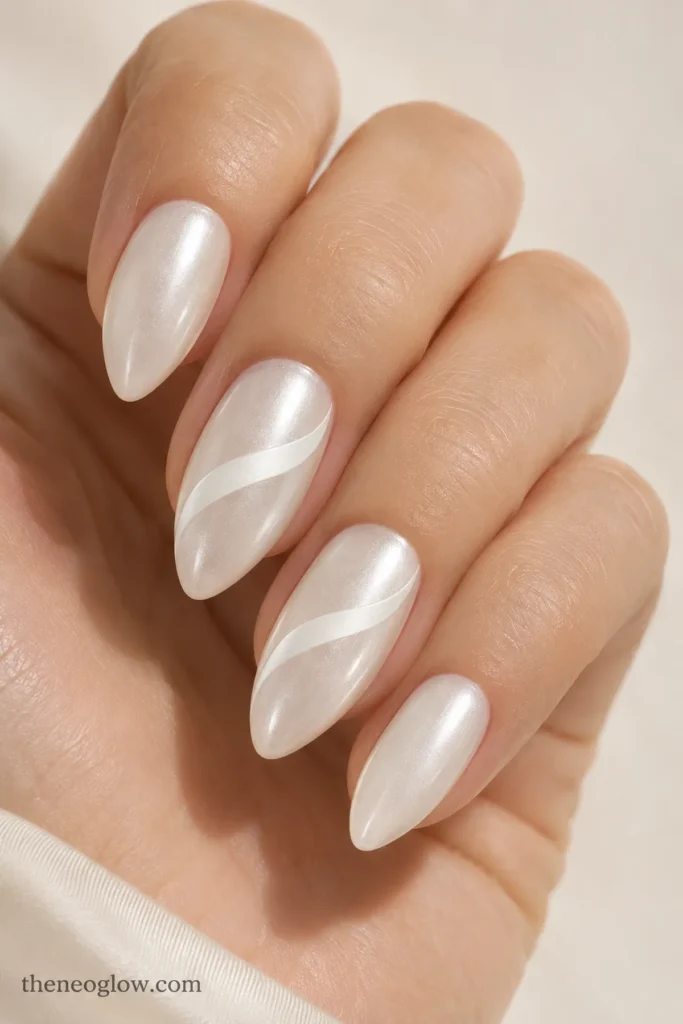
Medium almond nails use a warm ivory-white base and a restrained luminous chrome glaze. On the middle and ring fingers, lay one flat, opaque white curved ribbon with two gently tapered ends, running from one side of the center toward the outer tip. It suggests tailored embroidery without turning the manicure into lace or adding bulky ornaments.
Salon Powder, DIY Glaze, or Finished Press-Ons?
If you want a genuinely burnished chrome-powder finish, confirm that the salon or home kit uses compatible coatings and a suitable lamp when gel is involved. The powder is rubbed over a prepared layer, excess is removed, and the effect is sealed according to that specific system. OPI’s silvery-white chrome powder application instructions show exactly how its own compatible gel sequence differs between home and salon use. Those cure times are not universal instructions for every brand.
For a simpler regular-polish look, use a milky white lacquer and a compatible glaze topper instead of assuming powder can be rubbed into any ordinary polish. OPI’s beginner glazed-nails walkthrough provides a specific lacquer-and-topper example without loose chrome powder. It can resemble Ideas 1, 3, or 4, but should not be promised as the true mirror effect in Idea 2.
Finished chrome-look press-ons are another visual route, especially for the uniform full-coverage designs. Choose the correct nail shape and a tip that fits sidewall to sidewall without pinching or touching skin; use the set’s own sizing, adhesive, and removal directions. A chrome-looking press-on does not automatically use the same manufacturing method as salon chrome powder.
Before booking, describe five details in one sentence: nail length, shape, white-base opacity and undertone, reflection strength, and exact chrome placement. For example: “Short square, opaque neutral white, smooth high-reflection silvery-white chrome on every nail, no glitter or magnetic beam.” For a tip design, add the smile-line width and the location of any silver outline.
Keep the White Reflective, Not Worn-Looking
Inspect the manicure in daylight and indoor lighting: ivory can read warmer, and blue-white pearl can appear cooler when reflections shift. Bright mirror areas make scratches, lifting edges, and imperfections easier to notice; a softer milky veil makes small visual changes less prominent. Avoid picking or peeling a gel coating. The American Academy of Dermatology’s gel manicure nail-health guidance explains UV-exposure precautions, appropriate professional removal, and moisturizing between manicures.
White chrome is useful far beyond winter, although cool pearl and frosted mirror edges pair naturally with cold-weather outfits. If you want snowflakes, darker winter palettes, or a complete seasonal gallery rather than a white-finish comparison, continue with NeoGlow’s winter nails collection.
For the easiest everyday choice, save Idea 1 if you want the nail underneath to show, Idea 2 if you want obvious reflection, or Idea 6 if French structure matters most. Take that image along with its base opacity and finish description so the final manicure matches the detail you actually liked.