
Glass skin is a K-beauty-inspired appearance goal: skin that looks smooth, hydrated, fresh, and softly reflective. It is not a promise of invisible pores, erased texture, or a permanently filtered finish.
The most useful way to approach the look is to build a comfortable routine first, then use optional hydrating layers only when they add something your skin actually needs. Lighting, makeup, genetics, natural oil, and normal skin texture also affect how “glassy” skin appears in photos and in real life.
If your current routine already stings, burns, flakes, or feels overloaded, do not chase more glow with stronger products. Simplify first and use the look as an aesthetic direction, not a test your skin has to pass.
What glass skin actually means
In beauty culture, glass skin usually describes a very dewy, luminous finish with a smooth-looking surface. The idea is strongly associated with K-beauty, where lightweight hydration and careful layering are common parts of the conversation. But the visual result is broader than skin care alone.
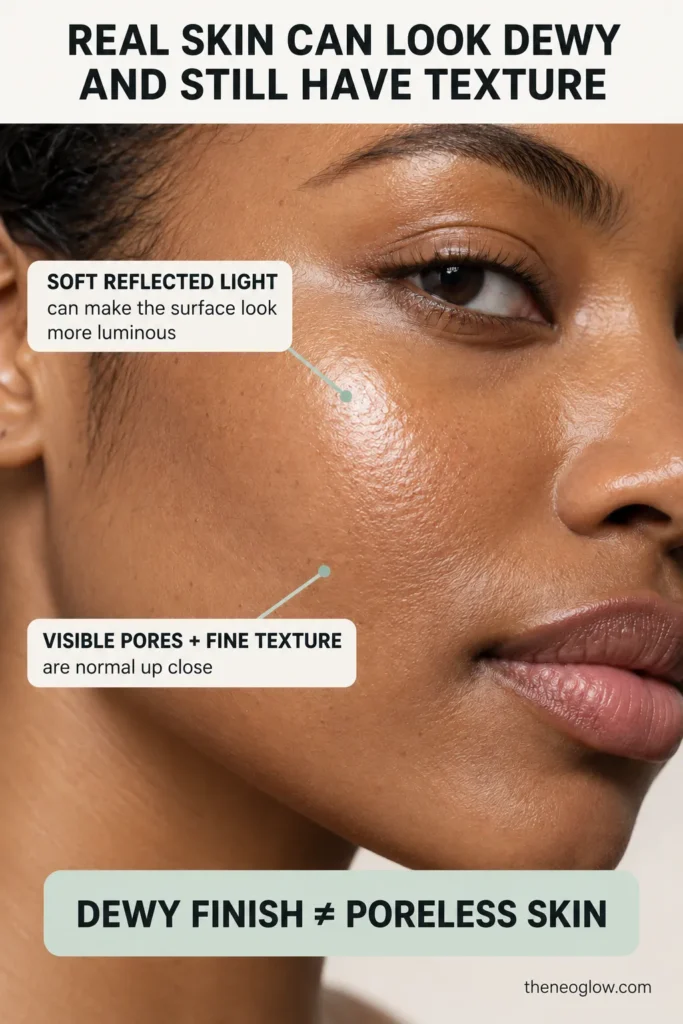
Skin care can help your skin feel comfortable, reduce the look of dry surface flaking, and create a more hydrated-looking finish. It cannot make normal pores disappear or guarantee the same reflective look under every camera, window, or bathroom light.
| Skin care may support | Skin care cannot promise |
|---|---|
| A softer, more hydrated-looking surface | Poreless or texture-free skin |
| Less obvious dryness or flaking when the routine suits you | A permanently glossy finish |
| A smoother-looking base for sunscreen or makeup | The same appearance in every type of lighting |
| A routine that supports comfort and sun protection | Erasing scars, lines, pigmentation, or medical skin conditions |
The American Academy of Dermatology also treats basic skin care as a simple foundation rather than a long product stack: gentle cleansing, moisturizing, and sun protection are core jobs. Its skin care on a budget guidance notes that moisturizer can be especially useful on damp skin and recommends broad-spectrum SPF 30 or higher for daytime protection.
Build the look from the foundation, not from ten steps
You do not need a traditional multi-step routine to pursue a glass-skin finish. Start with the few jobs that matter, then add only what improves comfort or appearance without making your routine harder to tolerate.
| Priority | What belongs here | How to use it |
|---|---|---|
| Essential foundation | Gentle cleansing as needed, moisturizer, daytime sunscreen | Keep these consistent and choose textures that feel comfortable |
| Helpful for some | One hydrating toner, essence, or serum | Add it only if it makes your skin feel or look better without irritation |
| Optional | Exfoliant, hydrating mask, facial mist, makeup for extra dewiness | Use for a clear purpose, not because glass skin is supposed to require it |
| Skip | Abrasive scrubs, several exfoliants at once, forced double cleansing, endless hydrating layers | More steps can add irritation without adding useful glow |
If you are still deciding what belongs in a basic routine, start with the site’s simple Skin Care guide. If you already have the products but are unsure about sequence, the morning and night skin care routine order is the better next reference.
A simple glass skin routine for morning and night
Use this as a flexible framework rather than a required product checklist. Toners, essences, and serums are optional. The right routine is the shortest one that leaves your skin comfortable and gives you the finish you like.
| Morning | Night |
|---|---|
| Cleanse gently if you need a morning cleanse | Remove makeup or hard-to-remove sunscreen as needed |
| Add one hydrating layer if it helps | Cleanse gently |
| Apply moisturizer in a texture that suits your skin | Add one hydrating layer if it helps |
| Finish skin care with sunscreen | Finish with moisturizer |
| Apply makeup after sunscreen if you want more visible dewiness | Skip extra steps if your skin already feels comfortable |
Cleanse without trying to make skin feel squeaky
Cleansing should remove the buildup you need to remove without leaving your face tight or stripped. Double cleansing can be useful when one cleanser does not comfortably remove makeup or a water-resistant product, but it is not a glass-skin requirement.
If one gentle cleanser already leaves your skin clean and comfortable, adding a second cleanse just to copy a trend may not improve the result.
Use hydration as a tool, not a product quota
A hydrating toner, essence, or serum can be helpful when you like the feel or finish it gives you, but you do not need all three categories. Start with one optional layer and judge the result by comfort, not by how many bottles are on the shelf.
If your main issue is tightness, dullness, or a dry-looking surface, the site’s hydration tips for a fresher, dewier look goes deeper into that specific problem. This page stays focused on the glass-skin aesthetic and its realistic limits.
Moisturize to hold onto water and improve comfort
Moisturizer is the step that usually makes the biggest practical difference between adding water-based layers and actually keeping the routine comfortable. A light lotion or gel may suit someone who dislikes heaviness, while a richer cream may feel better when skin is dry or the air is less humid.
You do not need a special “glass skin” moisturizer. Choose by texture, tolerance, and how the formula fits the rest of your routine.
Use sunscreen as protection, not as a glow trick
A dewy sunscreen may add visible shine, but its main job is sun protection. Choose a sunscreen you can use correctly and consistently rather than selecting one only because it photographs glossy.
For daytime protection, follow the product label. The AAD recommends broad-spectrum SPF 30 or higher as part of routine sun protection.
Exfoliation is optional, and more is not better
Exfoliation can make the surface feel smoother for some people, which is why it often appears in glass-skin routines. It is still an optional step, not a requirement.
The AAD’s guidance on exfoliating safely at home emphasizes choosing a method that fits your skin, using gentle technique, moisturizing afterward, and avoiding over-exfoliation. It also notes that exfoliating can worsen dryness or irritation when it does not suit your skin or the other products you use.
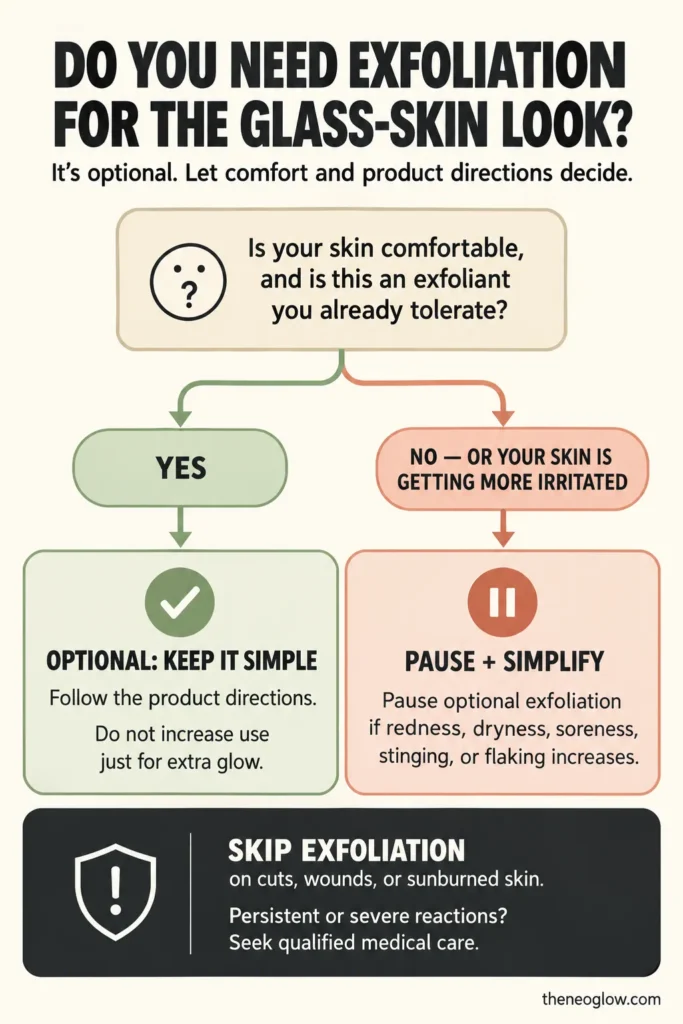
- If your skin is comfortable and you already tolerate an exfoliant, follow that product’s directions rather than increasing frequency for extra glow.
- If your skin is becoming more red, dry, sore, stingy, or flaky, pause optional exfoliation and simplify.
- If you use an irritation-prone treatment, do not automatically stack another exfoliating product on top of it.
- Do not exfoliate over open cuts, wounds, or sunburned skin.
If your routine is already uncomfortable, the site’s Skin Barrier Mistakes guide is a more useful next step than trying to polish the surface harder.
Pores and normal texture are still part of glass skin
The most misleading version of glass-skin content is the idea that real skin should look completely poreless. Pores are normal. Skin also has fine lines, follicles, small areas of unevenness, and texture that become more or less visible depending on distance and lighting.
The AAD’s guidance on making facial pores less noticeable focuses on reducing their appearance rather than promising that they can be removed. It also warns that scrubbing, picking, or squeezing can irritate skin and make pores look more noticeable.
That distinction matters for glass skin. A smoother-looking, more hydrated surface can reflect light beautifully while pores are still visible up close. Those two things can be true at the same time.
Lighting and makeup can change the finish without changing your skin
Glass skin is partly a visual effect. Soft reflected light can make a moisturized surface look more luminous, while harsh overhead light may emphasize texture. A dewy sunscreen, skin tint, facial oil, or highlighter can also increase surface shine.
That does not make the look fake. It simply means a photograph is showing skin plus the conditions around it. The useful boundary is to avoid treating a lighting or makeup effect as proof that pores, lines, or texture have disappeared.
If you enjoy makeup, apply it after sunscreen and use it as an optional finishing step. If you prefer bare skin, you can stop after sunscreen in the morning. Neither route is more authentic.
What to expect from a realistic glass skin routine
There is no universal timeline for “achieving glass skin” because glass skin is not a clinical outcome with a standard measurement. Some changes in finish can happen immediately after moisturizer, sunscreen, or makeup. Changes in how dry, flaky, or irritated your skin looks depend on what is causing the issue, which products you use, and how well you tolerate them.
Judge the routine by practical signs instead:
- Your skin feels comfortable after cleansing.
- Your moisturizer reduces tightness instead of adding sting.
- You can use sunscreen consistently without having to rebuild the whole routine around it.
- Optional layers improve the finish without making your skin feel hot, itchy, sore, or congested.
- You are not increasing exfoliation just because a photo looks more reflective than your skin does in ordinary light.
If a routine causes persistent burning, swelling, blistering, painful cracking, a spreading rash, or signs that look infected, stop treating it as a cosmetic glow problem and seek qualified medical care.
Keep the goal visual, but keep the routine practical
Glass skin works best as a style direction: hydrated-looking, smooth-looking, softly reflective skin with normal texture still visible. The foundation is simple—cleanse gently, moisturize, protect your skin from the sun, and add one hydrating layer only when it earns its place.
Exfoliation is optional. Poreless skin is not the standard. Makeup and lighting can enhance the finish without proving that your skin has changed underneath.
If your next question is how to improve hydration itself rather than the glass-skin look, continue with the hydration guide for fresh, dewy-looking skin and keep this routine as the simpler visual framework.