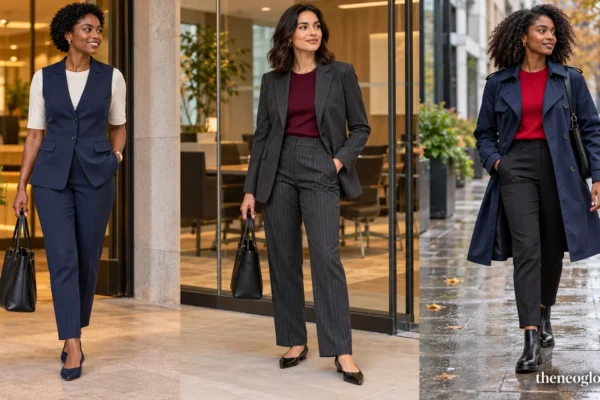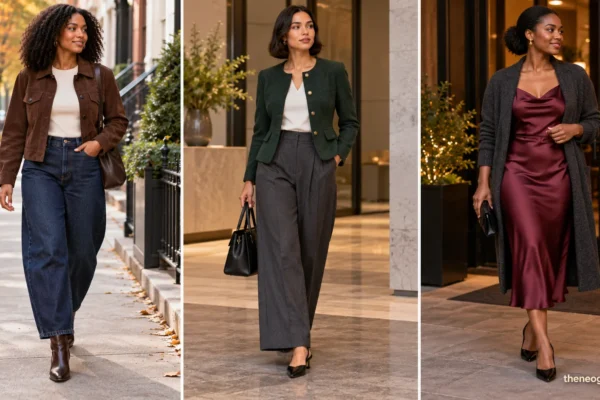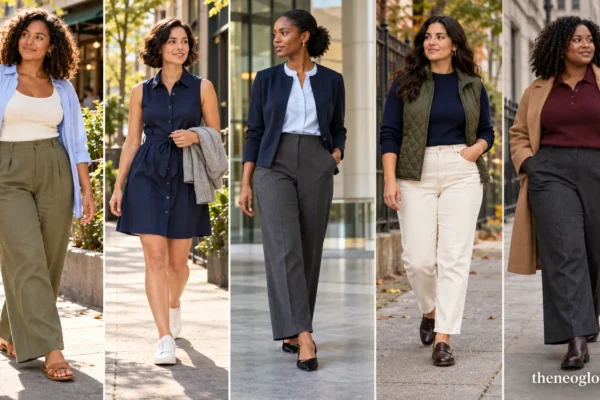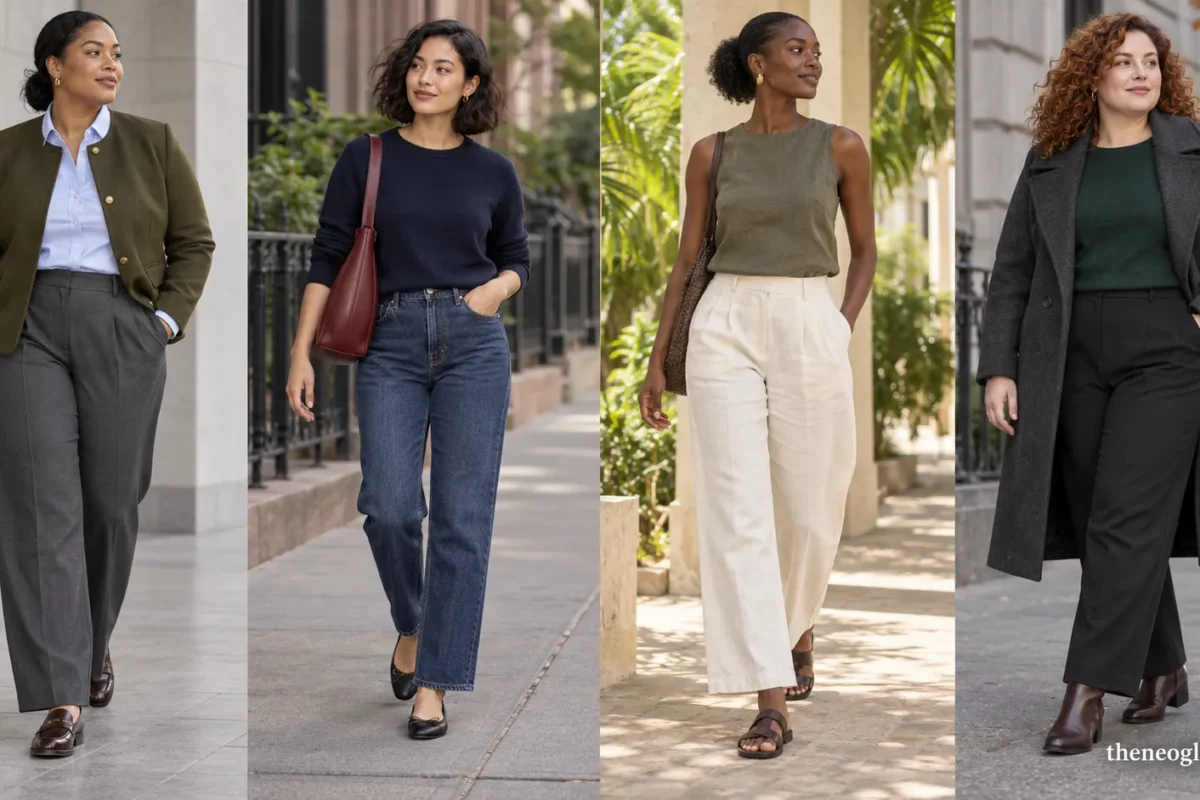
Quiet luxury is easiest to use when you stop treating it as a price category. The wearable version is a styling system: clean proportions, considered fabric and texture, controlled color, good garment condition, and details that support the outfit instead of competing with it.
That means you can build a quiet luxury outfit from clothes you already own. A dark pair of jeans can work. So can a cotton shirt, a simple knit, a fluid skirt, or a practical flat. The goal is not to imitate wealth or erase personality. It is to make each choice feel intentional enough that the whole outfit reads clearly.
If you like the idea but do not want a beige uniform or a closet full of identical blazers, start with the decisions below.
What Quiet Luxury Actually Means
Quiet luxury overlaps with classic and old-money-inspired dressing, but it has a narrower visual focus. It tends to favor restrained design, minimal visible branding, clean lines, refined texture, and coordination that lets fit and finish do more of the work.
Old-money-inspired style can add heritage, preppy, coastal, collegiate, or equestrian references. Classic style is broader still: it can include almost any reliable silhouette that earns repeat wear. If you want that heritage-leaning wardrobe system, use NeoGlow’s . This page stays with the quiet-luxury question: how do you create polish when the clothes themselves are not shouting for attention?
The answer starts with the line of the outfit, not the label inside it.
Start With the Line of the Outfit
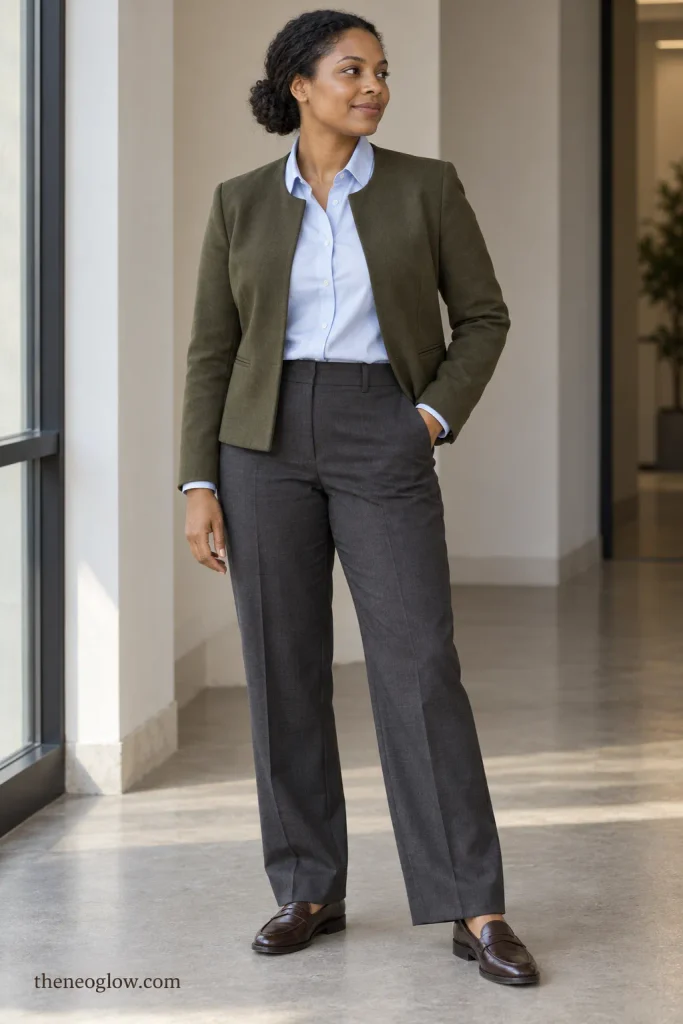
Before thinking about fiber, hardware, or accessories, look at the silhouette from a few feet away. Does the outfit have a clear shape, or are several pieces fighting for the same visual space?
For jackets and shirts, check whether the shoulder sits comfortably and whether buttons pull across the bust or midsection. For trousers, look for enough ease through the seat and hips that the fabric can fall rather than bunch into tension lines. Hem length matters too: a trouser that repeatedly collapses over the shoe can make an otherwise simple outfit look less resolved.
Proportion is personal, not a body-correction rule. A shorter jacket can emphasize the waist and give more visual length to the lower half. A longer layer can create a straighter column. A higher rise may feel balanced on one torso while a mid rise feels better on another. Choose the relationship that feels comfortable and deliberate on your body.
Small alterations can be useful when the garment is already close: a hem, sleeve adjustment, or modest waist refinement may improve the line. Major shoulder, rise, or structural reconstruction can be costly or impractical, so tailoring is not a universal fix.
Use Fabric as Texture and Behavior, Not a Price Tag
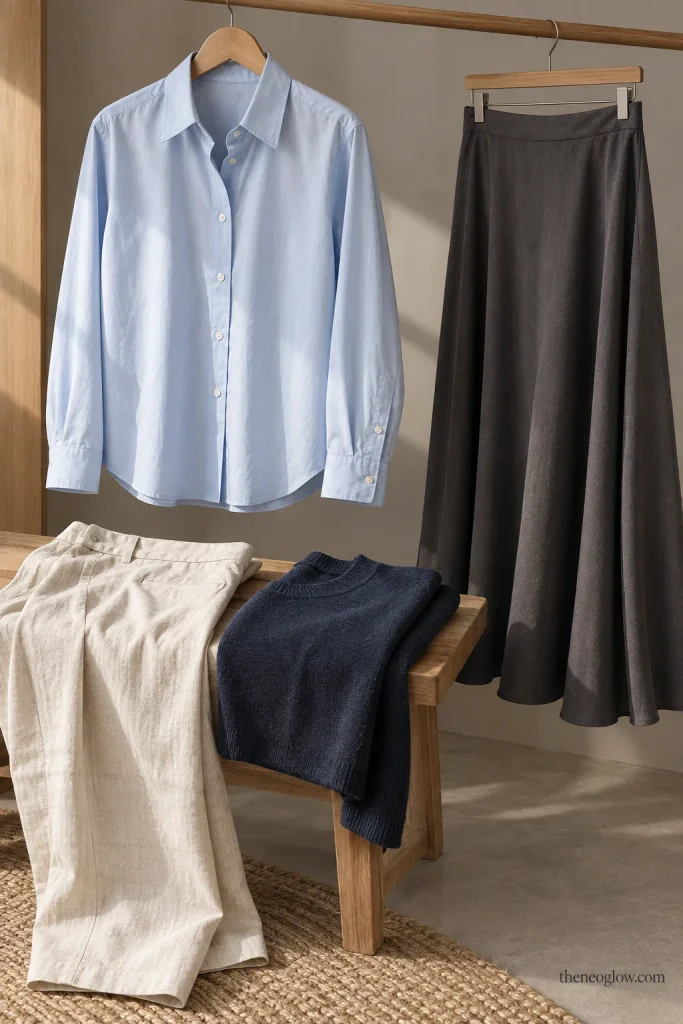
Quiet luxury content often turns fabric into a hierarchy: cashmere over cotton, silk over synthetics, natural over blended. Real clothes are more complicated.
A crisp cotton poplin can look beautifully controlled. Linen can bring breathable texture but also visible creasing. Fine wool can drape cleanly and layer well, while a thoughtfully made blend may reduce maintenance or change how a garment holds its shape. Viscose, lyocell, polyester, and other fibers can behave very differently depending on the weave, knit, weight, finish, lining, and construction.
For U.S. shoppers, the explains the fiber-content and origin information required on covered textile and wool products. Read the label as evidence about composition, not as a quality score. Then use your hands and eyes: check opacity, recovery, seam finish, lining where appropriate, surface pilling, and whether the fabric hangs smoothly when you move.
Care matters too. A beautiful material that you will avoid wearing because its maintenance does not fit your life is not automatically the smarter wardrobe choice. Follow the care label on the individual garment.
Build Color Harmony Without Going Beige
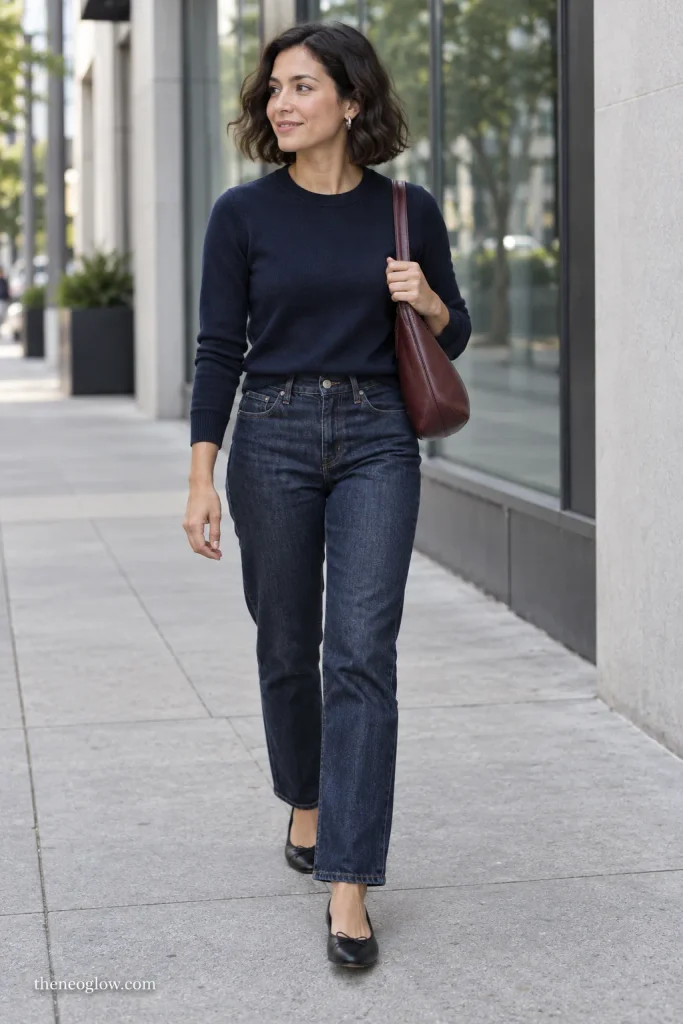
The quiet luxury aesthetic does not require cream, camel, and oatmeal from head to toe. The useful principle is color relationship.
Navy, charcoal, chocolate, black, olive, forest green, burgundy, pale blue, denim blue, soft pink, ivory, and controlled red can all sit comfortably in a restrained wardrobe. You can work with low contrast, medium contrast, or a deeper high-contrast pairing if that feels more like you.
A simple method is to let one color family dominate, repeat one supporting tone, and use a small accent only if the outfit needs it. Dark denim with navy and oxblood can feel cohesive. Charcoal with soft blue and black can feel cool and sharp. Chocolate with ivory and olive can feel warmer without becoming monochrome.
Your complexion does not ban you from a color. Adjust the temperature, depth, or contrast until the palette feels right near your face and useful with the rest of your closet.
Let Texture Create the Interest
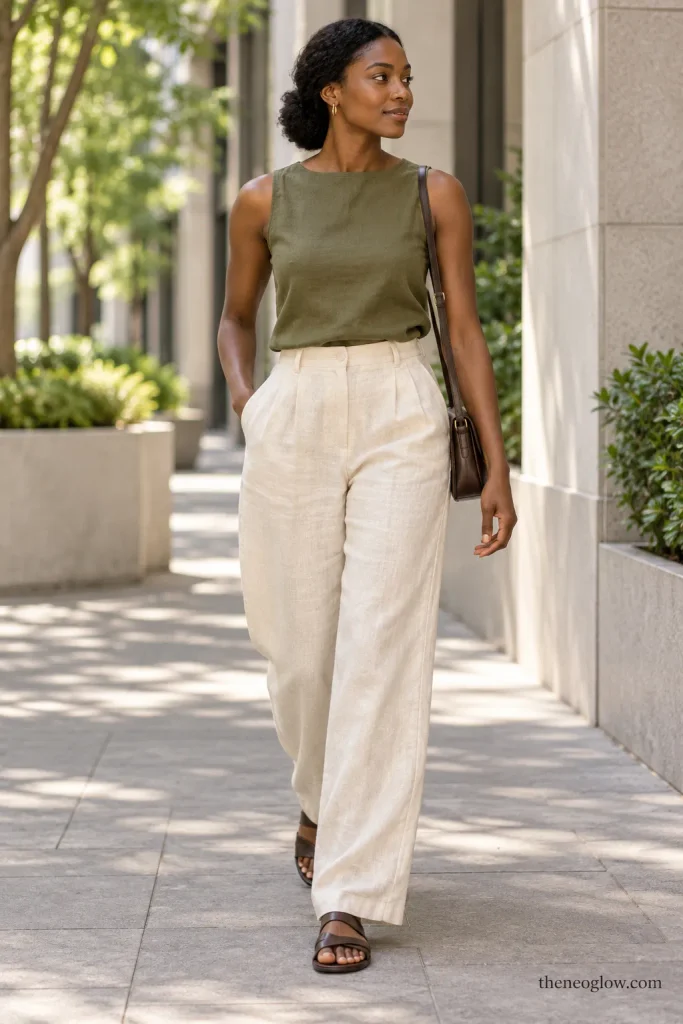
When logos, prints, and decorative details are reduced, texture keeps a quiet outfit from feeling flat.
Pair a fine knit with a smoother trouser. Put crisp cotton against dark denim. Combine a fluid skirt with a compact sweater. Use suede, pebbled leather, woven fabric, brushed wool, satin-like sheen, or a ribbed knit as one controlled change in surface.
You do not need several “luxury” textures at once. In fact, too many can turn restraint into styling theater. One clear contrast is often enough: matte plus subtle sheen, crisp plus soft, or dense plus fluid.
This is also where climate should edit the formula. In heat and humidity, a light cotton, linen blend, or breathable woven layer may make more sense than a dense knit. In colder weather, wool, merino, structured knits, leather, suede, or heavier twill can add warmth and visual depth. Quiet luxury only works in real life when the outfit works for the weather too.
Keep Details Quiet, Not Invisible
Minimal branding does not mean zero personality. It means branding is not the main design event.
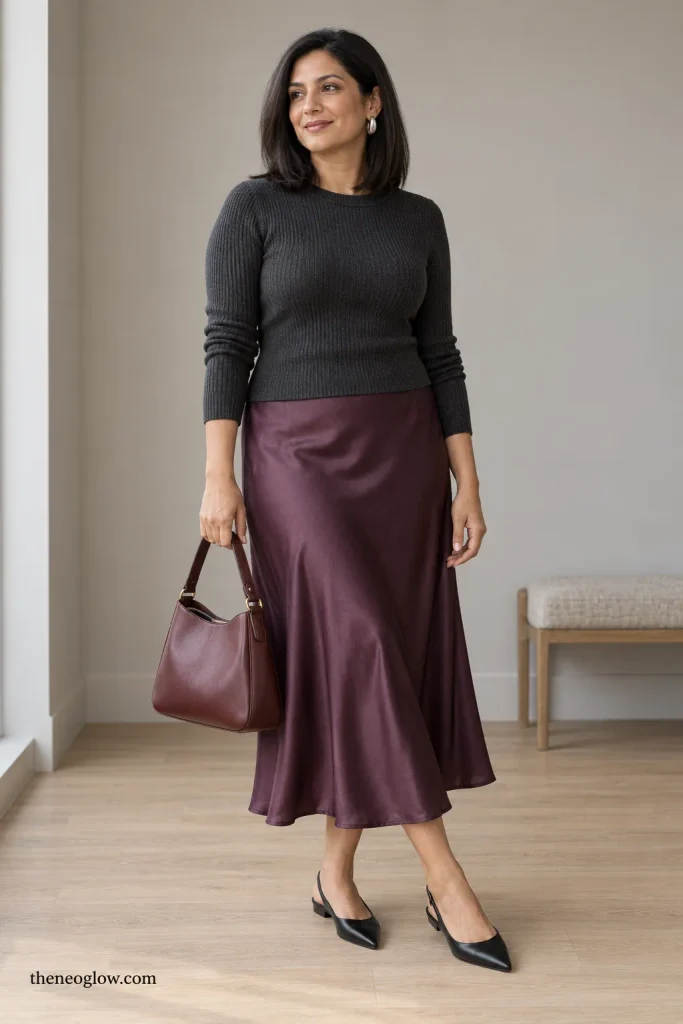
Look at button scale, zipper placement, stitching, hardware, shoe shape, bag proportion, and jewelry together. If one detail is already strong, let nearby details become simpler. A sculptural earring can work with an otherwise clean outfit. A burgundy bag can be the color focal point. A polished buckle can add structure without turning the outfit into a logo display.
Garment condition is often more noticeable than price. Remove loose threads, replace a missing button, de-pill knitwear when the fiber and care instructions allow it, clean shoes, and press or steam garments appropriately. These small maintenance choices can make familiar pieces feel more considered without asking you to buy something new.
Choose a Quiet Luxury Outfit Route for Your Real Week
Instead of copying one Pinterest look, choose the route that solves the kind of dressing you do most often.
| Your real-life route | Start with | Add polish through | Practical finish |
|---|---|---|---|
| Everyday clean | Dark straight jeans or relaxed trousers + fine knit or structured tee | Clear hem, controlled color, one refined texture | Loafers, ballet flats, or clean minimal sneakers |
| Soft polished | Fluid midi skirt + compact knit or simple blouse | Contrast between fluid and structured surfaces | Flats, slingbacks, or low boots you can actually walk in |
| Work or meeting | Tailored trousers + knit shell, shirt, or clean top | Shoulder fit, trouser drape, light structured layer | Loafers, stable low heel, or streamlined flat |
| Warm-weather refined | Linen-blend trousers or skirt + sleeveless woven top or crisp shirt | Breathable fabric, simple color relationship, uncluttered accessories | Leather sandals, flats, or other weather-sensible shoes |
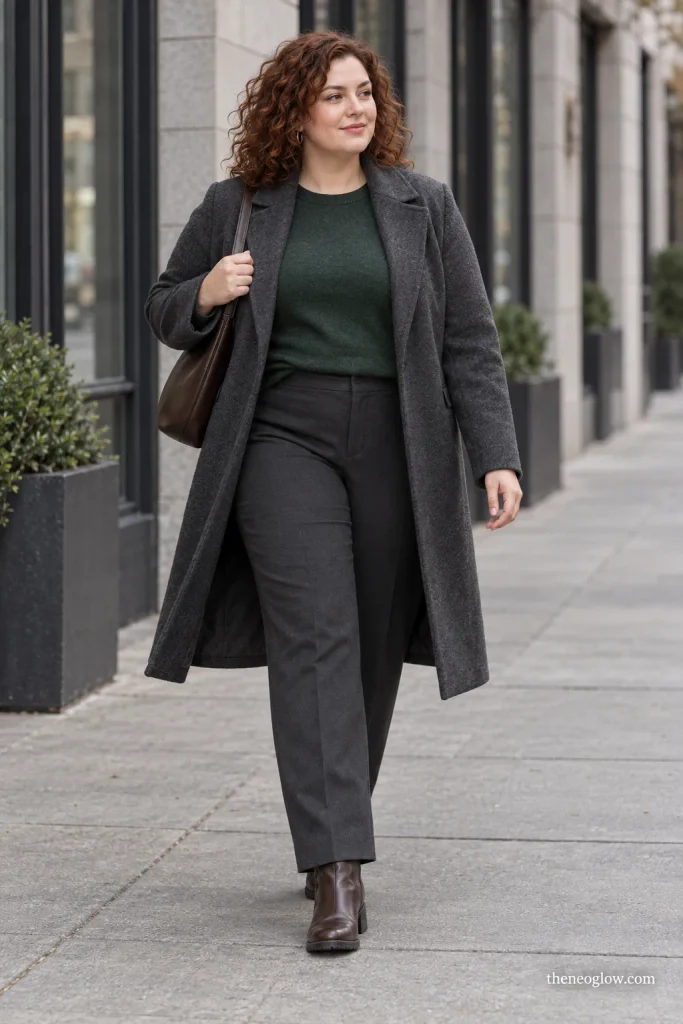
| Cool-weather layered | Dark denim or trousers + fine knit + clean-lined coat | Layer lengths, richer texture, deeper coordinated color | Ankle boots, loafers, or practical cold-weather flats |
Treat these quiet luxury outfits as formulas, not uniforms. Swap the skirt for trousers, change the shoe for your walking needs, or use a stronger color if neutrals do not feel like you.
If your real goal is simply to find more polished outfits by dressiness level, NeoGlow’s is the better next step. If you want repeatable staple combinations without needing the quiet-luxury aesthetic, browse the instead.
A Quiet Luxury Capsule Wardrobe Starts With Gaps, Not a Shopping List
A useful quiet luxury capsule wardrobe does not need a fixed number of pieces. Start by noticing which functions are missing from the outfits you already repeat.
You may need a dependable base top, a bottom that works with several shoes, a layer that fits over those tops, or one practical shoe that covers most of your week. That is more useful than buying a prewritten “essentials” list filled with pieces that do not match your climate, dress code, body, maintenance tolerance, or schedule.
Before buying, build three outfits around the proposed addition using clothes you already own. If the piece solves only one highly specific look, decide whether that is enough value for your wardrobe. If it connects several existing pieces, it may be a more useful gap-filler.
Make a Budget Wardrobe Feel More Considered
Quiet luxury should not become code for expensive shopping.
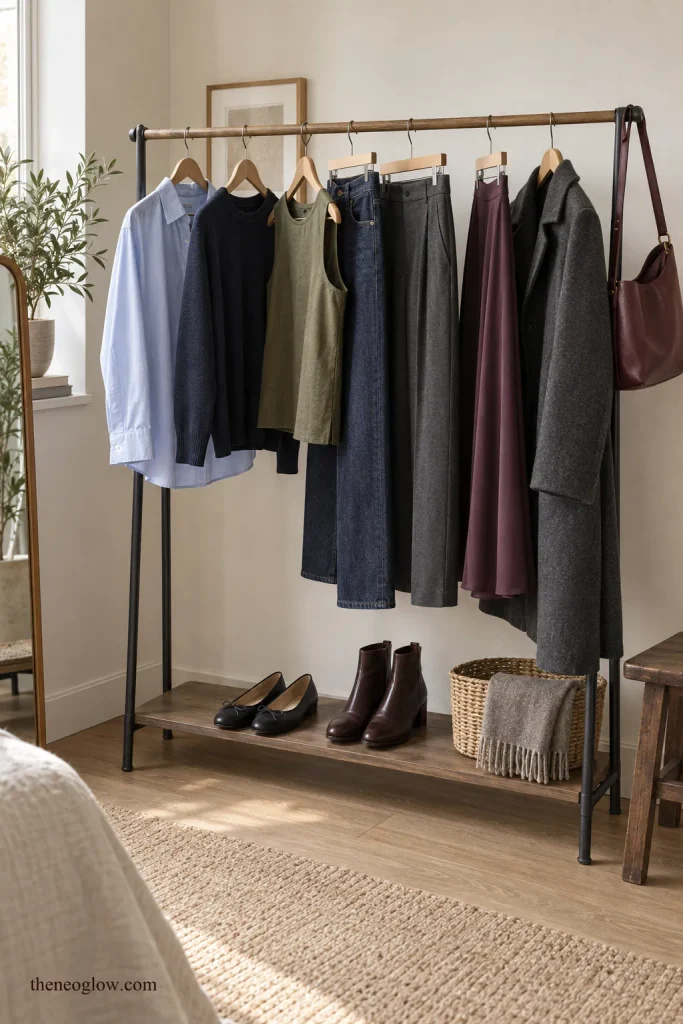
Start with condition and fit. Re-press a shirt. Clean the edge of a shoe sole. Try a different trouser hem with the shoes you wear most. Move a belt to a more comfortable hole. Pair a bag with the outfit where its scale makes sense rather than carrying it because it looks “luxury.”
Secondhand and vintage shopping can also be useful when you know your measurements and care tolerance. Check the actual garment, not just the fiber name or brand. Look at stress points, closures, lining, hems, stains, odor, surface wear, and whether alterations are realistic.
The strongest budget strategy is repetition. When you wear the same good formula several ways, the wardrobe starts to look coherent because the relationships are consistent—not because every piece came from the same price tier.
What Usually Makes Quiet Luxury Feel Forced
The aesthetic tends to lose its ease when every signal is turned up at once. Common problems include:
- dressing entirely in beige even when those colors do not suit your taste or wardrobe;
- repeating blazer-and-trouser combinations when your life calls for softer or more casual clothes;
- adding “heritage” accessories only to make an outfit look socially coded;
- choosing oversized shapes without checking shoulder, sleeve, hem, or overall balance;
- treating visible designer status as proof of taste;
- ignoring climate, walking, comfort, or care because a Pinterest image looks polished;
- buying a new capsule before testing what your existing closet can already do.
You can keep the quiet-luxury principles and drop any visual cliché that feels like costume.
Use a 60-Second Quiet Luxury Check
Before leaving the house, look at the complete outfit and ask:
- Is the main silhouette clear?
- Does anything pull, collapse, gape, or bunch in a way that bothers me?
- Do the colors relate intentionally?
- Is there enough texture or contrast to keep the outfit from feeling flat?
- Are the shoes realistic for the weather, surface, and walking I expect?
- Is one detail leading while the rest support it?
- Would the outfit still make sense if every brand name disappeared?
You do not need seven perfect yeses. The check is simply a way to find the one adjustment that matters most.
Quiet Luxury Works Best as an Editing Tool
Quiet luxury is not a rule that says you must dress minimally forever. It is useful when you want a calmer outfit and need a way to decide what to keep, what to simplify, and what deserves more attention.
Choose one outfit route from this guide and build it from your closet first. Save the formula—not the exact shopping list. Then repeat it with one meaningful change in fabric, color, layer, or shoe. That is how quiet luxury becomes personal, wearable style rather than another aesthetic you have to perform.