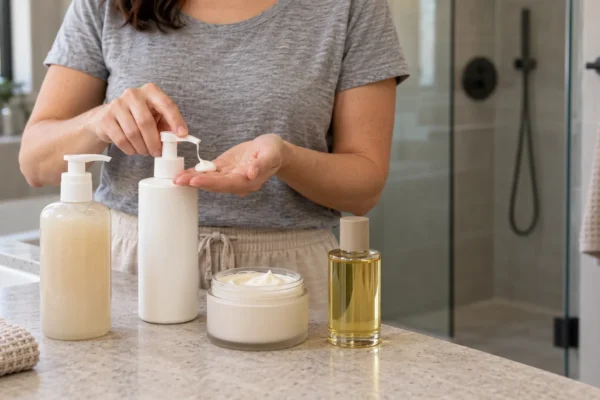
Glowing skin does not need to look wet, poreless, or the same in every light. A natural-looking glow is easier to approach when you work out what your skin needs first: more comfortable moisture, less irritation, a gentler approach to rough-looking surface texture, or more consistent sun protection.
Start with a cleanser that does not leave skin tight, a moisturizer that suits your skin, and daily sun protection. Exfoliation is an option for some people, not the price of admission. Choose one change based on how your skin feels instead of buying an entire glow routine.
Choose the job before you add a product
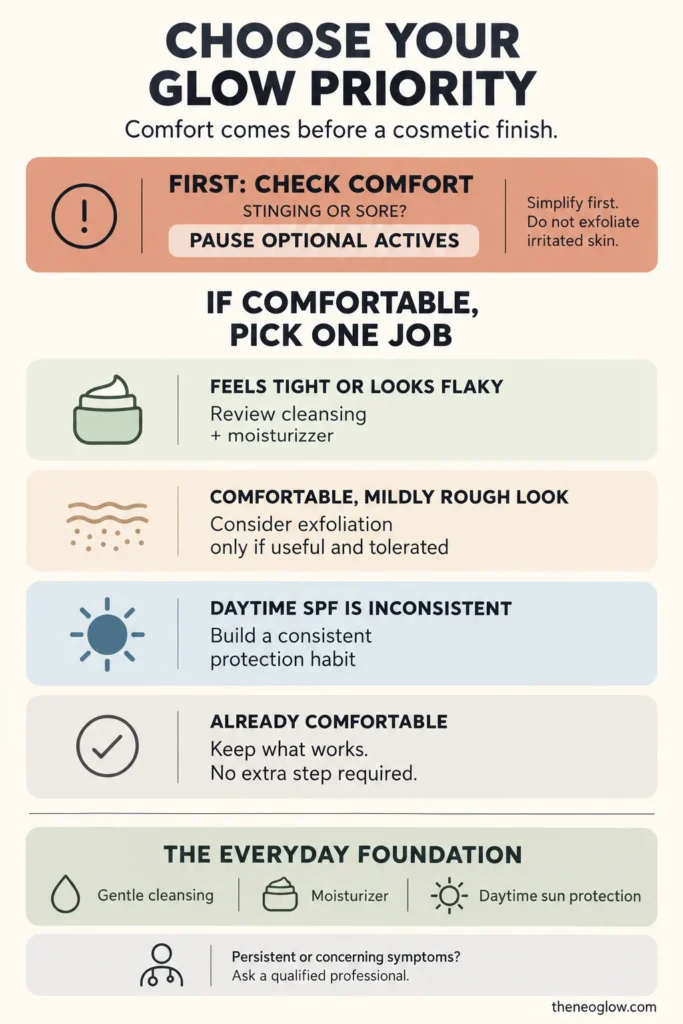
Look at how your skin behaves on an ordinary day. This is a cosmetic decision guide, not a way to diagnose a skin condition. If several descriptions fit, address discomfort before appearance.
| What you notice | First priority | What to avoid |
|---|---|---|
| Tightness after washing or visible dry flaking | Gentler cleansing and a comfortable moisturizer | Trying to scrub away dryness |
| Skin feels comfortable, but the surface looks a little rough | Check whether your current routine is already enough; consider exfoliation only if useful and well tolerated | Adding several acids or scrubs together |
| New stinging, soreness, or unusual sensitivity | Pause optional active products and simplify | Using an exfoliant to chase more radiance |
| Sun protection is inconsistent | Make a usable daytime protection habit | Replacing sunscreen with a glow serum |
| Skin is comfortable, with ordinary pores or some natural unevenness | Keep what works; no extra step is required | Treating filtered images as a skin standard |
Keep the everyday foundation simple
The American Academy of Dermatology describes a practical foundation of cleansing, moisturizing, and protecting skin. Its simple skin-care guidance also advises applying moisturizer to damp skin and avoiding unnecessary product overload.
- Morning: Cleanse gently if needed, moisturize in a texture you tolerate, and finish skin care with sunscreen before makeup.
- Evening: Remove the day’s makeup and sunscreen as needed, cleanse without aggressive rubbing, and moisturize.
- Extra products: A hydrating serum or exfoliant needs a distinct purpose. Neither is a mandatory step.
If you want the full application sequence rather than the glow decision, use the morning and night skin care routine guide.
When skin feels tight, choose moisture before polish
Surface shine and skin comfort are not identical. Skin can look shiny yet feel tight, and piling on shimmery products will not answer that discomfort. First check whether cleansing is too harsh and whether your moisturizer feels comfortable throughout the day.
Choose a moisturizer by feel and tolerance, not by a promise of instant radiance: a lighter lotion or gel-cream may suit someone who dislikes heaviness, while a richer cream may suit dry-feeling areas. A separate hydrating layer is optional if moisturizer alone already does the job. For ingredient and texture choices devoted specifically to dryness, read the hydration tips for fresh, dewy-looking skin.
When skin is comfortable but looks rough, decide whether exfoliation earns a place
Exfoliation removes surface skin cells, but more exfoliation does not reliably mean more glow. The American Academy of Dermatology’s at-home exfoliation safety guidance says it is not suitable for everyone and that the method and schedule should depend on skin type, other products, and tolerance.
- Choose neither: If your skin is already comfortable and you like its appearance, there is no reason to start exfoliating.
- Consider one optional method: If mild surface roughness is your specific concern, check the facial product’s directions and your existing routine before introducing anything new. Do not start multiple exfoliating products together or invent a universal weekly quota.
- Pause: If skin is stinging, unusually dry, tender, peeling, or irritated, do not exfoliate over it. Never exfoliate sunburned skin or open cuts and wounds.
Be especially cautious with aggressive scrubs and peels if your skin tends to develop dark marks after irritation. The AAD notes that stronger exfoliation can increase pigmentation for some people, particularly those with darker skin tones. Skip kitchen-acid hacks, abrasive facial scrubs, and high-strength at-home peels. Moisturize after any exfoliation you already tolerate.
Protect the result instead of chasing an immediate finish
Sunscreen is protection, not a cosmetic shortcut to instant luminosity. Select broad-spectrum SPF 30 or higher; the AAD also recommends water resistance. Use enough to cover exposed skin and pair sunscreen with shade and protective clothing. Reapply about every two hours while outdoors, and follow the label after swimming, sweating, or towel drying. See the site’s complete sunscreen selection and application guide for the detailed decisions.
If uneven-looking tone or dark spots are the main concern, this general glow guide is not a treatment plan. Irritation may itself contribute to dark marks, and the AAD’s dermatologist-reviewed information on dark spots in darker skin tones explains why gentle care, sun protection, and identifying the cause matter. Ask a dermatologist about persistent or changing discoloration rather than trying stronger DIY brightening methods.
Know what a realistic glow can look like
Moisturizer or a dewy sunscreen can change the visible finish soon after application. That does not prove a lasting change in underlying skin texture or tone. Other changes vary with the reason skin looks dull, your routine, and how you tolerate it; there is no guaranteed countdown to glowing skin.
Natural skin still has pores, fine lines, texture, and differences in tone. Lighting and makeup can increase reflectiveness without changing skin itself. Adequate sleep and drinking enough water belong to general well-being, but neither is a substitute for topical moisture or sun protection, and drinking extra water is not a guaranteed glow treatment. The highly reflective K-beauty aesthetic is a separate goal, explored in the realistic glass skin guide.
If the routine starts hurting, stop chasing glow
New burning, soreness, repeated stinging, or increasing flaking is a reason to pause suspected optional products, especially exfoliants, and return to a simpler, comfortable routine. The site’s skin barrier mistakes guide explains common overload patterns without making a diagnosis.
Seek qualified medical advice for persistent irritation, a spreading rash, painful cracking, significant swelling, blistering, infection-like changes, or a skin concern that does not settle. Do not push through pain for a cosmetic result.
Make one change, then judge comfort
If your skin feels dry or tight, begin with cleansing and moisturizer. If it is comfortable but you are considering exfoliation, first decide whether it is needed at all. Keep daytime sun protection in place whichever path you choose. Your best next step is the one that addresses a real need without making your skin feel worse; if moisture is that need, continue with the focused hydration guide.