Fall skincare does not require a brand-new routine on the first cool day. Keep the basic jobs that are already working—gentle cleansing, moisturizer, and daytime sun protection—then adjust one thing at a time if your skin starts feeling tighter, rougher, drier, or less comfortable.
The goal is to respond to your skin and environment, not to the calendar. Some people need a richer moisturizer as humidity drops or indoor heating starts. Others can keep the same products well into fall. A seasonal transition should feel like a small edit, not a shelf reset.
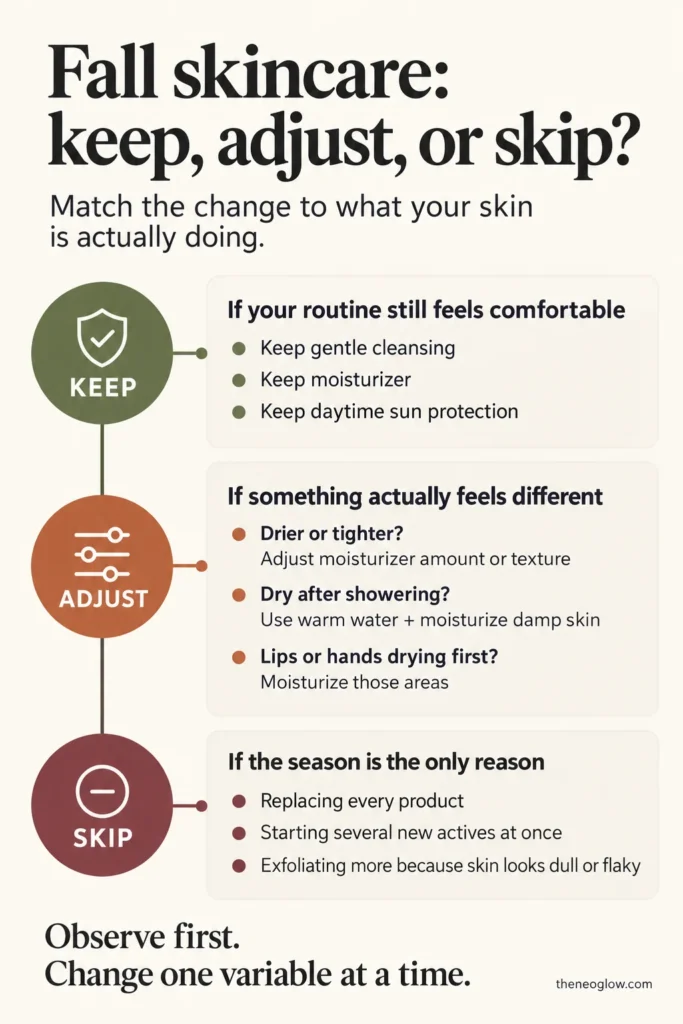
Quick answer: keep the core and change only what feels different
| Keep | Adjust if needed | Usually skip |
|---|---|---|
| Your basic cleansing, moisturizing, and sunscreen routine | Moisturizer texture or amount if skin feels drier | Replacing every product because the season changed |
| Products that still feel comfortable and useful | Shower temperature and length if body skin feels tight | Adding several new actives at once |
| Daytime sun protection | Extra attention to lips, hands, or other areas that become dry | Exfoliating more because skin looks dull or flaky |
If you are not sure whether a step belongs in your routine at all, the broader Skin Care guide explains the core jobs before seasonal adjustments.
Let your skin—not the date—tell you when to adjust
Cooler weather can coincide with lower humidity and more indoor heating, both of which can make dryness more noticeable for some people. That does not mean everyone needs a heavy cream in September. Start by watching for changes such as tightness after cleansing, rough-feeling patches, flaking, or a moisturizer that no longer feels cushioning enough.
The American Academy of Dermatology recommends warm rather than hot bathing, moisturizing while skin is still damp, and using a humidifier when dry indoor air is contributing to dryness. Its dry-skin self-care guidance is a useful reference if cooler, drier conditions are making your skin uncomfortable.
If your skin still feels the same as it did in late summer, you do not need to manufacture a problem. Keep your routine steady and reassess when something actually changes.
Make one fall skincare change at a time
Keep your cleanser if it still leaves skin comfortable
A seasonal transition is not a reason to replace a cleanser that still works. If washing leaves your skin comfortable rather than tight, hot, or squeaky, keep it.
If your cleanser starts feeling stripping as the weather changes, the useful adjustment is usually gentler cleansing—not adding several hydrating products to compensate. You may need a milder formula, less aggressive washing, or simply less product. Avoid turning fall into a cycle of stronger cleansing followed by heavier recovery layers.
Adjust moisturizer by feel, not by a seasonal rule
If your usual gel or light lotion still keeps your skin comfortable, there is no prize for moving to the richest cream available. If your skin begins to feel tight or rough soon after moisturizing, try a more cushioning texture or use a little more where you need it.
For people dealing with noticeable dryness, dermatology guidance generally favors creams and ointments over lotions because they hold more moisture in the skin. That is a response to dryness, not a universal fall requirement.
Your routine order does not need to change just because the texture changes. If you want the full morning and evening sequence, use the Skin Care Routine guide rather than rebuilding your order for the season.
Keep sunscreen in the routine
Shorter days and cooler temperatures do not make sun protection a summer-only step. The American Academy of Dermatology notes that UV exposure still occurs on cloudy days and in winter and recommends broad-spectrum, water-resistant sunscreen with SPF 30 or higher for exposed skin when you are outdoors.
If your summer sunscreen still feels comfortable, keep it. If a very light formula starts feeling drying, you can choose a more comfortable texture without changing the protection criteria. For label checks, application, and reapplication, continue with the Sunscreen guide or review the AAD’s sunscreen application guidance.
Notice the small areas that often need attention first
Fall dryness does not always show up across your whole face. Lips, hands, lower legs, elbows, or the area around the mouth may start feeling uncomfortable before the rest of your skin does.
For lips, add a non-irritating balm when they begin to feel dry rather than waiting for painful cracking. For hands, apply moisturizer after washing when dryness becomes noticeable. For body skin, moisturizing soon after bathing can be more useful than adding another scrub.
If body dryness is becoming the bigger seasonal issue, the Body Care guide goes deeper into lotion, cream, body butter, oil, exfoliation, and post-shower moisture without turning this fall page into a full body-care routine.
Adjust the shower before you add more products
A hotter, longer shower can feel appealing as mornings get cooler, but it may be a poor tradeoff if your skin feels tight afterward. If dryness is becoming a problem, try warm rather than hot water, keep the shower shorter, pat instead of rubbing skin dry, and moisturize while skin is still slightly damp.
Those changes are simple enough to test before buying a new stack of products. If your skin becomes comfortable again, you may not need anything else.
Do not use fall as a reason to overhaul active products
There is no seasonal rule that says you must add an exfoliating acid, retinoid, brightening serum, facial oil, or mask in fall. Keep any optional treatment only if it has a clear job, you tolerate it, and you are following its directions.
Dry-looking or flaky skin is not automatically a signal to exfoliate more. If products that normally feel fine begin to sting, or if your routine becomes increasingly tight, red, or uncomfortable, simplify before adding. The Skin Barrier Mistakes guide is the better next stop for routine-overload troubleshooting.
Use this fall-to-winter readiness check
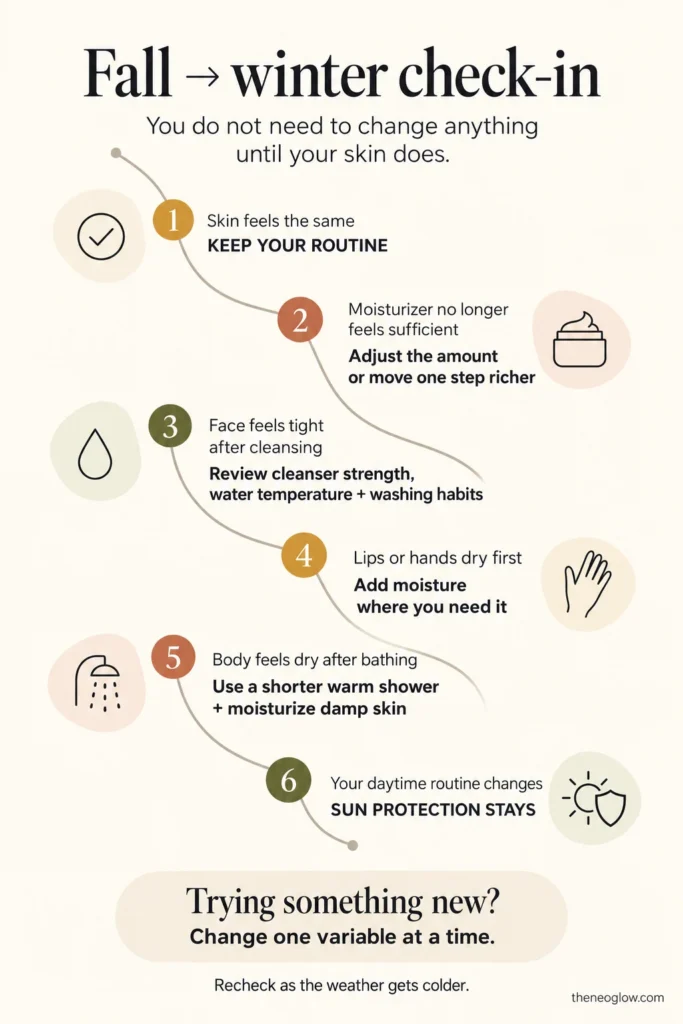
- Your skin feels the same: keep your routine.
- Your moisturizer no longer feels sufficient: adjust the amount or move one step richer.
- Your face feels tight after cleansing: review cleanser strength, water temperature, and washing habits before adding more products.
- Your lips or hands are drying first: add moisture where the problem is showing up instead of making your entire routine heavier.
- Your body feels dry after bathing: shorten or cool the shower slightly and moisturize while skin is damp.
- Your daytime routine changed: keep sun protection rather than treating SPF as a summer-only product.
- You want to try something new: change one variable at a time so you can tell whether it helps.
Recheck the same list as fall moves toward winter. The colder season may eventually call for richer textures or more attention to dry areas, but you do not need to make those changes before your skin asks for them.
Know when this is no longer a seasonal routine question
Mild seasonal dryness can often be managed with gentler cleansing, moisturizer, warmer-not-hot water, and fewer irritating extras. Persistent or worsening dryness deserves a different level of attention.
Seek qualified medical care if dryness does not improve with gentle self-care, if products repeatedly cause burning or stinging, or if you develop painful cracks, bleeding, significant inflammation, open sores, a spreading rash, signs of infection, or another change you cannot identify. A fall skincare routine can support comfort, but it cannot diagnose or treat a skin condition.
Keep the transition smaller than you think
The most useful fall skincare strategy is to keep what works and respond to real changes. Protect the basics, make one seasonal adjustment at a time, and give extra attention to the areas that actually become dry rather than rebuilding your routine around the idea of fall.
As the weather gets colder, keep using the same decision: observe first, then adjust. If your main problem is irritation or a routine that suddenly feels like too much, continue with the Skin Barrier Mistakes guide before adding another product.