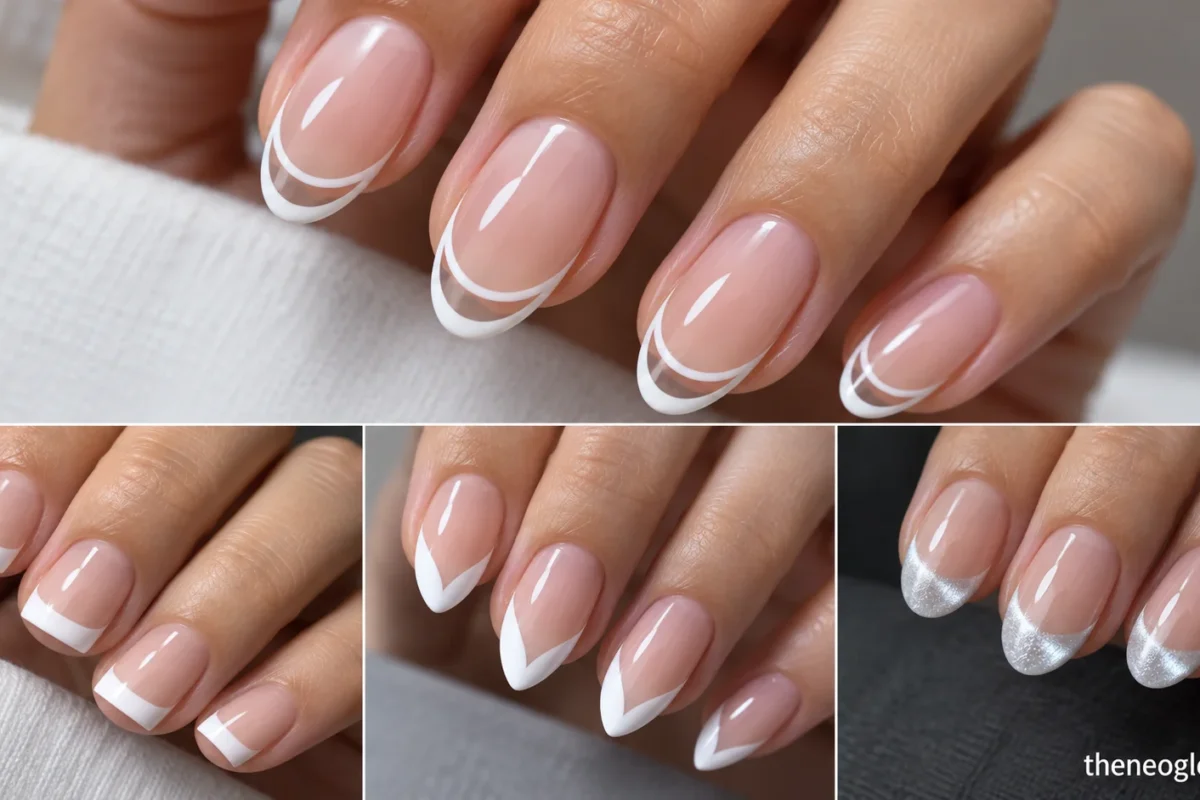
A white French manicure can change dramatically without adding a single flower, gem, or bright color. The same white polish becomes a barely visible rim on short nails, a crisp graphic cap on square nails, or a wide, sweeping curve on almonds. These 17 white french tip nails focus on what actually changes the result: tip coverage, base transparency, line direction, and surface finish.
You’ll find precise designs for real short nails as well as more spacious options for medium lengths. Each look keeps the white French boundary recognizable, so you can compare the designs without mistaking full-nail white art for another tip variation.
Match the White Tip to the Look You Want
| Your preference | Start with | Main tradeoff |
|---|---|---|
| Almost no extra length | Ideas 1, 2, or 3 | Very fine edges show uneven painting quickly |
| Familiar pink-and-white | Ideas 2 or 5 | A wider smile needs room to stay balanced |
| Softer, less stark white | Idea 4 | Milky bases reduce the tip-to-base contrast |
| Graphic placement | Ideas 6–14 | Complex boundaries take closer detailing |
| Noticeable texture or reflection | Ideas 15–17 | Finish depends on the exact product system |
White is not one visual strength. Bright opaque white creates a strong boundary; ivory is gentler; a sheer milky base can soften a brilliant white edge. Test the combination against your own nail and skin rather than assuming that one pink, peach, or neutral base suits everyone. For broader definitions of French structures, see NeoGlow’s French Tip Nails guide. Here the focus stays on distinct white builds.
Clean White Edges and Classic Proportions
1. White Needle-Edge on Barely-There Rounds
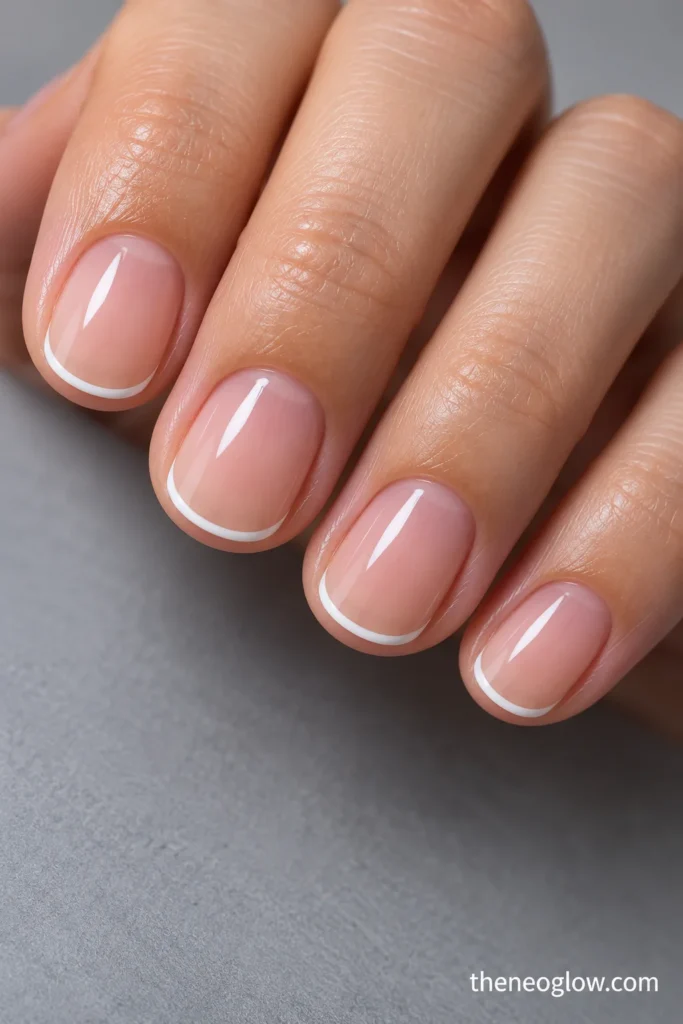
Very short round nails get a hair-thin line of opaque cool white directly along the curved free edge. The clear peach-pink base remains transparent enough to show the natural nail underneath, and the entire surface is glossy. The line ends cleanly at both corners without dropping down the sidewalls. Choose this when you want unmistakably white tips with almost no painted area; the narrower the line, the more noticeable a shaky edge becomes.
2. Balanced Bridal-White Smile on Ovals
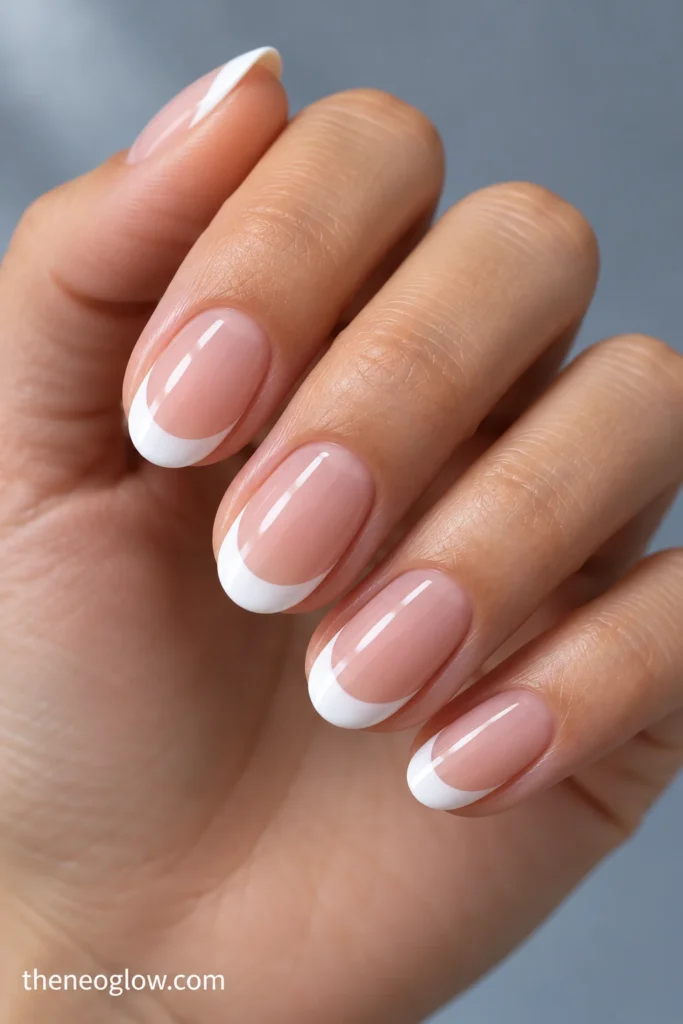
A medium-short oval carries an even, moderately curved white cream band over a translucent rosy-pink base. The two ends of the smile rise equally at the sidewalls, while the center leaves most of the pink bed visible. Unlike the hairline design, this band has enough width to show a clear, filled white crescent. It is a reliable reference for a familiar French manicure, whether or not you are dressing for an event.
3. Flat Porcelain Caps on Short Squares
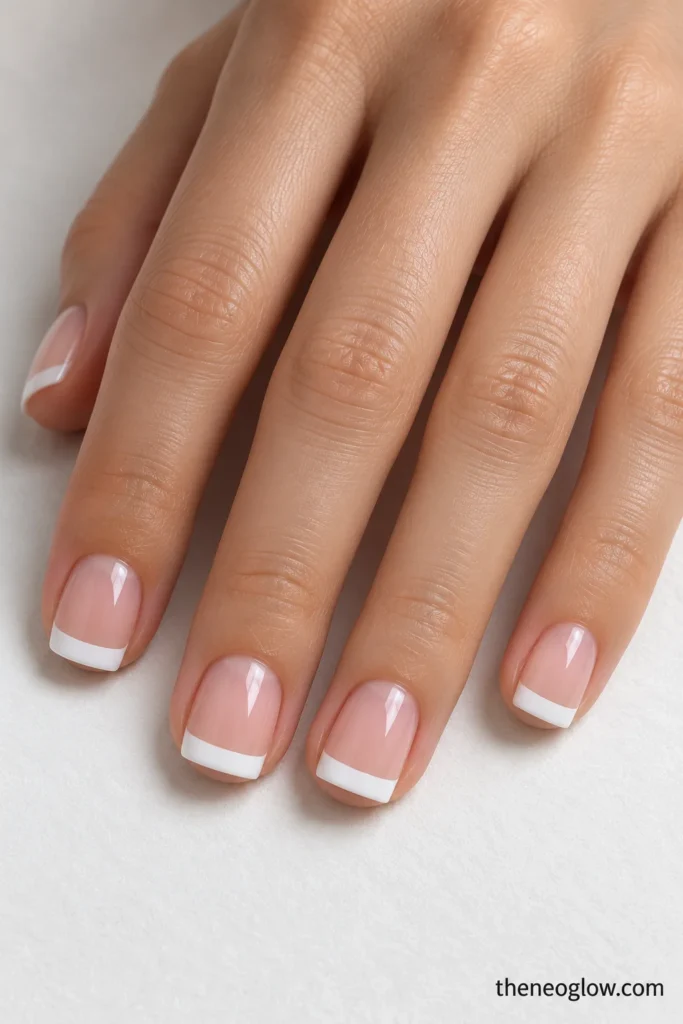
Keep natural square nails near fingertip length and cover only their straight outer edge with a shallow, opaque porcelain-white rectangle. A subtle curve turns around the corners, but the inner border stays almost horizontal. Use a sheer warm-neutral base and a glassy topcoat. This design emphasizes the square outline rather than mimicking the oval smile in Idea 2. If your corners frequently snag, soften the physical shape without rounding away the flat visual cap.
4. Snow-White Tips Over a Milky Base
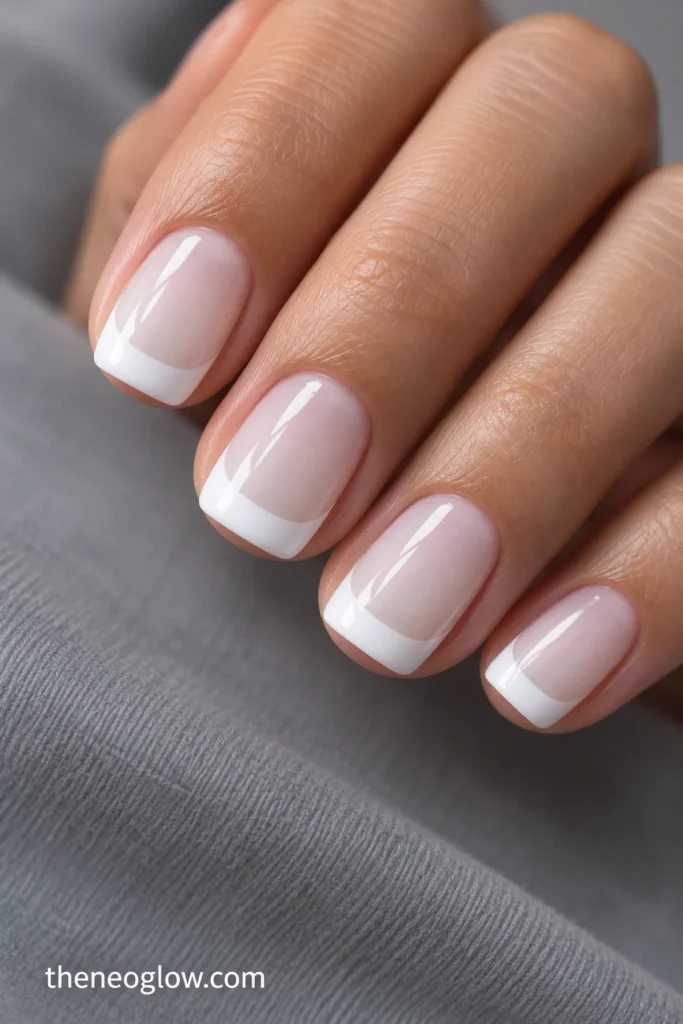
On short squoval nails, replace the transparent pink bed with an all-over translucent milky-white wash, then paint a sharply defined bright-white crescent at the tip. The base must remain sheer enough to show a hint of the nail beneath; the French band is opaque and noticeably whiter. Both layers finish glossy. This white-on-white contrast feels softer at a distance, but still has a real smile line rather than becoming a single solid white manicure.
5. Long White Sweep on Soft Almonds
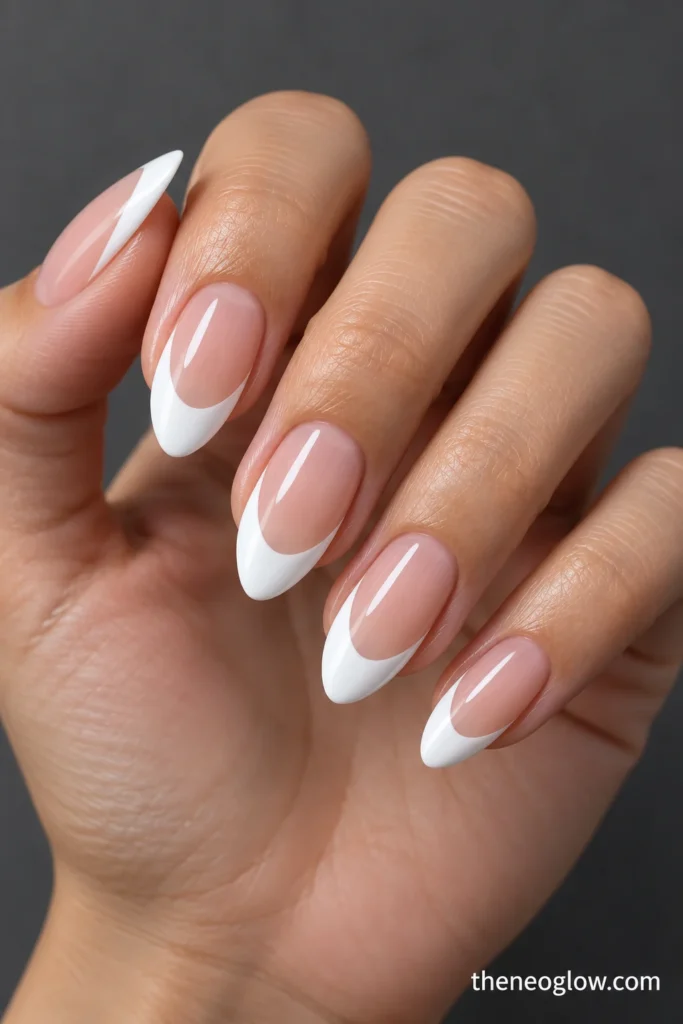
Medium almond nails provide space for a deeper white smile that extends up both tapered sidewalls and curves low across the center. Keep the base translucent warm rose and the bright-white tip solid and smooth. The defining feature is the dramatic U-shaped inner border, which reveals a tall central area of pink nail bed. It needs a genuine almond free edge; a very short nail cannot hold the same deep sweep without losing most of its visible base.
Directional White French Designs
6. Diagonal Ivory Cut on Soft Squares
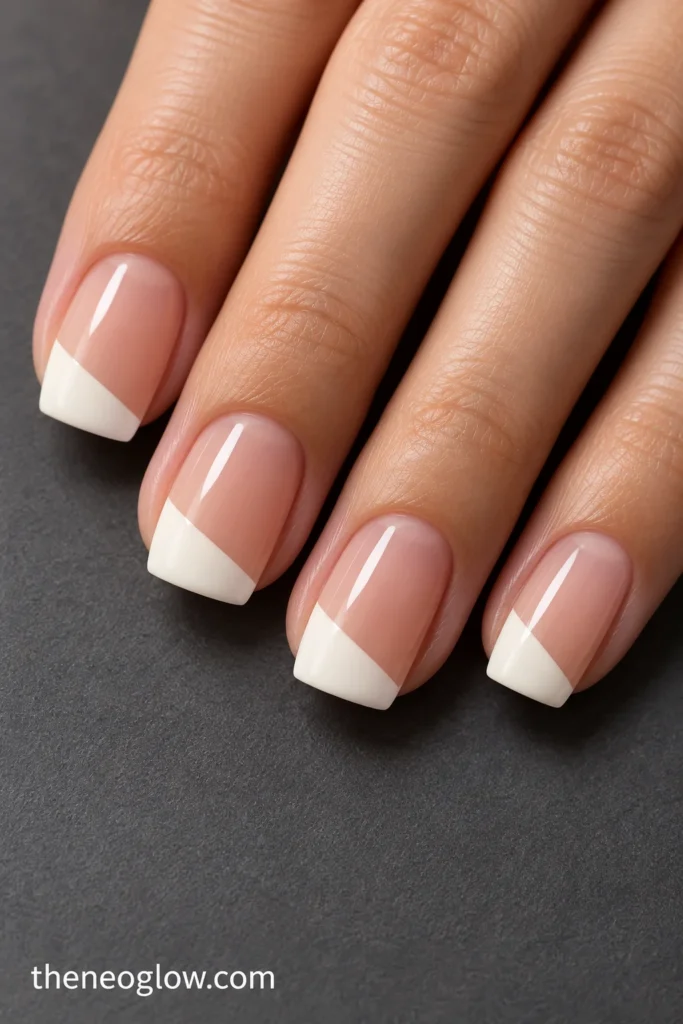
A medium soft-square nail has a straight diagonal ivory-white boundary slanting from the left sidewall down toward the right free-edge corner. Fill the triangular outer portion with glossy cream-white, leaving the peach-beige nail bed clear below. Keep every diagonal in the same direction. This looks distinct from a classic curved French because one tip corner carries most of the white; the white must still connect clearly to the free edge.
7. Asymmetric White Shell on Ovals
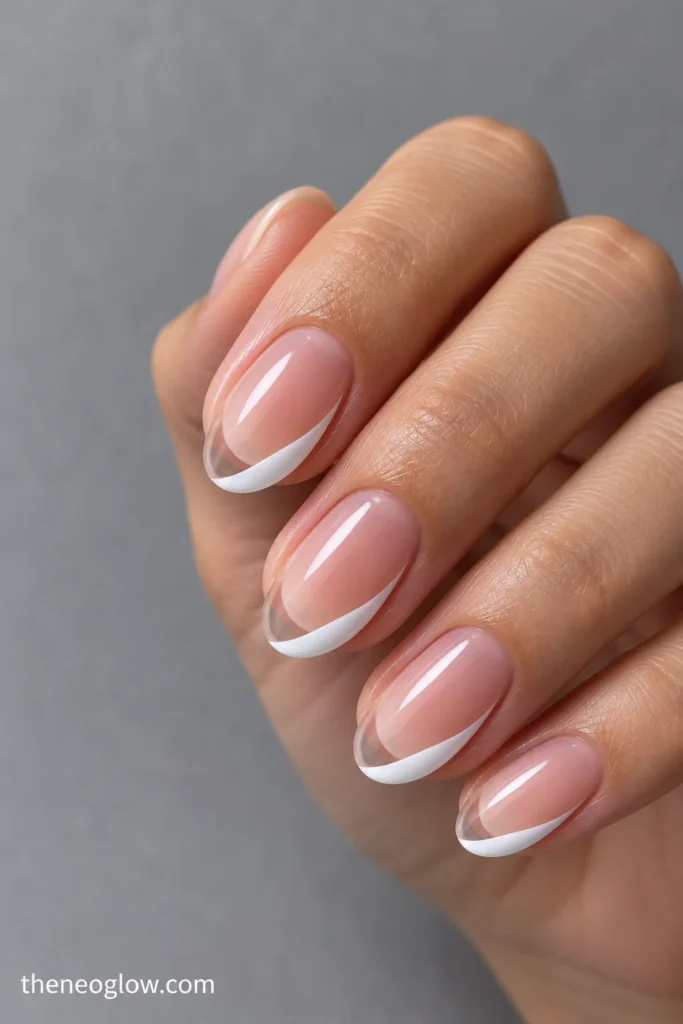
Start at the right corner of each medium oval tip with a generous white curved segment. Sweep it across the free edge, narrowing to a fine white point halfway toward the left corner, and leave the remaining left edge transparent. A lightly tinted rose base and high gloss make that open half legible. The edge resembles a sideways crescent, not the straight wedge in Idea 6, and its soft taper suits curved nail shapes.
8. Twin White Chevron Wings on Almonds
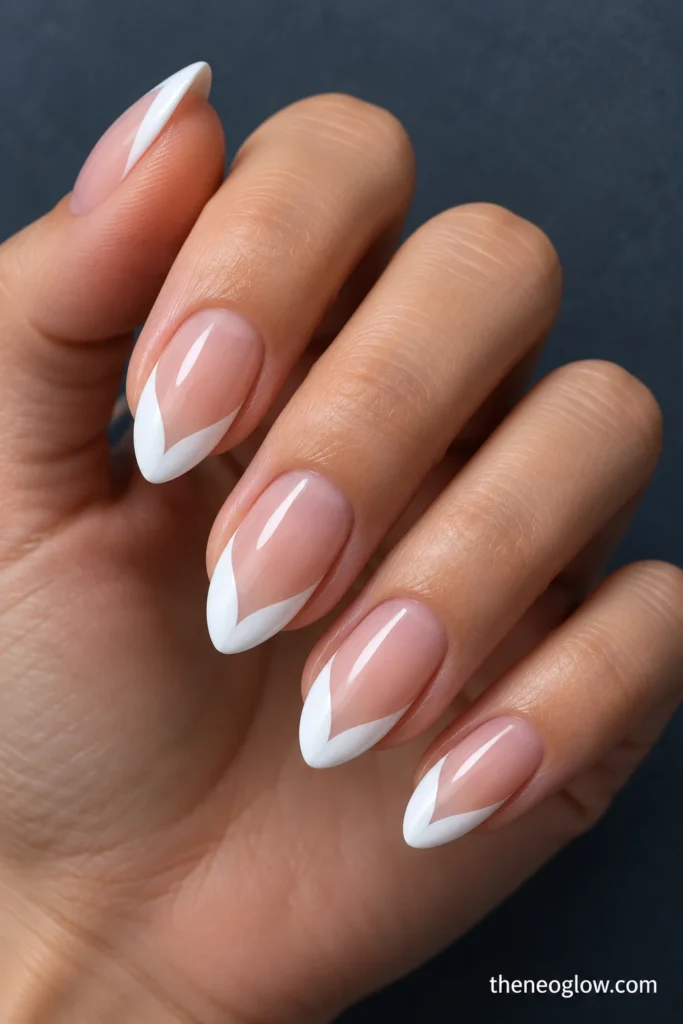
Use medium almond nails with a translucent beige-pink base. Paint two slim, opaque-white diagonal wings from opposite tip sidewalls so their sharp inner borders meet in a centered V; the outer white sections continue to the actual pointed free edge. Both wings should be symmetrical and glossy. This is a filled, pointed French design, not two free-floating diagonal lines. It adds a geometric direction without changing the natural-looking nail bed.
9. Two Floating White Threads
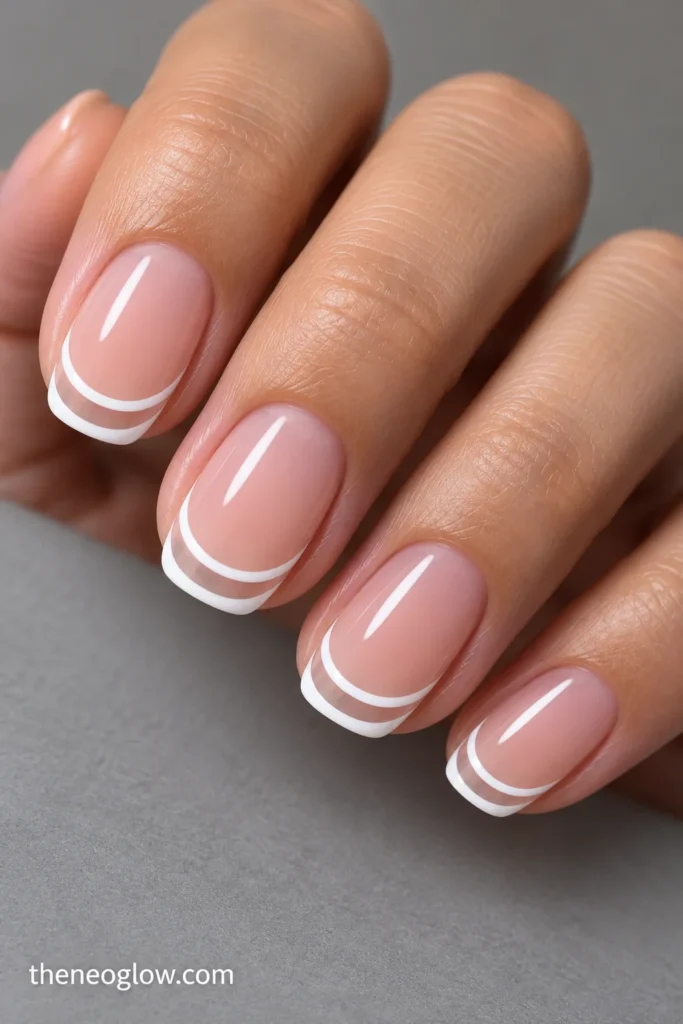
Short-to-medium squovals wear two separate, equally thin white French arcs over a sheer neutral-rose base. The upper thread follows the outside free edge, while the lower thread mirrors it several millimeters inward; a visibly bare strip separates them. Neither arc is filled in. Both lines end neatly at the lateral edges. This is the most open double-line option because negative space, rather than a white cap, fills the region between its curves.
10. Solid White Tip With a Dotted Echo
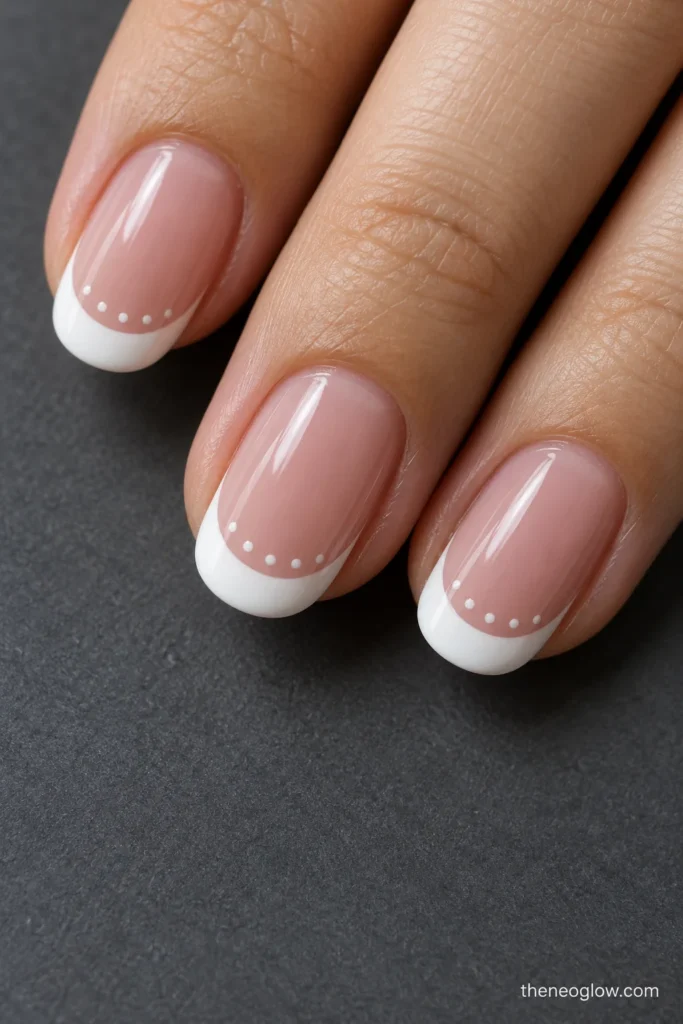
A medium round nail gets a complete glossy white classic French band plus a second curved row of five tiny white dots below the smile line. The dots follow the same arc but stay detached from the band and from one another, against a translucent mauve-pink base. Unlike Idea 9’s continuous twin threads, this double treatment uses one filled tip and a broken, ornamental echo. Keep the dots fine enough that they do not resemble a full-nail polka-dot manicure.
11. Clear-Center White Outline French
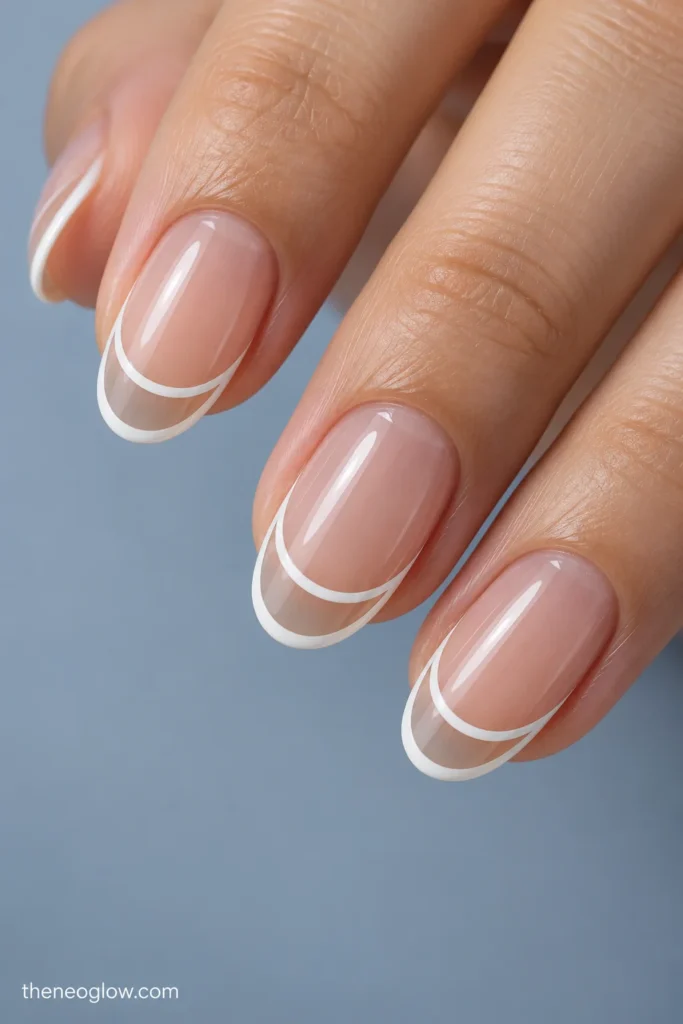
On medium ovals, outline a broad French zone with two slim opaque-white curves: one follows the outer free edge, and another traces the lower smile boundary. Connect the ends at both sides, leaving the entire interior band transparent. A pale peach base and glossy seal make the open channel easy to recognize. The look reads as the silhouette of a conventional white tip, but no solid white fills the middle. It needs more space than a micro French.
12. White Reverse Arc With Matching Edge
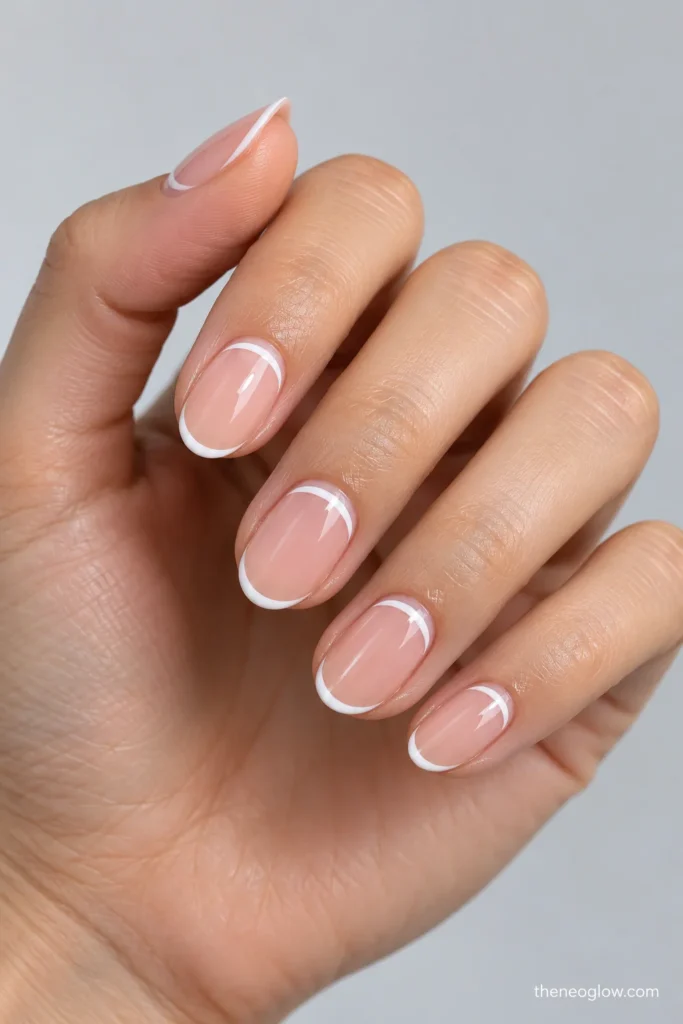
Short almond-shaped nails with sufficient free edge take a fine opaque-white crescent following the cuticle area and a separate white micro French along the true tip. Leave the central nail bed completely transparent with a warm pink tint. The cuticle crescent never connects to the tip line, and the two curves are different sizes: broader at the base, finer at the front. This paired reverse-and-forward placement gives the white line work two clear boundaries without forming a full perimeter frame.
13. White French With a Curved Clear Window
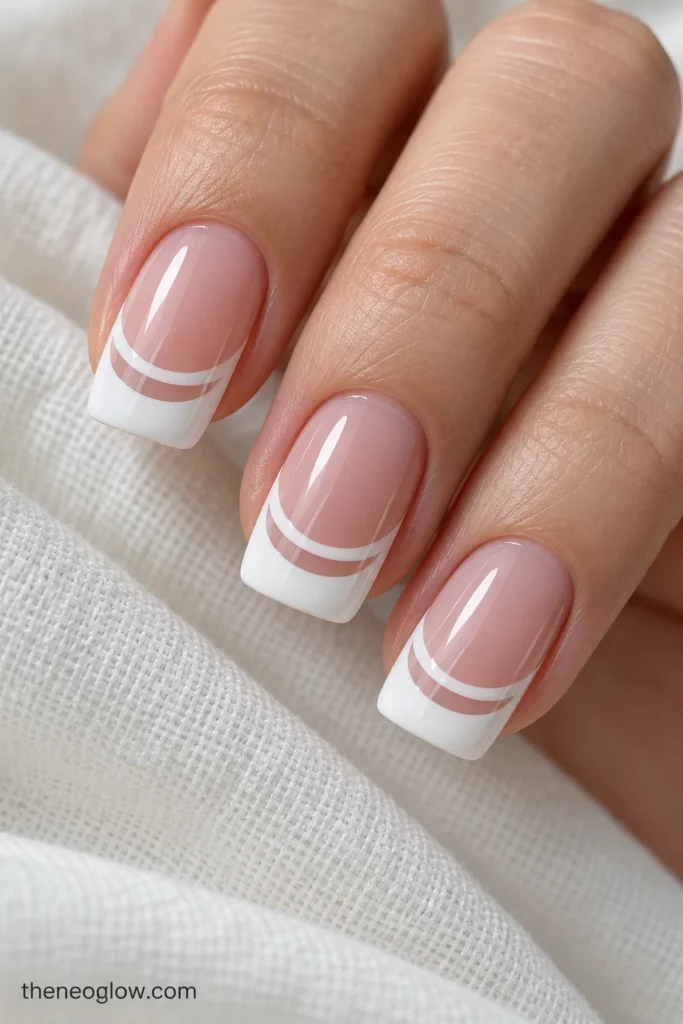
Paint a moderately wide, glossy snow-white French band on medium squoval nails. Inside that white tip, leave one narrow curved window of untouched rosy base, running parallel to the smile line; white polish remains visible both above and below the window and stays continuous across the outer free edge. The negative-space channel is part of a filled band, unlike the empty outline in Idea 11. This requires enough width to avoid merging the two white strips.
14. White-and-Clear Checker Tip
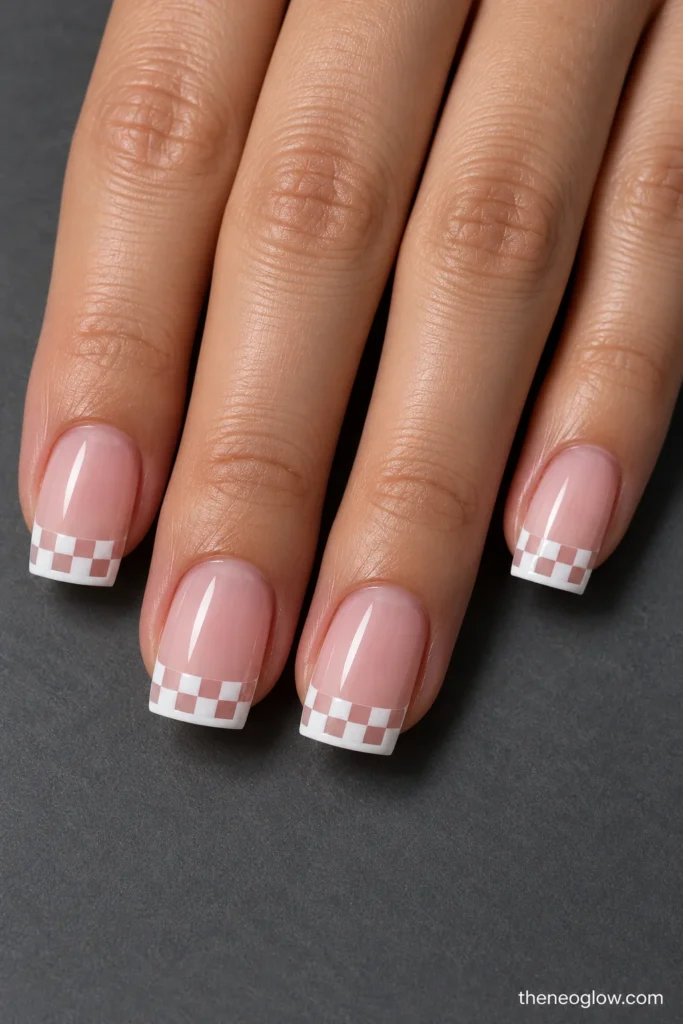
A medium square nail wears a shallow French band built from alternating opaque-white and clear square cells in two neat rows. Anchor the pattern with a fine continuous white line across the actual free edge, while the sheer cool-pink nail bed below stays plain. Keep the checks large enough to be clearly square; do not run the pattern down the entire nail. This is a structured French-zone graphic rather than the angled wedge, V, or curve used elsewhere.
White Tips With a Distinct Finish
15. Pearl-Chrome White Rims
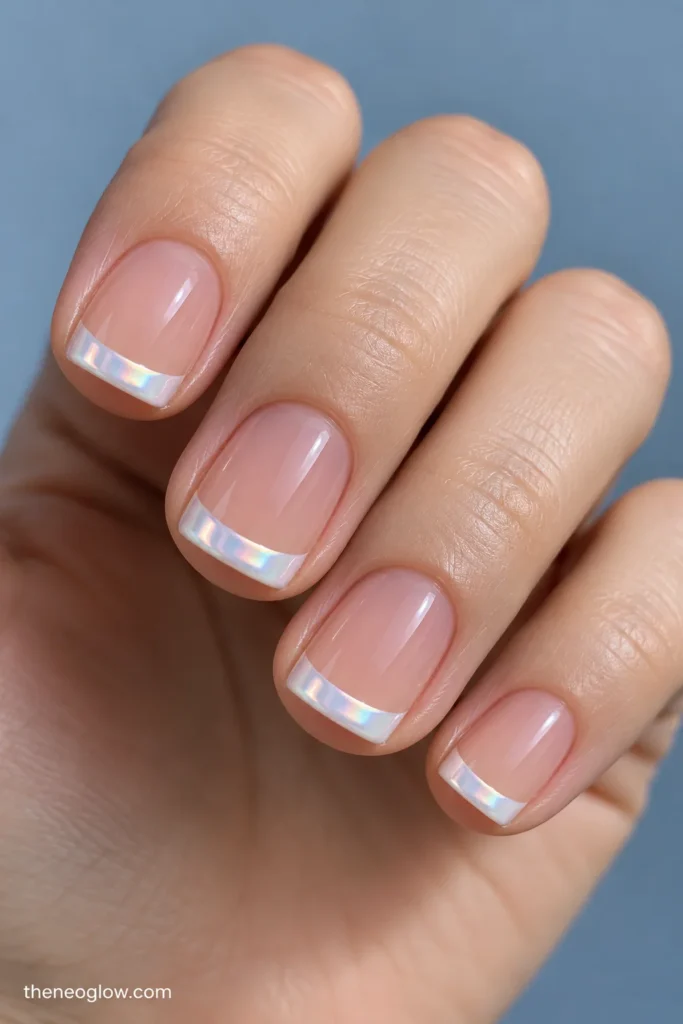
Very short squoval nails carry a narrow pearl-white reflective tip over a transparent rosy base. The French border stays crisp, but the outer band reflects a smooth opalescent sheen instead of looking like flat chalk-white cream. Keep the pearl effect strictly within the tip, with no glaze across the nail bed. It gives a subtle flash without the opaque coverage of a wide white cap; the exact reflection depends on the finish and products used.
16. Frosted White Magnetic French
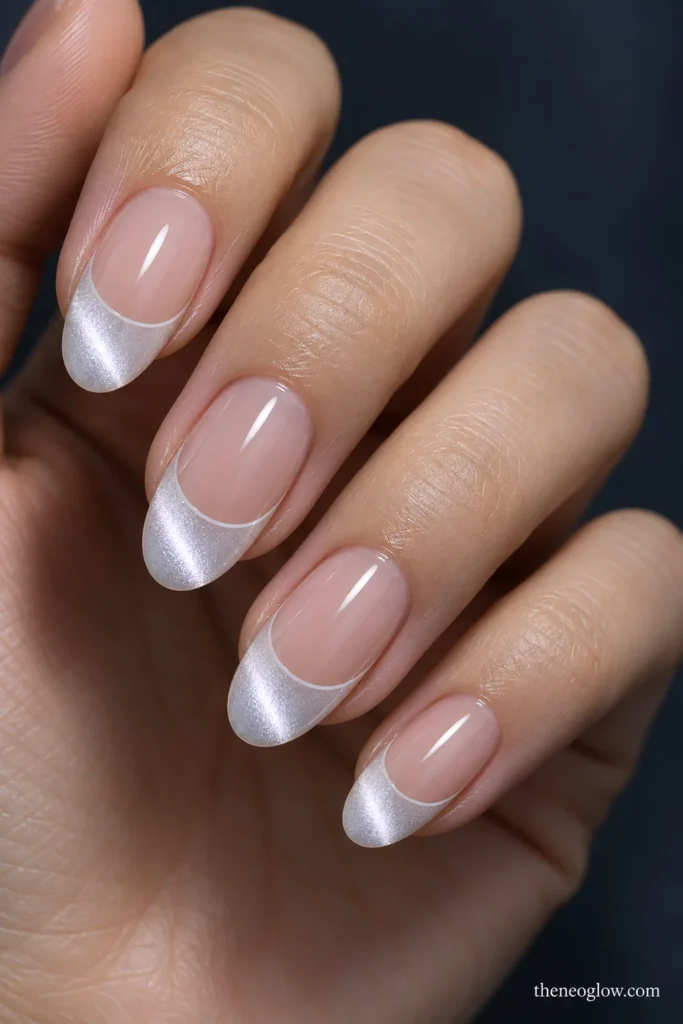
Medium ovals get a slightly deeper icy-white magnetic French band over a sheer cool-neutral base. Inside each white tip, a narrow silver-pearl light beam slopes diagonally across the magnetic particles, while a clean white smile boundary separates the tip from the base. No shimmer spreads below that boundary. Unlike pearl chrome, the visible feature is a concentrated luminous beam rather than an even reflective glaze. A product with sufficient contrast is essential to make the effect visible.
17. Matte Chalk Tip Against a Glossy Base
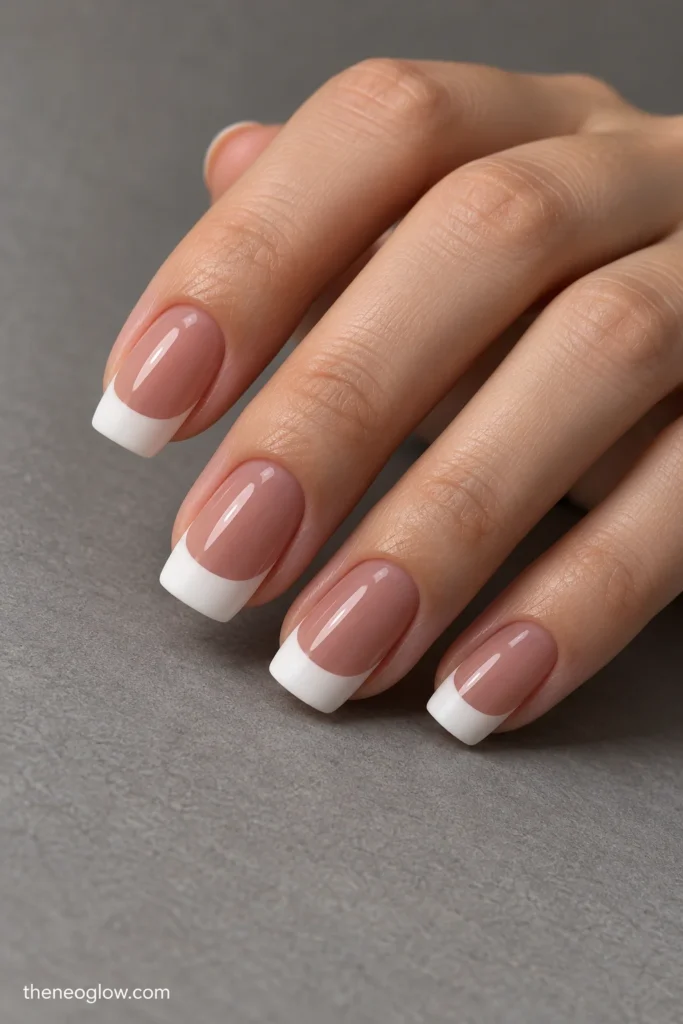
On medium soft squares, paint a smooth, moderately wide chalk-white French cap and finish only that white area in soft matte. Keep the translucent rose-brown base visibly glossy, with a controlled curved boundary between the textures. There are no raised ornaments, chrome flecks, or extra stripes. This final variation changes how light meets the white edge rather than adding another motif; careful finishing is what makes it different from ordinary white cream tips.
Make the White Boundary Look Intentional
A crisp white edge puts painting accuracy on display. For regular nail polish, allow the base to settle according to its directions, sketch the intended curve with a fine detail brush or suitable guide, then fill only the designated tip area. Correct a lopsided border instead of repeatedly broadening the entire white band. Essie’s step-by-step French manicure tutorial provides an optional visual breakdown of preparing the nail, painting the smile line, and cleaning the edge.
For short french nails, make the width proportional to your actual free edge. A design that looks beautifully deep on an almond extension may cover too much of a fingertip-length square. NeoGlow’s Short Nails guide handles the larger question of length, wearability, and design scale; this collection keeps the conversation on white tips.
If you are deciding between a pink base and a nude base, try a small swatch of each. A peachy sheer base creates a warmer contrast, cool rosy pink gives the white an icier look, and translucent milk makes the entire manicure more tonal. None is a universal skin-tone match. Look at the combination in ordinary daylight, not only under a nail lamp or studio lighting.
Wear and Maintain the Design You Choose
Choose regular polish for a simpler cream-white design when that suits your routine; specialty magnetic and chrome finishes may need specific compatible products and application steps. For gel, follow the exact polish and lamp instructions, and do not peel or pry away lifting product. For nail health and salon hygiene, the American Academy of Dermatology’s manicure and pedicure safety guidance explains cuticle care, tool cleanliness, and what to check during a salon visit.
White tips make visible chips and uneven regrowth easier to spot, especially when the edge is opaque and sharply defined. Check the corners after daily wear, keep nails away from tasks that use them as tools, and remove polish using directions appropriate to your specific manicure system. If the white shape has lost its symmetry, a fresh, narrower line often looks neater than adding several uncontrolled repair layers.
If you decide you prefer a stronger dark edge rather than white, NeoGlow’s Black French Tip Nails collection offers the neighboring color-focused route without turning this page into a multi-color gallery.
The Best White Tip Is the One You Can Describe
For a compact everyday set, start with the needle edge, flat porcelain cap, or milky-base French. Choose the open double threads or clear-center outline when line work is the attraction, and reserve chrome or magnetic tips for the reflective finish you actually want. Save one design with its length, base opacity, exact white boundary, and finish visible. Those details turn a pretty reference into a manicure you can request with confidence.