Short coffin nails sound like a simple compromise: the angled sides of a long coffin manicure, just without the extra length. But shrink that outline too far and the sides no longer have room to narrow. The result is often an ordinary short square nail wearing a coffin label.
A convincing short coffin has two visible features: sides that move inward toward the tip and a narrow, flat end. This guide explains when your natural free edge can support both, when a small extension makes more sense, and which colors and design placements keep that distinct outline visible. You can use the comparisons before a salon visit or while choosing a correctly fitted press-on set.
What Actually Makes a Nail Coffin-Shaped?
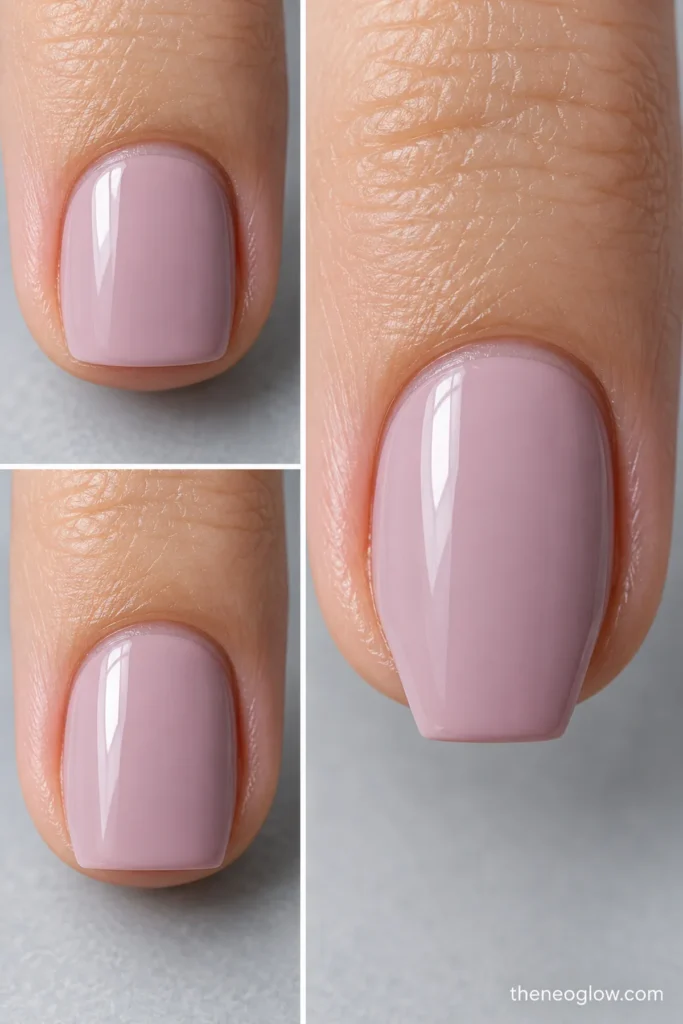
From above, a coffin nail has a wider body, two sides that converge toward the free edge, and a squared-off end. It is also called a ballerina shape. Unlike an almond, it does not end in a rounded peak. Unlike a standard square, its sides are not parallel all the way to the tip.
The important distinction is where the narrowing happens. On a realistic short coffin, the taper must be visible in the portion extending beyond the supported nail bed. A technician should not carve deeply into attached natural-nail sidewalls to create a narrow silhouette on a nail that has no usable tip.
OPI’s illustrated coffin-shaping guide describes the angled sides and flat tip, while identifying coffin as a shape that normally benefits from longer nails. A short version therefore needs a restrained, not exaggerated, interpretation.
| Outline | Sides and front edge | What you see on a truly short nail |
|---|---|---|
| Soft square | Mostly parallel sides, flat front, softened corners | Defined even with almost no free edge |
| Tapered square | Slight narrowing toward a flat front | A subtle wedge; may look almost square |
| Short coffin | Clearly converging outer sides, distinctly narrower flat front | Recognizable only when there is enough tip to show the taper |
| Short almond | Sides narrow into a rounded central peak | No flat coffin-style end |
A softly tapered square is a legitimate result. It simply should not be presented as a dramatic coffin shape when the geometry is not there.
How Much Free Edge Do You Need?
There is no reliable universal millimeter minimum. Nail-bed width, attached sidewall position, finger proportions, and how much nail extends beyond the fingertip all change the result. Use the outline test below rather than a fixed measurement copied from someone else’s hands.
| What your nails look like now | Coffin feasibility | Better decision |
|---|---|---|
| Nail ends flush with or behind the fingertip | A true visible taper is generally unrealistic | Keep a short square or squoval, or consider a fitted extension |
| Only a sliver of free edge shows | Sometimes a barely tapered square is possible | Accept a subtle outline instead of forcing a narrow tip |
| A distinct free edge extends past the fingertip | A compact coffin may be possible | Check whether both sides can angle inward beyond the supported area |
| Nail beds are broad or naturally flared, with little free edge | Pronounced taper is difficult without removing supported width | Retain the natural sides; consider a small, carefully designed extension |
| Nail is brittle, split, painful, or otherwise unhealthy | Do not chase the silhouette by filing or covering the problem | Prioritize nail condition and appropriate professional guidance |
The practical test: imagine drawing two straight diagonal lines from the ends of the supported sidewalls to a narrower, horizontal tip. If there is too little free edge to draw those lines without cutting back into the attached nail, the coffin outline is not currently feasible on that natural nail.
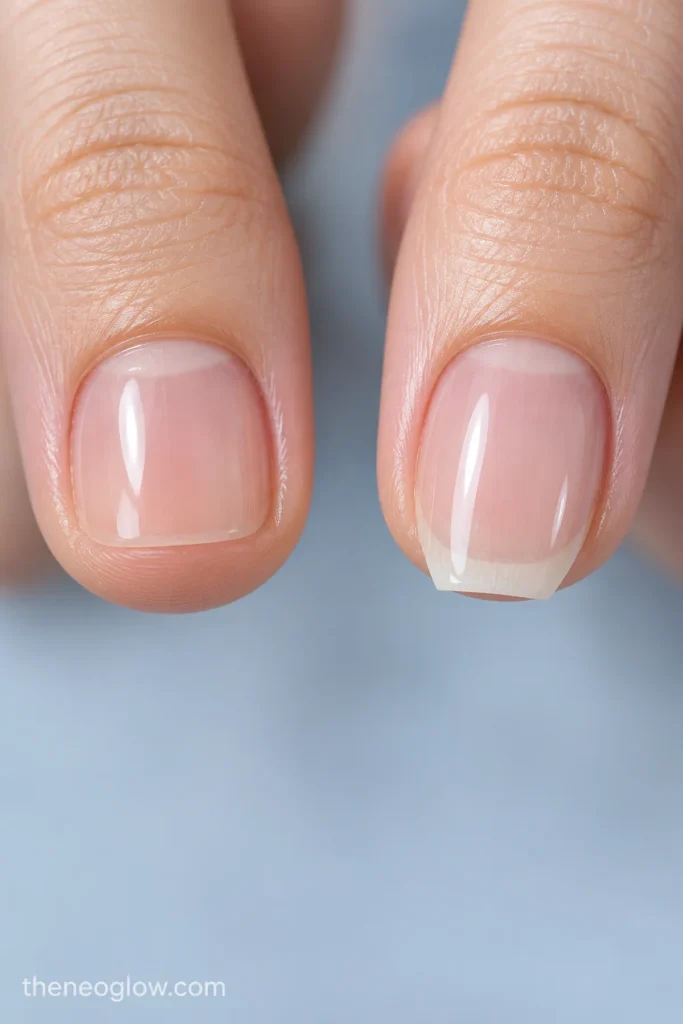
Your thumb may need a broader flat end than your little finger. The manicure should share a recognizable shape family, not force identical widths onto ten different nail plates.
Check the Shape From Three Angles
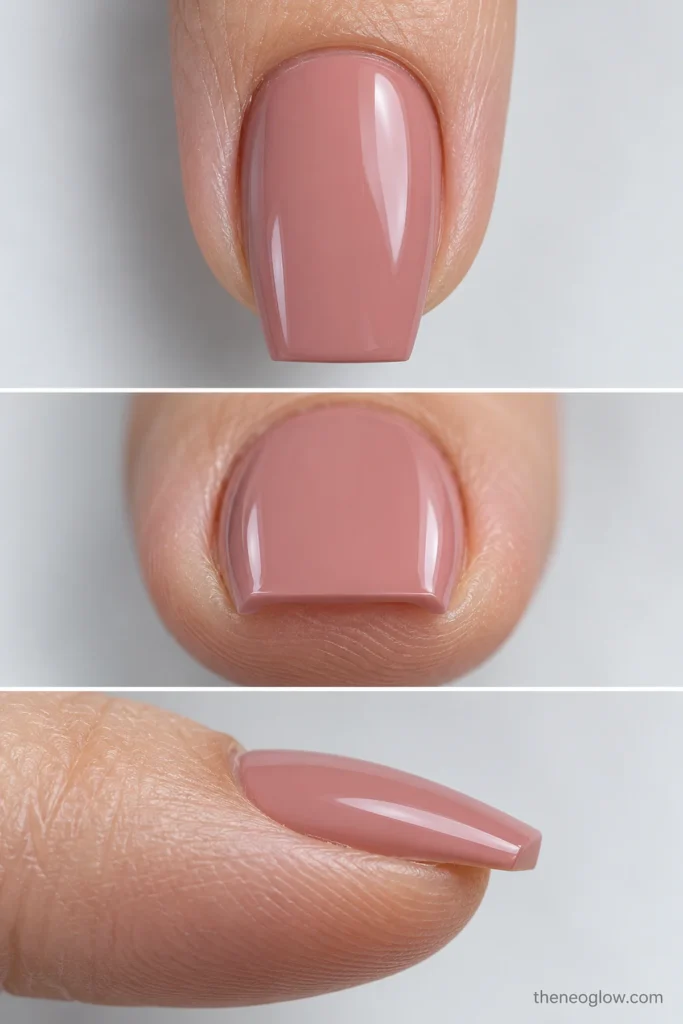
From above: the taper should be symmetrical
The flat front needs to sit on the nail’s center line. Both free-edge sides should narrow toward it in a controlled way. If one side looks straight and the other plunges inward, the result can appear twisted instead of tapered.
Avoid making the tip so narrow that the shape resembles a blunt stiletto. A short coffin needs enough horizontal front edge to remain visibly square-ended.
From the fingertip: the front stays flat
Look straight at the end of the nail. You should see a defined, mostly level free edge with two corners. The corners can be lightly softened for comfort, but rounding the entire end changes the shape toward oval or almond.
If a French tip or color cap is added, it should follow that flat edge instead of painting an artificial V that pretends the nail is more tapered than it is.
From the side: length and thickness both count
A small extension can look short from above yet feel bulky if the product rises sharply off the natural nail. Check the side profile and underside as carefully as the overhead outline. A smooth, appropriately built extension is more convincing than a thick tip that projects upward or downward.
Keep the intended end point specific: just past the fingertip, or slightly farther only if that extra space is necessary to make the taper legible. “Short” is not a standard length shared by every brand or salon.
Preserve the Sidewalls Instead of Filing for an Illusion
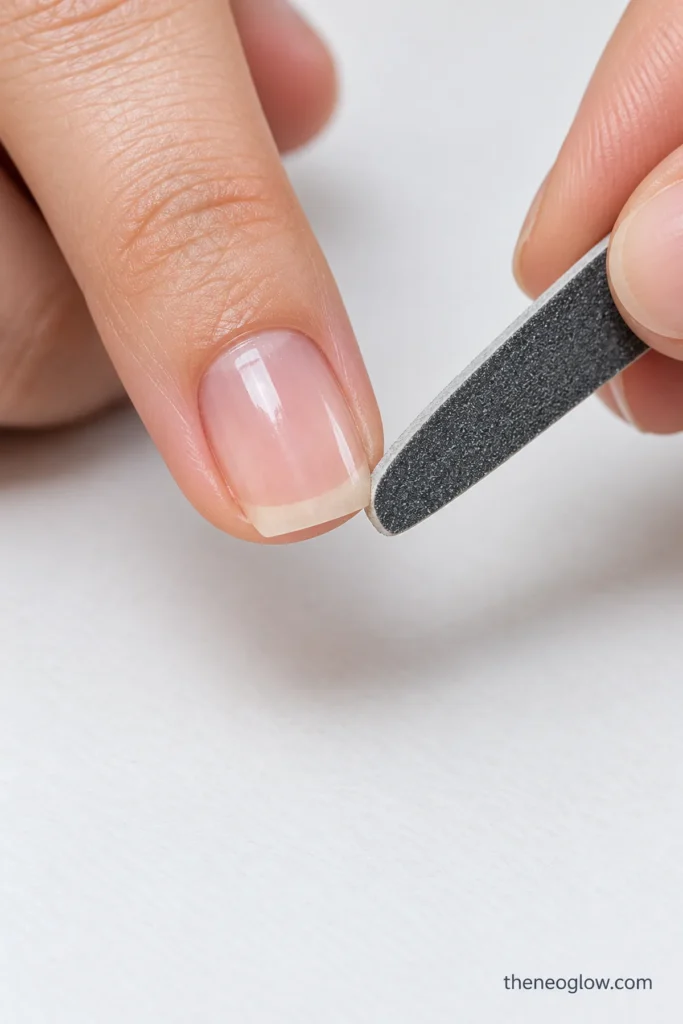
The easiest way to turn a too-short nail into a coffin on paper is to remove width from both sides. It is also the mistake worth avoiding. Filing deeply into the attached, supported portion of the nail can reduce its structural width and irritate the surrounding skin.
NailKnowledge’s explanation of sidewall over-filing describes why aggressive filing into those areas can leave nails more vulnerable to bending and stress. The useful boundary is to shape the free edge, not to cut a new narrow channel beside the nail bed.
On natural nails, establish a modest flat front and check whether there is enough free edge to refine the two outer corners into a visible taper. If there is not, stop at soft square or squoval. No amount of polish can replace missing structural length.
If you file your nails at home, use gentle pressure and smooth rough edges rather than repeatedly thinning the same corner. Do not try to recreate professional extension construction through aggressive natural-nail filing.
Natural Nails, Short Extensions, or Coffin Press-Ons?
The system changes how the outline is created, but it does not change what the silhouette must look like. These are different routes with different preparation, upkeep, and removal needs.
| Route | When it makes sense | Main limitation |
|---|---|---|
| Natural nails with polish | You already have a visible, healthy free edge | You cannot manufacture taper where there is no extra edge |
| Small professional extension | You want a recognizable flat, narrowed tip but lack natural projection | Added structure and ongoing maintenance are part of the choice |
| Pre-shaped short coffin press-on | You want a temporary shape change with a suitable available tip | The nail must fit your width and curve without pinching or touching skin |
| Overlay on existing natural length | Your current shape is already workable and you want an enhancement service | An overlay alone does not create missing free-edge length |
A short acrylic extension is one possible construction route, not the definition of a coffin nail. NeoGlow’s short acrylic nails guide covers acrylic-specific options and maintenance without turning this shape discussion into an application tutorial.
Before choosing any enhancement, consider the maintenance and removal commitment. The American Academy of Dermatology’s artificial-nail guidance explains why preparation, repeated services, and removal can affect the natural nail. Extensions are not a good shortcut for concealing painful, damaged, or suspicious-looking nails.
For a temporary set, the tip must cover the nail plate from sidewall to sidewall without pinching or overlapping skin. The outer plastic silhouette can taper, but the part sitting on your natural nail must still fit. Use NeoGlow’s press-on nail sizing guide to check width and curve; follow the exact manufacturer’s instructions for application and removal.
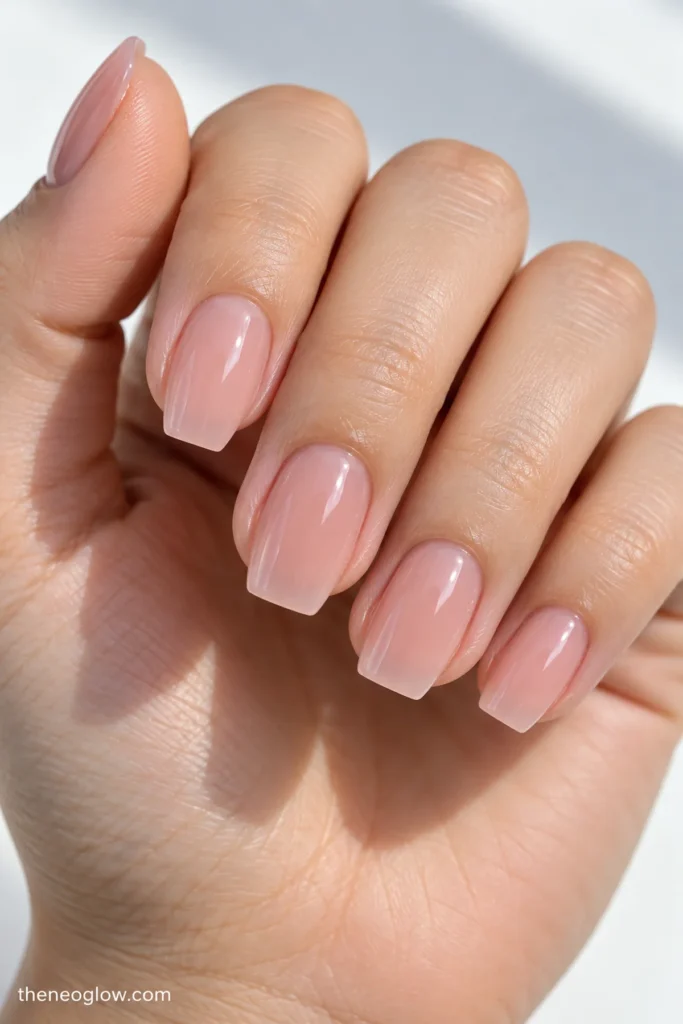
Design Ideas That Show Off the Shape Instead of Hiding It
The best short coffin nail designs use the outline as part of the composition. An oversized pattern covering every corner can make the taper difficult to see, particularly on a nail with minimal projection.
Opaque color with a crisp narrow edge
A single deep lacquer—oxblood, smoked navy, inky teal, or brick red—lets the angled sides do the work. Keep coverage even and the front straight. With a high-contrast solid, crooked corners are easy to notice, so precision matters more than extra decoration.
A straight-edge French cap
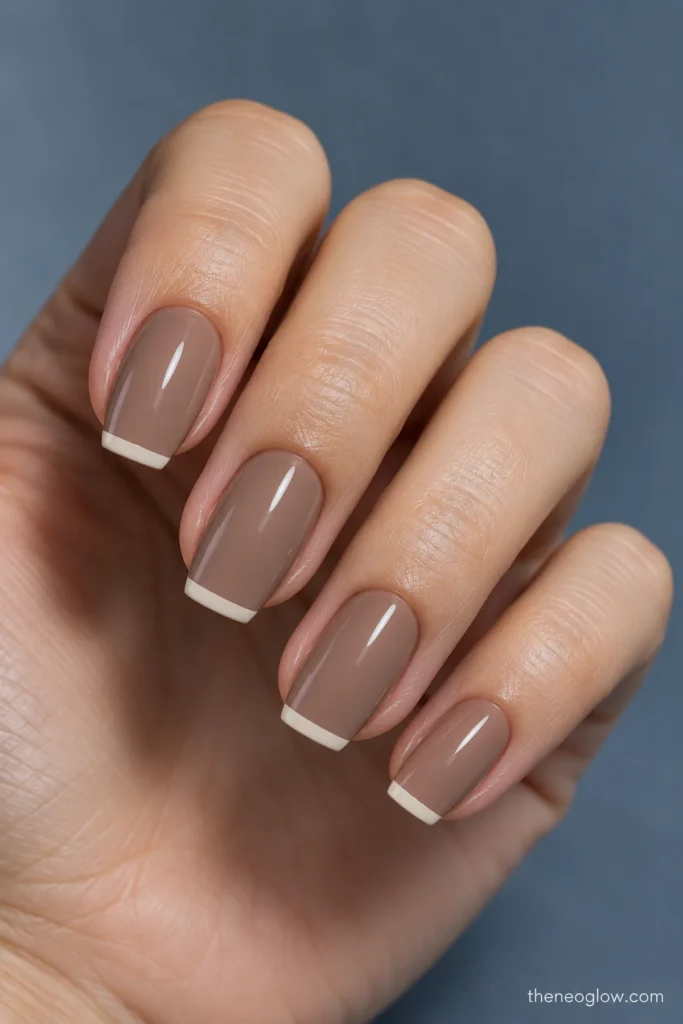
Instead of a deep U-shaped French smile, try a narrow, level color band that sits across the flat end, with the sides of the band terminating exactly at the angled outer edges. An ivory cap over cool mocha, or a black cap over muted lavender, will reveal the outline without visually rounding it.
Avoid a wide white block that consumes most of the exposed tip; that can make a compact coffin look like a painted square.
A vertical light effect
Fine pearl, a subtle satin sheen, or a narrow magnetic reflection can draw the eye lengthwise while leaving the sides clean. A cool graphite magnetic finish with a single slim reflection looks different from a pale opal pearl wash, but neither needs raised charms or multiple tiny motifs.
For gel-dependent effects, confirm that the salon has the actual product and compatible curing setup. Do not substitute generic curing times from another system.
Negative-space edges with controlled color
Leave a slim, transparent margin near the free-edge corners while applying a contrasting central color panel. The two exposed corners help distinguish the taper; the panel should not become so wide that it obscures the side direction.
For a bolder variation, carry a single diagonal block of aubergine over a dusty-rose base, ending before the flat front so the tip remains easy to read. These are alternatives, not two accents to stack on one small nail.
Where Short Coffin Nails Are More Likely to Catch or Break
A narrow squared end has corners and less material across the tip than a full-width square of similar length. How it handles stress depends on natural-nail condition, projection, product structure, and what your hands do all day. It is not automatically stronger because it is short, and an enhancement is not damage-proof.
Watch the two front corners during typing, hair washing, pulling clothes on, or reaching into bags. If the edge repeatedly catches, a very small corner softening may help; if you must round away the whole flat front, a squoval is probably the more practical shape.
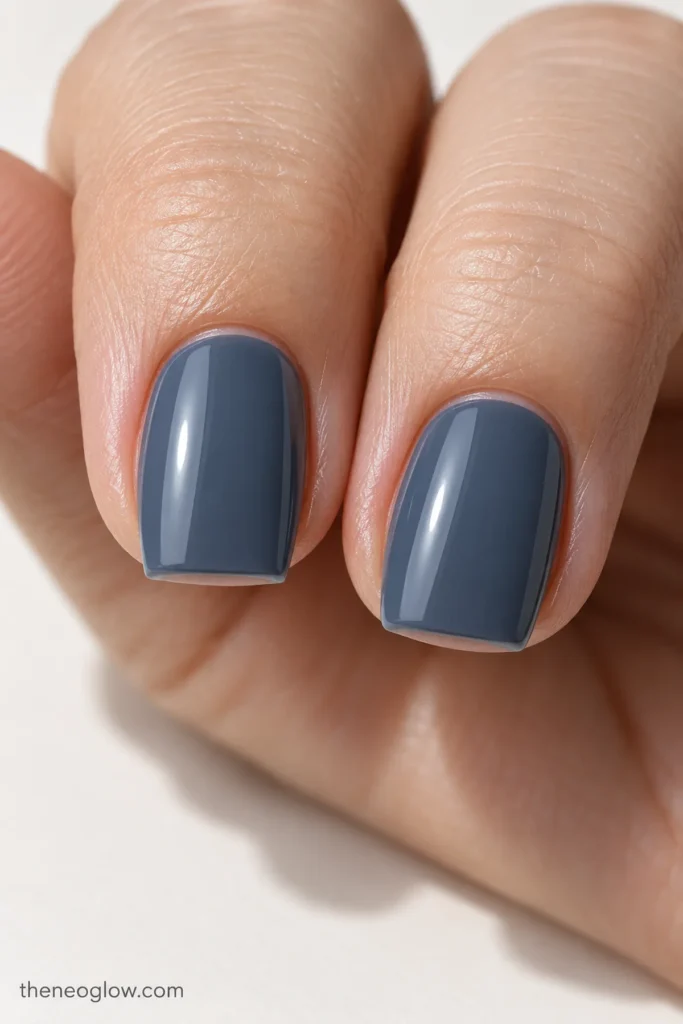
Grow-out matters too. As the nail extends, the relationship between the taper and the supported base changes. Reassess its alignment and thickness before a maintenance appointment rather than repeatedly filing the attached sides narrower.
If acrylic, gel, or adhesive products are involved, follow their specific instructions and pay attention to irritation. The FDA’s nail-care product guidance offers further information on labeled directions, ingredients, and possible reactions. Do not peel or pry off an enhancement or press-on. Seek professional advice if you notice persistent pain, swelling, or an unusual nail change.
Bring a Reference That Shows Geometry, Not Just Color
One attractive top-down photo is not enough if it hides the actual length. Save a reference showing the same nail from above, from the tip, and from the side when possible. Compare its free-edge projection against your own fingernail before agreeing on the final shape.
A clear request might be: “I want a genuinely short coffin with a visible taper, a centered flat tip, and as little added length as possible. Please keep my natural attached sidewalls intact, show me the shape before color, and tell me if a small extension is needed to make it realistic.”
Then select one finish or accent from the options above. This keeps shape feasibility separate from decorative preference and gives the technician room to recommend a more realistic outline if your current nails cannot support it.
When a Different Short Shape Is the Better Choice
A soft square makes more sense when the nail ends flush with your fingertip and you like a crisp front. Squoval keeps a similar overall look while taking the sharpness off corners that catch. Shallow oval is worth considering when you want a narrower-looking end but do not need the flat coffin finish.
NeoGlow’s best nail shape for short nails comparison covers those broader alternatives in more detail. If you are still deciding beyond the coffin silhouette, the Short Nails guide maps the larger choices of length, finish, and everyday practicality.
The useful outcome is not a label on your manicure photo. It is a clear taper you can actually wear without sacrificing the supporting structure of your natural nails. Save one accurate shape reference and make the length decision before choosing the art.