Short gel nails can look beautifully finished without adding length, thick overlays, or miniature artwork on every finger. The useful starting question is what kind of gel manicure you actually want: color cured over your short natural nails, a structured builder-gel overlay, or a gel extension. Those services can look similar in photos but involve different maintenance and removal decisions.
The 16 looks below stay close to the fingertip, use readable shapes, and keep decoration flat. You’ll find transparent finishes, bold color, small graphic placements, and a few gel-friendly effects, plus a practical way to pick the right service before your appointment.
What Kind of Short Gel Manicure Do You Need?
Gel polish coats your natural nails with cured color. It does not automatically add length or significant structure. Builder gel is a separate product category used to create or reinforce structure; it may be applied as a short overlay, depending on the product and service. Soft-gel tips are extensions even when the finished result is marketed as short.
| Your goal | Ask about | Check before agreeing |
|---|---|---|
| Keep your existing short length | Gel polish on natural nails | Thin finish, product-compatible lamp, removal method |
| Add structure without much length | Short builder-gel overlay | Finished thickness, whether that formula can be filled or must be removed |
| Change the silhouette or add a small free edge | Properly fitted soft-gel tips | Actual tip length, upkeep, and removal for that system |
| Change color frequently | Regular polish instead of gel | Whether UV curing and gel removal are worth the commitment |
One manufacturer’s directions cannot be treated as universal. For example, OPI’s professional GelColor application guide specifies its own coats and matching lamp, illustrating why your technician should follow the exact product system rather than a generic curing time.
If you are still comparing every possible manicure system, the broader Short Nails guide is the better starting point. This page stays with gel-specific looks and upkeep.
16 Short Gel Nail Ideas You Can Actually Wear
1. Clear Rosewater Squovals
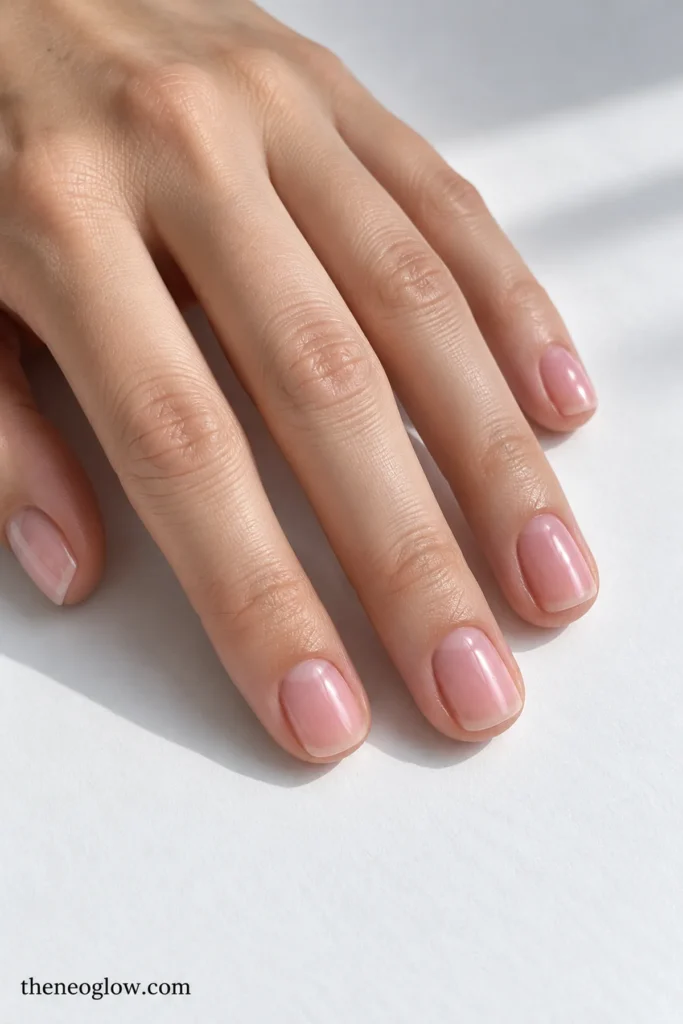
Keep squoval nails nearly flush with the fingertips and cover them in translucent rose-pink gel. The natural nail remains faintly visible through the glassy gloss; there are no tips, dots, or accent fingers. This makes the shade itself the reference and lets you inspect whether the cured surface looks slim from the side. Choose a rose tint that suits your preferred warmth rather than matching one prescribed nude.
2. Paprika Cream Flush Squares
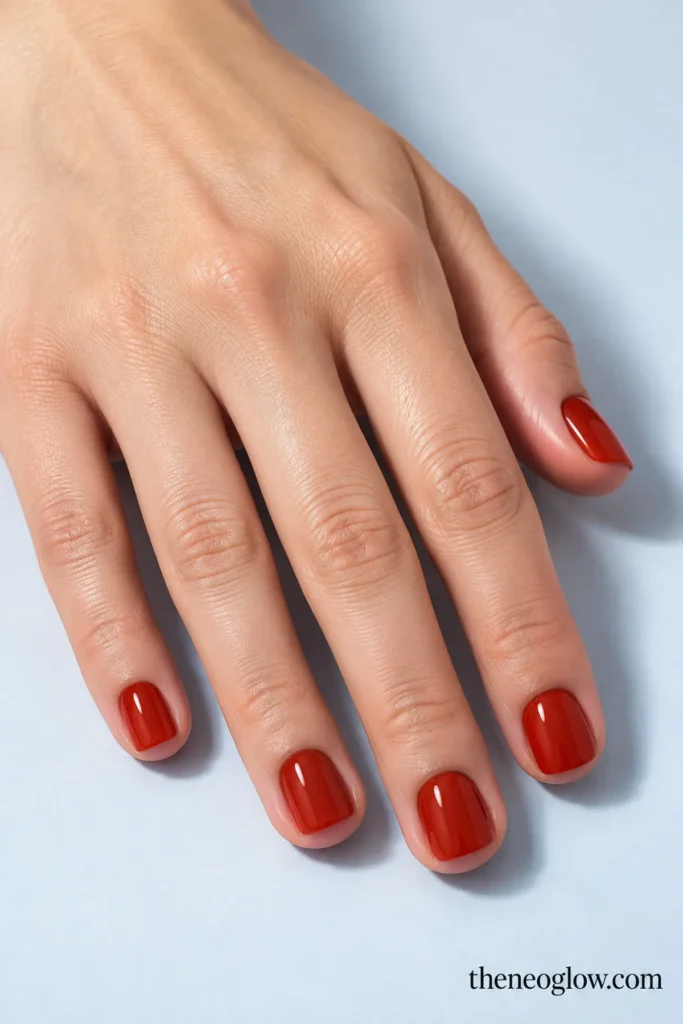
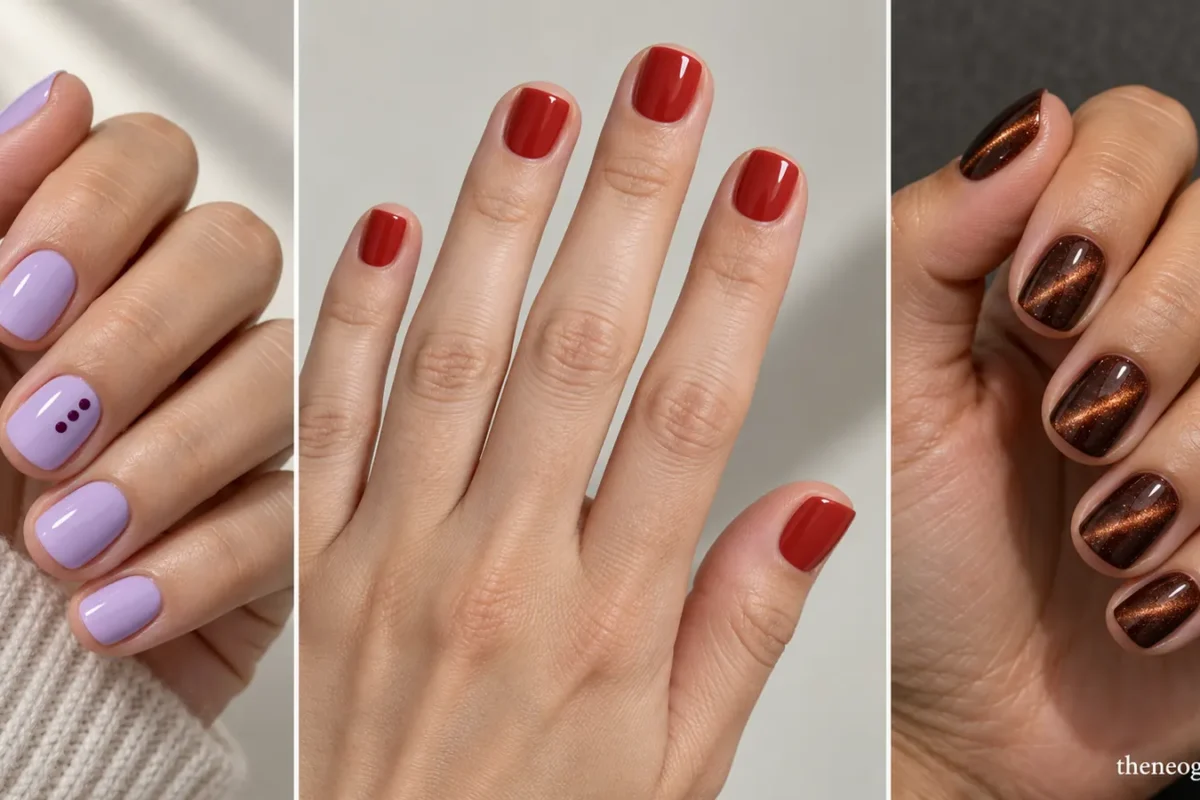
These straight-edged, extra-short squares carry an opaque paprika-red cream from base to tip, finished in high gloss. A single solid color gives small nails enough impact without borrowing space for art. The polish should stop cleanly before the surrounding skin, and the square corners can be softened if sharp edges bother you during daily tasks.
3. Midnight Speckle Rounds
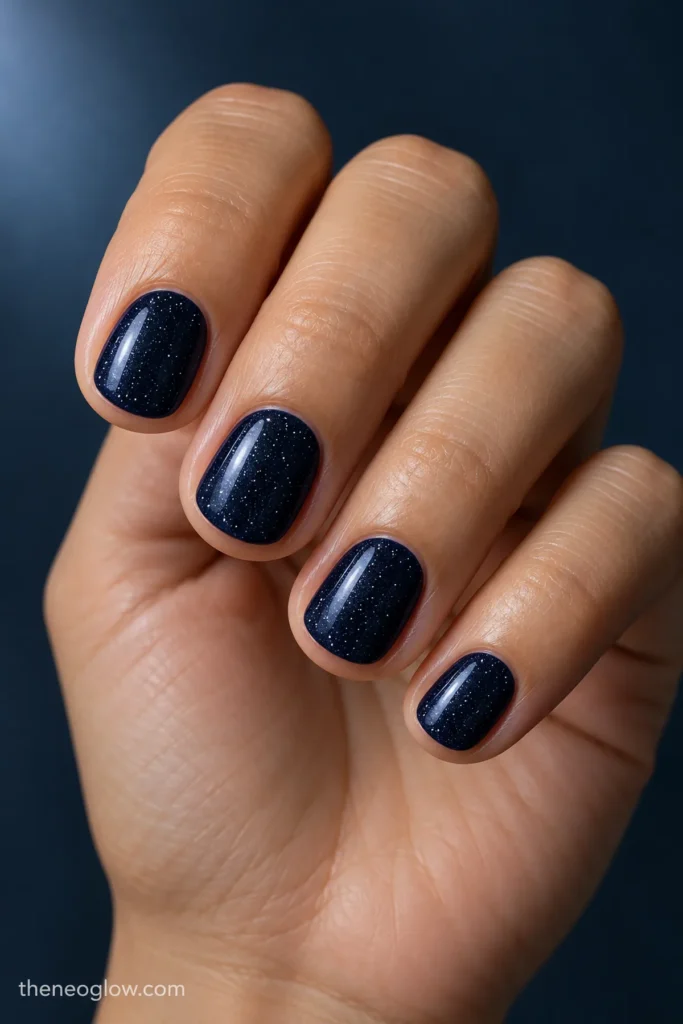
On very short rounded nails, apply opaque midnight-blue gel scattered with fine, evenly distributed silver microshimmer. The sparkle should resemble tiny points caught inside the finish, not raised glitter grains or large star decals. This is a dark manicure that looks different under direct and indirect light while keeping a smooth, compact outline.
4. Honey-Jelly Shallow Ovals
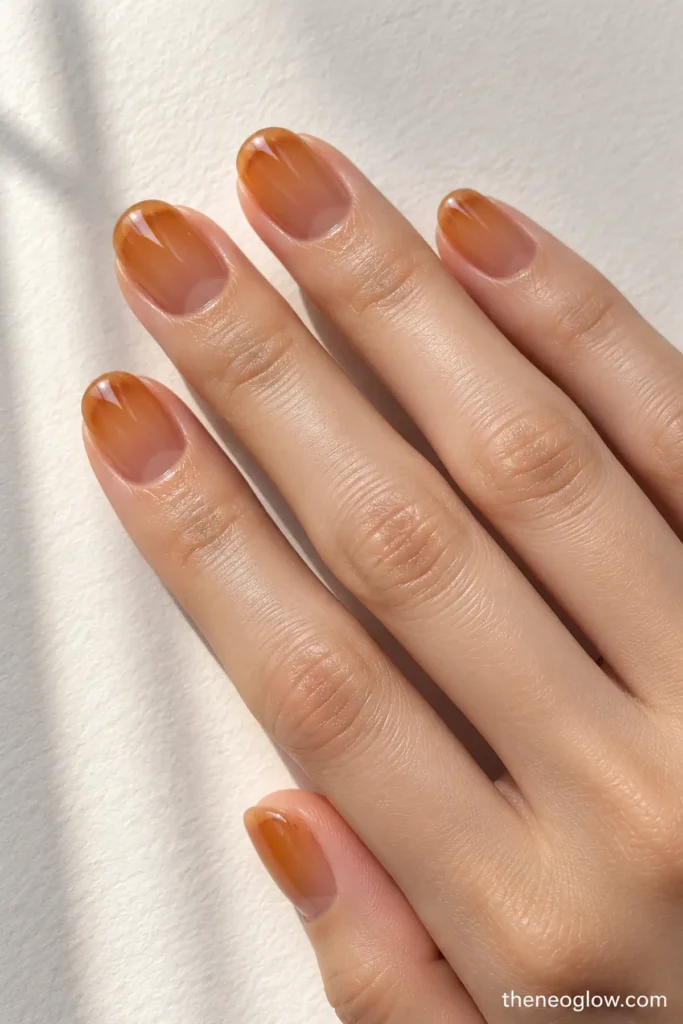
A translucent amber-honey jelly covers short ovals with only a narrow natural free edge. Keep the color slightly deeper toward the tips through transparent layering, with no hard French border. You should still see light passing through the finished color; opaque mustard gel would create a completely different look. The shallow oval needs a little edge, not a long pointed extension.
5. Pearly Pistachio Micro Rounds
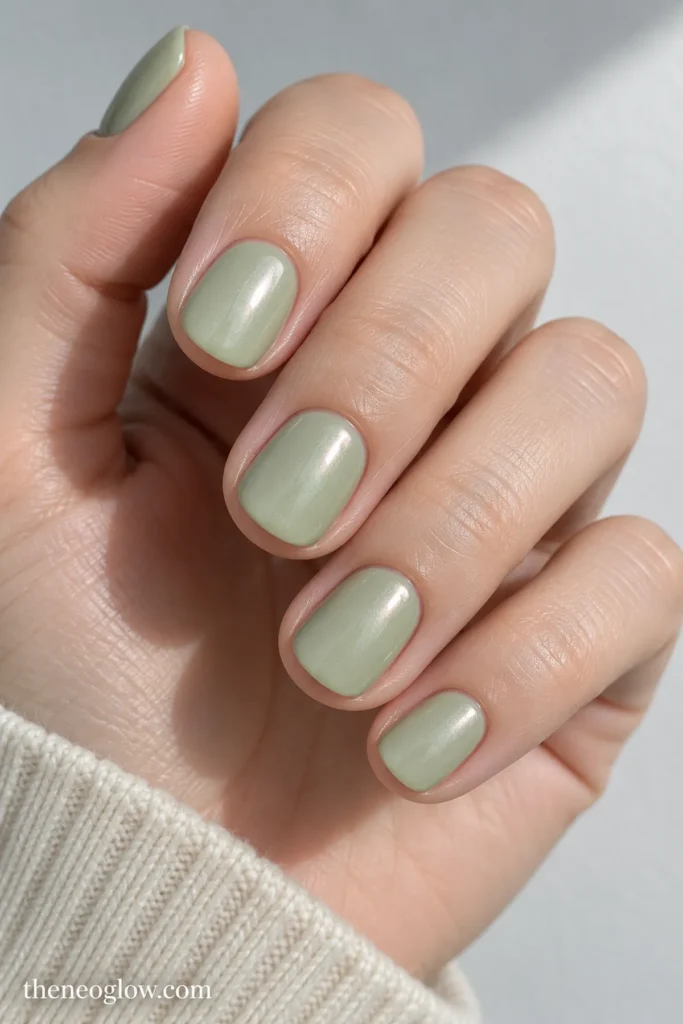
Try fingertip-length round nails in a soft pistachio cream topped with a restrained pearlescent veil. The pale green stays recognizable beneath a delicate ivory reflection; it should not become full mirror chrome. There is no motif, making this a color-and-light choice for someone who wants a softer alternative to nude without a visually busy surface.
6. Charcoal Matte With Shiny Arcs
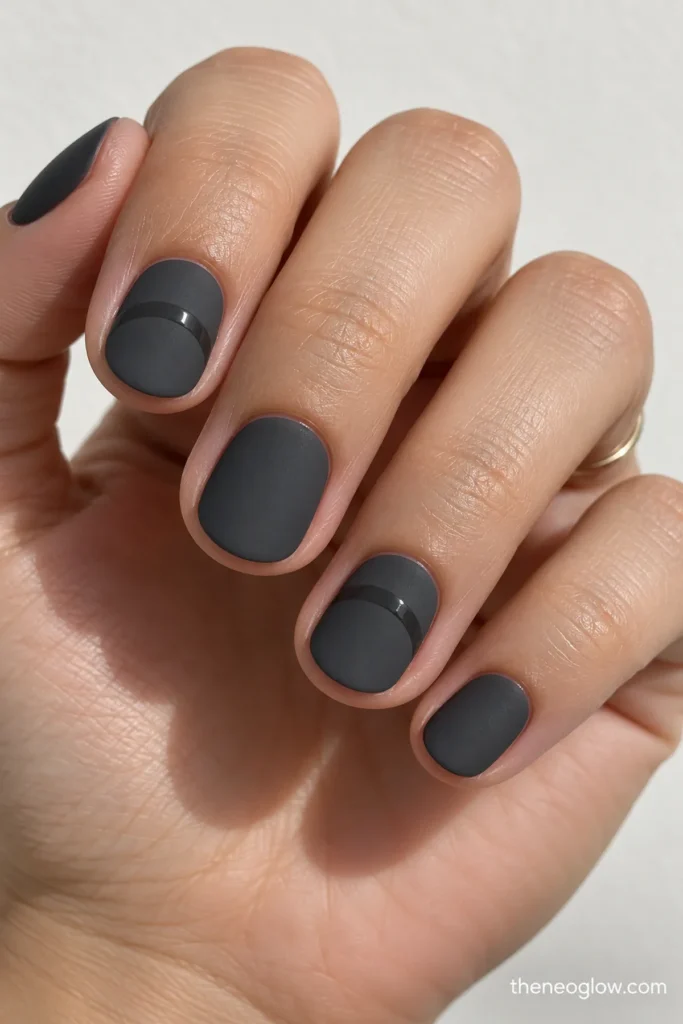
Paint extra-short rounds a deep charcoal gel with a smooth matte finish. Add one thin curved gloss-on-matte arc across the center of each index and ring nail, leaving the others plain charcoal. The contrast appears when light moves over the nail rather than through extra color. Confirm that the matte and glossy finishes are compatible with the selected gel system.
7. Cocoa Fine-Line Frames
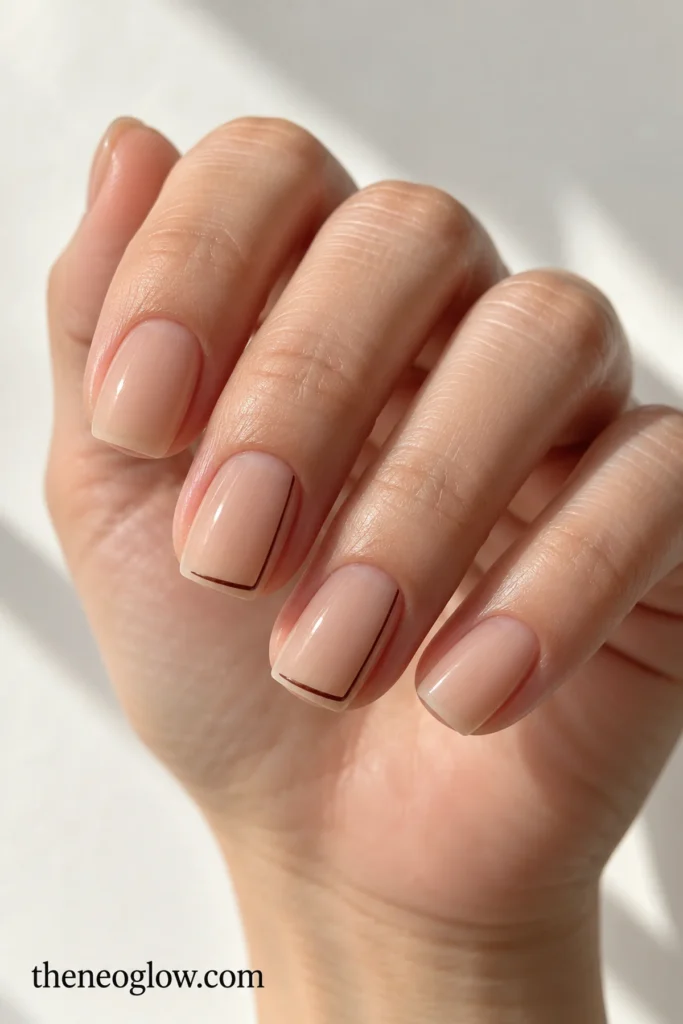
Start with sheer biscuit-beige gel on short soft squares. A single fine cocoa-brown line runs down the right side and across the free edge of each ring and middle nail, forming a delicate open-corner frame. Leave the opposite side empty. The frame sits flat beneath the final topcoat and needs precise placement rather than additional nail length.
8. Seafoam Offset Blocks
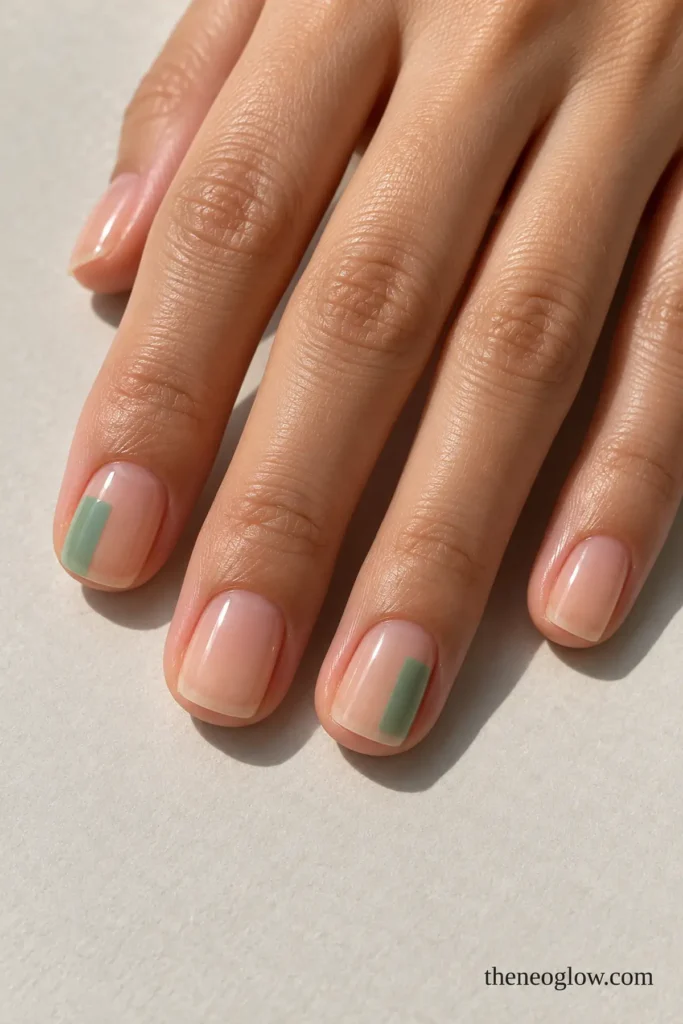
Short squovals wear a transparent peach-beige base. On the index and ring nails, an opaque seafoam rectangle begins halfway up one sidewall and finishes just before the tip, leaving an obvious clear margin around it. All other nails remain transparent and glossy. This compact color block reads clearly on a narrow nail plate without resembling a full-color French tip.
9. Lavender Dot Staircase Rounds
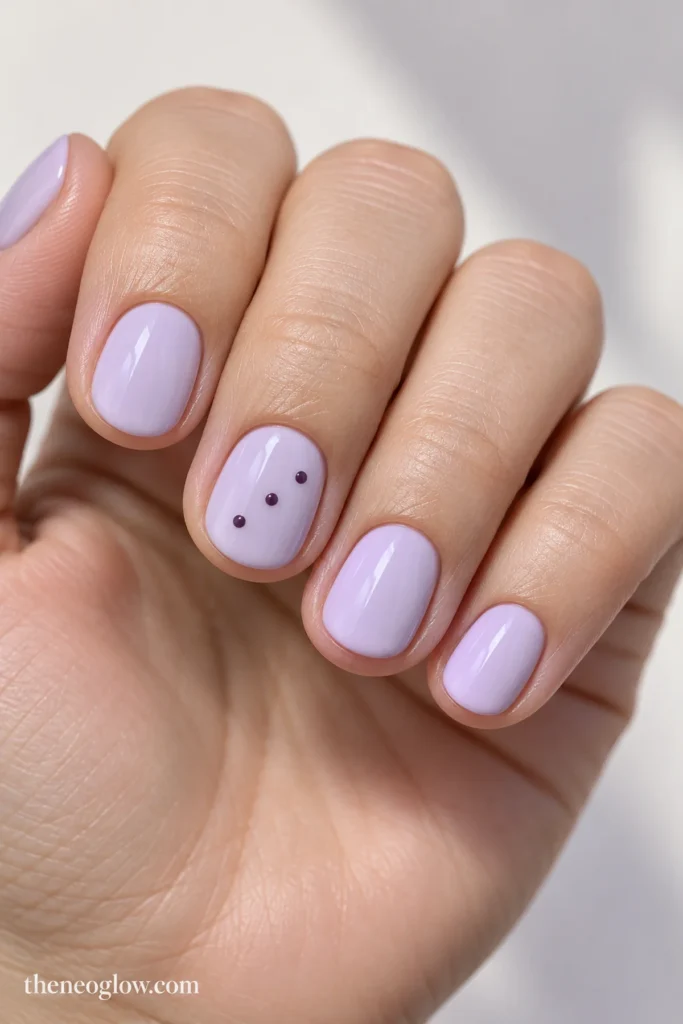
Use opaque pale-lavender gel on very short round nails. Only the middle fingernail receives three tiny dark-plum dots stepping diagonally from low left to upper right, evenly separated and painted flat. The other nails stay solid lavender. Three correctly spaced dots make the composition legible; adding five miniature flowers would overcrowd this tiny canvas.
10. Blackberry Ribbon Squares
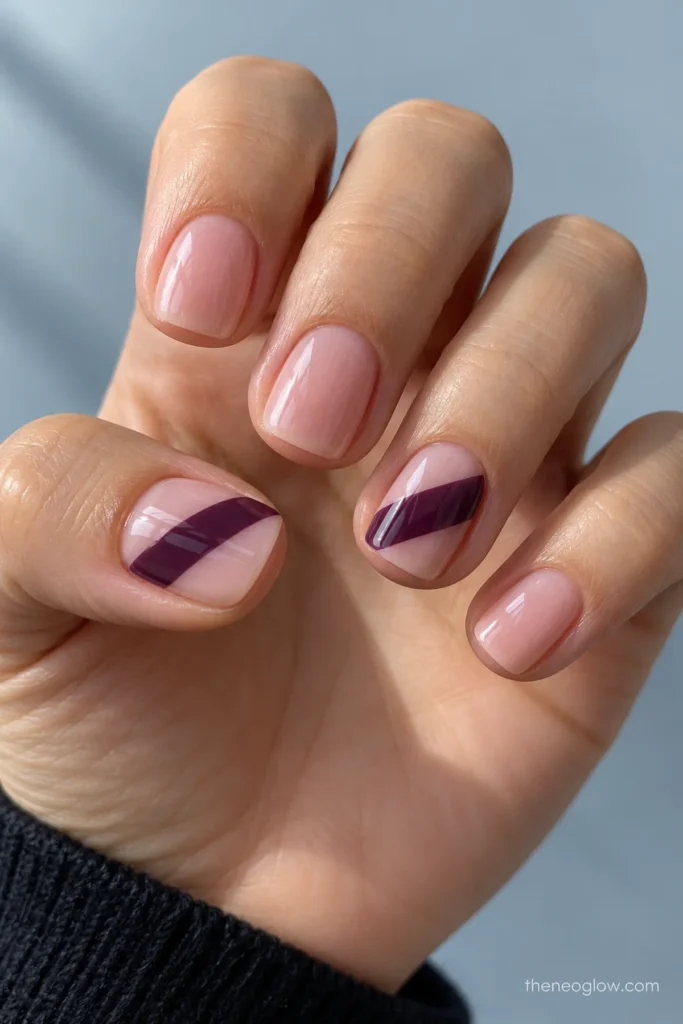
Give short soft-square nails a clear blush base. Draw one broad, smooth blackberry-purple diagonal ribbon across the middle of the thumb and ring nails, leaving visible blush at both ends. Avoid outlines, foil, or extra stripes. The direction and width of the band carry the design, and the remaining nails stay transparent for contrast.
11. Ink-Blue Hairline French
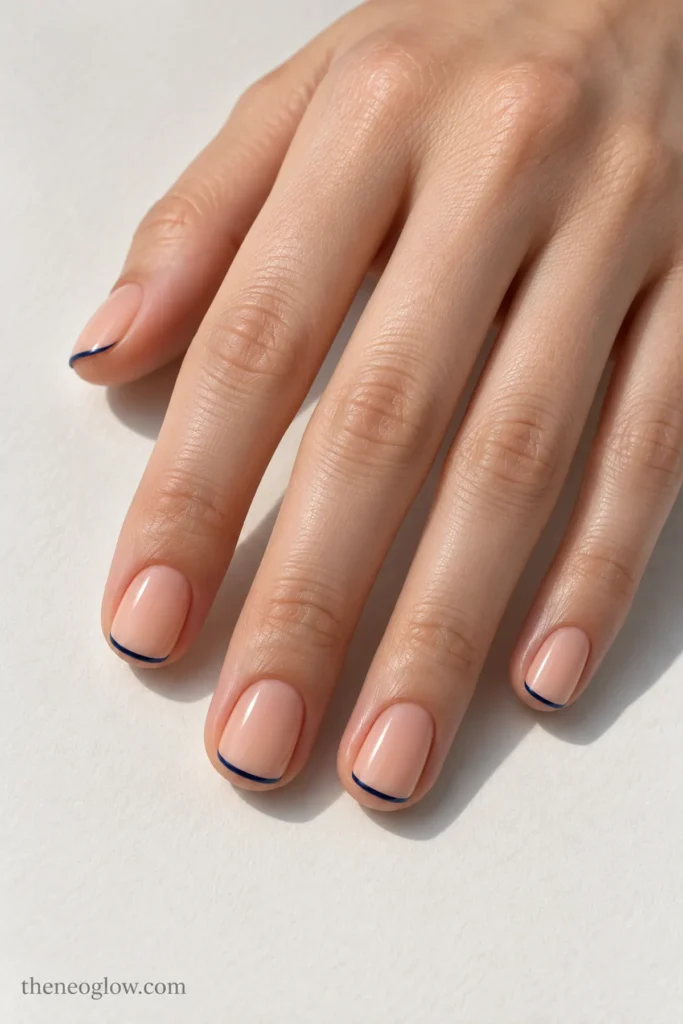
On very short squovals, lay a softly opaque peach base and trace each free edge with the thinnest practical line of inky blue. The curve follows the actual short tip instead of creating an artificially deep smile line. It delivers the structure of short French nails without pretending there is room for a wide colored cap. Keep the line flat and consistent.
12. Tangerine Side Waves
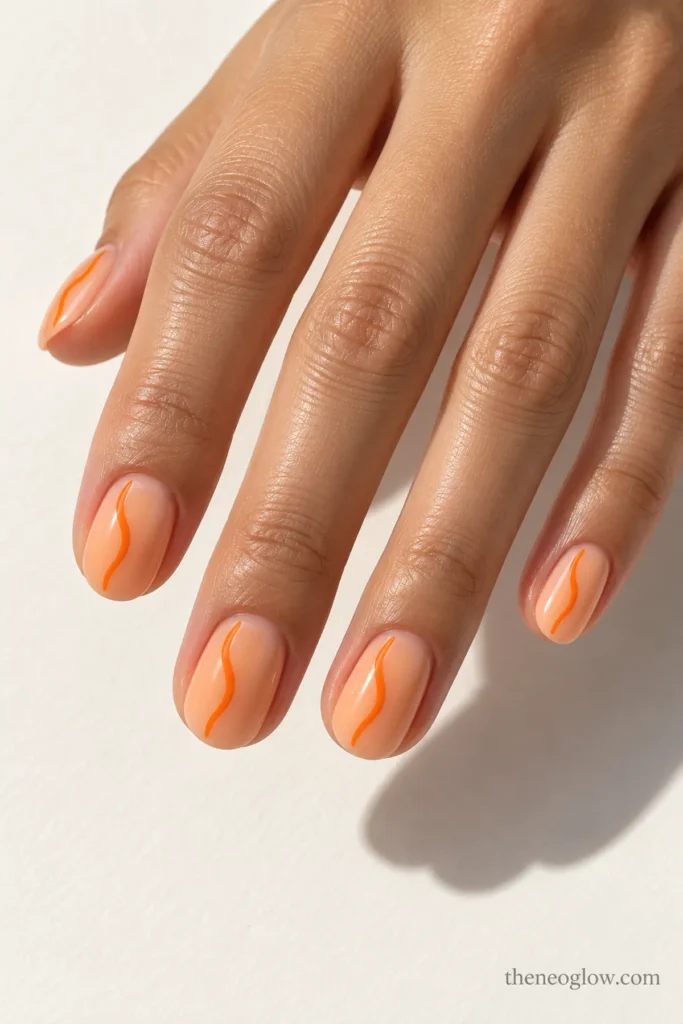
Choose short shallow ovals with a semi-sheer apricot base. Along the left third of each nail, paint one slender tangerine S-shaped wave running lengthwise, stopping clear of the cuticle and free edge. There is no tip stripe and no second wave. The elongated side placement gives these small nails movement while preserving most of the apricot background.
13. Clouded Lilac Vein Ovals
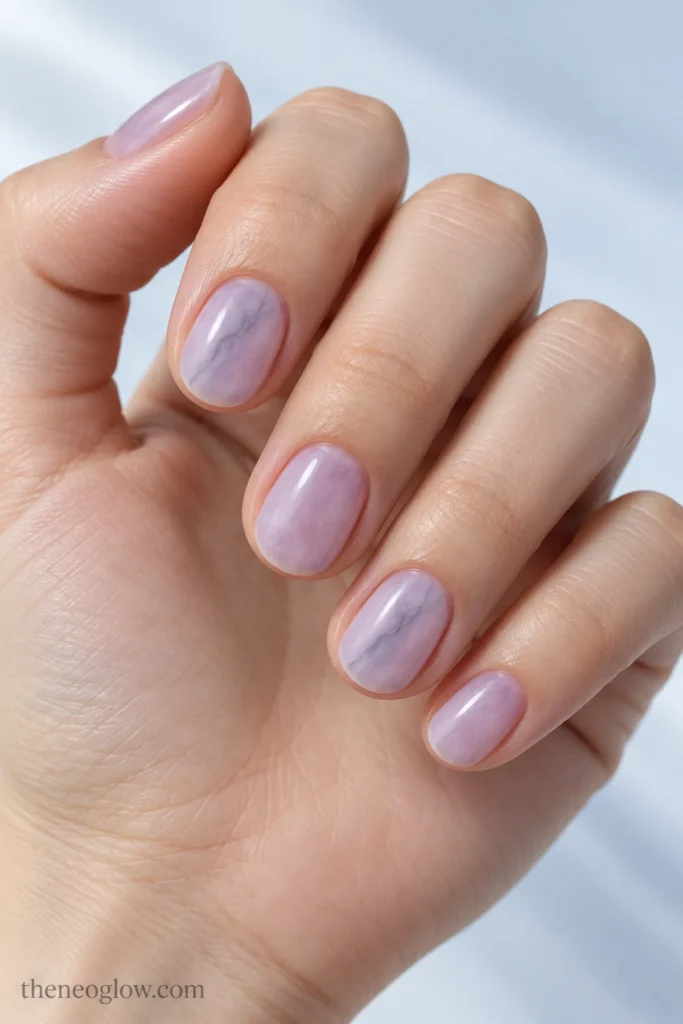
A misty, semi-transparent lilac wash covers short ovals. On the index and ring fingers, a single diffuse pale-gray vein drifts across the center with softly blurred edges; the other nails show only the lilac haze. This is a quiet marbled effect, not a high-contrast swirl or raised stone texture. The design depends on transparency and controlled blending within compatible gel layers.
14. Champagne Corner Glints
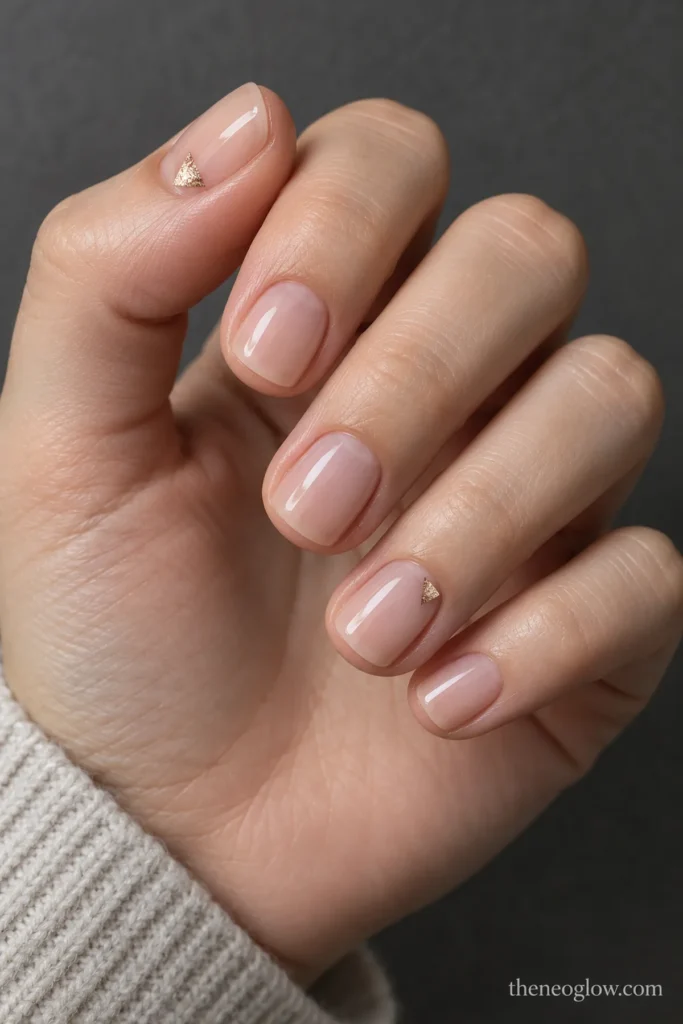
Cover short square nails in sheer cool beige. Place one tiny, sharply defined champagne-metallic triangular glint near the outer cuticle corner of each thumb and ring nail, surrounded by visible beige. Leave the free edges untouched and seal the metallic detail flat. It is a root-corner highlight rather than a foil-dipped tip or a full chrome manicure.
15. Cobalt Night-Star Mini Almonds
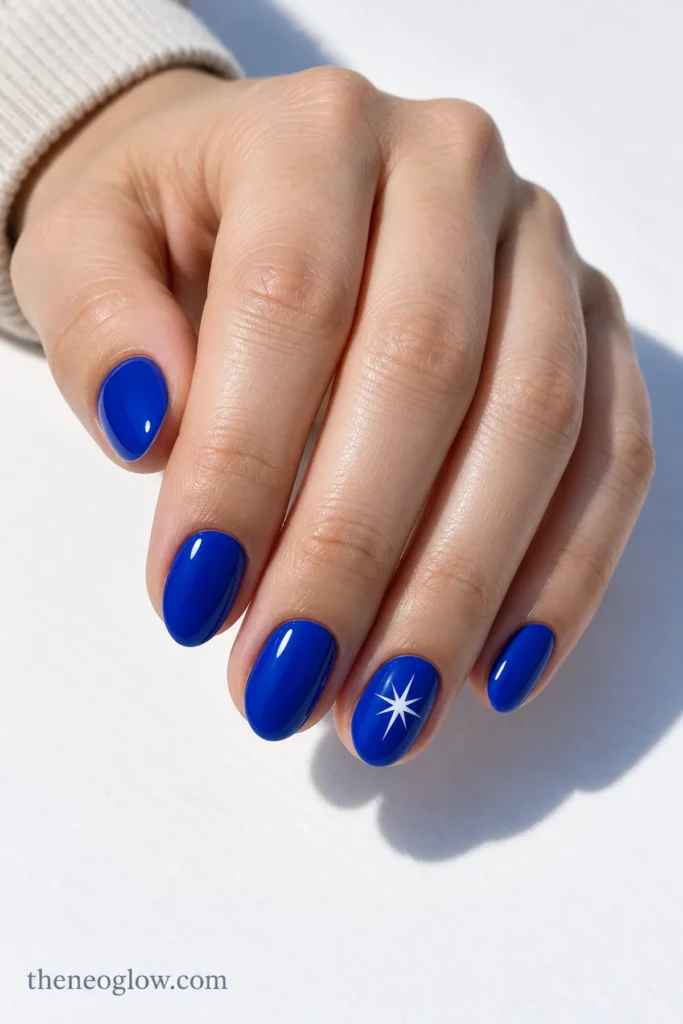
For nails that already have enough free edge to support a gentle taper, use genuinely short almond tips in opaque cobalt-blue gel. Paint one small, crisp eight-point white star near the middle of each ring fingernail; all other nails remain solid blue. If your natural nails have almost no free edge, switch this exact color-and-star placement to a short oval rather than filing deeply into the sides.
16. Copper-Lit Espresso Cat-Eye Squovals
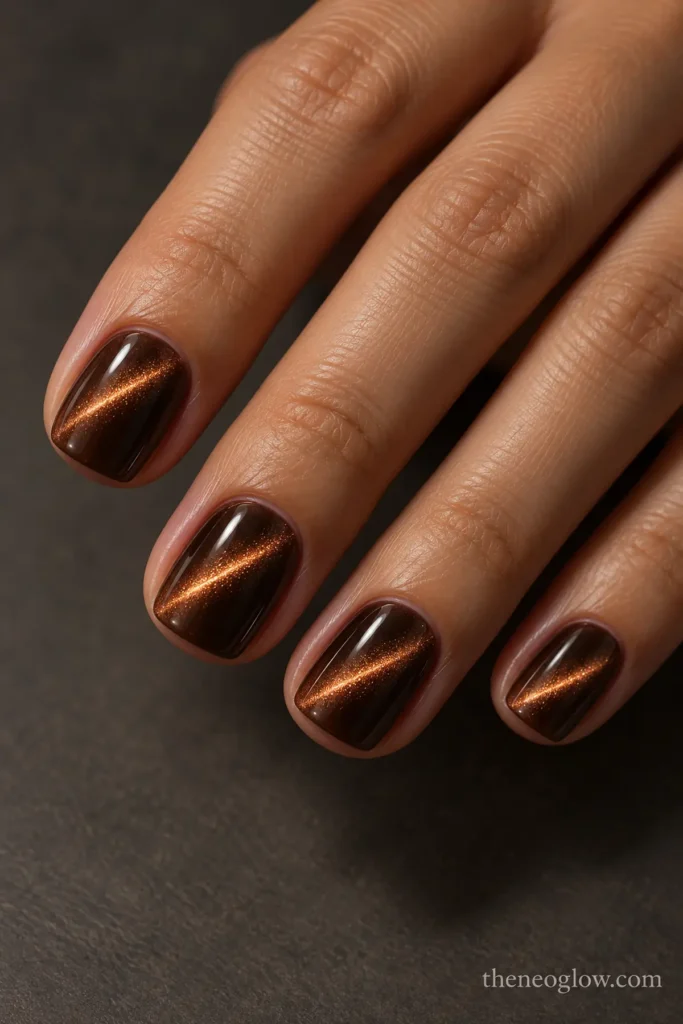
On compact squovals, use deep transparent espresso-brown magnetic gel with one narrow copper-colored diagonal light band traveling across each nail. The band should appear suspended within the glossy color, not as metallic striping tape. This gel-dependent effect brings depth without raised decoration. Ask whether the salon works with this magnetic product and its specified curing system.
Match the Look to Your Real Length and Upkeep
A photo of a short manicure is useful only if the free edge is actually short. With no visible tip, look first at the rounds, flush squares, and squovals above. With a little edge, shallow ovals are possible. The mini almond in idea 15 needs a true free edge; don’t file into attached sidewalls to create a tapered point. For a fuller geometry comparison, see Best Nail Shape for Short Nails.
Opacity also changes how growth looks. Translucent rosewater and honey jelly may make the transition near the cuticle less visually abrupt than paprika cream or ink-blue French; this is an appearance tradeoff, not a promise of longer wear. Smooth microshimmer and sealed metallic effects can be flat, while matte surfaces may reveal scuffs differently from gloss.
Before a booking, name the product family and ask whether the salon is applying ordinary gel color, a builder overlay, or soft-gel extensions. Check the planned lamp, product directions, and removal method. The FDA’s nail-care product guidance explains why following labels, avoiding unnecessary skin exposure, and paying attention to reactions matters.
Maintenance, Fills, and Removal Are Not Interchangeable
For gel polish on natural nails: Expect visible growth and eventual color replacement. Ask whether your specific gel is designed to soak off, and have it removed according to that system; don’t pick or pry at lifting edges. A hard or non-soak-off product may need a different professional removal process.
For builder-gel overlays: A fill or rebalance may be possible when the exact system supports it and the existing product is sound. It is not an automatic top-up over lifted material. OPI’s professional GELevate rebalance walkthrough shows how technicians assess lifting, structure, and growth before deciding on service; it is an example for that named product, not a DIY instruction for all builders.
For curing and nail care: UV exposure is part of gel curing, including with many LED-designated lamps. The American Academy of Dermatology’s gel-manicure guidance recommends SPF 30+ broad-spectrum water-resistant sunscreen on hands or protective fingerless opaque gloves, advises against picking gel, and explains cautious acetone contact for appropriate soak-off services. It also recommends breaks and moisturization when nails need recovery.
If the skin around a manicure becomes persistently irritated or nails become painful or unusually changed, stop covering the problem and seek advice from a dermatologist. Gel is optional: regular polish may suit you better if the curing and removal commitment doesn’t fit your routine.
One Clear Reference Beats Six Different Photos
Save the single numbered idea that matches your length, then tell the technician whether you want gel polish on natural nails or a structural overlay. Specify the actual nail edge, base opacity, accent placement, and finish. For instance: “Natural-nail gel polish, very short squoval, translucent peach base, one ink-blue hairline French edge, with no added length or raised art.”
For the lowest-detail starting point, try idea 1, 2, or 4. If you want more character without bulk, compare the matte arc in 6, the fine line in 11, or the magnetic band in 16. Keep the result short enough for your ordinary day—and choose a gel service whose removal you understand before it begins.