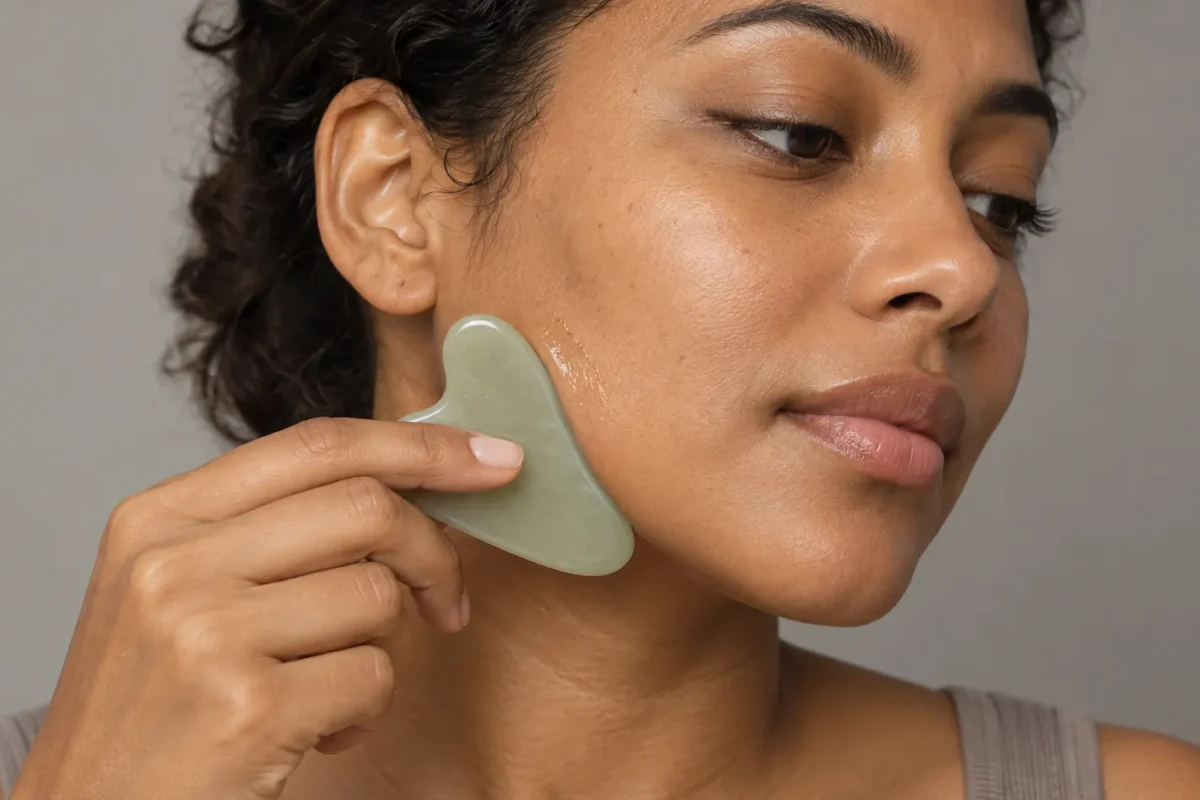
Facial gua sha can be a calming, hands-on skin care ritual, but it is not a permanent face-lift, a way to remove facial fat, or a proven “detox.” For beginners, the useful goal is simpler: use a smooth tool with enough slip, very light pressure, clean technique, and realistic expectations.
A small 2025 randomized study compared repeated facial gua sha with facial rolling and reported changes in some contour and muscle-tone measurements in the gua sha group. But it was short, involved a small group, and did not include a no-massage control group or establish permanent reshaping. The most accurate takeaway is that the evidence is promising but still limited. You can read the facial gua sha randomized trial on PubMed.
Quick answer: what matters most with gua sha?
You need four things: a smooth, undamaged tool; enough skin slip that it does not drag; light pressure; and a simple direction you can repeat comfortably. More pressure is not better. Pain, bruising, or aggressive scraping are not goals for facial gua sha.
Cleveland Clinic’s gua sha technique and safety guidance also emphasizes a very light touch on the face and notes that high-quality research is still too limited to make definitive benefit claims.
| What you need | What to look for | What you can skip |
|---|---|---|
| Gua sha tool | Smooth edges, intact surface, comfortable shape, easy to keep clean | A particular gemstone, luxury price, or complicated shape |
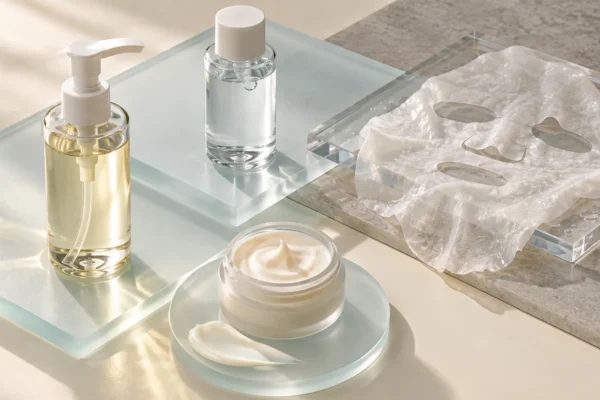
| Slip | A moisturizer, serum, or face oil you already tolerate well enough to prevent dragging | A special “detox” oil or an unfamiliar active just because you are using gua sha |
| Pressure | Very light and comfortable on facial skin | Hard scraping, visible bruising, or pushing through tenderness |
| Routine | A few controlled passes on comfortable areas | A long multi-step ritual if a shorter one feels better |
How to use gua sha on your face gently
There is no need to chase a perfect viral routine. A beginner technique should reduce friction and keep the tool comfortable against the skin.
- Start with clean hands, clean skin, and a clean tool. Check the tool for chips, cracks, or sharp edges before it touches your face.
- Add enough slip. Apply a moisturizer, serum, or face oil that your skin already tolerates. The tool should glide without catching or pulling.
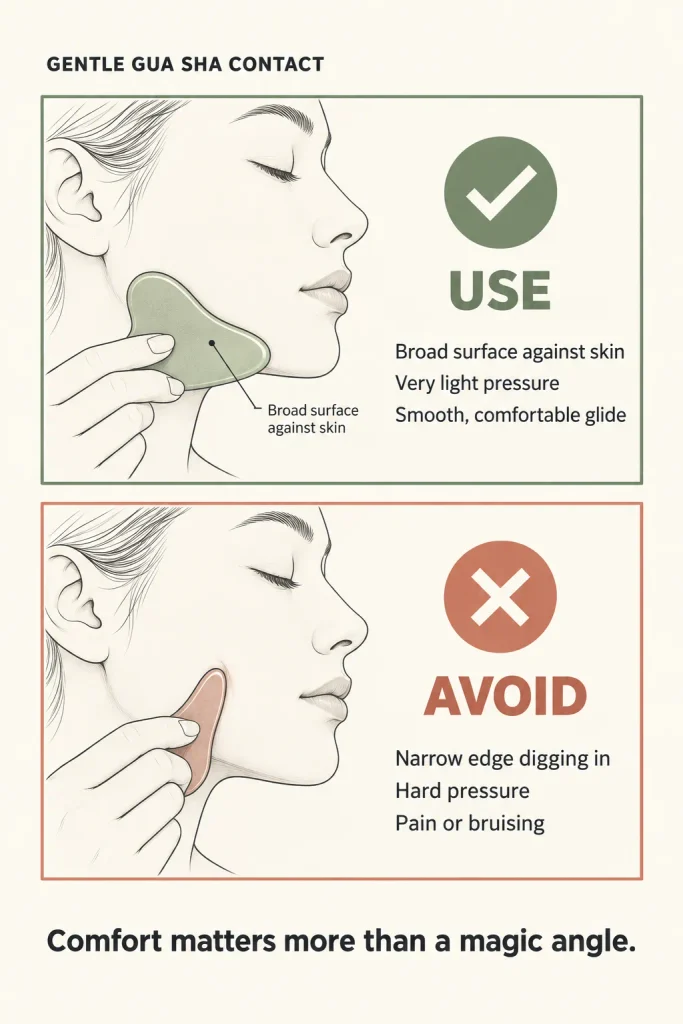
- Keep a broad surface against the skin. Hold the tool fairly low rather than digging a narrow edge into the face. Exact angle instructions vary among technique sources, so comfort and low pressure matter more than chasing one magic number.
- Use very light pressure. Facial gua sha should feel controlled and comfortable. You do not need to create redness, tenderness, or bruising.
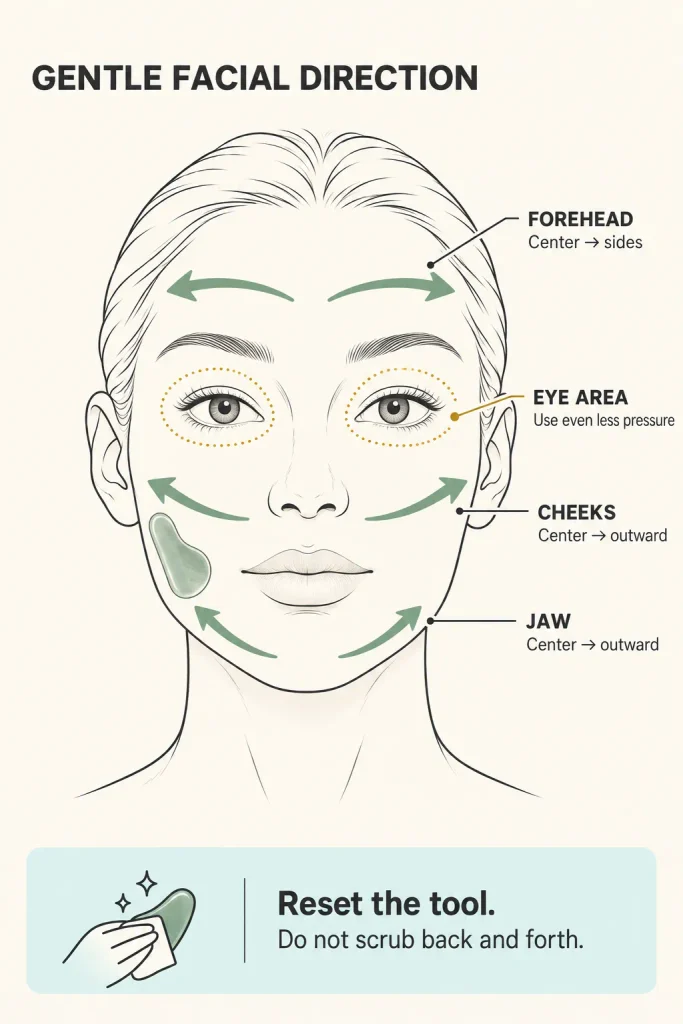
- Move in one smooth direction. A simple beginner pattern is to glide from the center of the face outward along the jaw and cheeks, then from the center of the forehead toward the sides. Reset the tool instead of vigorously sawing back and forth.
- Be especially cautious around the eyes. Use even less pressure on delicate areas, and skip any area that feels irritated, swollen, painful, or unusually sensitive.
- Stop when the skin starts dragging or becoming uncomfortable. Add more slip if appropriate, reduce pressure, or end the session.
You do not need a fixed number of passes or a daily schedule to begin. Research protocols are not the same thing as proven consumer dosing instructions. Start conservatively, notice how your skin responds, and keep the routine short enough that you can maintain a light touch.
Choose slip for comfort, not for extra claims
The job of your slip product is to reduce friction. A basic moisturizer, serum, or face oil can work if it gives enough glide and already agrees with your skin. You do not need to add a new active ingredient or a special oil just to use the tool.
If your routine already includes potentially irritating products, do not use gua sha as a reason to add more friction to skin that feels stung, raw, unusually dry, or inflamed. If you are unsure where a simple moisturizer or other step belongs, use the skin care routine order guide rather than turning gua sha into another complicated layer.
What can gua sha realistically do?
The strongest current facial evidence is still modest. In the 2025 randomized study, women used either a facial roller or gua sha for 10 minutes, five times a week, for eight weeks. The gua sha group showed changes in some measured facial contour and muscle-tone outcomes. The study did not show that gua sha permanently changes facial structure, removes fat, or creates a lasting lifted face.
That is why promising is a better evidence label than “proven.” The trial was small, lasted eight weeks, and its authors noted that longer studies are needed to understand whether changes last. It also used a standardized routine that may not match how people use gua sha at home.
For a beginner, it is more reasonable to treat gua sha as a gentle cosmetic massage ritual than as a structural treatment. Some people may enjoy a relaxed feeling or a temporarily less-puffy appearance, but facial puffiness benefits are not well established by current gua sha research.
What gua sha cannot promise
- Permanent face sculpting: current evidence does not establish lasting reshaping of facial structure.
- Facial fat removal: a topical massage tool does not remove facial fat.
- A medical “detox”: avoid claims that the tool removes toxins or treats a health condition.
- Better results from harder pressure: aggressive facial scraping raises the chance of soreness, bruising, and irritation rather than proving the technique is working.
- A substitute for medical care: gua sha is not a treatment for persistent swelling, a skin disease, an infection, or another medical problem.
Keep the tool clean and intact
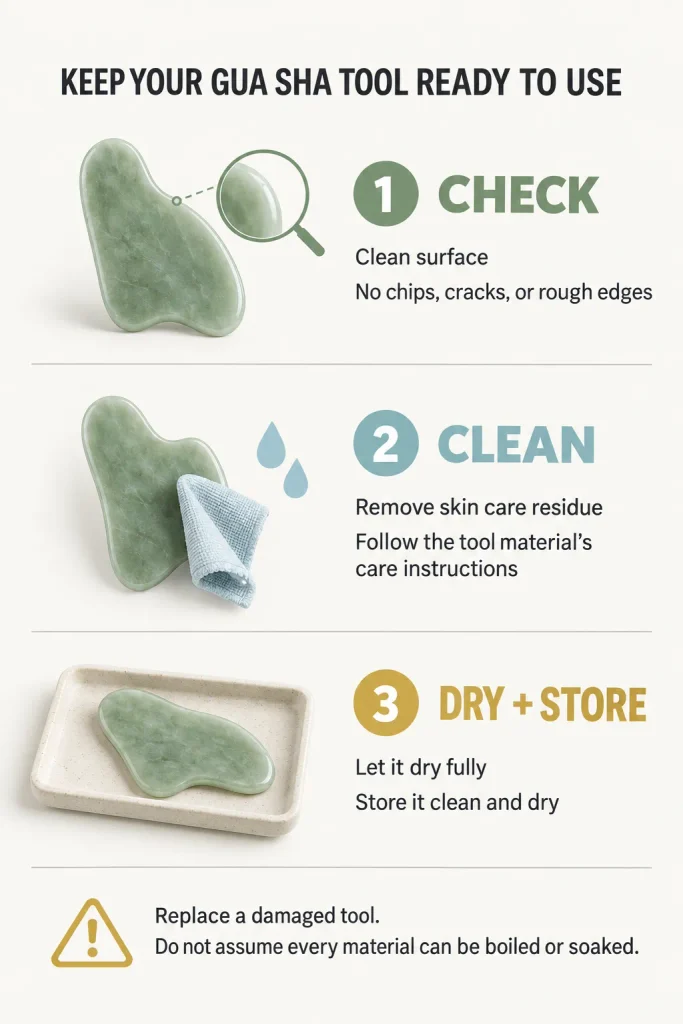
Before each use, make sure the tool is clean and the surface is intact. After use, remove skin care residue according to the care instructions for that material, let the tool dry fully, and store it somewhere clean and dry.
Do not assume every material can be boiled, soaked in a strong disinfectant, or cleaned the same way. Replace a tool that is chipped, cracked, or has a rough edge that could scratch the skin. Avoid sharing a tool unless it can be cleaned appropriately between users.
When to skip gua sha
Do not use the tool over broken, sunburned, inflamed, infected-looking, or actively irritated skin. If your face is already burning, peeling, very tender, or reacting to products, the better next move is usually to simplify and let the skin settle rather than add massage or friction. Our skin barrier guide explains that reset more fully.
It is also sensible to get individualized advice before facial gua sha if you take blood-thinning medication, have a circulation-related condition, are receiving cancer treatment, have an active skin condition in the area, or are pregnant. Your treating clinician can tell you whether massage is appropriate for your situation.
Stop if your skin is telling you to stop
End the session if you develop pain, significant tenderness, bruising, bleeding, worsening swelling, or a strong skin reaction. Persistent or unexplained swelling, signs of infection, or symptoms that keep worsening are not problems to troubleshoot with a beauty tool; seek qualified medical care instead.
A simple beginner routine to remember
- Clean hands, skin, and tool.
- Add enough familiar slip to prevent dragging.
- Keep the tool broad and the pressure very light.
- Glide smoothly outward rather than scrubbing back and forth.
- Use fewer passes if your skin is sensitive.
- Stop at discomfort, irritation, or bruising.
- Clean, dry, and safely store the tool afterward.
Gua sha does not need to earn a place in your routine through dramatic claims. If the gentle ritual feels good and your skin tolerates it, it can stay optional. If it makes your routine harder, irritates your skin, or encourages you to chase permanent sculpting claims, you can skip it without losing the foundations of good skin care.
For the bigger picture, build around cleansing, moisturizing, sun protection, and only the extras that solve a real need. The Bare Alchemy skin care guide is the logical next step if you want to keep the rest of your routine simple.