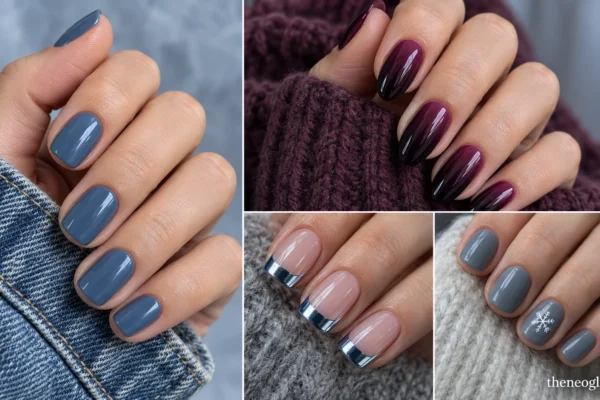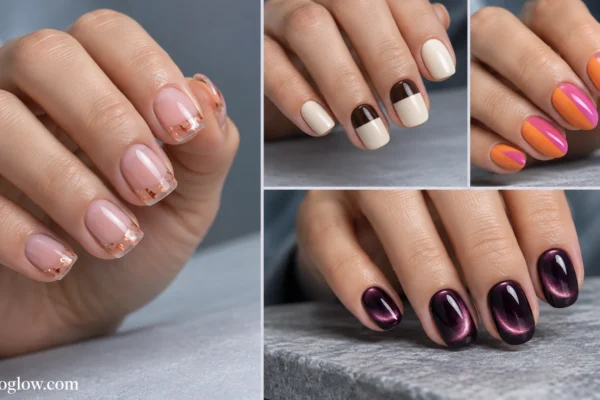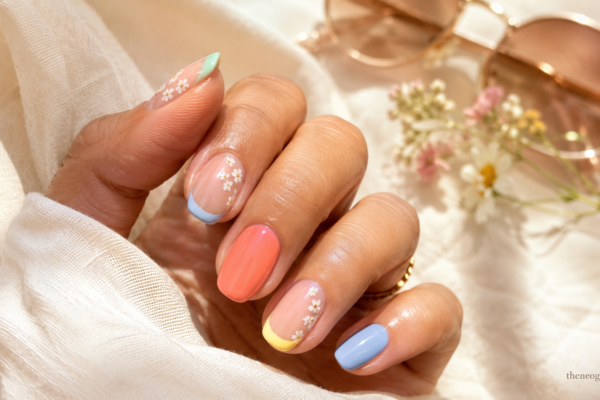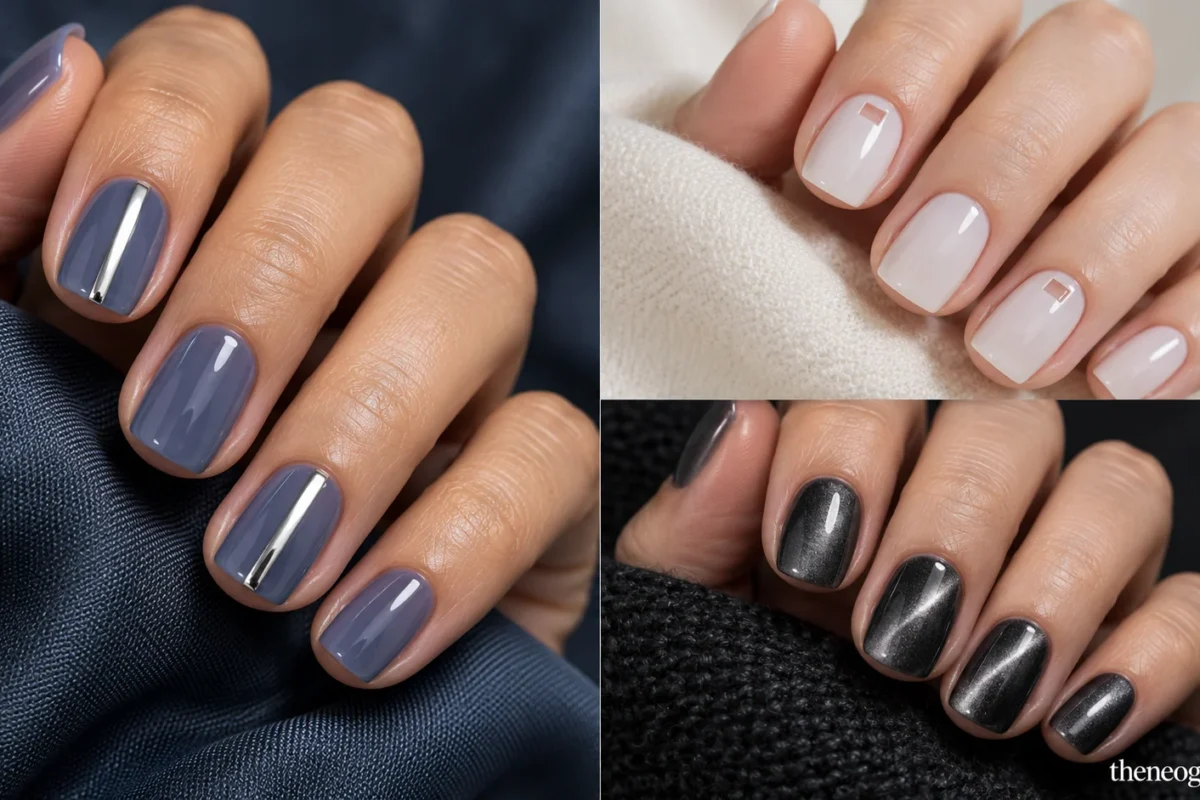
Winter nail photos often hide the most important detail: the manicure has more length than yours. These 17 short winter nails are designed for natural nails that finish close to the fingertip, not medium extensions relabeled as short. You’ll find snowy neutrals, blue geometry, reflective finishes, and one recognizable snowflake, with each look built around the space it actually needs.
The goal isn’t to fit an entire winter scene onto every nail. It’s to make one clear decision about where the color or detail belongs, then keep enough open space for the design to read. Use the table to narrow your options and the descriptions to save a reference that can be reproduced at short length.
Find a Winter Design That Fits Your Nail Length
| Your available space | Design that fits | Start with | What to avoid |
|---|---|---|---|
| Almost no free edge | Side fades, flecks, small cutouts | 1–3, 8 | Deep French bands |
| Short square or squoval | Rails, panels, compact plaid, broken tips | 5–7, 10 | Tiny all-over illustrations |
| Short round or shallow oval | One soft drip, magnetic glow, centered pearl | 4, 11–12, 15 | Wide raised accents |
| A small, genuine almond tip | Curved silver orbit | 17 | Filing deeply into sidewalls |
| One wider thumbnail for art | Cropped snowflake or compact texture | 7, 16 | Shrinking a complete scene onto the pinky |
Every design below keeps the surface flat or smoothly finished. For a wider seasonal gallery with medium-length options, explore NeoGlow’s winter nails collection; this page stays with the short-nail versions.
Snowy Neutrals With Room to Breathe
1. Side-Fog Rosewater Rounds
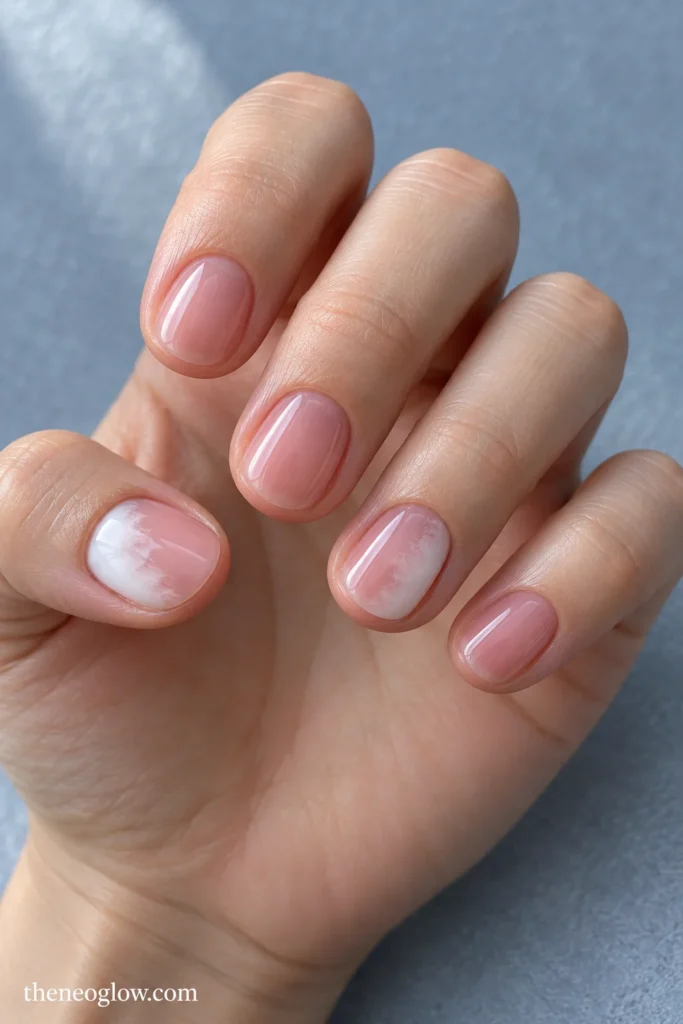
Give extra-short round nails a transparent cool rosewater base. On the thumb and ring finger, blend an opaque milky-white haze inward from one sidewall, stopping before it reaches the opposite edge. Keep the other fingers plain and glossy. This is a sideways cloud, not a French tip or a full white manicure. It suits small nail plates because the blurred edge doesn’t require a precisely drawn motif.
2. Snow-Glass Notched Squares
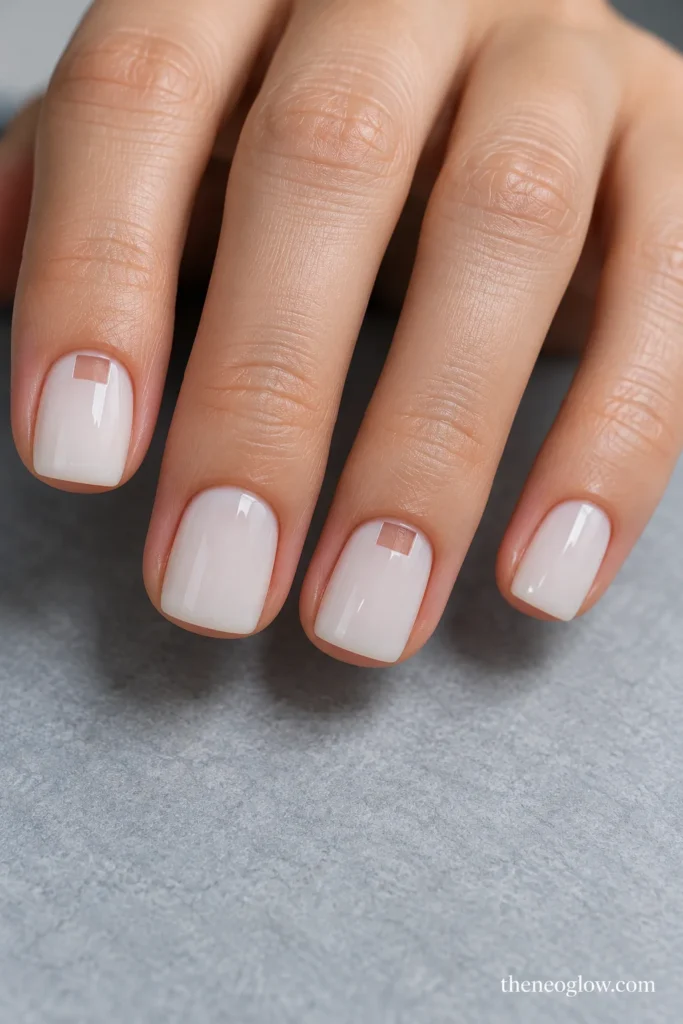
On very short natural squares, apply translucent cool-white polish. Leave a tiny clear rectangular notch just above the cuticle on the index and ring nails, with the remaining nails fully milky. Unlike a curved half-moon, the little window has squared corners and sits at the base rather than the tip. Use a suitable guide or a fine brush; the straight edges will show unevenness more readily than a soft gradient.
3. Speckled Granite Squovals
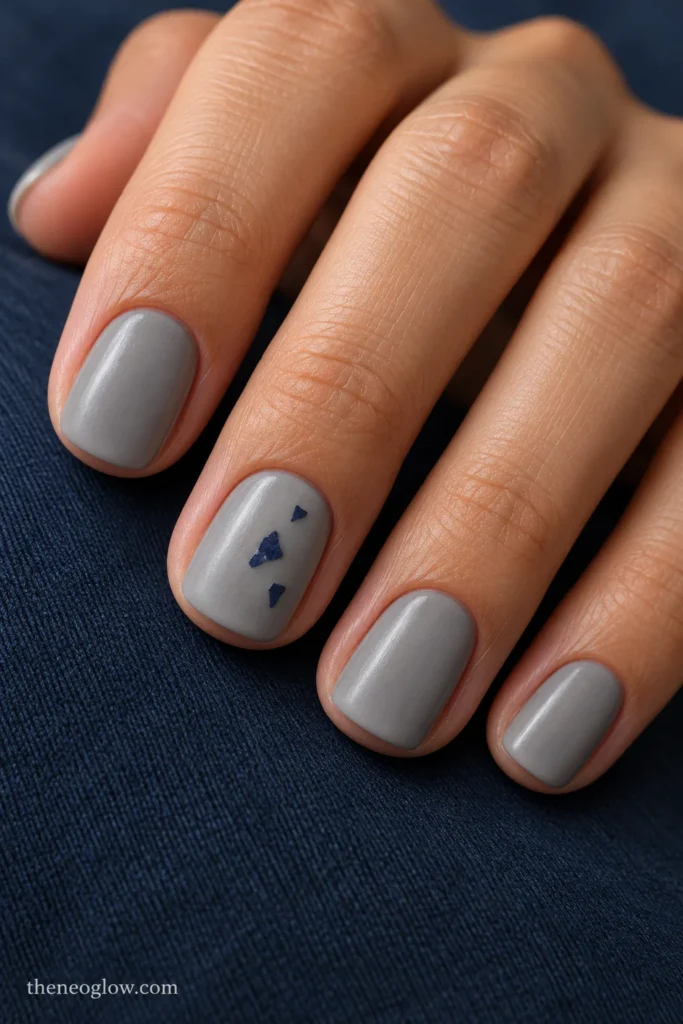
Paint short squovals in opaque stone gray with a smooth satin finish. Place three irregular, ink-blue flecks in a loose diagonal on each middle nail, making one larger than the others; leave every other nail solid stone. The flecks should be tiny flat fragments, not perfectly round snowfall dots. Choose this for a winter neutral with a little texture that won’t resemble a Christmas print.
4. Snowmelt Single-Drip Ovals
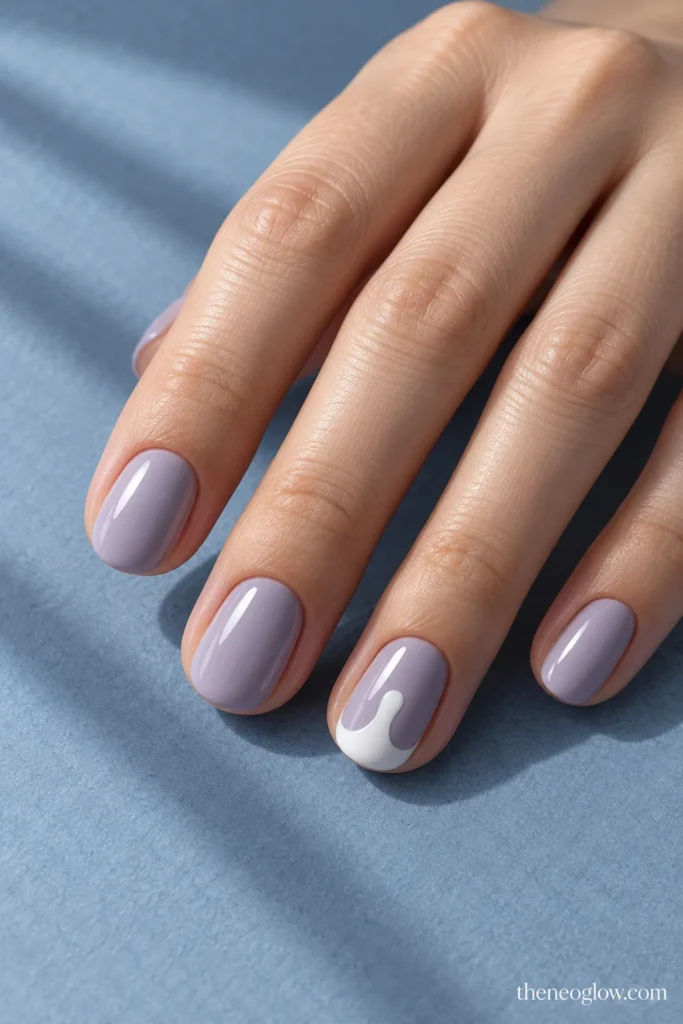
Short shallow ovals wear a glossy muted lilac base. On the ring fingernail only, pull one rounded opaque-white drip downward from the central free edge, ending just above the middle of the plate. Its width should be enough to remain visible but leave lilac on both sides. One drip provides the icy character; several narrow icicles would crowd a small nail.
5. Porcelain Side-Rail Squares
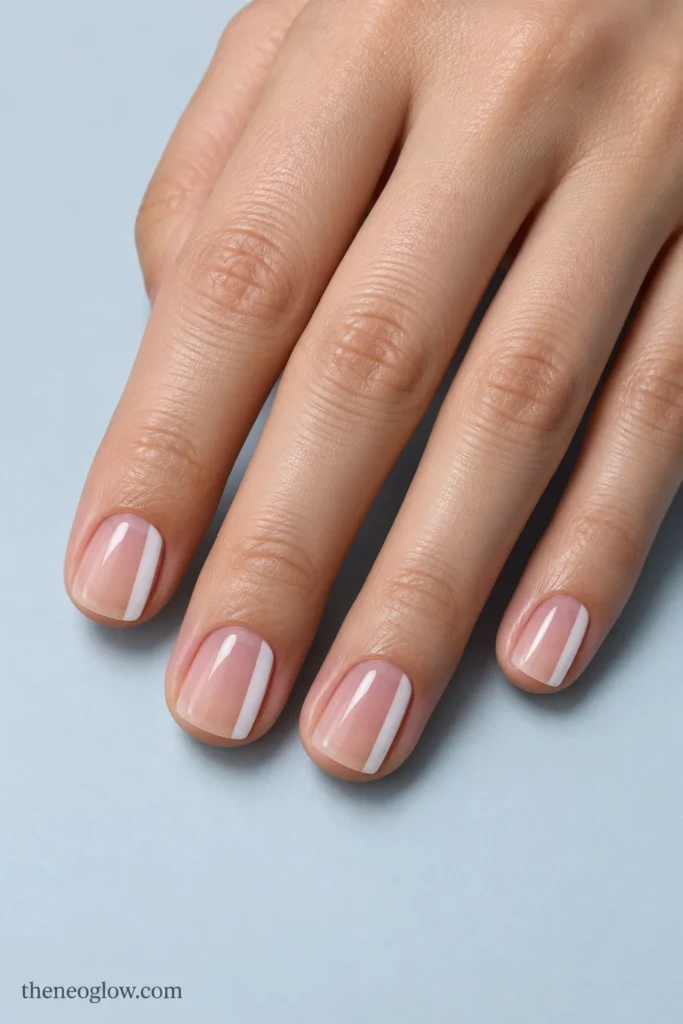
Start with a sheer neutral-pink base on extremely short soft squares. Paint one opaque porcelain-white vertical rail along the outer side of each nail, from just beyond the cuticle to the short free edge. Keep the strip broad enough to look intentional, yet leave most of the pink center exposed. Unlike a white French manicure, this line lives beside the nail rather than across its tip.
Compact Blue Geometry
6. Frosted-Teal Side Panels
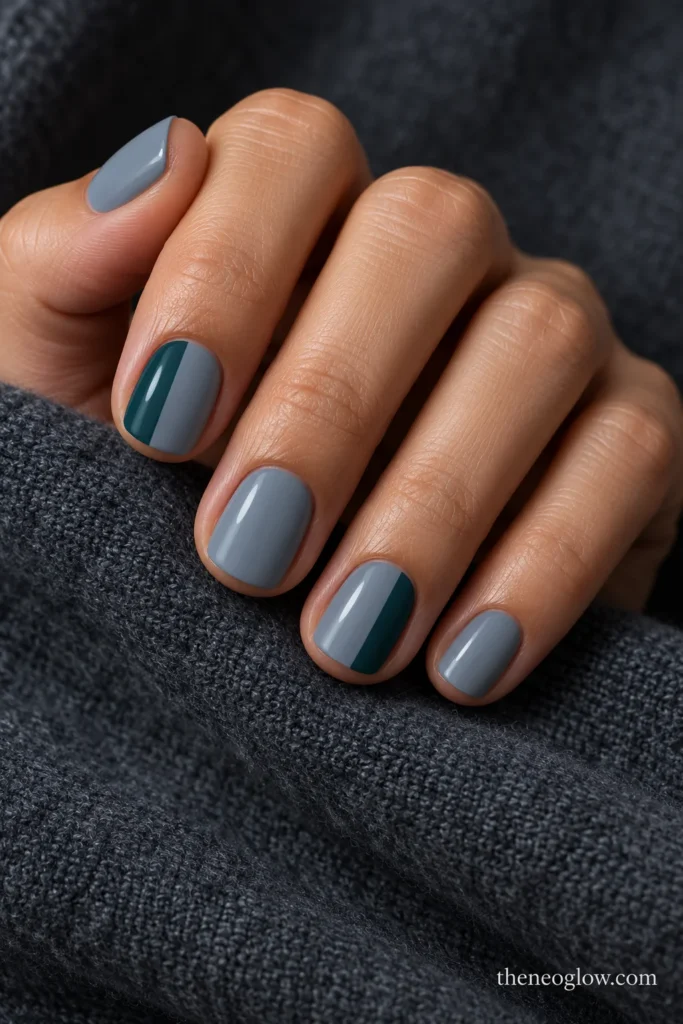
Cover short squovals in opaque gray-blue cream. On the index and ring nails, fill the outer third with a straight, deep-teal vertical panel; the remaining fingers stay gray-blue. The two fields meet in one crisp line running lengthwise. This offers bold winter color without relying on tip length or metallic effects, although the straight division takes a steadier brush than a solid manicure.
7. Windowpane Thumb Plaid
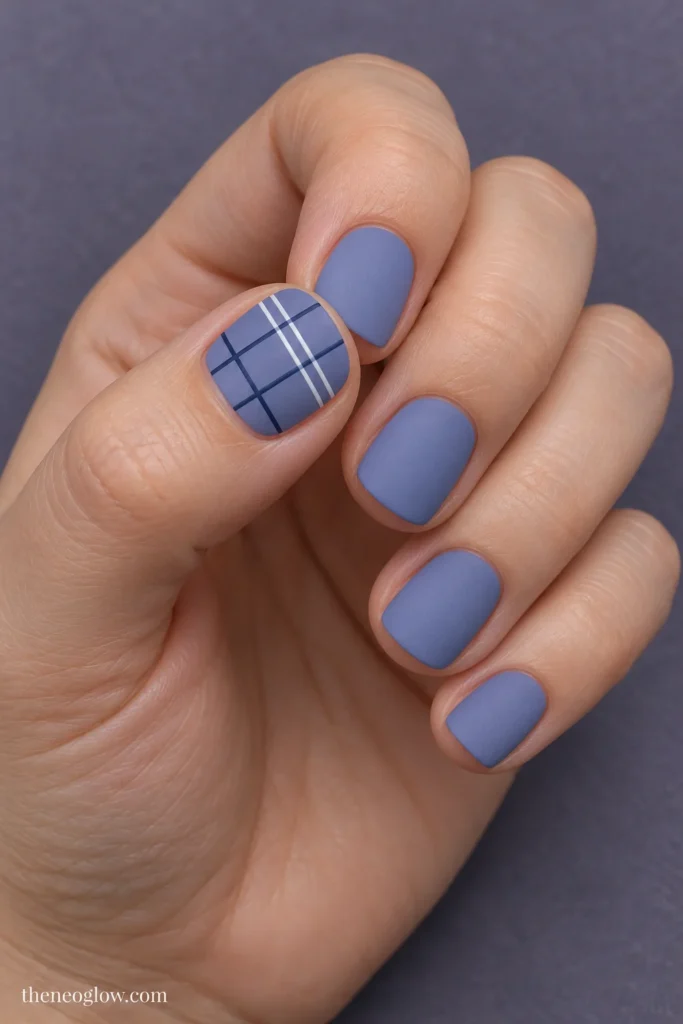
Choose very short squovals in matte dusty periwinkle. On each wider thumbnail, cross two fine chalk-white lines with two darker navy lines to create a small offset windowpane near the center. All smaller nails remain plain periwinkle. Don’t extend the grid to the pinkies: the larger thumb gives four lines enough separation to resemble textile plaid rather than a muddled checkerboard.
8. Deep-Navy Stair-Step Notches
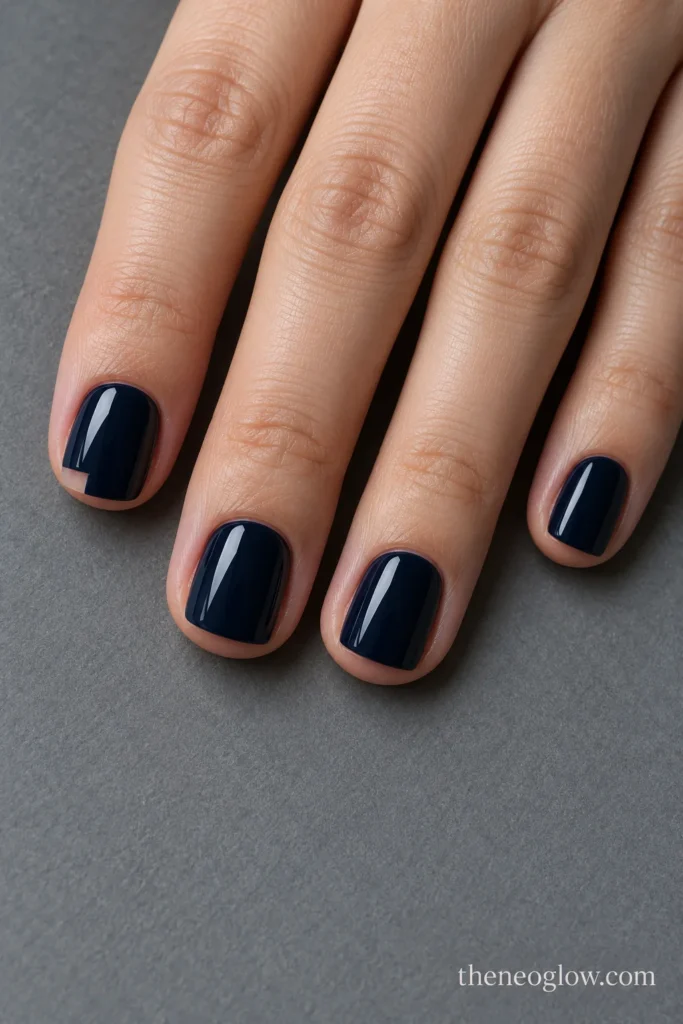
Use glossy opaque midnight navy on extra-short square nails. On each index fingernail, leave a tiny unpainted stair-step opening entering from one side near the tip: one short horizontal gap meeting one short vertical gap. All other fingers stay solid navy. This geometric negative-space corner is more legible than a tiny painted symbol, but only if the two square steps stay crisp.
9. Ski-Track Diagonals
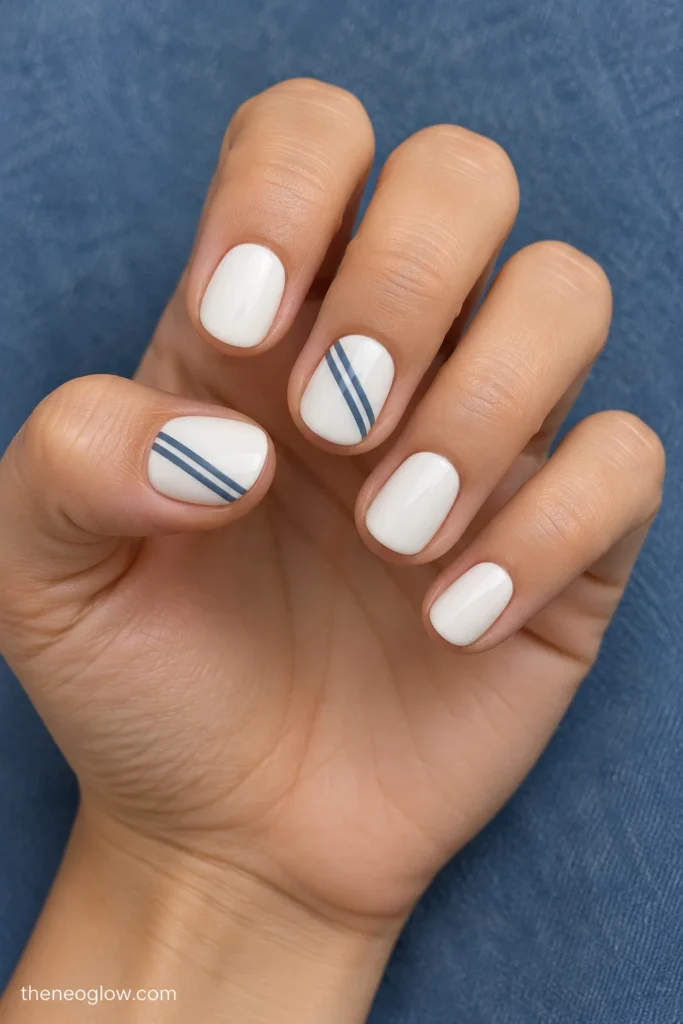
Give short round nails an opaque winter-white base. Across each thumbnail and middle finger, paint exactly two thin, parallel steel-blue diagonal strokes running from the upper left toward the lower right of the central plate. Leave ample white between the strokes and around the edges; all other fingers stay white. These are clean tracks across the nail, not candy-cane stripes wrapping the free edge.
10. Broken Ice-Blue Micro French
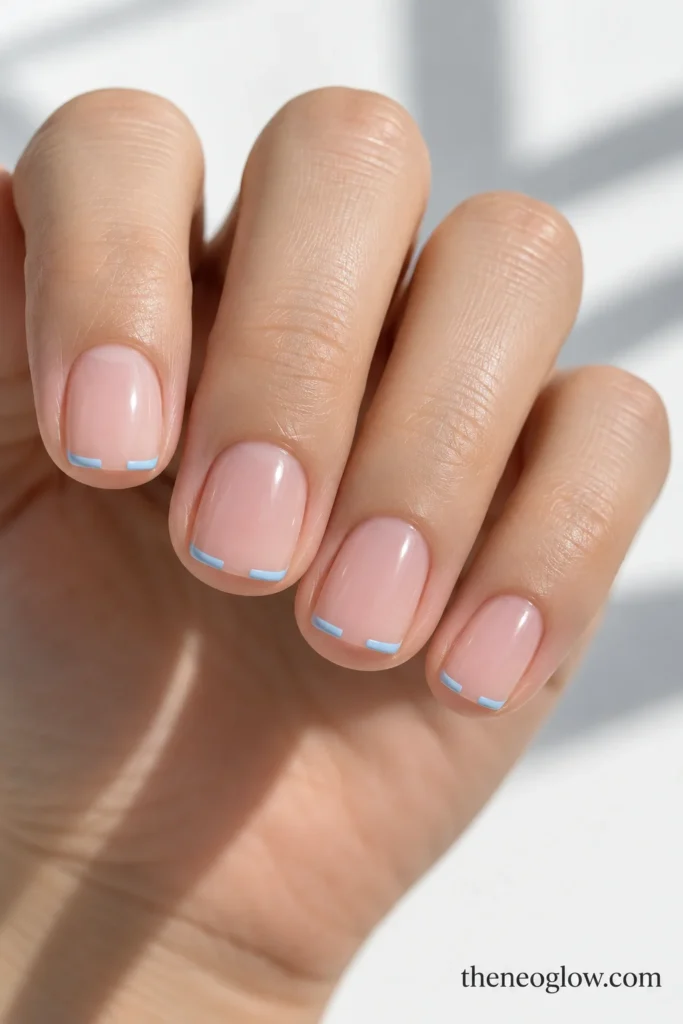
Keep short squovals translucent cool pink. Along each tiny free edge, draw two separated ice-blue horizontal strokes, leaving a visible gap at the center; both strokes together should remain thinner than an ordinary French band. This construction works particularly well on short square winter nails because the straight edge provides a guide. If you cannot leave a clean central gap, switch to Idea 5 rather than widening the tip.
Chrome, Pearl, and Magnetic Light
11. Diagonal Pewter Cat-Eye
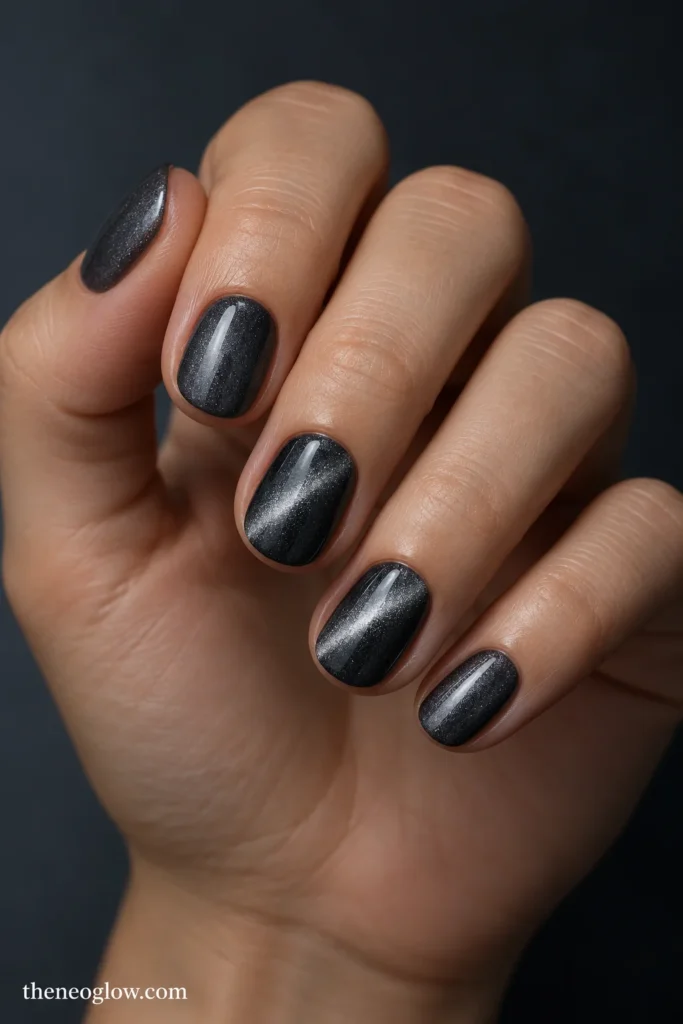
Use short natural ovals coated in smoky charcoal magnetic polish. On the middle and ring fingers, direct one narrow pewter reflection diagonally across the plate, with dark charcoal clearly visible on either side; keep the remaining nails in a softer all-over charcoal shimmer. Unlike a long central cat-eye beam, the light crosses a short nail at an angle. This is best handled by someone familiar with the exact magnetic-polish system.
12. Horizontal Lilac Velvet
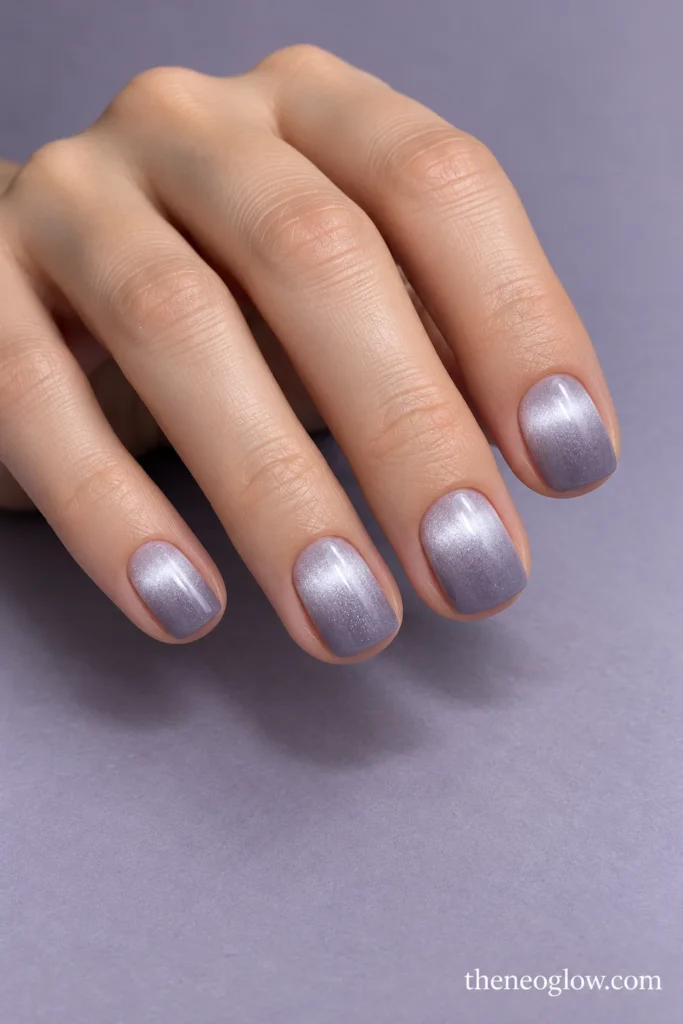
For a softer effect, keep short squovals in pale gray-lilac magnetic polish and gather the reflection into a broad, diffuse horizontal glow near the cuticle on every nail. The tips remain visibly cooler and darker. There is no drawn line, chrome outline, or gemstone. This gives the limited nail plate one continuous change in light instead of dividing it into multiple motifs.
13. Mirror-Silver Pinstripes
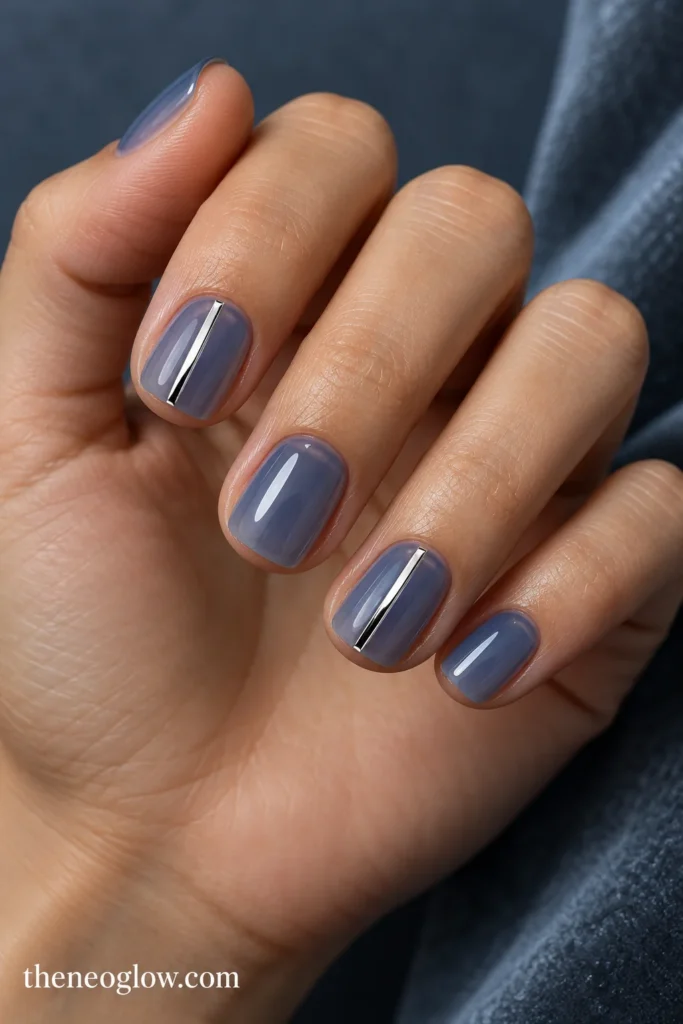
Coat very short soft squares in translucent smoky-blue glaze. Add a single narrow mirror-silver strip running vertically, slightly off-center, on the index and ring fingers; the rest stay blue glass. The silver should be reflective rather than glittery, with clear base visible on both sides. It offers a metallic statement without using an entire short tip as a chrome French cap.
14. Split-Foil Mocha Tiles
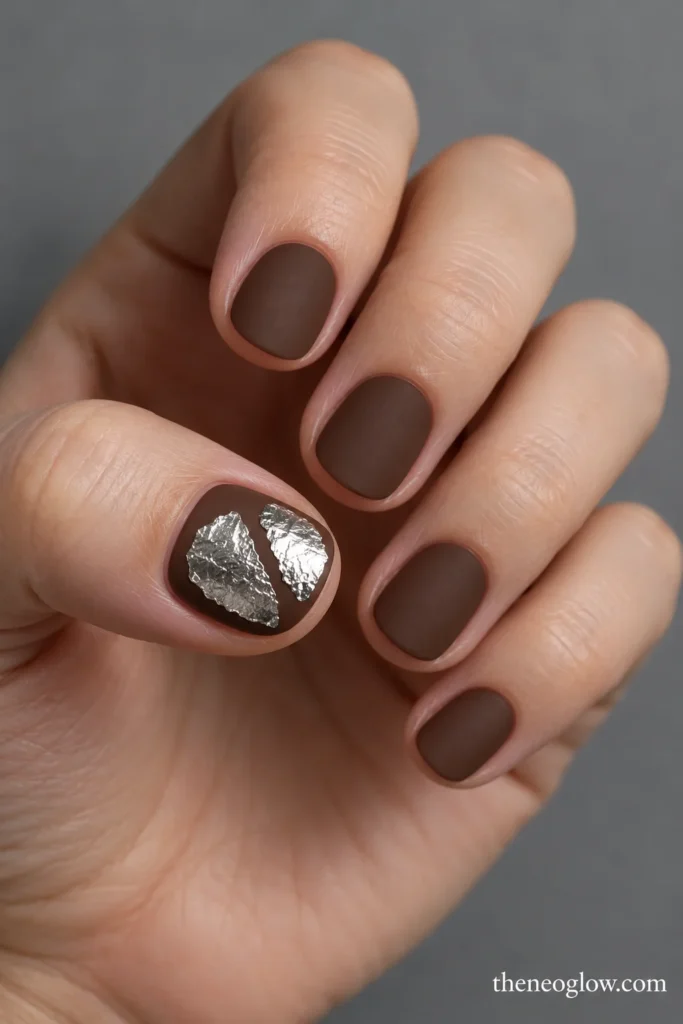
Try opaque dark mocha on ultra-short rounds with a soft matte finish. Across the center of each thumbnail, place two flat, irregular silver-foil tiles separated by one narrow mocha gap, as though a small metallic patch has split in two. All smaller fingers stay matte mocha. This is not glitter scattered over the nail or a single fleck near the cuticle; the dark channel between the two pieces makes the composition recognizable. Keep both pieces sealed smooth, with no lifted or sharp edges.
15. Opal Spotlight on Blue Glass
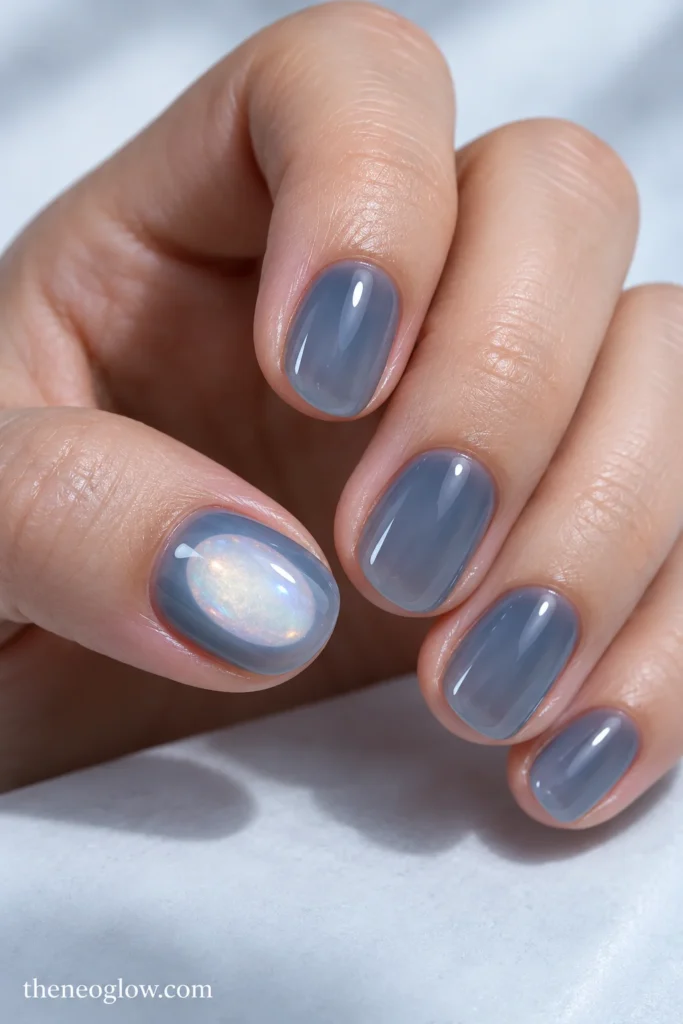
Tint short shallow ovals with translucent gray-blue jelly. Give the thumbnail one centered oval of pale opalescent pearl, with a visible blue border on every side; the other nails retain their transparent blue finish. The luminous patch should look flat and softly reflective, not like a raised stone. A thumb-sized spotlight displays the finish more clearly than miniature pearl circles on all ten nails.
Chrome powder, pearly lacquer, and magnetic polish are not interchangeable materials. OPI’s guide to glaze toppers and chrome powders explains how its lacquer-compatible glazes differ from powders used with specific gel systems. Match the desired reflection to a compatible product, and follow its own application and curing instructions rather than improvising across systems.
Two Winter Accents That Stay Small
16. Cropped Snowflake on Black Plum
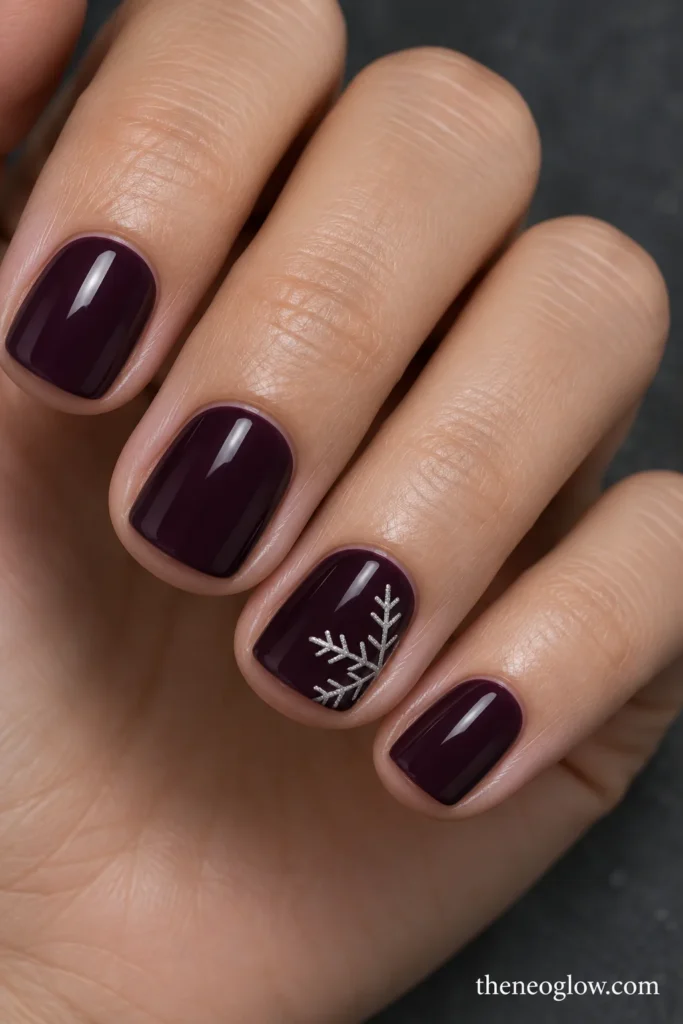
Paint ultra-short soft-square nails a glossy blackened plum. On one ring fingernail, show only three main arms of a fine icy-silver snowflake entering from the lower outer corner; the imaginary center sits beyond the nail’s edge. Keep each visible arm separated, and leave every other nail solid plum. This is intentionally a partial snowflake, not a full six-armed emblem squeezed onto a small plate. The dark base carries it well beyond December.
17. Silver Orbit on True Short Almonds
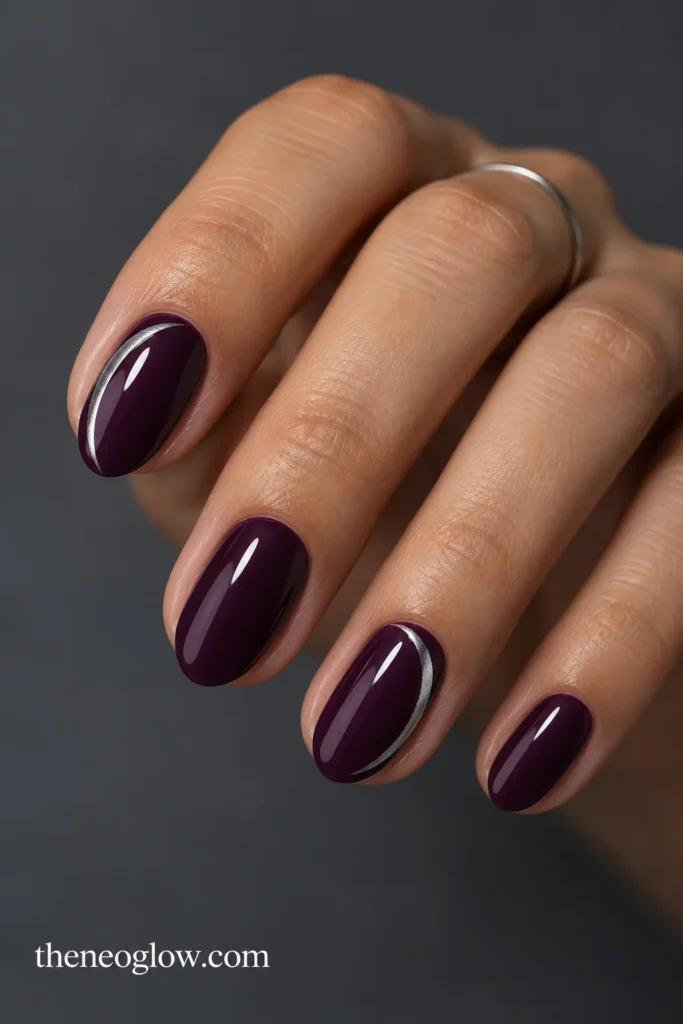
A genuinely short almond needs a little natural free edge, not an extended point. Coat that small tapered outline in glossy deep aubergine, then sweep one narrow silver C-shaped arc along the side of the index and ring fingernails, starting near the base and ending before the tip. Leave the centers purple and the other nails plain. If your tips cannot form an almond without excessive side filing, Idea 13 delivers a similarly sleek metallic accent on soft squares instead.
Scale the Effect Instead of Shrinking Everything
Four constructions need special editing on a short nail. A snowflake becomes two or three visible branches entering from an edge, while the imagined center can remain outside the frame. A French tip becomes a hairline or two separated marks instead of a deep band. Chrome can move into one slim strip, divided tile, or focal oval. Cat-eye light can cross the plate diagonally or gather as a short horizontal glow; it doesn’t need a long nail to show direction.
Keep the thumbnail as your larger art surface and give smaller fingers simpler echoes of the color. Always check how the actual free edge looks before copying a photo; if you need a more detailed shape comparison, NeoGlow’s short nails guide explains which silhouettes can be achieved without pretending you have extra length.
Wear and Maintain the Finish You Choose
For a regular-polish routine, the flat cream, jelly, rail, and small-mark ideas are more accessible than a specialized mirror or magnetic effect. Sheer colors tend to make grow-out less conspicuous, while chips on dark navy, black plum, or a crisp white rail can be more noticeable. Matte finishes may develop shiny rubbed spots; a smooth topcoat over decals or foil helps avoid catching on knitwear.
If you choose gel to get a particular reflective result, plan for correct application and removal rather than picking it only from a photograph. The American Academy of Dermatology’s gel manicure care recommendations cover UV exposure precautions, avoiding polish picking, and moisturizing nails between manicures. Don’t peel or pry off a lifting coating, and seek professional guidance for persistent nail changes or irritation.
These are winter looks, not a substitute for a holiday set. For bows, trees, red-and-green designs, and other festive symbols scaled to tiny nails, visit NeoGlow’s short Christmas nails collection.
The simplest way to choose is to save one idea with its exact shape, color coverage, finish, and accent location. For almost no free edge, start with the side-fog, granite, or stair-step looks. For more reflection, compare the pinstripe and diagonal cat-eye. The point is to keep the winter detail visible without making the nails longer to accommodate it.