An everything shower routine is best treated as an occasional longer reset, not the standard every shower has to meet. Keep the same skin-friendly foundation you use on an ordinary day, then add only the grooming or self-care steps that have a clear job for you.
The simplest rule is this: keep cleansing and post-shower moisture as the core, then choose optional steps such as hair care, exfoliation, or shaving based on what you actually need that day. You do not have to scrub, shave, mask, oil, and use multiple active products in one session for the shower to “count.”
Quick answer: build the routine around one or two extras
Before you turn on the water, decide what makes this shower different from an ordinary one. Maybe it is a hair-wash day. Maybe you want to shave. Maybe rough-feeling body skin makes gentle exfoliation useful. Pick the extras first instead of adding every possible step by default.
If you mainly need the repeatable order for ordinary showers, use the Shower Routine guide. This page owns the longer, occasional reset and the decision about what belongs in it.
| Keep as the core | Add only when useful | Skip or separate when needed |
|---|---|---|
| Warm water, gentle cleansing, thorough rinsing, post-shower moisturizer | Your usual hair-wash steps, exfoliation, shaving, a richer body moisturizer | Multiple exfoliants on the same area, aggressive scrubbing, optional steps over irritated or broken skin |
Before the shower: choose your reset
An everything shower becomes easier when you decide what you are trying to accomplish before you start. Use this short check instead of a product checklist.
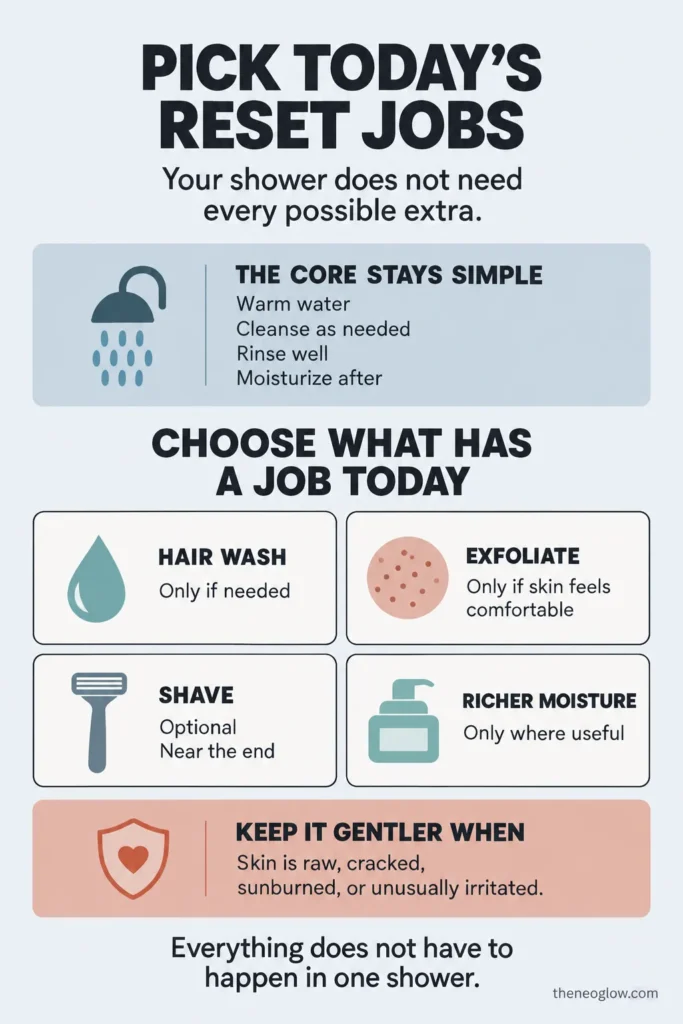
- If your hair needs washing, plan your usual shampoo and conditioner or treatment according to their directions.
- If you want smoother-feeling body skin, decide whether exfoliation is actually needed and whether your skin feels comfortable enough for it.
- If you want to shave, plan to do it later in the shower after the hair and skin have been wet.
- If your skin already feels stingy, raw, sunburned, cracked, or unusually irritated, make the reset gentler rather than more elaborate.
You can also set out your towel and moisturizer before showering. That small step makes it easier to moisturize promptly afterward instead of getting distracted while skin dries completely.
In the shower: use an order that keeps optional steps optional
- Start with comfortably warm water rather than very hot water.
- Do your normal hair-wash steps if this is a wash day.
- Cleanse the body where sweat, odor, sunscreen, or buildup makes cleansing useful.
- Exfoliate only if you chose that step and the area feels comfortable.
- Shave near the end if shaving is part of your plan.
- Rinse away cleanser, exfoliant, shaving product, and hair-product residue thoroughly.
If you are prone to dry skin, a longer shower is not automatically better. The American Academy of Dermatology recommends warm rather than hot water, limiting showers to about five to ten minutes when managing dry skin, and applying moisturizer while skin is still damp. Its dry-skin bathing guidance is a useful reference if long showers leave you feeling tight or itchy.
Exfoliation is the step most likely to turn “extra” into “too much”
You do not need a body scrub, exfoliating tool, and chemical exfoliant in the same everything shower. Choose one method only if it adds a clear benefit for you, then follow the directions for that product or tool.
The American Academy of Dermatology notes that exfoliation is not right for everyone and that frequency depends on skin type and the method being used. It also recommends gentle technique and advises against exfoliating over open cuts, wounds, or sunburned skin. See its safe exfoliation guidance for the full precautions.
If your skin becomes increasingly red, dry, sore, or stingy, pause exfoliation. More friction is not a useful way to “finish” the routine.
If you shave, do not make exfoliation a required partner
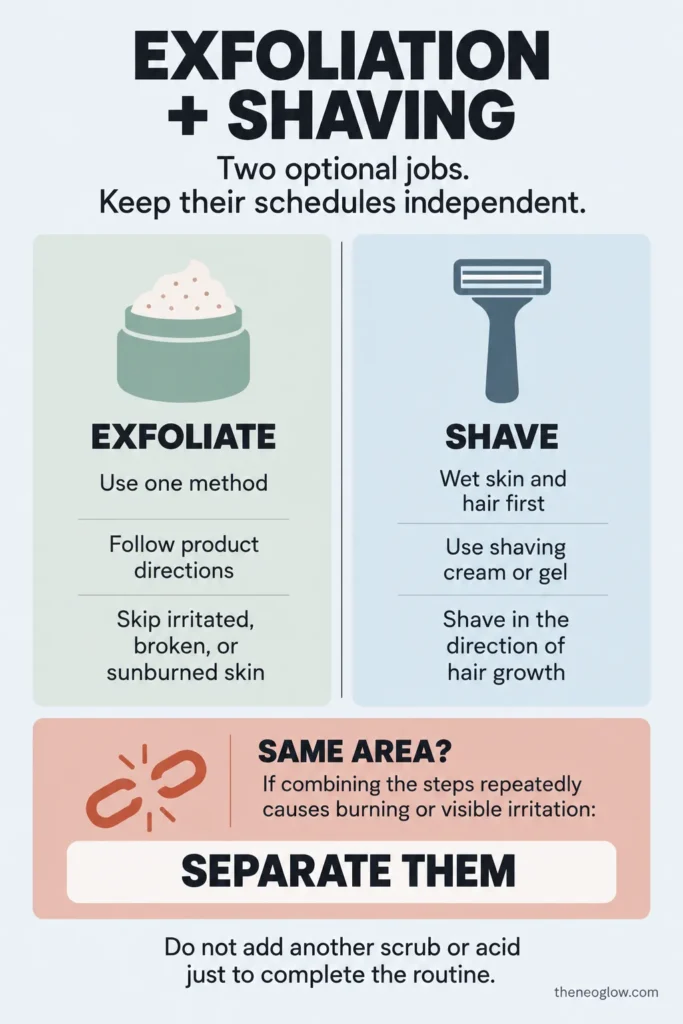
Shaving is optional, and it does not need an exfoliation step immediately before it to be effective. If you do shave, letting the skin and hair get wet first can make the process more comfortable. The AAD’s shaving guidance recommends wetting the skin and hair, using shaving cream or gel, shaving in the direction of hair growth, rinsing the razor between passes, and storing the razor in a dry area.
If scrubbing and shaving the same area in one session repeatedly leaves you burning or visibly irritated, separate those steps. Do not add an acid, another scrub, or a strong leave-on active to freshly shaved, uncomfortable skin just because the routine is supposed to feel “complete.”
After the shower: finish with moisture, not another product pile
Pat your skin dry instead of rubbing aggressively, and leave it slightly damp. Then apply a moisturizer that feels comfortable enough to use consistently.
You do not automatically need lotion, body butter, body oil, and an overnight body treatment together. Start with one moisturizer. If you want help choosing between lighter and richer body-care formats, the Body Care guide explains the category choices without turning them into mandatory layers.
If a richer cream helps drier areas feel more comfortable, use it where you need it. If a basic lotion is enough, that is also a complete finish. The goal is comfortable skin, not the maximum number of layers.
Use this everything-shower checklist
| Stage | Core job | Optional decision | Reason to skip |
|---|---|---|---|
| Before | Choose the purpose of the shower | Hair wash, exfoliation, shaving, or a richer body-care finish | You are adding a step only because it is trending |
| During | Warm water and gentle cleansing | One irritation-prone extra when useful | Skin is already raw, cracked, sunburned, or uncomfortable |
| Near the end | Rinse thoroughly | Shave if desired after hair and skin have softened | Shaving the area is already causing significant irritation |
| After | Pat dry and moisturize damp skin | Use a richer texture on drier areas | Extra layers do not improve comfort |
A quick reset and a full reset can share the same foundation
Quick reset
Choose this when you want to feel refreshed without turning the shower into a project:
- Warm water.
- Hair wash only if needed.
- Gentle body cleansing.
- Thorough rinse.
- Moisturizer after showering if your skin benefits from it.
Full reset
Choose this when several grooming tasks have accumulated and your skin feels comfortable:
- Your usual hair-wash routine if needed.
- Gentle body cleansing.
- One exfoliation step if useful and tolerated.
- Shaving near the end if desired.
- Thorough rinse.
- Post-shower moisturizer, with a richer texture only where useful.
The difference is not that the full version is “better.” It simply groups more optional tasks into one session.
How often should you do an everything shower?
There is no skin-care reason to force a fixed everything-shower schedule. Use the ritual when it is convenient to group several grooming tasks, and let the irritation-prone steps keep their own schedules.
Exfoliation frequency, for example, should depend on your skin, the method, and the product directions rather than the fact that you are having an everything shower. Shaving frequency is personal as well. A routine that feels good once does not become safer because it is repeated on a calendar.
What to leave out when your skin feels irritated
When skin feels unusually tight, hot, raw, stingy, or visibly irritated, simplify. Skip scrubs, exfoliating tools, strong leave-on acids on that area, and any optional product that repeatedly worsens discomfort. Use warm rather than hot water, cleanse gently, rinse well, and moisturize.
If your wider routine already feels overloaded, the Skin Barrier Mistakes guide can help you identify places to simplify instead of adding another “repair” step.
Stop using a product that causes significant burning, swelling, blistering, or worsening irritation. Persistent dryness despite gentle self-care, repeated burning or stinging, painful cracking, open sores, a spreading rash, or signs of infection deserve qualified medical evaluation rather than a more elaborate shower routine.
Make the ritual feel special without making it harsher
The relaxing part of an everything shower does not have to come from stronger products. Give yourself enough time, use a clean towel, put on comfortable clothes afterward, play music or a podcast, and keep the bathroom setup uncluttered. Those details can make the reset feel intentional without adding another exfoliant or treatment.
A useful everything shower routine should leave you feeling clean, comfortable, and reset—not sore, stripped, or responsible for completing a long checklist. Keep the core simple, choose the extras deliberately, and return to your ordinary shower routine on regular days.