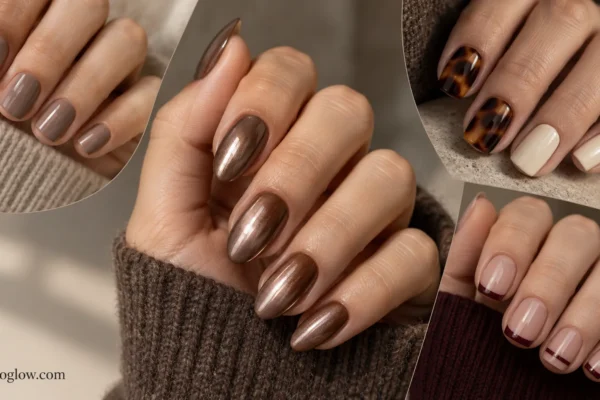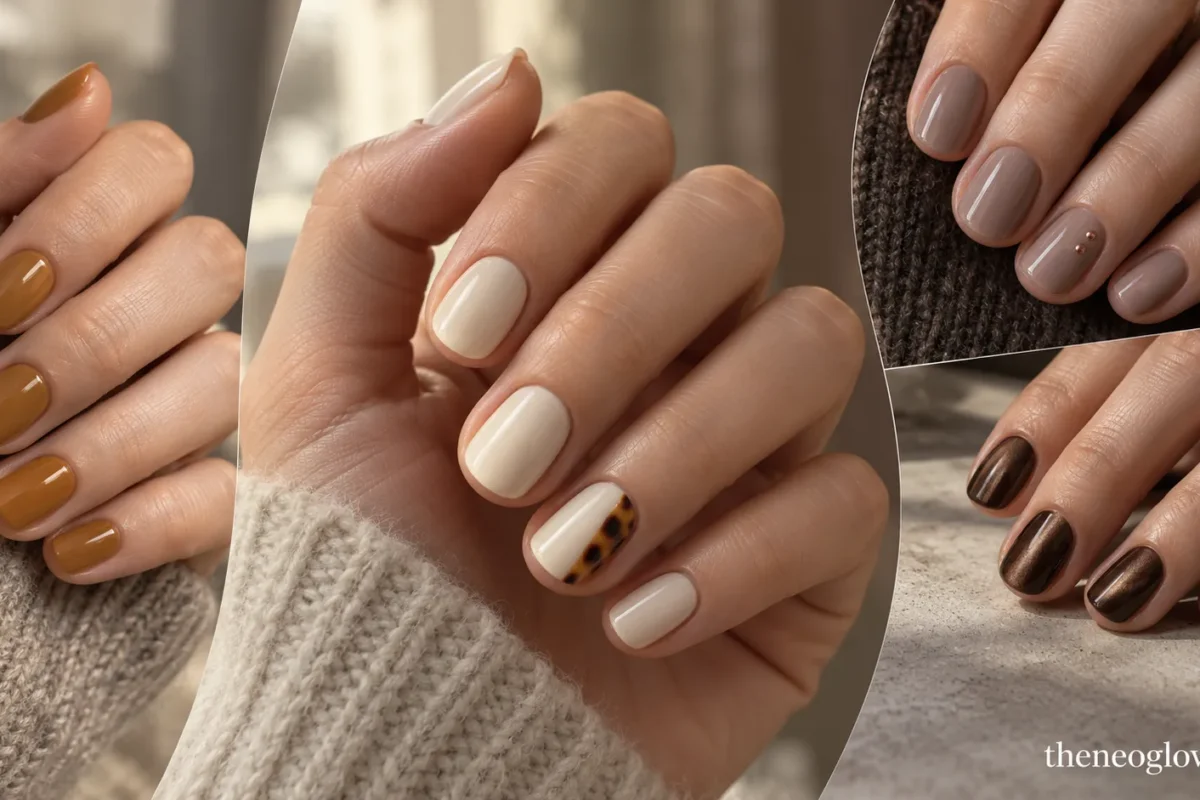
Short fall nails work best when the design is planned for the space you actually have. Rich brown, olive, wine, or rust can look polished on an extra-short plate, while a tiny line, corner accent, or narrow French edge adds detail without crowding it.
These 21 ideas stay on genuinely short square, squoval, round, or shallow oval nails. Instead of shrinking long almond or coffin references, each look uses fall color, controlled placement, and realistic proportions. A quick shape-and-maintenance guide helps you choose a manicure that fits typing, daily errands, work, and regular touch-ups.
Choose Shape, Detail Density, and Maintenance First
If you are still deciding which outline is realistic for your current free edge, use NeoGlow’s best nail shape for short nails guide before choosing the artwork. Here, “short” means the nail ends near the fingertip or extends only slightly beyond it.
| Short shape | Best detail density | Fall designs that fit well | Maintenance |
|---|---|---|---|
| Soft square | Low to medium | Opaque creams, slim borders, corner blocks | Low to medium |
| Squoval | Low to medium | Micro French, dots, side details, tonal mixes | Low |
| Round | Low | Glossy solids, cuticle accents, jelly color | Low |
| Shallow oval | Low to medium | Sheer layers, soft gradients, curved details | Low to medium |
Maintenance here means how fussy the design is to keep looking even, not a wear-time guarantee. A short nail does not need to look bare. It needs one clear hierarchy: let color carry most of the manicure, then add detail only where negative space remains.
Clean Fall Color for Genuinely Short Nails
1. Toasted Oat Soft Squares
Choose an opaque oat-beige with a warm toasted undertone and keep the free edge almost flush with the fingertip. Soft square gives the cream shade structure without needing length.
On a very small plate, skip art. The clean cuticle curve and even color are enough, and touch-ups stay simple.
2. Muted Marigold Short Rounds
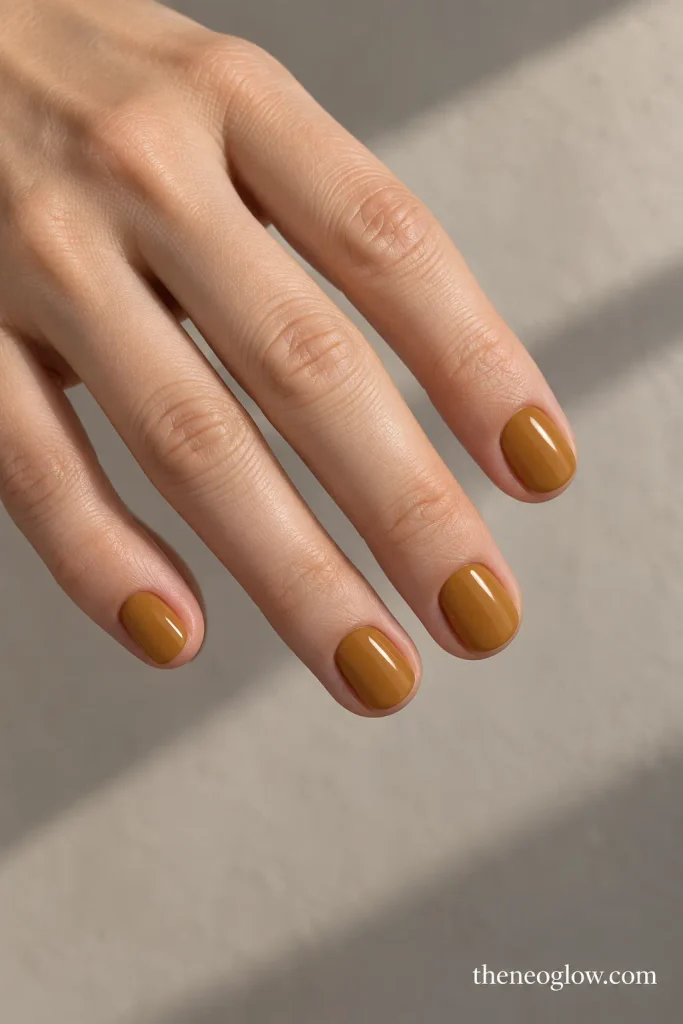
Use a brown-ochre marigold rather than bright summer yellow. Keep the nails short and round, following the fingertip curve so the warm color feels compact.
Keep the scale simple with one solid shade across the hand. If it feels too vivid, move toward mustard, ochre, or caramel rather than adding neutral artwork.
3. Moss Green Squovals
A medium moss or softened olive gives fall color without relying on brown or burgundy. Short squovals keep the edge neat while softened corners stay practical.
Keep the set glossy and unpatterned, or make only the ring finger one step darker. Skip leaves and vines; the green already supplies the seasonal cue.
4. Brick Rose Short Ovals
Brick rose sits between muted red, clay, and dusty pink. Wear it on shallow short ovals with just enough free edge for a gentle curve.
Keep the oval broad rather than narrowing the sides. Do not force a short plate into a pointed outline just to imitate a long almond reference.
5. Blackberry Jelly Rounds
Choose a translucent blackberry, plum, or black-cherry jelly and let some natural nail depth show through. Short rounds keep the dark shade from feeling heavy.
Build color with thin translucent layers instead of art. The finish creates dimension without taking up visual space.
Brown and Earthy Fall Nails With Small-Plate Structure
6. Cocoa Cream Short Squares
A medium cocoa-brown cream looks clean on short squares with lightly softened corners. Adjust toward milk chocolate or deeper espresso if you want more or less contrast.
Let the square outline and opaque brown do the work; extra art is unnecessary on this compact plate.
7. Espresso Side-French Squovals
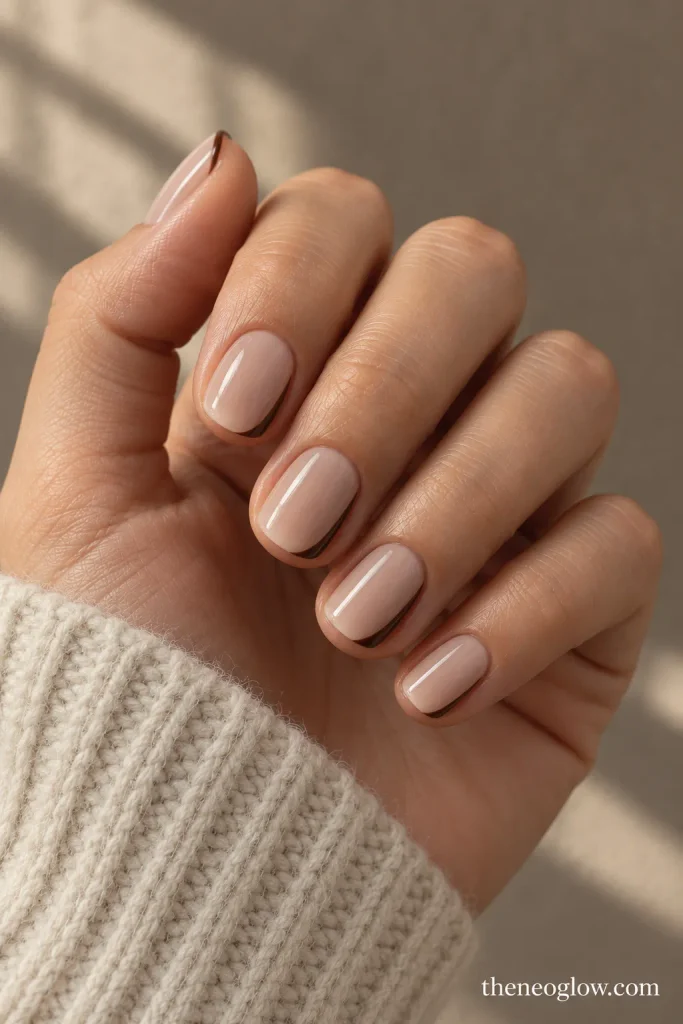
Start with a sheer beige or pink base, then place a narrow espresso curve along only one side of the free edge. Short squoval gives the line a stable corner to begin from.
Keep the French band shallow. A partial edge uses less vertical space and leaves most of the base visible.
8. Caramel Cuticle Slivers
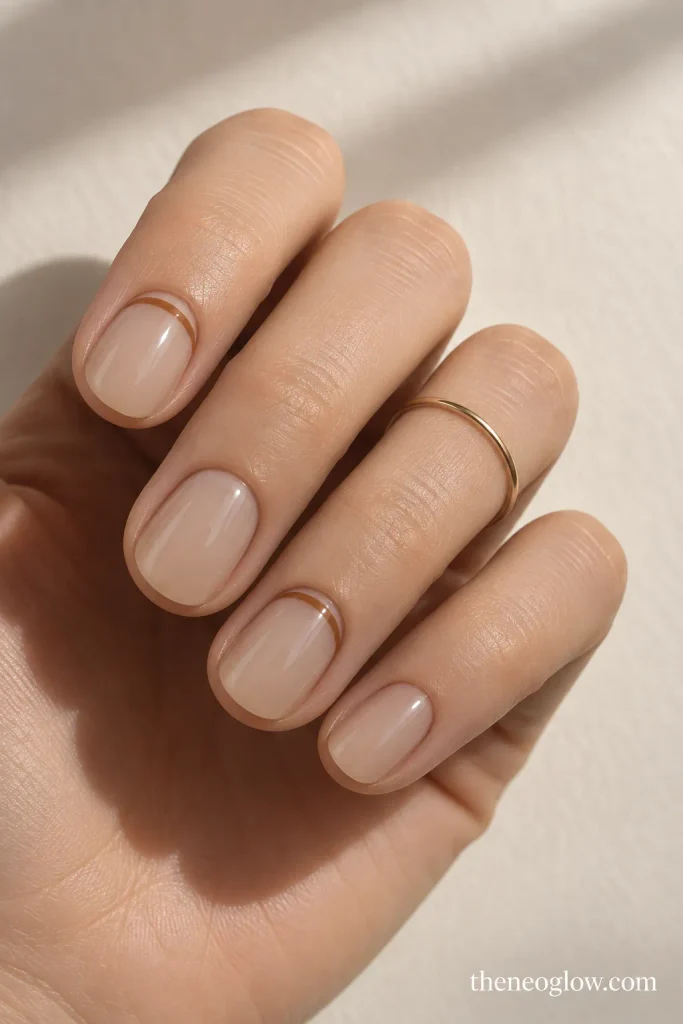
Use short round nails with a translucent neutral base and a slim caramel crescent close to the cuticle on two accents. Keep the other nails warm beige.
Limit the crescent to a shallow sliver rather than a large half-moon. Two accents are enough for the idea to read.
9. Cinnamon Fade Short Ovals
Blend a milky beige base into a compact cinnamon-brown concentration near the tip or outer side. Keep the gradient soft on shallow short ovals.
Use only two closely related colors. A multi-color ombré needs more visual distance than an extra-short nail usually provides.
10. Espresso-and-Oat Two-Nail Rhythm
Paint most short squovals creamy oat, then use deep espresso on the index and ring fingers. Matching the finish keeps the two colors cohesive.
Create variety through color placement rather than artwork. That gives the set rhythm without making every small nail equally dark.
Tiny Fall Details That Leave Breathing Room
11. Copper Pinpoint Pair
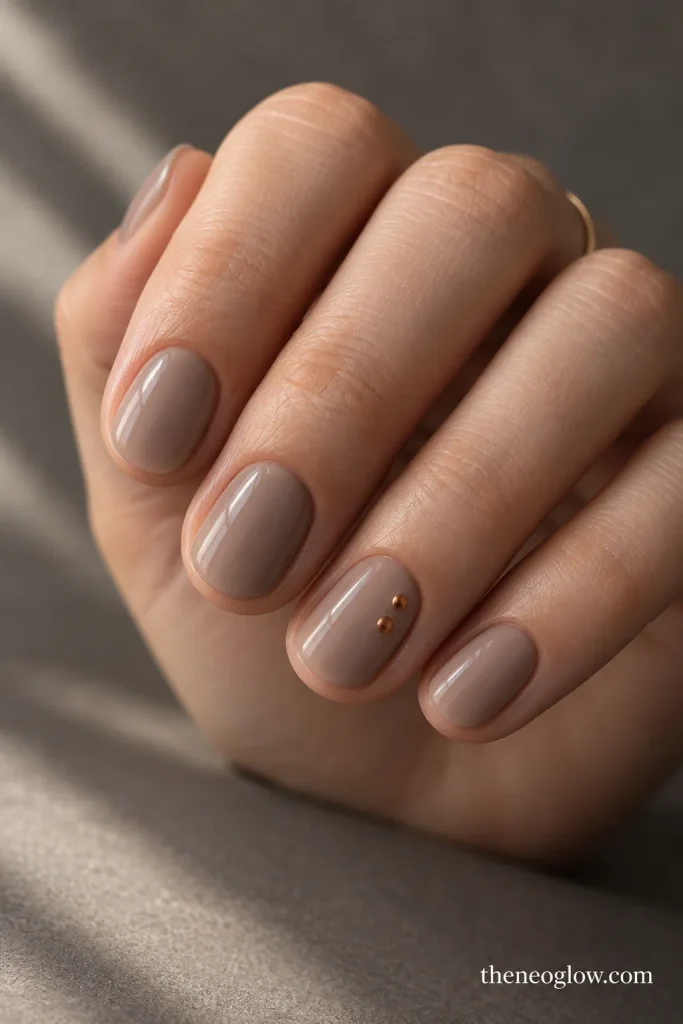
Use a sheer taupe base on short rounds and place two tiny copper dots near one side of each ring finger.
Keep both dots inside one small zone and leave the center empty. The result reads as a metallic accent, not a full polka-dot pattern.
12. Maple-Red Edge Dash
On a milky beige short squoval, add one slim maple-red dash along the upper outer edge of two nails. Paint the others muted red-brown.
Think of the dash as punctuation: shorter than a side French and narrow enough that the base remains dominant.
13. Bronze Vertical Hairline
Choose short soft-square nails in mushroom beige and add one ultra-fine bronze vertical line on a single accent, stopping before the free edge.
One line on one nail is enough. Repeating it across every finger can make a compact set look striped.
14. Olive Corner Block
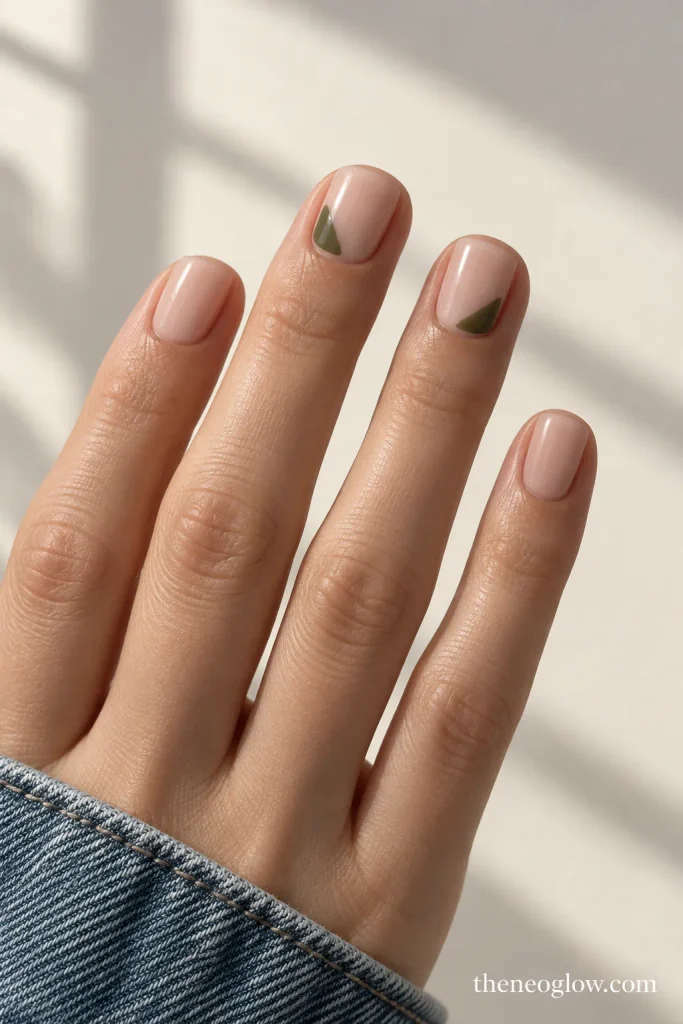
Use a sheer neutral base and place a small muted-olive block in one lower corner of two short square nails.
Cover only the corner, not half the plate. Keeping most of the nail open makes the geometry easier to read.
15. Wine Micro-Frame Accents
Paint short squovals sheer pink-beige, then trace a thin wine line along one side and part of the tip on two accents. Leave the cuticle side open.
Leave the outline interrupted. A full perimeter can visually compress an already short plate.
16. Tiny Tortoiseshell Corner
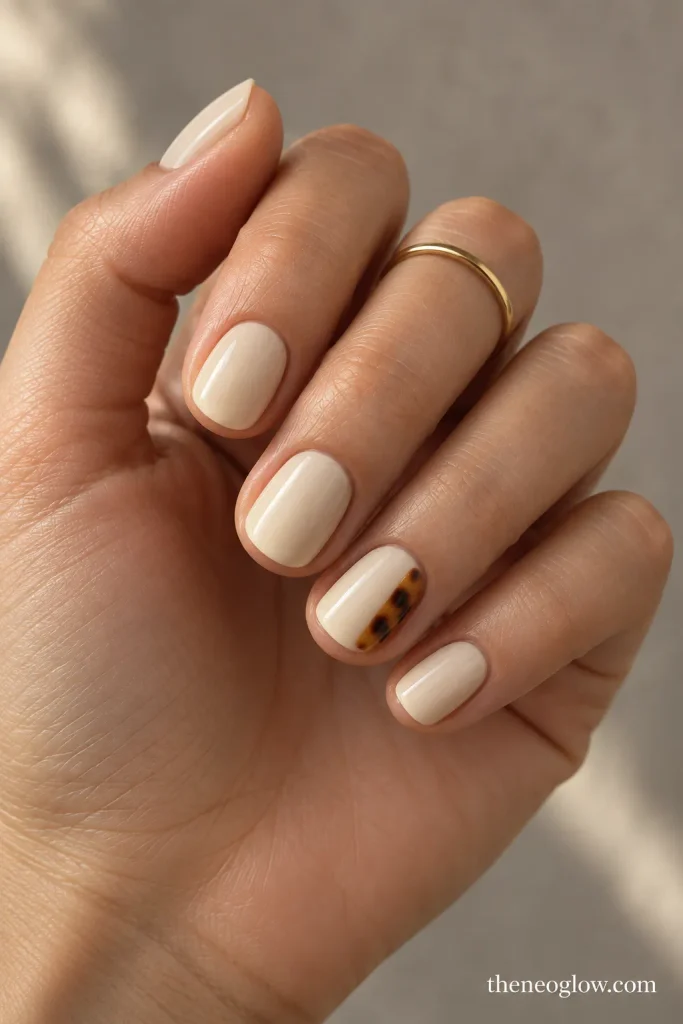
Keep four short ovals warm cream and place a cropped amber-brown tortoiseshell patch in one corner of each ring finger. Use only a few translucent brown and near-black shapes.
Crop the pattern tightly and keep it to the accents. Tortoiseshell needs enough open space for its translucent layers to stay recognizable.
Short Fall Nails With Finish Instead of Extra Art
17. Taupe Satin Shimmer Squovals
Choose a taupe-brown base with very fine satin shimmer rather than chunky glitter. Short squovals let reflection provide movement while the outline stays practical.
Use the same finish on every nail and skip embellishments. Fine shimmer adds depth without consuming nail space.
18. Bronze-Veil Short Ovals
Layer a restrained bronze sheen over medium taupe on shallow short ovals. The effect should look softly reflective rather than mirror-metallic.
Keep the sheen uniform from cuticle to tip. On short nails, a controlled metallic veil reads cleaner than chrome combined with large art.
19. Mocha Cat-Eye Short Rounds
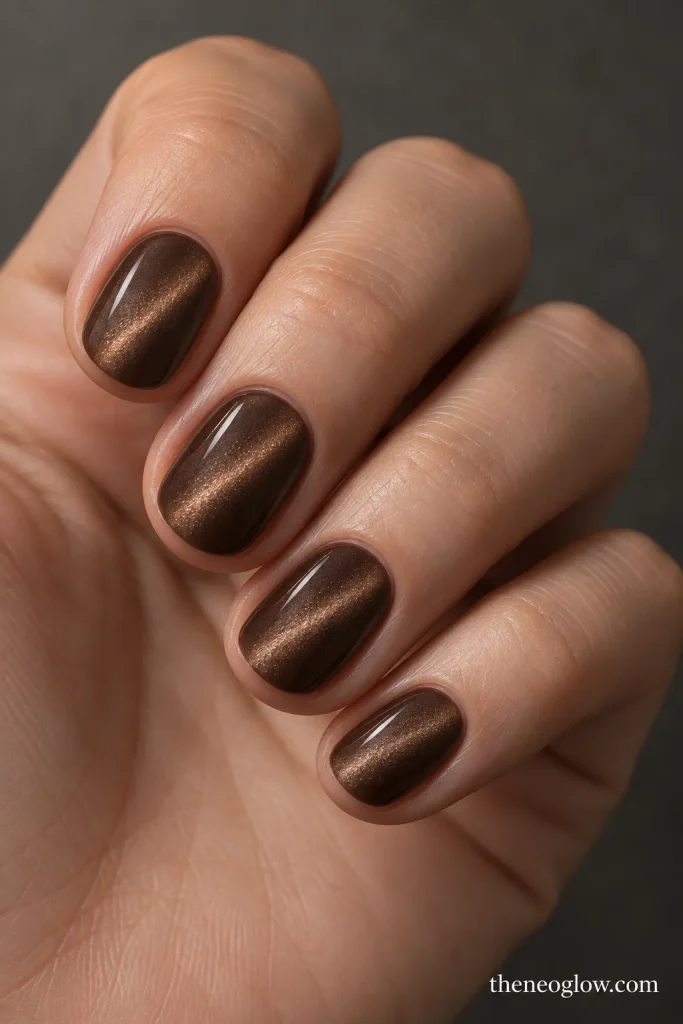
Use a deep mocha magnetic finish with a narrow, diffused highlight through the center. Keep the nails round and close to fingertip length.
Use one simple highlight direction across the set. Complex magnetic patterns can lose definition on very small plates.
20. Sheer Amber With Espresso Tips
Apply translucent amber-brown on short squovals and trace the existing free edge with an espresso micro tip. Keep enough contrast for the structure to show.
Trace only the natural edge instead of building a deeper artificial smile line. With minimal free edge, the tip should stay hairline-thin.
21. Wine Gloss With One Matte Accent
Paint short soft squares a deep wine cream, then make only the ring finger matte while the rest stay glossy.
Let finish contrast replace motifs. Very short nails gain a designed effect without needing extra lines, symbols, or texture.
How to Keep Short Fall Nail Art in Scale
Before saving a reference, look at the design as a percentage of the nail rather than copying its exact size. A detail that covers one-quarter of a long almond nail may overwhelm half of a short natural nail.
For extra-short nails, prioritize solids, jelly color, satin shimmer, one corner accent, or a hairline edge. With a little free edge, side French lines, shallow ovals, and small gradients become easier to read. For a visual walkthrough, OPI’s professional nail-shaping tutorial demonstrates square, squoval, round, oval, and almond construction step by step.
At a salon, describe both shape and scale: “Keep my natural nails short, use a soft square or squoval shape, and keep the art in one small zone with visible base around it.” That is clearer than showing a long-nail reference and asking for the same design “but shorter.”
If your goal is spooky motifs rather than general autumn color, NeoGlow’s short Halloween nails guide owns that problem with ghost, web, pumpkin, and other designs scaled specifically for small nail plates.
Pick the Fall Design That Fits Your Real Nail Space
Start with your current shape, not the photo you saved. Choose solids, jelly, or shimmer for the lowest detail. Move to a side French, corner block, cuticle sliver, or tiny metallic accent when you want more structure without crowding the nail.
The best short fall manicure is one that still looks intentional at your natural length. Save the exact shape, color family, and placement you want so the scale stays clear at home or at your next appointment.