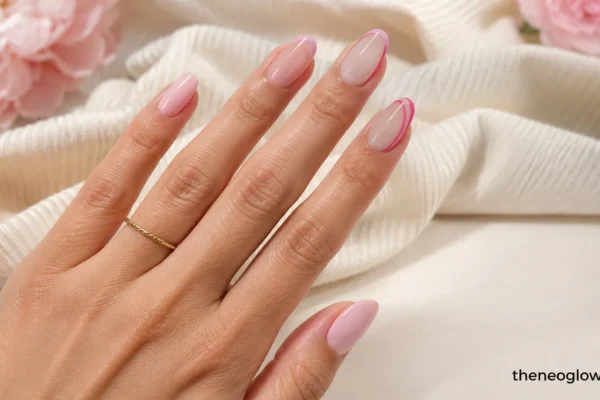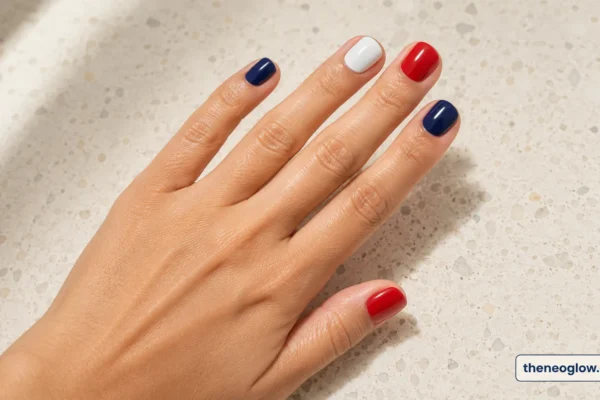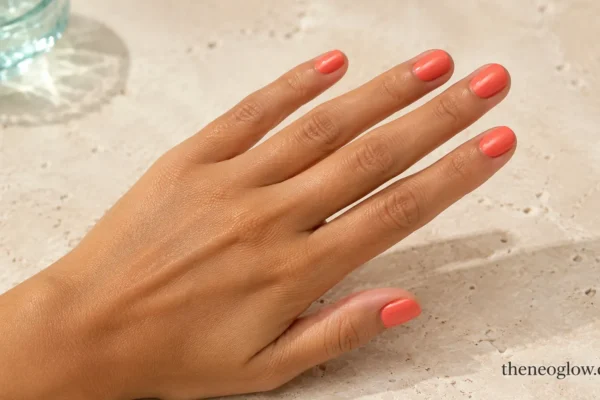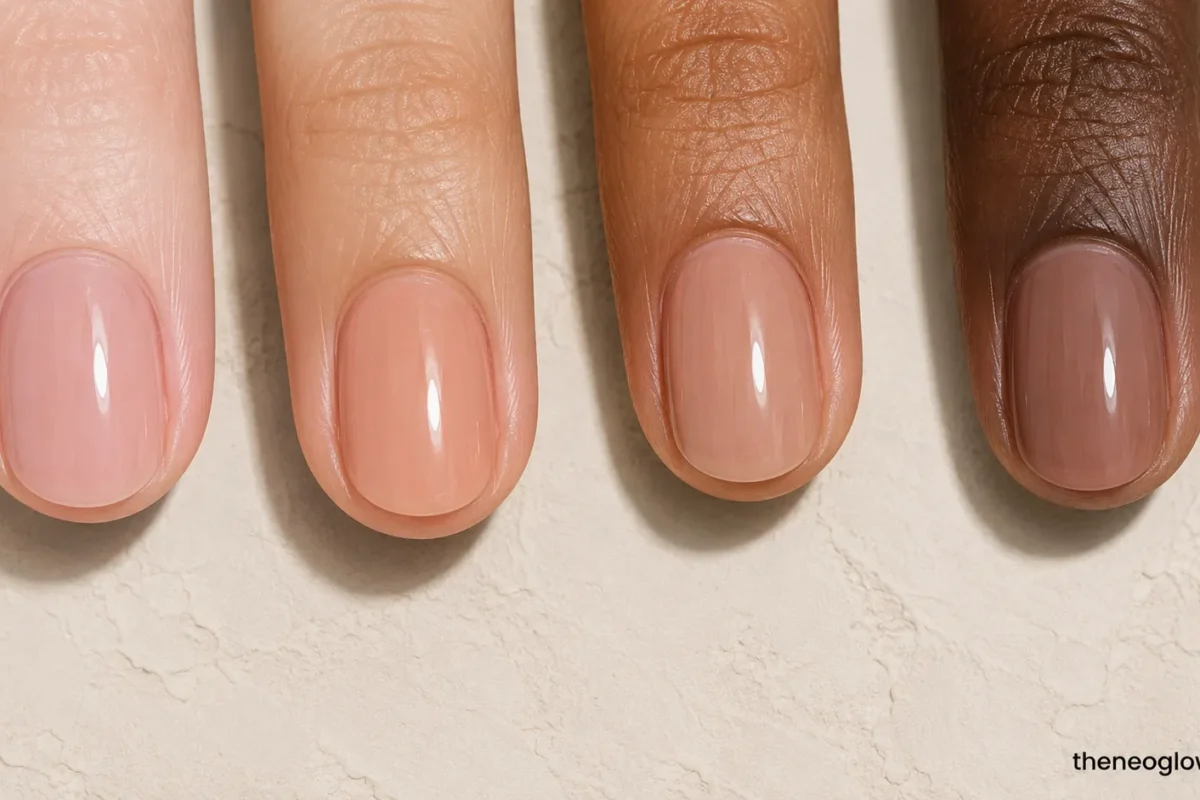
Choosing nude nail polish for your skin tone is easier when you stop searching for one supposedly universal shade. A nude can be pink, beige, peach, caramel, cocoa, or almost clear—and the same bottle can look gray, orange, pale, or perfectly intentional on different hands.
The useful approach is to make four decisions: identify your undertone, choose the right depth, decide how much natural nail you want to show, and select your preferred level of contrast. Use the guide below to shortlist two shade families, then compare them in daylight before committing to a full manicure.
The Four Choices That Control a Nude Manicure
A successful nude manicure is not only about skin tone. It is the combination of undertone, depth, opacity, and contrast.
| Choice | What It Means | Why It Matters |
| Undertone | The warm, cool, neutral, or olive cast beneath your surface skin color | It affects whether a nude reads rosy, balanced, orange, yellow, or gray |
| Depth | How light or dark the polish looks | It controls whether the manicure blends, softly defines, or strongly contrasts |
| Opacity | How much of the natural nail remains visible | Sheer formulas borrow warmth and dimension from your nail plate; opaque creams replace it |
| Contrast | The difference between the polish and surrounding skin | Low contrast looks seamless; higher contrast looks deliberate and graphic |
Treat these as adjustable settings, not rules. A shade that does not harmonize with your undertone may still work beautifully when you deliberately choose stronger contrast.
Step 1: Identify Your Undertone
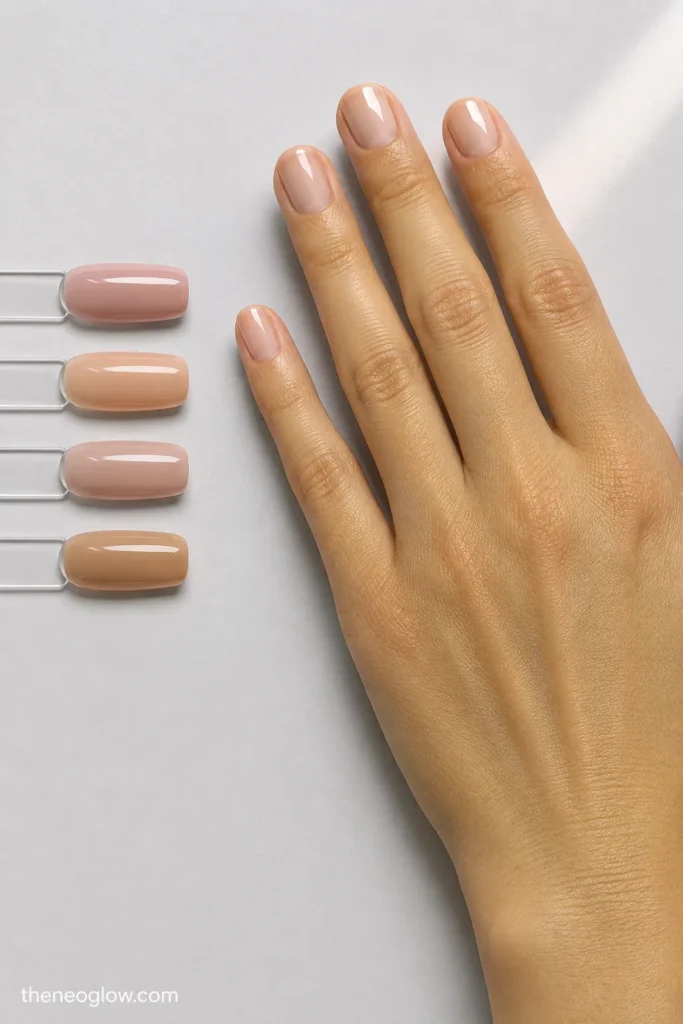
Skin depth and undertone are different. Fair, medium, rich brown, and deep brown skin can each have warm, cool, neutral, or olive undertones.
Use several clues rather than trusting one test. Check your wrist veins in natural light, compare silver and gold jewelry, and hold pure white and cream fabric near your skin. Maybelline’s undertone identification guide explains these common comparison tests in more detail.
As a practical starting point:
- Cool undertones may show pink, red, or blue notes. Rosy pink, pink-beige, mauve-beige, and cooler cocoa families often feel balanced.
- Warm undertones may show peach, yellow, or golden notes. Peach nude, warm beige, honey, caramel, and reddish cocoa are useful starting families.
- Neutral undertones combine warm and cool qualities. Balanced beige-pink, neutral taupe, soft caramel, and muted rose-brown are flexible options.
- Olive undertones may contain green, gray, golden, or neutral qualities. Beige with a controlled golden cast, muted peach, caramel, and neutral brown often work better than icy pink or heavily yellow beige.
These categories help you begin, but your final swatch matters more than the label printed on a bottle.
Step 2: Choose the Contrast You Want
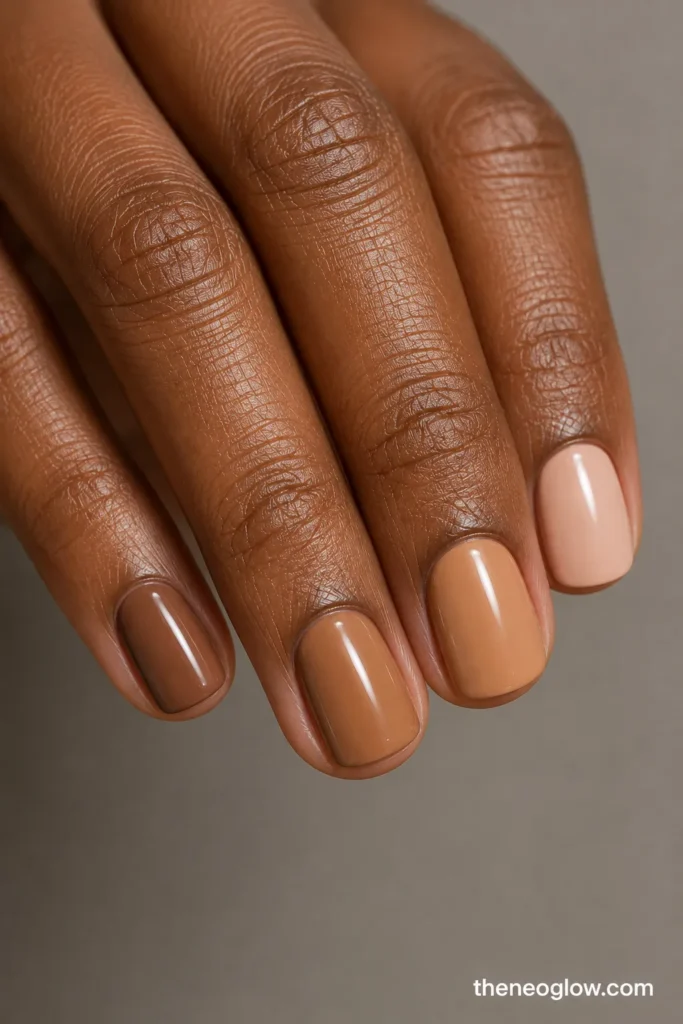
Before selecting a color family, decide whether you want the polish to blend with your hand or stand apart from it.
Low-Contrast Nude
Choose a polish close to your skin depth with a related undertone. This creates a seamless, elongated effect. The shade should still remain visible enough to look intentional rather than like an uneven match.
Low contrast does not require an exact match. A sheer pink-beige, warm caramel jelly, or translucent cocoa can let the natural nail contribute depth and prevent a flat result.
Soft-Contrast Nude
Choose a shade roughly one visible step lighter or darker than your skin. This is often the easiest everyday option because the manicure looks clearly finished without becoming stark.
Try rosy beige against cool skin, peach-beige against warm skin, caramel against medium or rich brown skin, or soft cocoa against tan to deep skin. Adjust the undertone if the result appears gray or orange.
High-Contrast Nude
A pale pink, milky beige, light peach, or opaque cream can create a strong fashion contrast on medium, tan, rich brown, and deep brown skin. A deeper cocoa or espresso nude can create equally clear contrast on fair and light skin.
High contrast is not a mistake. It only needs to look deliberate, smooth, and evenly opaque. For a wider range of non-nude shades organized by season and finish, compare the Nail Colors 2026 guide.
Step 3: Pick a Nude Color Family
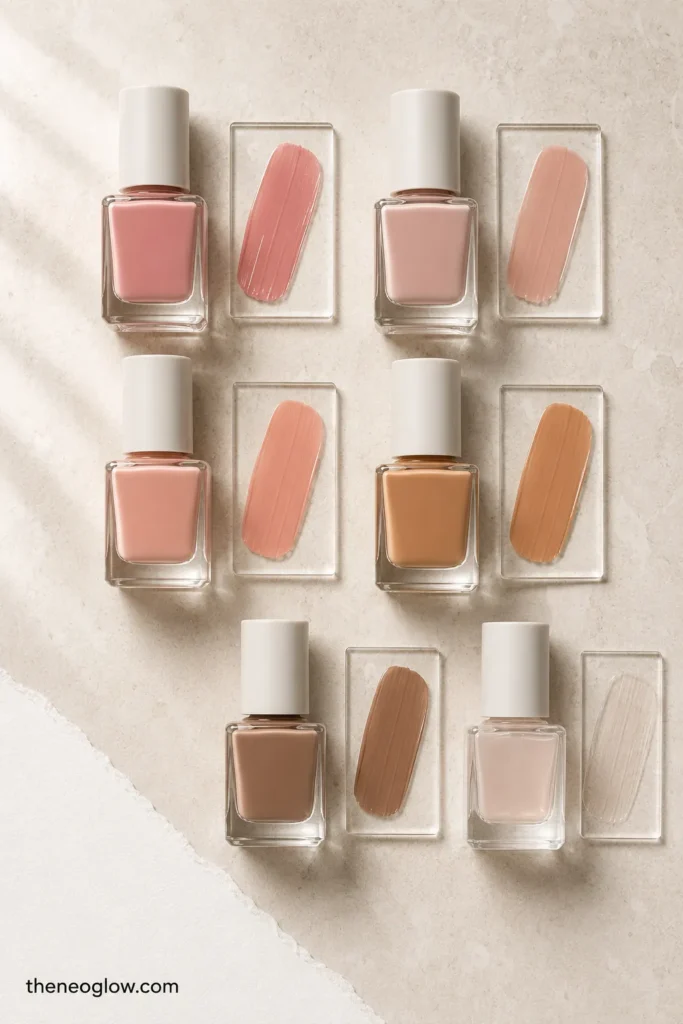
Shade names vary by brand, so focus on the visible color rather than words such as “natural,” “buff,” or “bare.”
| Nude Family | Visual Character | Useful Starting Point |
| Pink nude | Rosy, blush, ballet pink, or mauve-pink | Cool, neutral, or anyone wanting a fresh nail-bed effect |
| Beige nude | Cream, sand, taupe, or beige-pink | Neutral and olive undertones; adjust warmer or rosier as needed |
| Peach nude | Peach, apricot, coral-beige, or warm blush | Warm and golden undertones; choose pink-peach when orange appears too strong |
| Caramel nude | Honey, toffee, tan, or golden brown | Medium, tan, olive, rich brown, and deep skin seeking warm tonal depth |
| Cocoa nude | Rose-brown, milk chocolate, neutral brown, or espresso | Richer tonal manicures and deeper contrast across all skin depths |
| Sheer neutral | Clear pink, translucent beige, jelly caramel, or transparent cocoa | Anyone who wants the natural nail to influence the final color |
Pink Nudes
Pink nude can make the nail bed look brighter and more even. Cooler skin may prefer blue-pink, rose, or mauve-pink. Warm skin can try strawberry-beige or peachy blush rather than an icy ballet pink. On deep skin, a sheer rosy veil gives gentle contrast, while an opaque pale pink creates a bolder statement.
Beige Nudes
Beige is useful but easy to misjudge. A beige with too much gray can look dull on warm or olive skin, while a yellow-heavy beige can appear orange or sallow beside cool skin. Beige-pink is a flexible middle ground; taupe-beige creates a cooler result, and sand or biscuit beige adds warmth.
Peach Nudes
Peach combines pink, orange, and beige. It can enliven warm or golden undertones, but it does not need to be bright. If a peach nude turns orange, look for more pink, less yellow, or a sheerer formula.
Caramel and Cocoa Nudes
Caramel, toffee, cocoa, and espresso expand “nude” beyond pale beige. They are especially useful for nude nails for dark skin because they can create tonal depth without an ashy white base. A caramel one step lighter than the skin looks softly defined; cocoa close to the skin looks seamless; espresso creates deeper contrast.
The summer nail colors for dark skin guide offers additional caramel, chocolate, mauve, pearl, and bright-color comparisons without limiting deeper skin to neutrals.
Step 4: Choose Sheer, Semi-Sheer, or Opaque
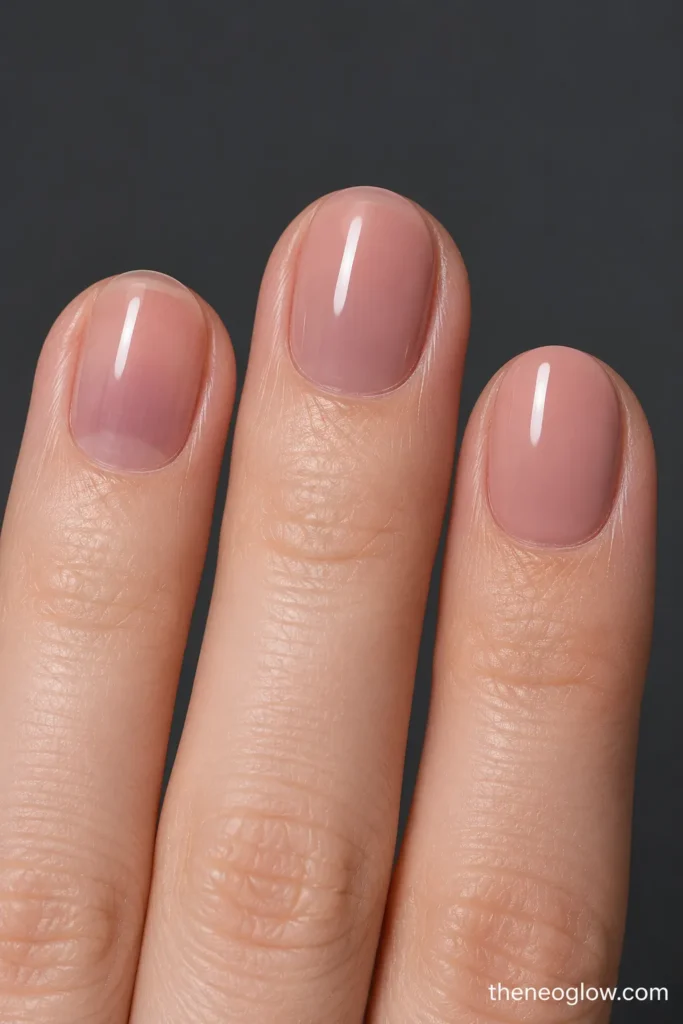
Opacity can rescue a shade family that seems wrong in the bottle.
Sheer and Jelly Nudes
Sheer nude nails allow the natural nail plate to show through. This makes pink, beige, caramel, and cocoa feel more dimensional and often reduces the risk of a chalky result. One coat creates a tinted veil; two or three thin coats build more color while preserving translucency.
Sheer polish is less effective when you want to fully cover staining, a strong natural nail line, or uneven color. In that case, choose a buildable semi-sheer or a smoothing base recommended for your polish system.
Semi-Sheer Nudes
Semi-sheer formulas soften the natural nail while retaining some depth. They are useful when transparent polish feels unfinished but opaque cream looks too heavy. Beige-pink, milky caramel, and rosy cocoa are particularly adaptable in this finish.
Opaque Cream Nudes
Opaque polish delivers the clearest color and strongest contrast. It works well for a crisp pale nude, solid caramel, or glossy cocoa manicure. Because the natural nail no longer modifies the color, undertone mismatches and streaky coverage are easier to notice.
Nude Nail Polish Decision Tree
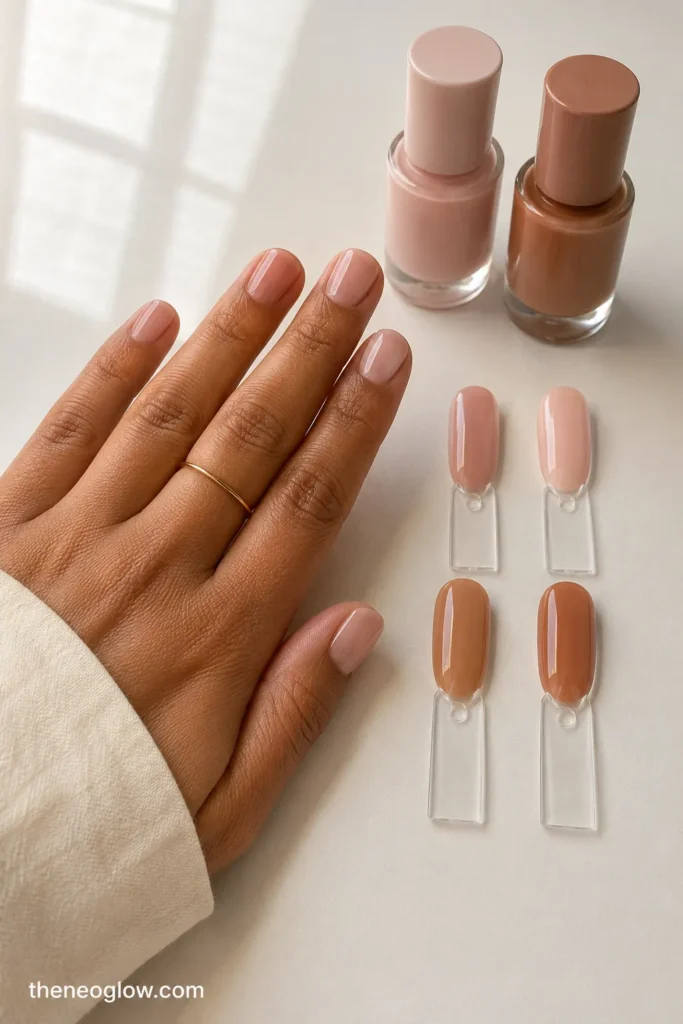
Use this sequence when shopping or choosing a salon reference:
- Choose the effect. Select low contrast for a seamless look, soft contrast for everyday definition, or high contrast for a statement nude.
- Choose two undertone directions. For example, compare rosy beige with neutral beige, or peach caramel with neutral caramel.
- Choose the depth. Start near your skin depth, then compare one shade lighter or darker.
- Choose opacity. Use sheer for natural dimension, semi-sheer for soft correction, or opaque for full color.
- Swatch both options. Compare them beside the fingers in indirect daylight, not only under store lighting.
- Check the dry result. Look for unwanted gray, orange, yellow, or white casts after the polish has settled.
- Save the winner and the runner-up. Keep one low-contrast family and one more contrasting family for different moods.
After identifying your direction, Essie’s Nail Color Finder can help you explore polish families, formulas, and finishes. Use any quiz result as a shortlist rather than a rule, then verify the shade against your own hand.
Troubleshooting a Nude That Looks Wrong
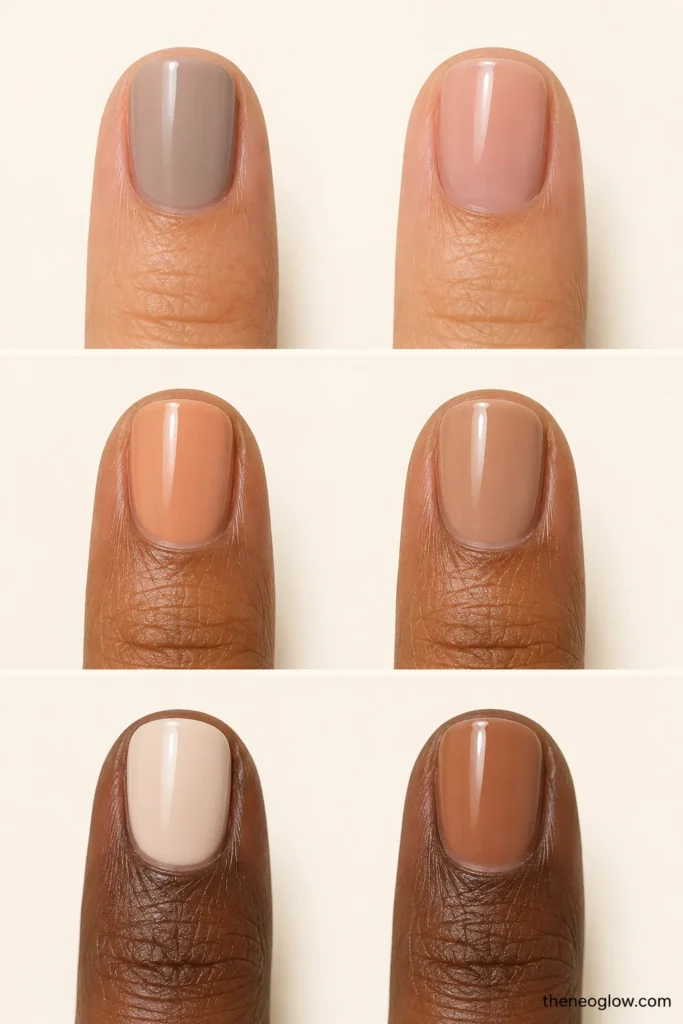
| Result | Likely Cause | Better Adjustment |
| Gray or ashy | The nude is too cool, too pale, or too opaque | Add pink, peach, caramel, or warmth; try a sheer or slightly deeper version |
| Orange | The shade contains too much yellow or red warmth | Move toward pink-beige, neutral caramel, rose-brown, or a less saturated peach |
| Chalky or white | The polish is too pale and heavily pigmented for the intended effect | Choose one shade deeper, reduce opacity, or make the contrast intentionally crisp |
| Flat or muddy | Depth is too close without enough undertone or shine | Shift lighter or darker, add a rosy or golden cast, or choose a translucent glossy finish |
| Too pink | The shade is cooler or rosier than expected | Try beige-pink, muted peach, taupe-beige, or neutral brown |
| Barely visible | The sheer shade is too close to the nail plate | Add another thin coat or choose a semi-sheer version one step deeper |
| Streaky | The formula is too sheer for the desired coverage or coats are too thick | Use thinner coats, allow each layer to set, or switch to a buildable semi-sheer |
Do not judge only the bottle. Brush swatches, product photos, screen settings, and lighting can all change how a neutral appears. The most useful comparison is the dried shade beside your fingers in the lighting you normally use.
What to Ask for at the Salon
Describe four details instead of naming only a brand shade:
- “A sheer rosy beige with low contrast and visible natural nail.”
- “A warm caramel cream one step lighter than my skin, with no gray cast.”
- “A neutral cocoa jelly that looks tonal, not almost black.”
- “An opaque pale pink-beige for intentional contrast, not a sheer bridal pink.”
- “A peach nude with more pink than orange and a glossy finish.”
Bring two references showing the same color family at different depths or opacities. That gives your nail technician a clear direction even when the salon carries another brand.
Choose Your Two Best Nude Options
The best nude nail color is the one that creates the effect you want—not the shade someone labels universally flattering. Start with undertone, then adjust depth, opacity, and contrast until the result looks intentional.
Save two options: one close, sheer or softly contrasting nude for everyday wear, and one lighter, deeper, or more opaque shade for visible contrast. For finished manicure inspiration using sheer pink, beige, caramel, and milky finishes, visit Natural Summer Nails.