Almond summer nails look best when the design respects the shape instead of treating every tapered set like a longer oval. The key decisions are how much free edge you have, how narrow the tip can safely become, and how often you are willing to maintain the sidewalls and apex. This guide separates natural short almonds, short extensions, and medium tapered sets so you can choose a design that fits your real nails and routine. For broader color and motif inspiration, browse the summer nails 2026 guide after selecting your length route.
Soft Almond vs. Tapered Almond
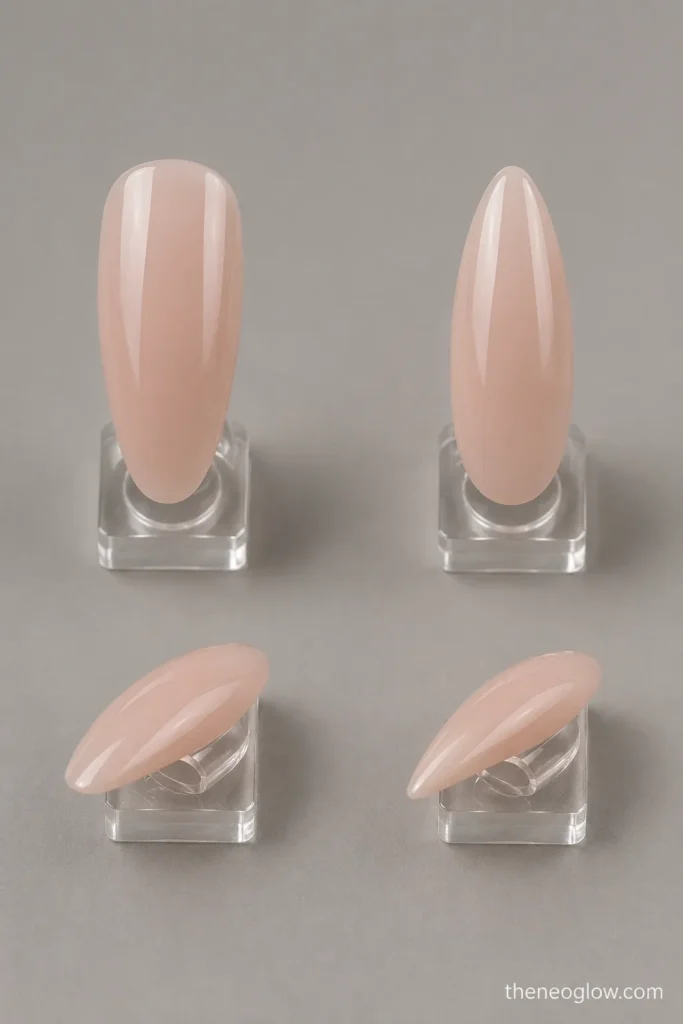
A soft almond has gently narrowed sides and a wider, rounded tip. It is the more realistic option for short natural nails because it preserves more width through the sidewalls. A tapered almond narrows more dramatically and finishes in a slimmer rounded peak. That sharper silhouette usually needs medium length or an extension so the taper has room to develop.
OPI’s professional shaping guide describes almond as best suited to medium-to-long nails and forms it by narrowing the sides before rounding the free edge into a peak. That does not mean a short almond is impossible; it means the short version should remain softer and wider rather than being over-filed into a fragile point.
Almond Length and Maintenance Comparison
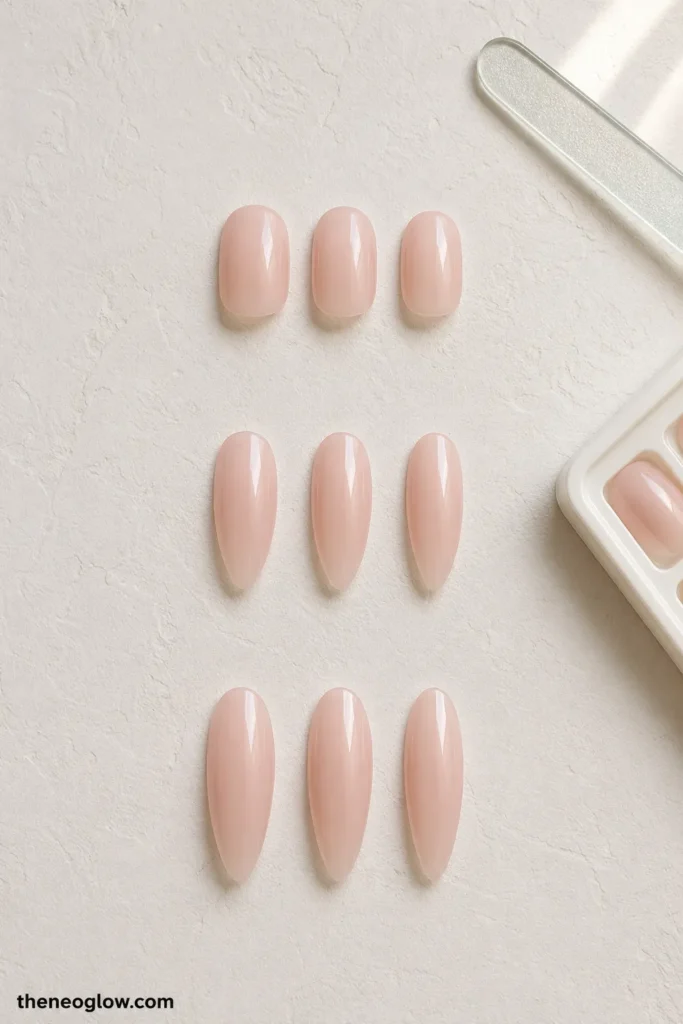
| Route | Best Starting Point | Tip Shape | Design Scale | Break/Catch Risk | Maintenance |
| Short natural soft almond | Visible free edge and intact sidewalls | Wide rounded peak | Micro tips, slim lines, sheer finishes | Lowest of the three when kept compact | Light filing and regular edge checks |
| Short almond extension | Very short nails or insufficient natural taper | Pre-shaped soft point | Small French bands, gradients, controlled accents | Moderate; added length can catch during daily tasks | Product-specific fills, repairs, and removal |
| Medium almond manicure | Natural length with strength or a structured extension | Soft or more tapered peak | Ombré, layered French, chrome, flowing art | Highest when the tip is narrow or unfamiliar | More frequent symmetry, sidewall, and balance checks |
If your free edge is almost flush with the fingertip, do not sacrifice the sidewalls to imitate a long reference. Compare the proportions in the short summer nails guide or choose a short extension that creates the silhouette without excessive filing.
Short Natural Soft-Almond Ideas
1. Milky Peach Jelly Soft Almonds
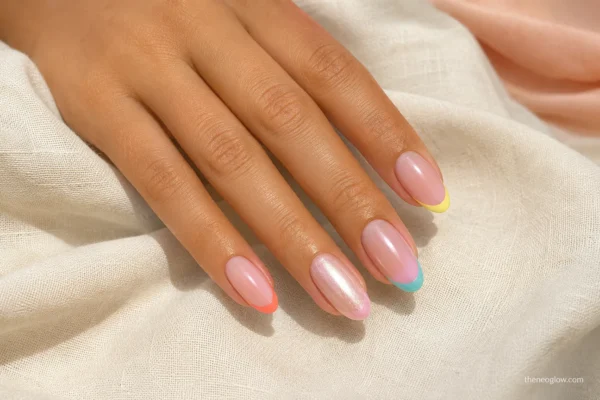
Use a translucent peach-beige jelly on a compact soft almond with a broad rounded tip. The sheer finish keeps the remaining natural width visible, so the shape reads intentional rather than pinched. This route suits low-detail maintenance because regrowth is subtle and small edge repairs do not interrupt artwork.
2. Coral Micro French With a Wide Smile Line
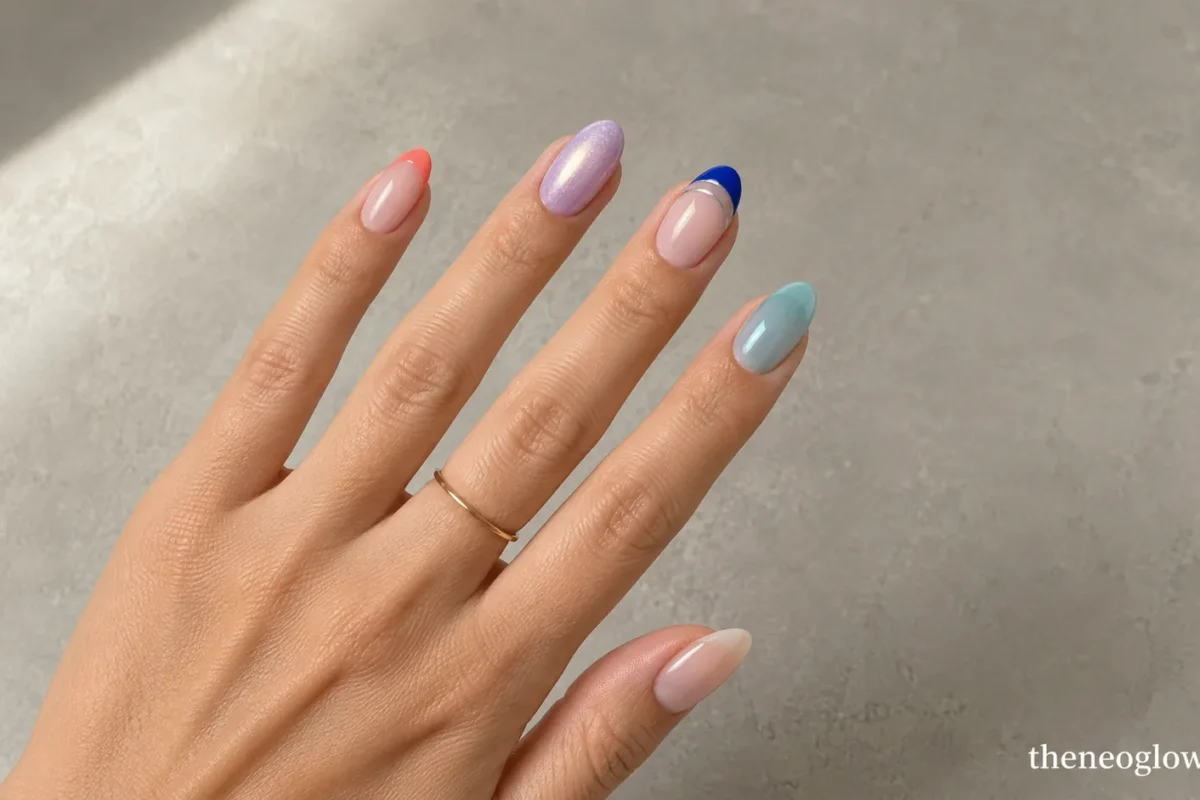
Trace a thin coral tip that follows the full rounded free edge instead of creating a deep V. A wider smile line visually completes a short almond without making the tip look narrower than the nail can support. Keep the base sheer and repeat the same tip depth across all ten nails.
3. Butter-Yellow Side Tips
Place a slim butter-yellow curve along one outer edge, beginning near the upper sidewall and ending at the rounded peak. The asymmetry emphasizes taper without requiring a pointed silhouette. Use the design on every nail for rhythm or on two accents when your nail plates are especially small.
4. Aqua Cuticle Arcs
Paint a narrow aqua arc just above the cuticle over a clear pink base. Keeping the color at the lower nail preserves the full free edge, which is useful when the natural almond is short and only gently tapered. The open upper section also makes regrowth less distracting.
5. Cobalt Center Pinstripes
Add one fine cobalt line from the lower third of the nail toward the center of the rounded tip. The vertical placement reinforces the almond’s long axis while leaving both sidewalls clear. Keep the line thin and stop before the cuticle so slight growth does not immediately break the design.
6. Raspberry Jelly With Clear Half-Moons
Apply raspberry jelly while leaving a narrow clear crescent near the cuticle. The transparent half-moon reduces the visual weight of saturated color on a short almond and softens the appearance of regrowth. Choose a rounded rather than sharply tapered tip so the juicy finish stays balanced.
7. Short Pastel Almond Press-On Gradient
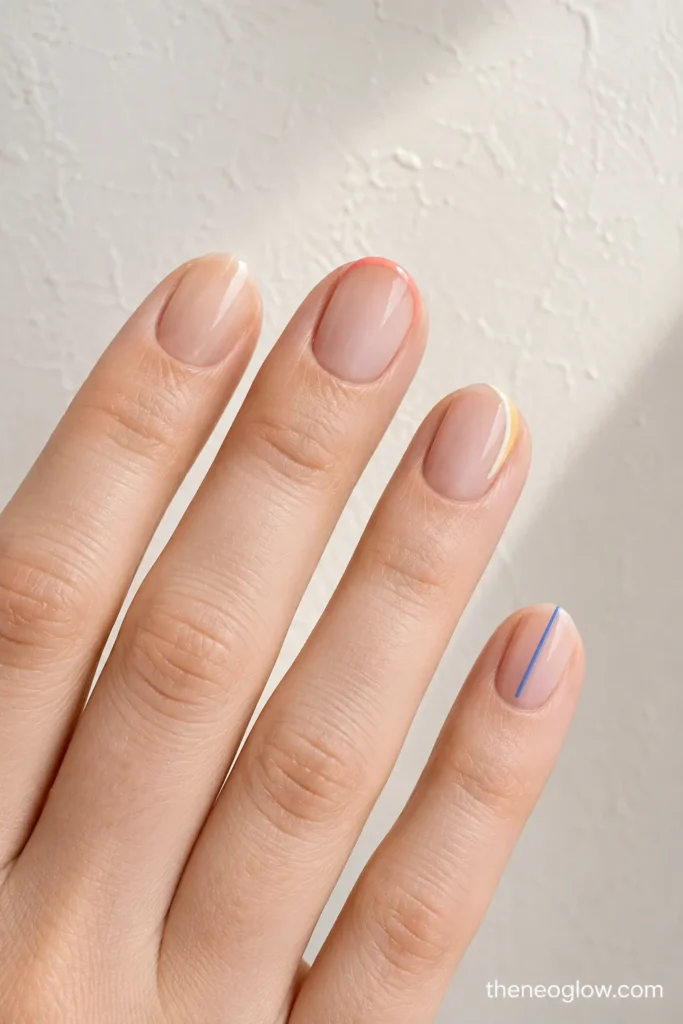
Choose pre-shaped short almond tips in lavender, peach, mint, butter yellow, and powder blue, using one solid shade per nail. The consistent shape and finish make the colors cohesive. Size every tip from sidewall to sidewall without pinching or touching skin, then follow the exact set’s application and removal directions.
Short-Extension and Medium Soft-Almond Ideas
8. Sea-Glass Sheer Skittle Almonds
Use translucent aqua, mint, lavender, pale blue, and soft teal across medium soft almonds. The extra length lets light pass through each shade while the rounded peak keeps the set relaxed. Match the opacity across all five colors so one nail does not look heavier than the others.
9. Coral-to-Pink Center Ombré
Blend peachy coral near the base into watermelon pink through the center, keeping the side edges slightly lighter. The vertical color concentration supports the almond silhouette and avoids widening the nail. A short extension provides enough room for a visible transition without requiring a dramatic point.
10. Lavender Pearl Halo Nails
Layer a fine pearl veil over a cool lavender base, concentrating the reflection through the center rather than using full mirror chrome. A soft almond distributes the shine smoothly across its curved surface. This design offers visual impact without raised pieces that can make a practical medium set harder to manage.
11. Cobalt Double Side French
Create two narrow cobalt curves along one side of a sheer beige-pink nail. Begin the lower line below the tip and let the upper line meet the peak. Medium length gives the parallel spacing enough room to remain clear, while the open center prevents the side detail from visually shortening the nail.
12. White Hibiscus Half-Flower Accents
Paint most nails glossy coral, then place one cropped white hibiscus entering from the side of two sheer accent nails. Cropping the flower uses the almond’s curved edge as part of the composition. Keep the petals flat and the remaining nails solid so the set stays wearable rather than becoming a full tropical scene.
13. Sunset Side-Swirl Almonds
Run one coral, orange, and pink wave along the outer third of each nail over a translucent nude base. The curves should follow the taper instead of crossing the widest point horizontally. Medium soft almonds provide enough distance for three colors; shorter versions should use one two-color wave.
14. Lime-Edged Negative-Space Tips
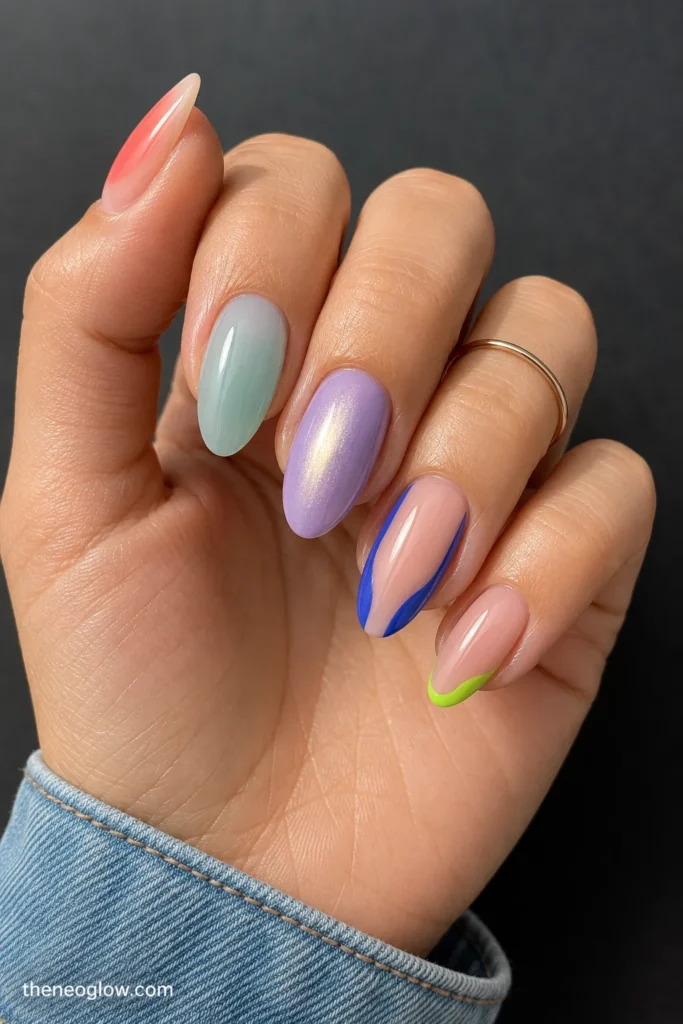
Outline only the outer half of each almond tip in lime, leaving the inner half sheer. This partial French construction highlights the rounded peak while reducing the amount of bright color near the sidewalls. It works well for readers who want colorful almond nails without a full neon manicure.
Medium Tapered Almond Ideas
15. Royal-Blue Deep French With Silver Underscore
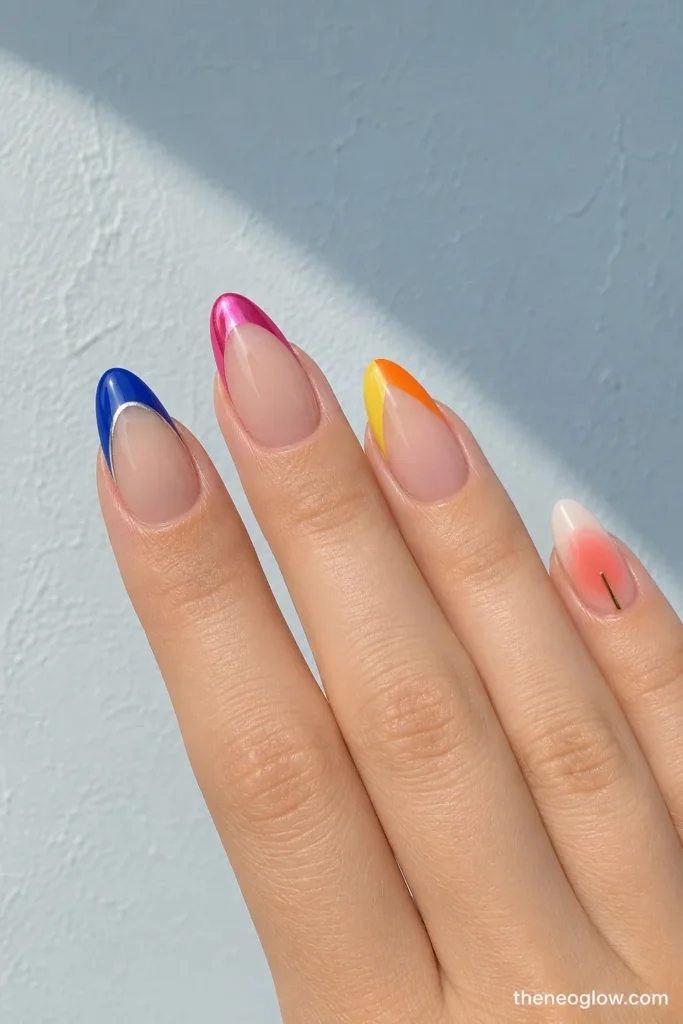
Use a translucent nude base and paint a controlled royal-blue French band that narrows toward the sides. Add one hairline silver curve beneath the blue. A medium tapered almond has enough length for both bands; keep the peak rounded so the design reads almond rather than stiletto.
16. Hot-Pink Chrome Edge
Apply hot-pink chrome only across the final third of a medium almond, fading it into a sheer blush base. Limiting reflection to the tip directs attention toward the taper without making the entire nail metallic. This finish is best kept smooth and flat, with no gems competing at the narrow edge.
17. Citrus Chevron Tips
Build an open chevron using lemon yellow on one side and tangerine on the other, allowing the two lines to meet just below the rounded peak. The V should echo the taper without becoming a sharp point. Use matching line thickness so the design remains symmetrical from thumb to little finger.
18. Peach Aura With a Fine Gold Center
Diffuse peach and soft coral through the center of a milky nude almond, then add one short gold line along the vertical axis on two accents. The aura makes the middle appear softly illuminated, while the gold reinforces symmetry. Keep the sidewalls clear so the shape remains slender.
19. Blue Pool-Wave Negative Space
Place one aqua and one cobalt wave diagonally across alternating nails, leaving the base transparent. Angle the lines upward toward the tip rather than straight across the widest area. This movement complements a tapered almond and provides a summer reference without adding literal shells, droplets, or beach objects.
20. Translucent Stained-Glass Panels
Divide each medium almond into three irregular translucent panels using coral, turquoise, and lavender, separated by fine clear gaps. Keep the largest panel near the center and the smallest near the tip. The changing scale follows the taper and prevents the color blocks from making the free edge look bulky.
21. Coordinated Almond Press-On Mix
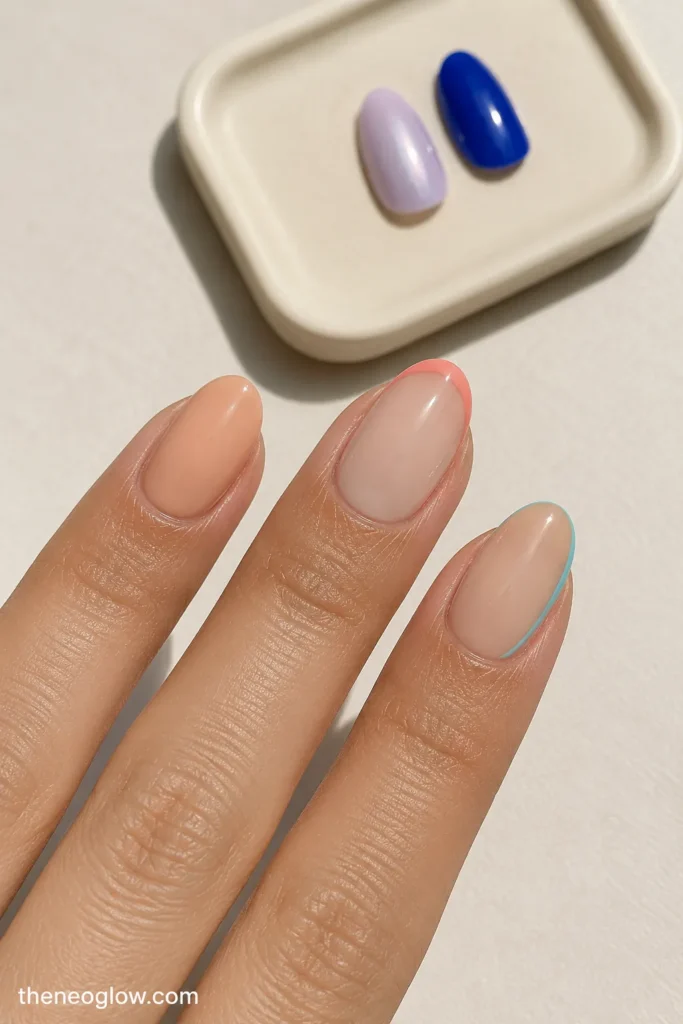
Select a short-to-medium almond set combining one sheer peach solid, one coral micro French, one aqua side line, one pearl-lavender finish, and one cobalt accent. Repeat the same rounded peak and gloss across every nail. Choose a tip width that covers the natural nail fully without overlapping the surrounding skin.
How to Maintain Almond Nails Without Over-Filing
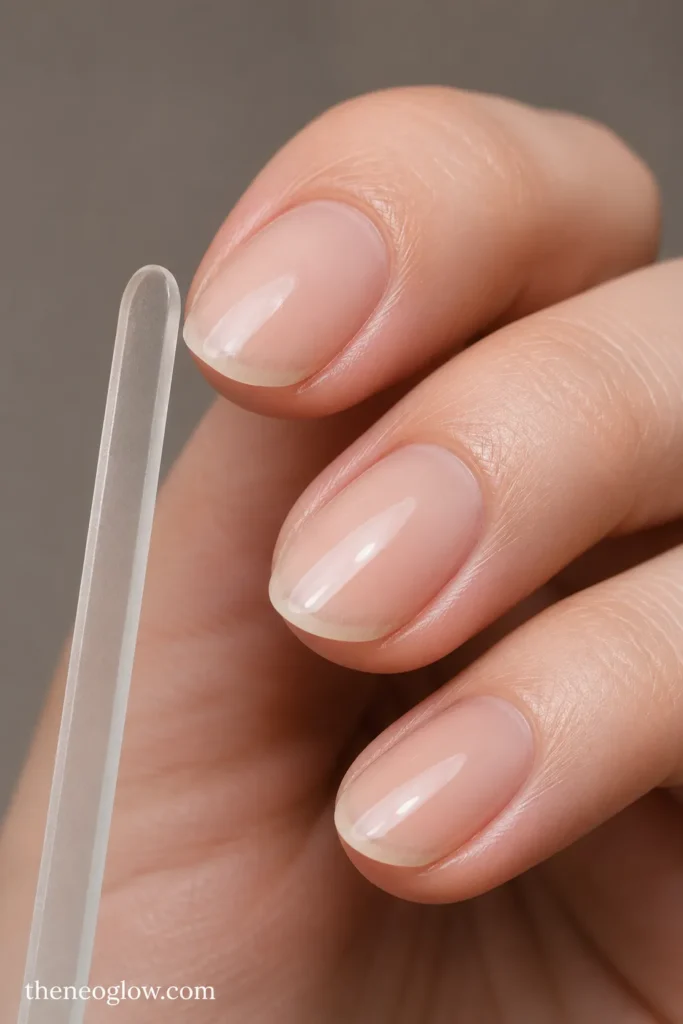
Check the silhouette from above and from the palm side. If one tip begins leaning, correct a small amount rather than repeatedly narrowing both sides. The American Academy of Dermatology recommends smoothing rough edges with a file in one direction because back-and-forth filing can weaken nails. It also recommends moisturizing after trimming to help nails remain flexible.
Natural almond nails need enough sidewall left to support the free edge. Do not chase a thinner point when a corner chips; shorten the set slightly and rebuild a softer curve. Extensions can create almond length when natural nails are too short, but artificial systems also add preparation, fill, and removal commitments. Follow the instructions for the exact product or salon system and avoid peeling or forcing enhancements off.
For low-detail alternatives that keep the natural nail visible, compare these natural summer nails.
Salon Wording to Save
For a natural short almond: “Keep as much sidewall as possible, use a gentle taper, and finish with a wide rounded peak—not a sharp point.”
For a short extension: “I want a compact soft almond that clears the fingertip, with a natural-looking apex and enough tip width for everyday use.”
For a medium tapered set: “Use an even taper on both sides, a slim rounded peak, and check every nail from the top and underside for symmetry.”
Add the exact base opacity, tip depth, finish, and accent placement from your saved design. A clear reference should show the length and shape as well as the color.
Choose Your Almond Route
The best almond summer nails begin with an honest length decision. Choose a short natural soft almond when you already have enough free edge and want easier upkeep. Use a short extension when the silhouette matters more than staying fully natural. Pick a medium almond when you want layered French tips, ombré, chrome, or flowing art and can accept more maintenance.
Save one length route and two designs that fit it. If your natural nails cannot support a visible taper, choose a different short shape or an appropriate extension instead of filing away the structure you need.