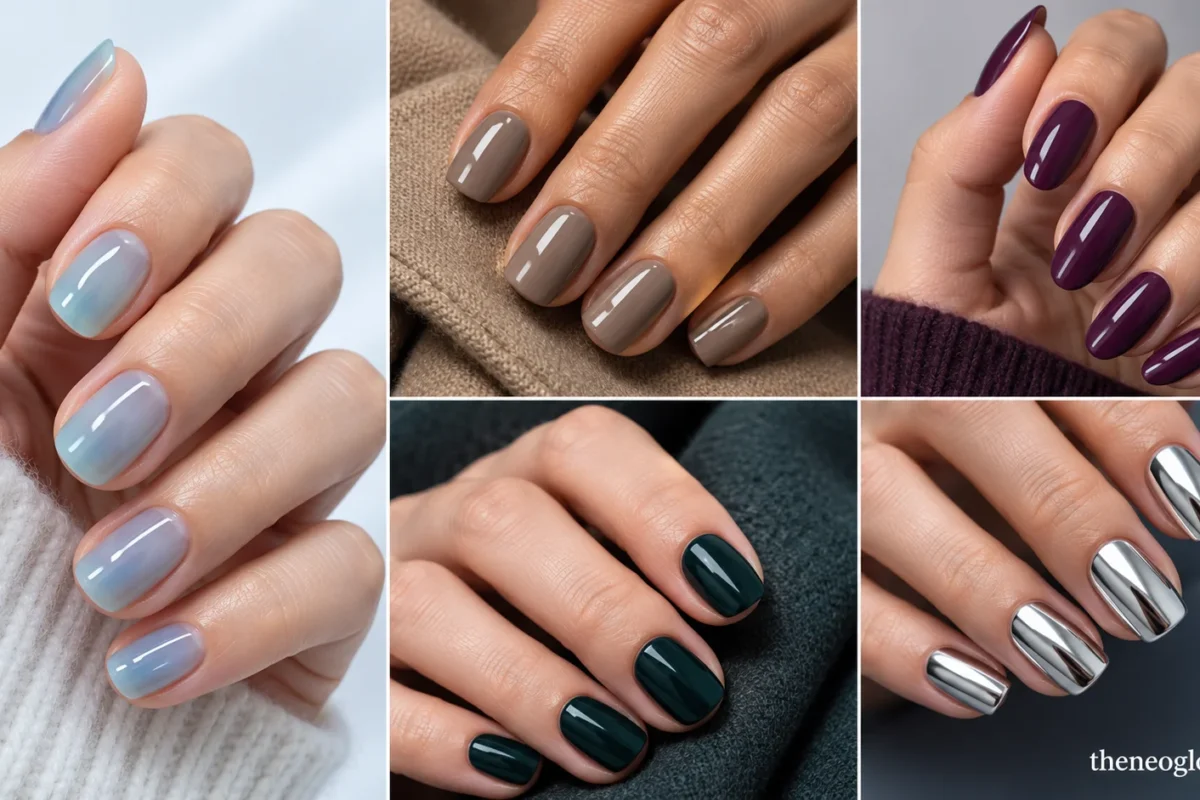
The right winter nail color has to do more than look pretty in a saved photo. Icy blue can feel crisp or washed out depending on its undertone; a dark plum can look almost black indoors; and silver can range from a quiet shimmer to a mirror finish. These 18 winter nail colors for 2026 offer distinct routes through cool blues, winter neutrals, deep jewel shades, and metallics. Each option specifies the color, coverage, finish, and a realistic nail shape. Use the comparison below to find a shade that works with your wardrobe and the amount of upkeep you actually want.
Compare the Color Families Before Picking a Shade
| Hue family and ideas | Undertone | Finish to look for | Visual contrast | Outfit metal pairing | Maintenance to expect |
|---|---|---|---|---|---|
| Cool blues and mint (1–4) | Cyan, blue-violet, blue-green | Jelly, cream, satin | Light to strong | Silver, white gold | Opaque pale shades show chips; jelly edges look softer |
| Pale neutrals (5–8) | Cool white, rosy neutral, greige, lilac-gray | Gloss, milky, sheer | Low to medium; varies by skin tone | Either silver or gold | Sheers soften grow-out; white needs precise coverage |
| Warm-to-deep neutrals (9–10) | Golden beige, neutral brown | Matte, satin | Soft to strong | Yellow gold, bronze | Matte surfaces can burnish; dark tips show wear |
| Deep green and red (11–13) | Blue-green, cool wine, red-brown | Gloss, cream, jelly | Usually strong | Silver for cooler shades; gold for warmer shades | Dark opaque edges reveal chips; jelly may be more forgiving |
| Purples (14–15) | Blue-purple, violet-gray | Cream, pearl | Medium to strong | Silver, pewter | Check the shade in daylight; pearl shows surface unevenness |
| Slate and metals (16–18) | Cool graphite, neutral champagne, cool silver | Satin, fine metallic, mirror | Medium to high | Silver or mixed metals | Reflective finishes reveal application flaws |
“Contrast” describes how much the color stands apart from your own skin and nail bed, not which shades you are allowed to wear. Test the swatch beside your hand in natural light. For a broader, all-season comparison, NeoGlow’s nail colors guide covers the rest of the palette.
Cool Blues and Blue-Greens
1. Icebound Cyan Jelly
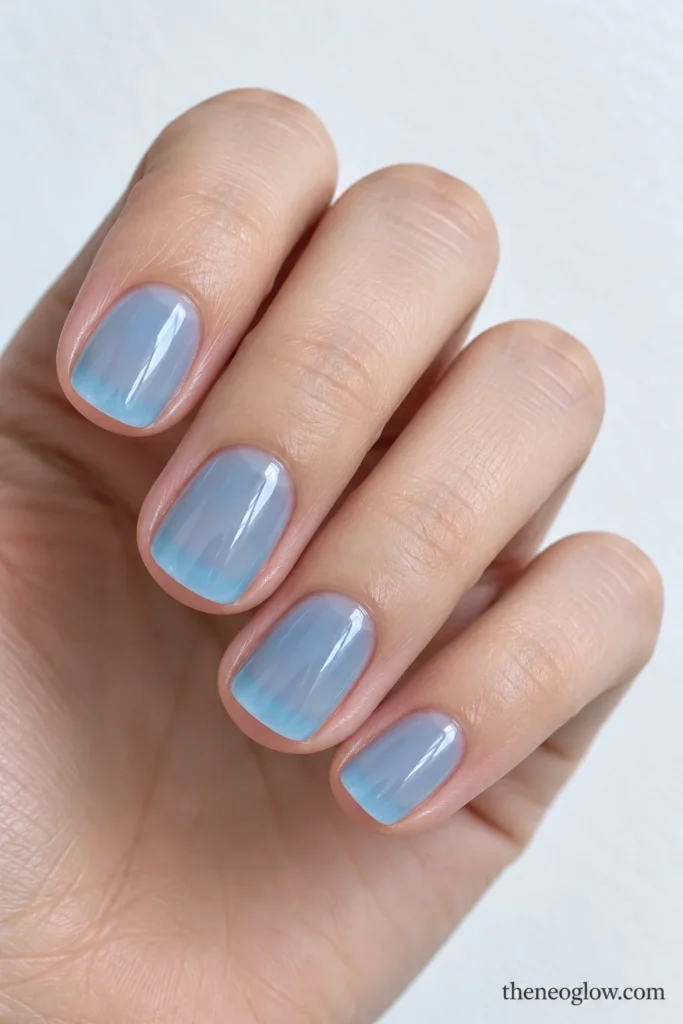
A pale, distinctly cyan-blue jelly turns short round nails into translucent pools of winter color. Keep the natural nail faintly visible through the gloss; a solid chalk-blue would be a different look. This is a lighter option for someone who wants an icy impression without painted snowflakes. Because the finish is transparent, the appearance of the natural nail matters to the final result.
2. Heather Blue Cream
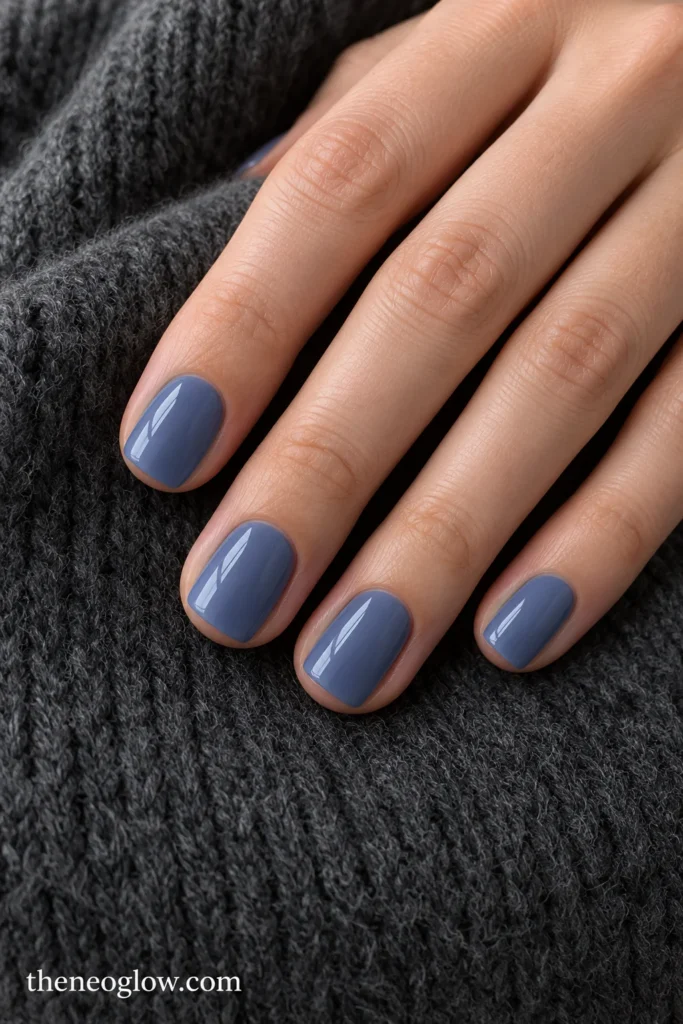
Heather blue mixes medium blue with a restrained violet-gray cast. On short squovals, use an opaque, smooth cream with a clear glossy topcoat. It has more pigment than a misty pastel but less visual weight than navy. Try it with charcoal knits or medium-wash denim when bright baby blue feels too springlike.
3. Indigo Ink
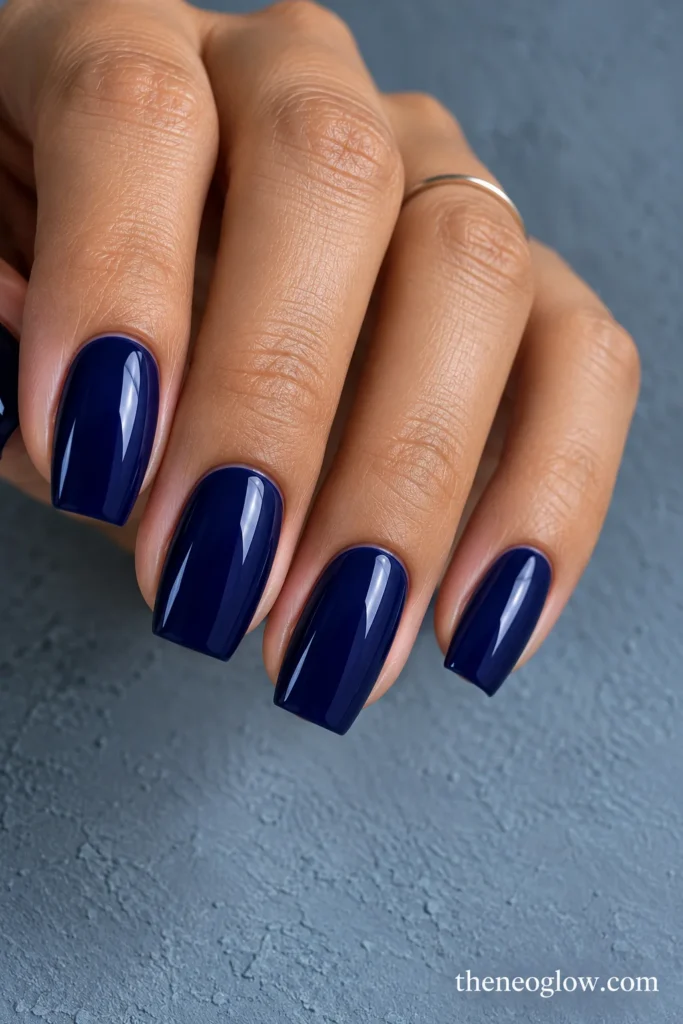
Medium tapered-square nails make room for a completely opaque indigo that reads blue in daylight and nearly navy under warm indoor lights. Its violet undertone is the essential detail: this should not turn black or teal. Keep the surface highly glossy and free of cat-eye lines so the deep pigment stays in charge. Silver rings sharpen the cool character.
4. Glacier-Mint Satin
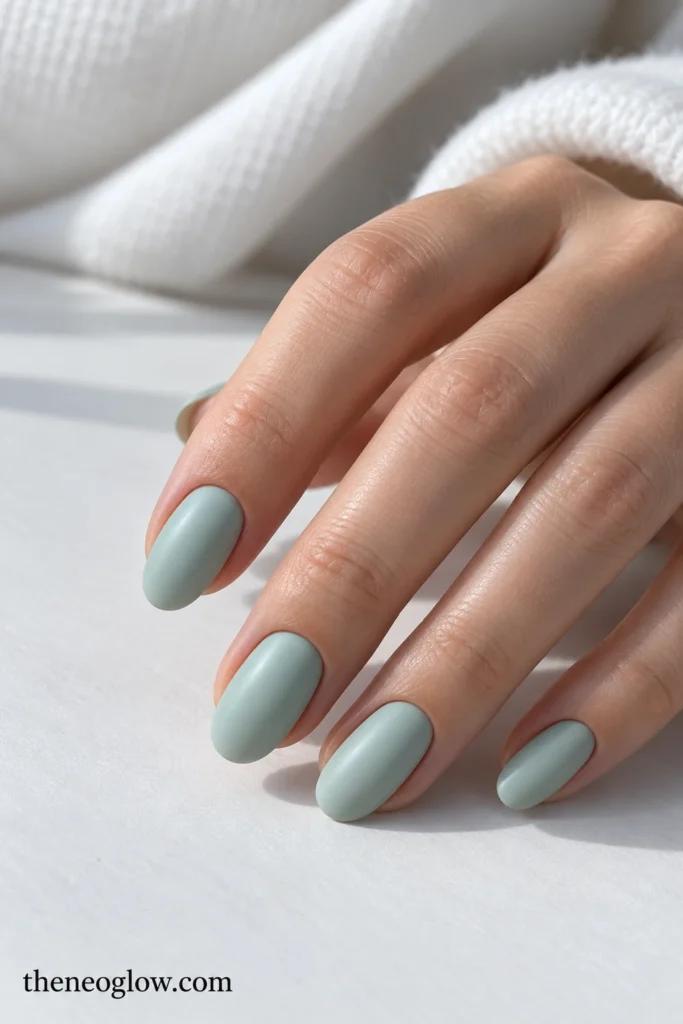
Glacier mint is a pale, icy green with enough blue-gray to avoid a bright candy color. Wear it as an opaque satin finish on medium ovals, with no added pearl or shimmer. The subtle green cast becomes most obvious next to white clothing. If very pale polish makes the nail edge look stark, choose a slightly grayer version instead.
Winter Neutral Nail Colors Without the Holiday Theme
5. Porcelain Winter White
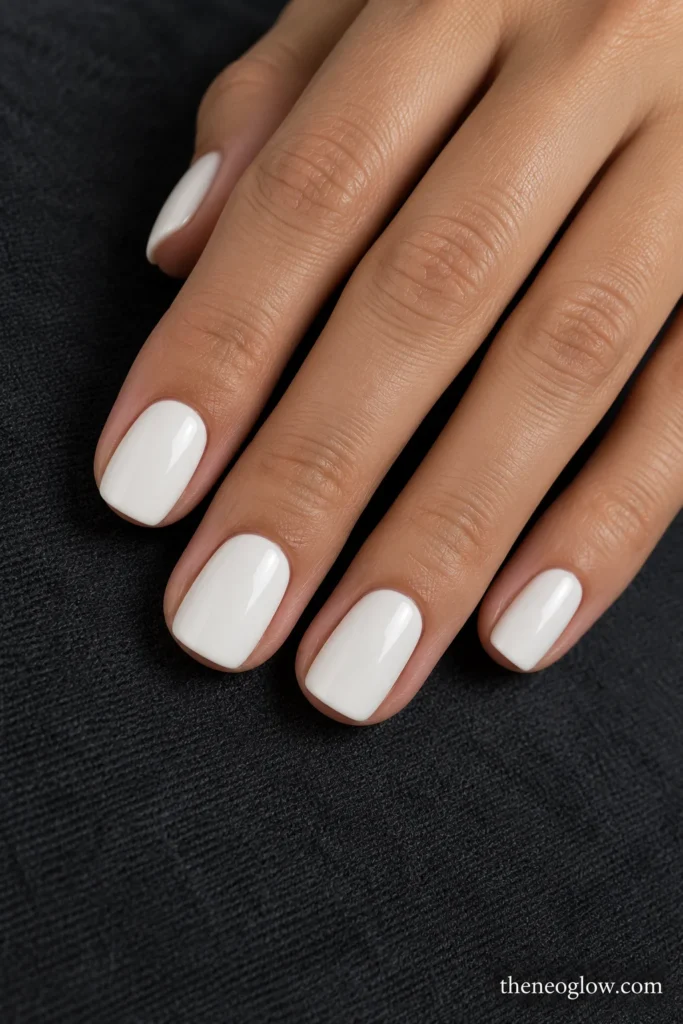
Porcelain white is opaque off-white with a neutral-cool cast, not a transparent milky pink. On short soft-square nails, an even high-gloss cream finish gives the white a polished, ceramic quality. It works with black, camel, and gray coats but needs careful application: streaks and bare corners are easy to notice in a solid light shade.
6. Blush Oyster Milk
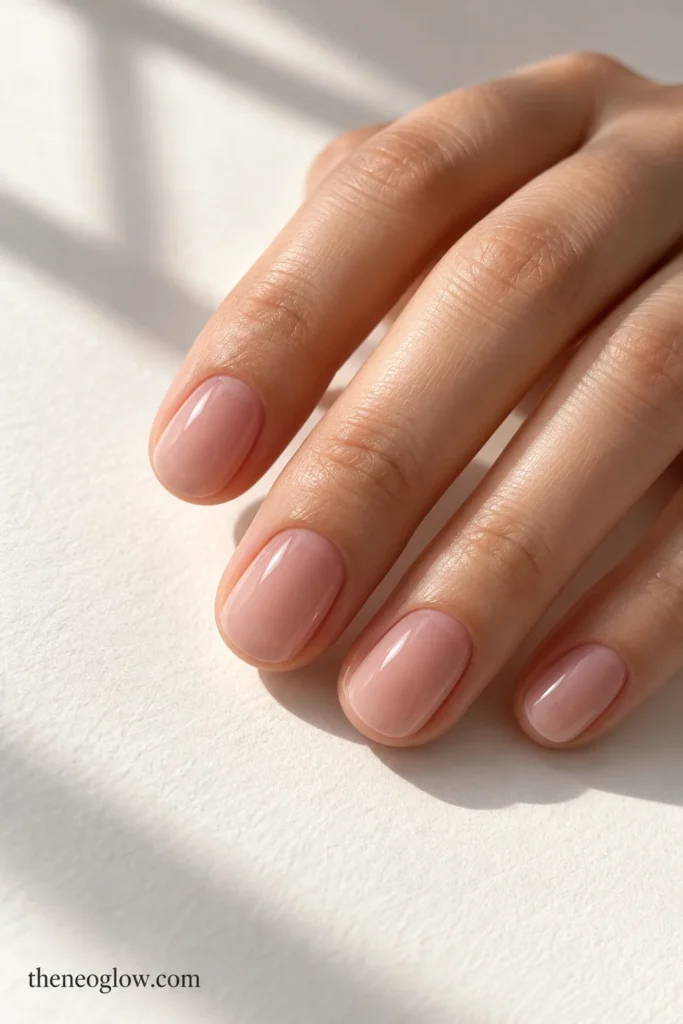
Think muted rose-beige softened by a cloudy, semi-sheer milk finish. Short oval nails keep this neutral understated; the pink is visible, but the nail bed is not completely erased. It is a gentle alternative to stark white for office weeks or frequent outfit changes. Against deeper skin, compare a slightly more pigmented version if you want clearer separation.
7. Driftwood Greige Gloss
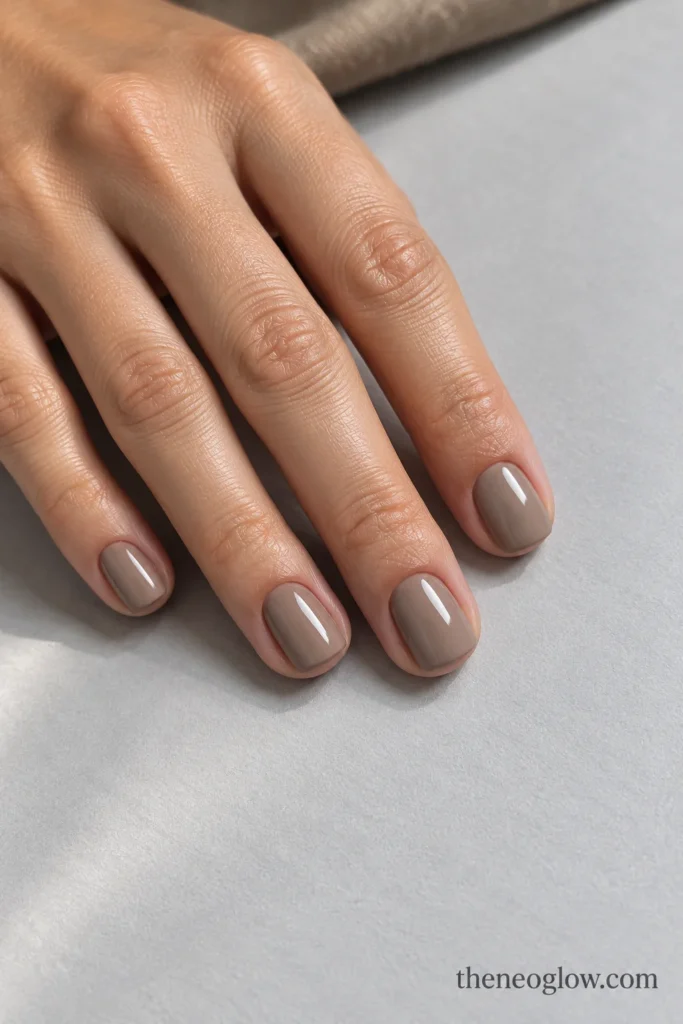
This is a balanced brown-gray, neither lavender taupe nor warm latte. Cover short squovals in opaque greige and finish with a clean, reflective gloss. The brown note complements tan accessories while the gray note works with cool winter coats. It is a practical bridge between fall/winter nail colors without relying on a leaf motif or metallic accent.
8. Thistle-Lilac Veil
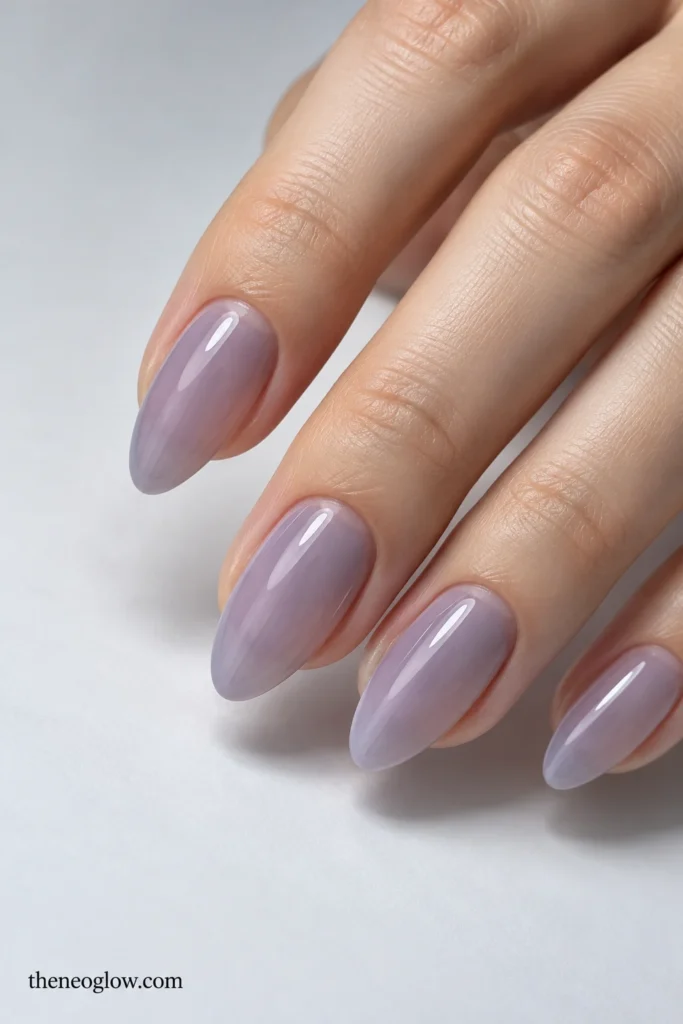
Medium almond nails carry a thin, glossy layer of translucent lavender-gray. Keep it visibly purple rather than mauve-pink, with natural depth showing beneath the polish. The result is airier than a full plum cream and less stark than a pale gray. If the color looks patchy in a bottle swatch, ask to see it over a natural-nail sample before deciding on coverage.
9. Sandstone Almond Matte
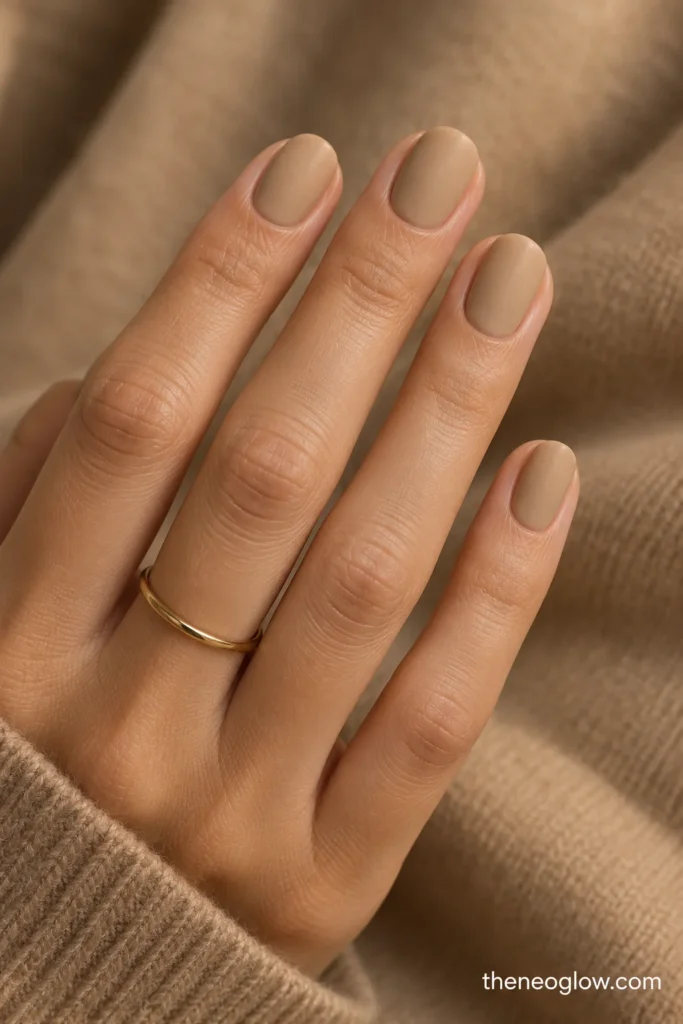
Sandstone almond is a warm, lightly golden beige—not a cool mushroom taupe. Use opaque color and a soft, even matte topcoat on short ovals. Gold jewelry and camel or chocolate fabrics bring out the warmth. Choose this when you prefer winter neutral nail colors with some warmth; keep in mind that rubbed, shinier patches can become noticeable on a matte surface.
10. Dark Truffle Brown
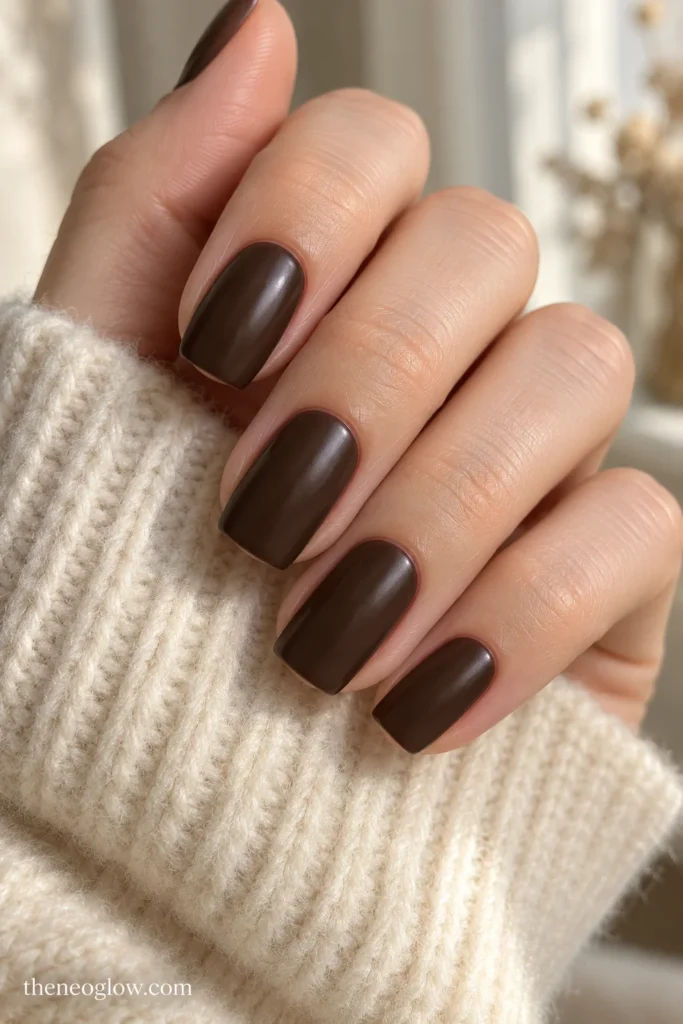
A deep neutral chocolate, almost espresso but still unmistakably brown, looks substantial on medium squovals. Choose an opaque satin finish rather than jelly or mirror gloss. The dense brown pairs naturally with cream sweaters and gold or bronze accessories. It is more visually forgiving of tiny streaks than pale cream, although light-colored tip chips will stand out.
Deep Winter Nail Colors for Dinner and Everyday Drama
11. Blackened Juniper
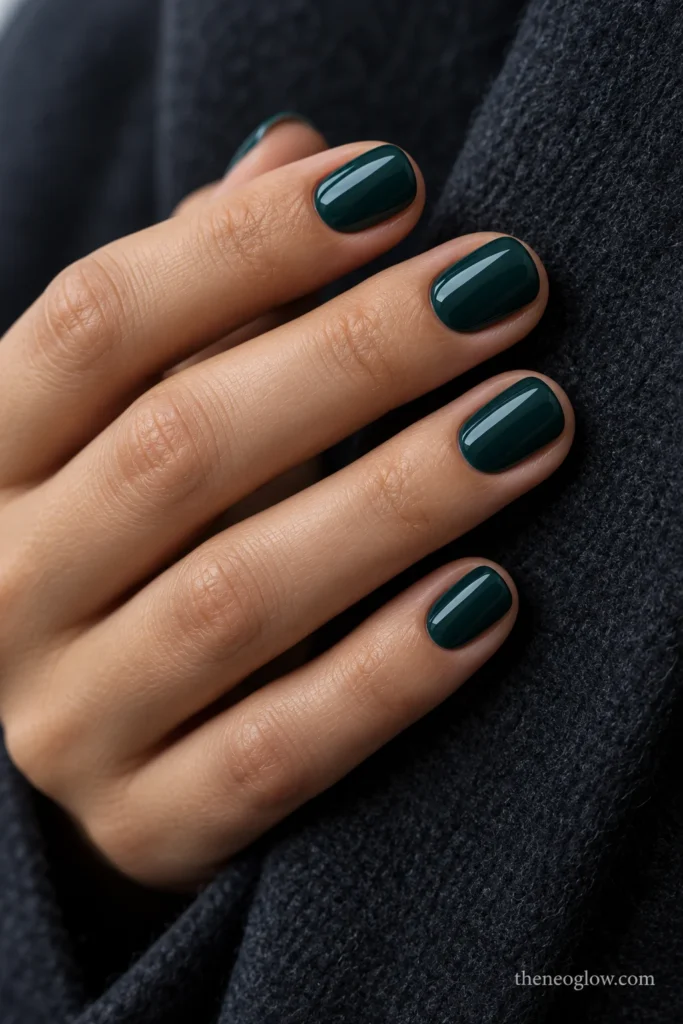
Short round nails in opaque, bluish pine-green offer depth without becoming black. Under natural light the green should remain visible, even though it looks almost inky indoors. Use a smooth glossy finish, with no glitter, holly, or holiday graphics. This is a winter green for someone whose wardrobe already leans navy, black, or dark denim.
12. Mulled Garnet
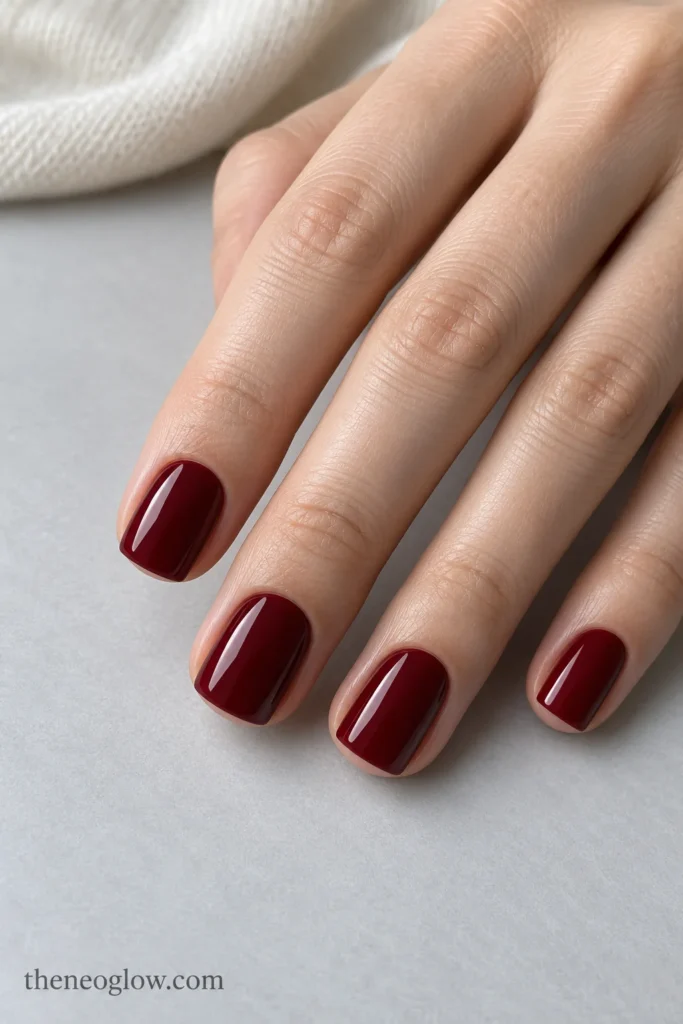
Mulled garnet sits between cool burgundy and deep red wine, with more red than purple. On short square nails, full-coverage cream polish and a glossy finish make the color look clean rather than smoky. It provides strong contrast with pale clothing and is equally striking beside rich brown skin. Choose a tidy short edge if prominent wear marks would bother you.
13. Black Cherry Syrup
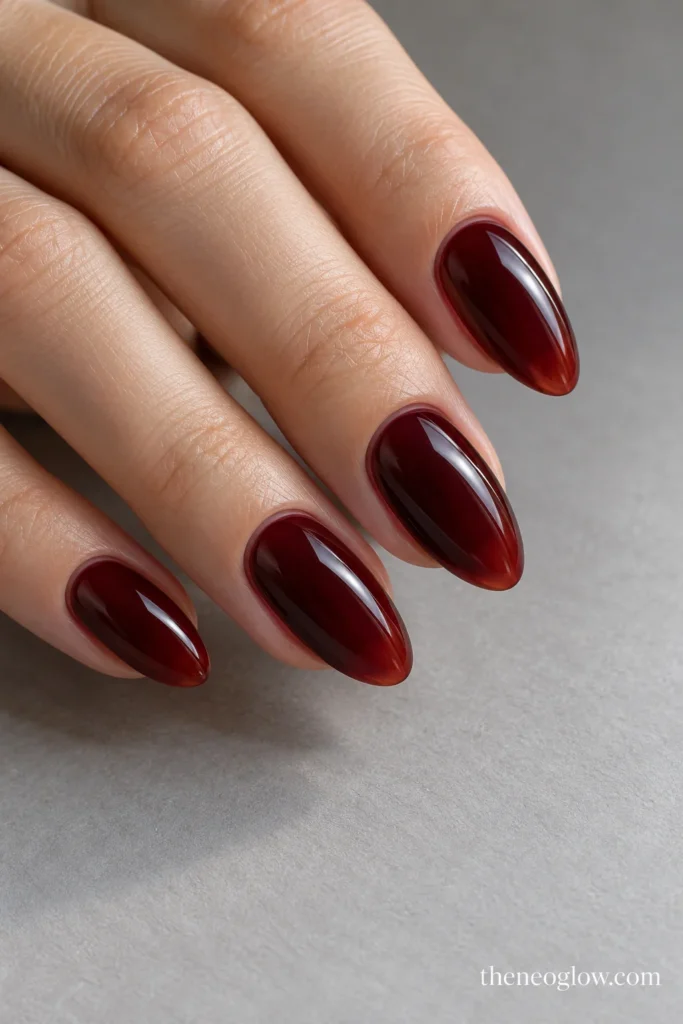
For something softer than opaque oxblood, use transparent, warm red-brown jelly on medium almonds. Layer enough color to read black cherry while preserving a sense of light through the nail. It should never look like solid burgundy cream. The jelly depth gives this dark shade a different personality, and the visible underlying nail changes its appearance from person to person.
14. Damson Plum Cream
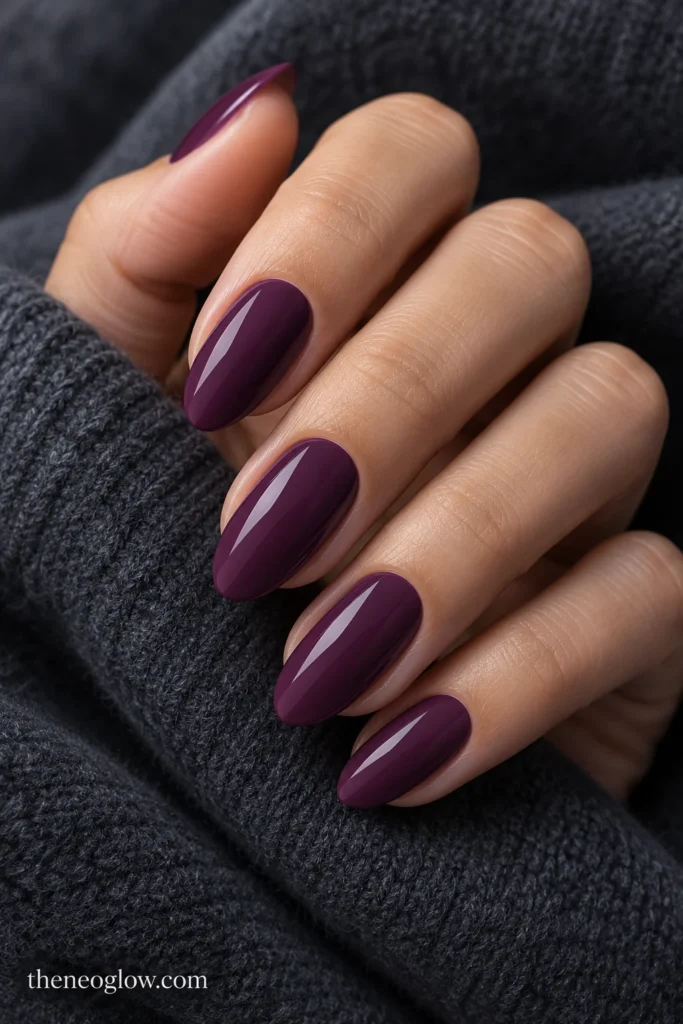
Damson is a saturated, cool purple-plum—neither raspberry red nor blackened aubergine. Choose medium soft-almond nails coated evenly in opaque cream with restrained gloss. Next to charcoal wool or a black dress, its purple pigment remains evident. This is a strong choice when wine red feels predictable but you still want a recognizable, nonmetallic winter color.
15. Smoky Amethyst Shift
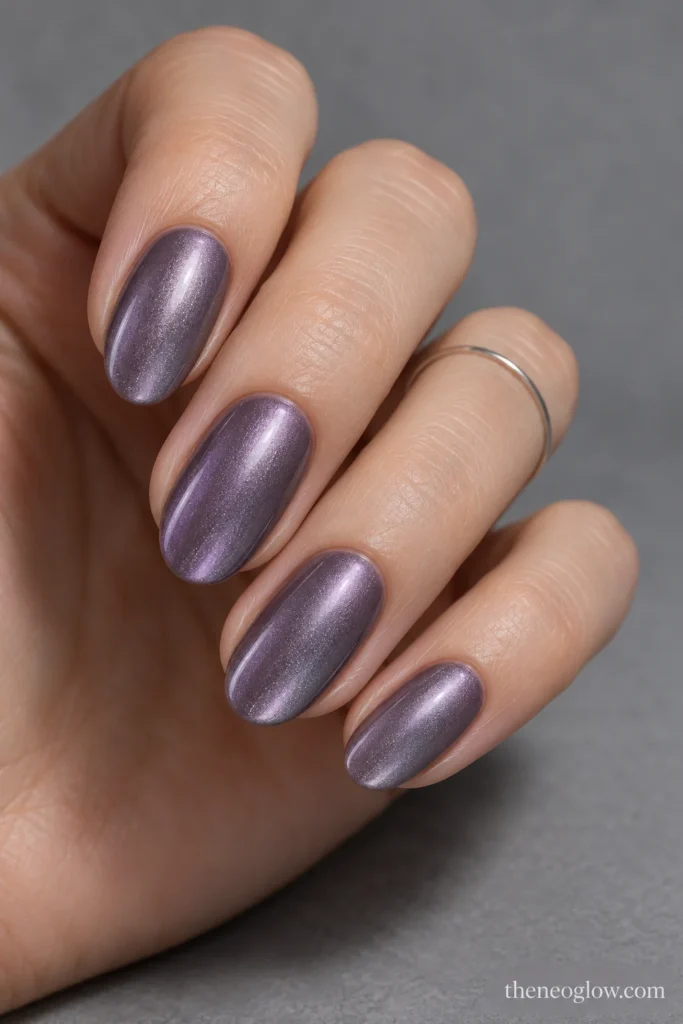
A violet-gray base with a fine, softly shifting lilac-pewter pearl suits medium oval nails. The color is deliberately smoky rather than bright lavender, and the reflected veil should be smooth, not coarse glitter. Watch how it changes between daylight and indoor lighting before committing: this finish has a different read from a plain purple cream, especially near silver accessories.
Winter Slate and Metallics
16. Carbon Slate Satin
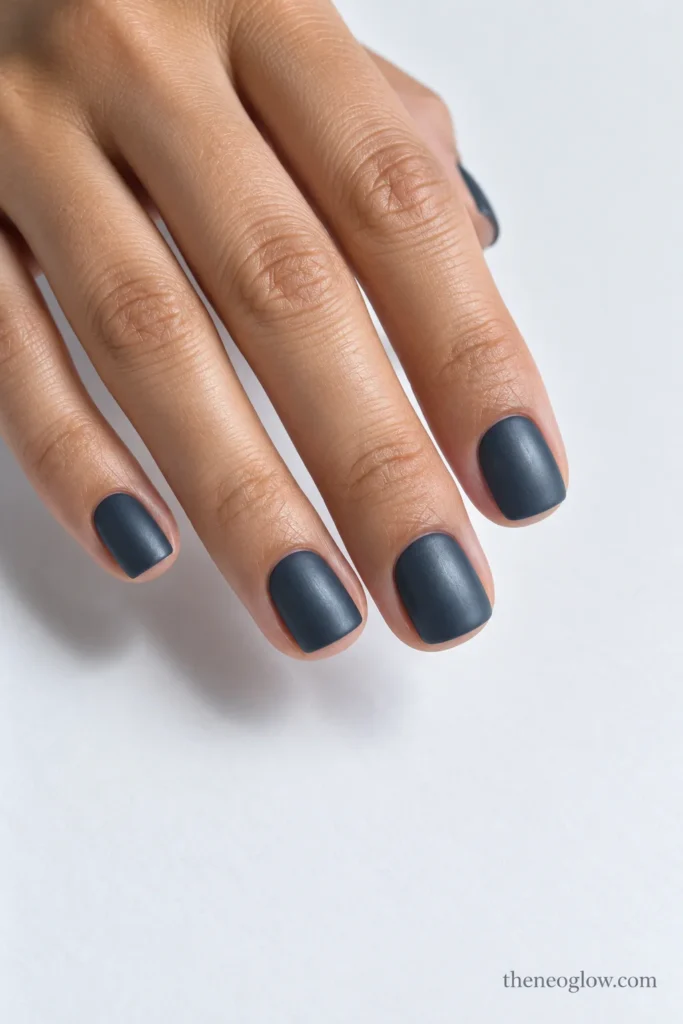
Carbon slate is charcoal with a definite cold blue-gray undertone. Keep short squovals fully opaque and satin-smooth, without cracked-ice lines or magnetic bands. It creates a nearly black manicure that looks softer next to dark coats than pure jet black. The tradeoff is visible edge wear if the underlying nail starts to show at the tips.
17. Champagne Pewter
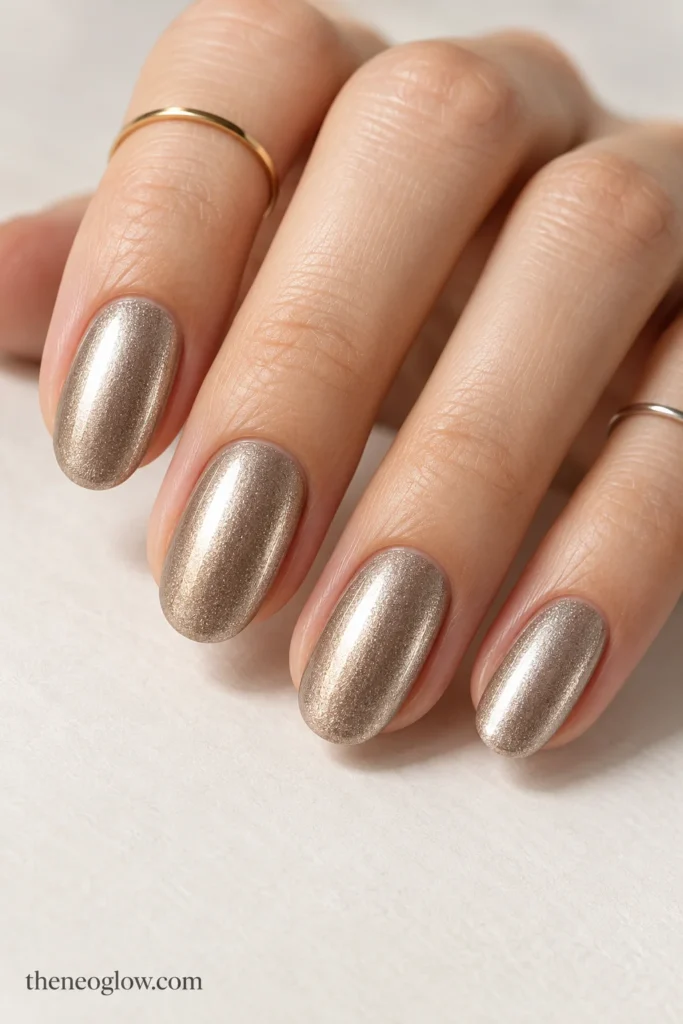
This muted metallic falls between cool pewter and warm champagne, with tiny, uniform reflective particles rather than large glitter pieces. Coat medium ovals in the same color from cuticle to edge. Because the metal tone is balanced, it can sit comfortably beside silver and gold jewelry. It gives evening shine without the sharply reflected surroundings of mirror chrome.
18. Molten Silver Mirror
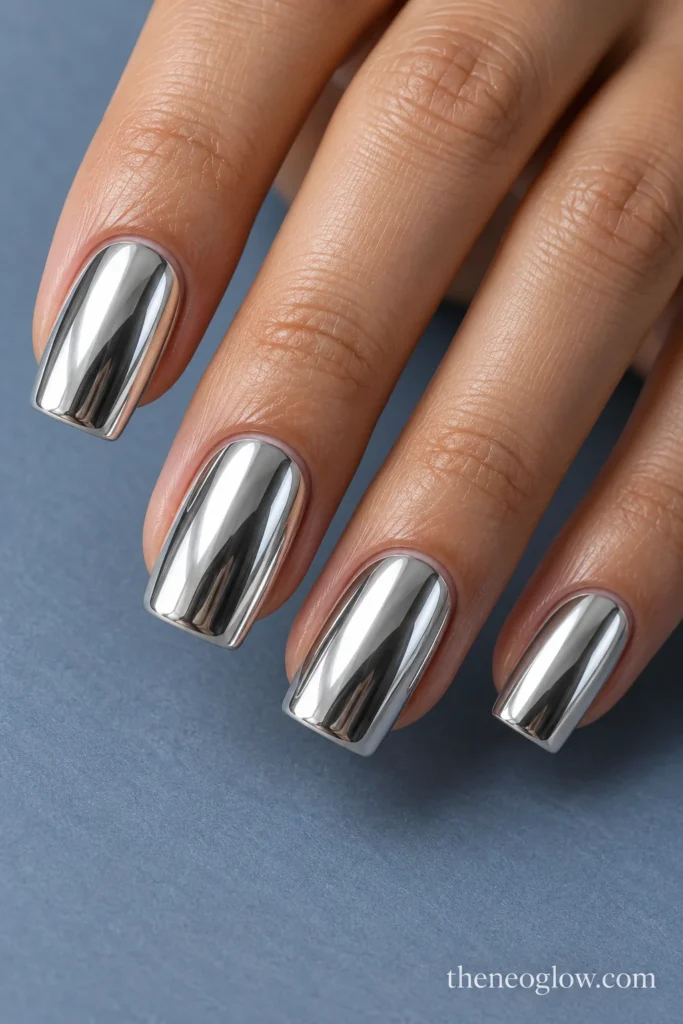
For maximum reflection, cover medium squovals in an unbroken, cool silver mirror surface. Unlike champagne pewter, this finish reads almost like liquid metal; it is not silver glitter or a pearly white topper. Ask what product system is needed for the specific effect. OPI’s comparison of glaze toppers and chrome powders explains that its lacquer-compatible glaze and chrome powders for specified gel systems are different products, not interchangeable shortcuts.
Make the Color Practical, Not Just Photogenic
Keep shade selection separate from nail-art technique. Decide whether the color itself should be sheer, opaque, satin, glossy, or reflective; only afterward consider a French edge, gradient, or accent. A whole-hand color swatch is more useful for this decision than an elaborate design photo. If motifs and multi-color layouts are your real goal, NeoGlow’s 27 winter nail ideas owns those designs, while its simple winter nails collection focuses on low-detail execution.
Length changes the presentation, not the underlying shade: very short rounds show a compact block of pigment, while medium ovals show more of a jelly’s transparency or a metallic’s reflection. For a salon or at-home reference, save one sentence naming the shade, undertone, coverage, finish, and shape. For example: “Gray-blue heather cream, fully opaque, glossy, on short squovals.” That instruction is much less ambiguous than “winter blue nails.”
Maintenance and Product Choice
Plan for the finish you choose. Pale opaque whites make streaks and tip gaps apparent. Deep creams highlight small chips; translucent jellies can look less abrupt as they grow. Matte and satin finishes can acquire glossy contact marks, while high-shine metallic surfaces can emphasize uneven application. These are visual tradeoffs, not guarantees of how long a manicure will last.
Use the directions for your exact polish, topper, remover, or gel system rather than assuming one method works for everything. Keep cuticles intact, moisturize your nails and surrounding skin, and avoid forcibly picking off a manicure. The American Academy of Dermatology’s manicure and pedicure safety advice offers deeper guidance on hygiene, cuticle care, and moisturizing after removal.
A Winter Color Worth Saving
If you want quiet everyday nails, begin with blush oyster milk, driftwood greige, or heather blue. For stronger contrast, try juniper, garnet, or damson plum. Choose champagne pewter when you want subtle shine and molten silver when you want the finish to lead. Save the numbered shade with its undertone and finish; when you’re ready for Christmas-specific details rather than color alone, browse NeoGlow’s Christmas nail ideas separately.