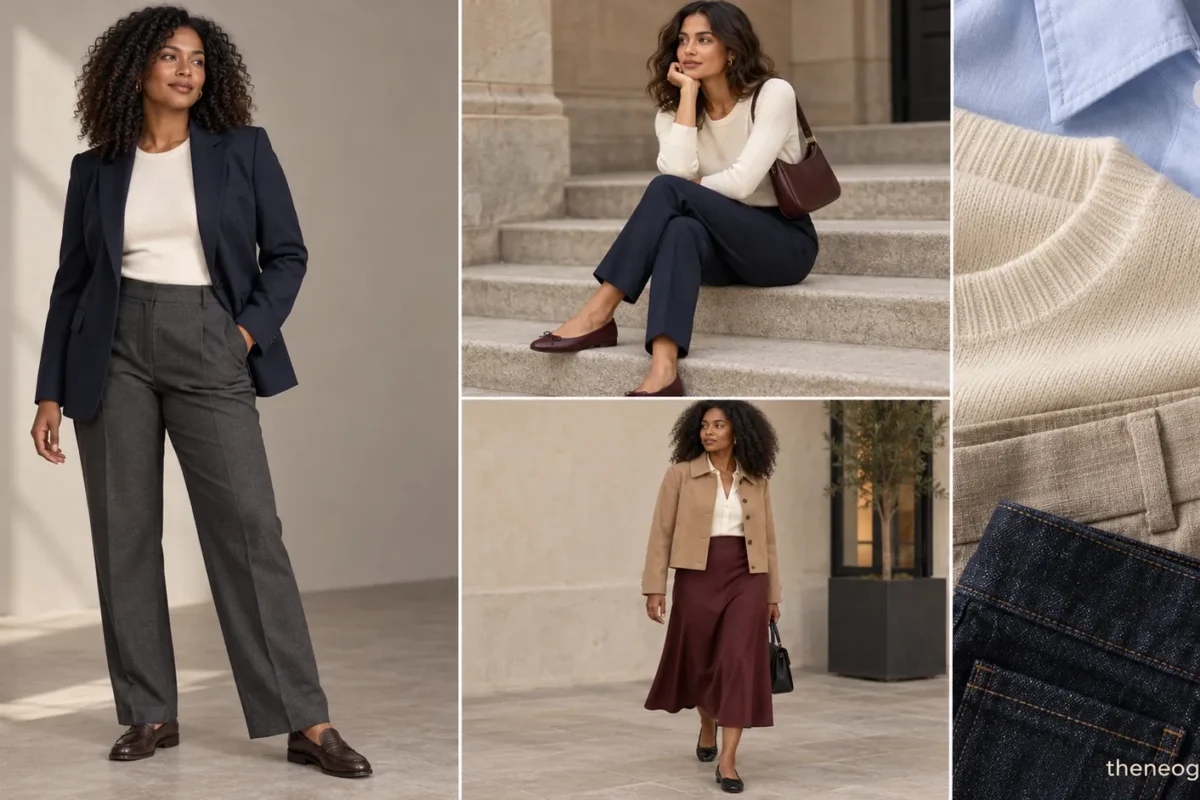
Old money style is most useful when you treat it as a wardrobe system, not a costume or a shortcut to looking wealthy. The modern version is built around balanced proportions, restrained color, practical fabrics, well-kept clothes, and accessories that support the outfit instead of advertising a label. You do not need a beige closet, designer purchases, or one specific body type to make it work.
This guide breaks the aesthetic into decisions you can actually use: what silhouettes to choose, which colors coordinate easily, how to judge fabric and fit, what accessories add polish, and how to build outfits from pieces you already own.
What Old Money Style Means in a Modern Wardrobe
The useful part of the old money aesthetic is not social class. It is the visual discipline behind the clothes: fewer competing details, repeatable combinations, comfortable tailoring, controlled contrast, and pieces that still make sense after the trend cycle changes.
That makes it related to quiet luxury and classic style, but not identical to either one. Quiet luxury leans more heavily on understated design, finish, and minimal branding. Classic style is broader and can include almost any reliable, long-wearing silhouette. Old-money-inspired dressing adds heritage, preppy, coastal, collegiate, and equestrian references when they fit the setting.
The goal is not to imitate a lifestyle. It is to borrow the wardrobe logic: coordinate more, over-style less, and choose pieces you can realistically rewear.
The Five Rules That Make the Look Work
1. Start With Silhouette and Proportion
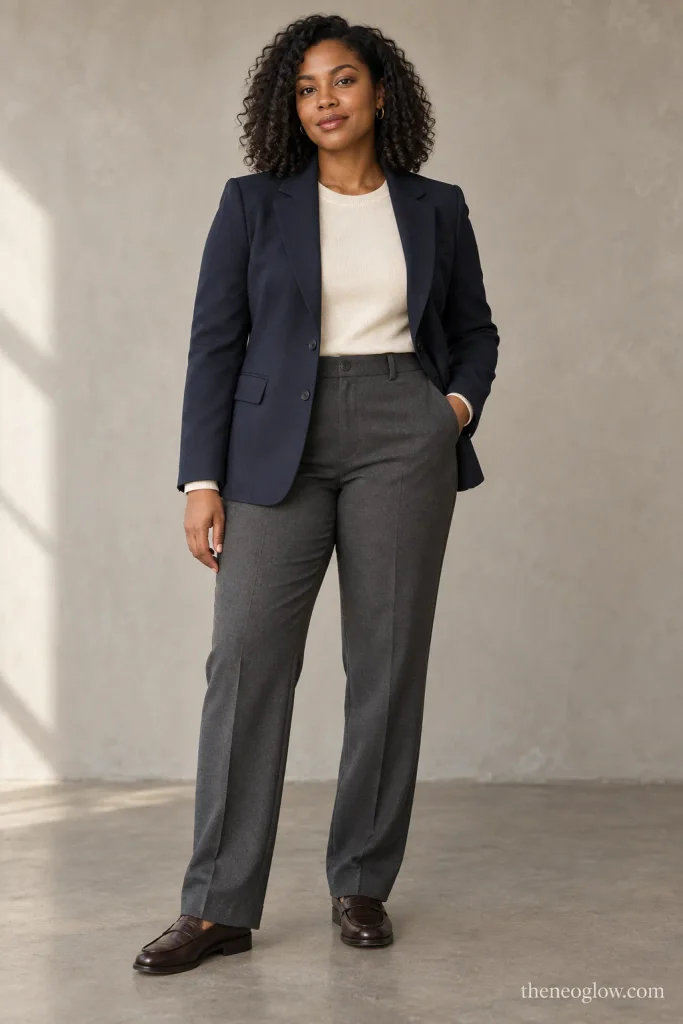
A polished outfit usually reads clearly before anyone notices the brand, fabric, or jewelry. Look first at the line of the outfit.
A blazer should sit cleanly through the shoulders and close without obvious pulling. Trousers need enough ease through the seat and hips to fall rather than cling or collapse into wrinkles. A skirt or dress should allow you to sit and walk comfortably. Knitwear can skim, drape, or fit closer depending on the look; it does not need to be oversized to feel refined.
Proportion is flexible. If a long coat overwhelms your frame, try a shorter jacket or expose more of the waistline. If a cropped jacket feels too sharp, pair a longer layer with a straighter trouser or column-like skirt. Petite, tall, curvy, plus-size, fuller-busted, and straight-shaped readers do not need different definitions of elegance; they may simply prefer different lengths, rises, scale, or amounts of structure.
2. Judge Fabric by Real-Life Use, Not Prestige
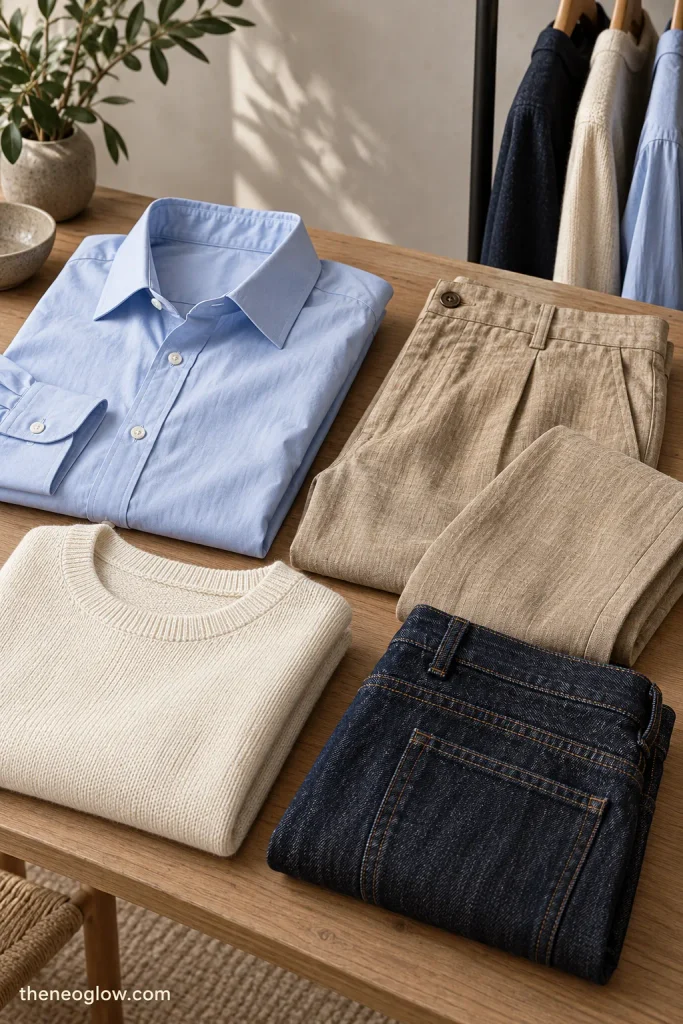
Fabric affects drape, opacity, warmth, wrinkling, maintenance, and how a garment holds its shape. Those practical qualities matter more than whether a fiber sounds luxurious.
Cotton poplin can make a crisp shirt. Linen and linen blends can work well when you want airflow and are comfortable with visible creasing. Fine-gauge wool or merino can layer neatly in cooler weather. Denim, cotton twill, corduroy, and structured knits can also belong in this wardrobe when the cut and color support the rest of the outfit.
Before buying, read the fiber-content and care labels instead of judging a garment from a product photo alone. In the United States, the Federal Trade Commission explains that most textile and wool products carry fiber-content information and that care labels provide cleaning instructions. Use the FTC’s apparel-labeling guidance when you want to understand what those labels are required to tell you.
Then inspect the garment itself: Is the fabric opaque enough for its purpose? Does a jacket have enough structure to keep its line? Does the knit recover after being stretched lightly? Is the maintenance realistic for your life? A beautiful piece that requires care you will never give it is not a practical wardrobe investment.
3. Build a Flexible Color System, Not a Beige Uniform
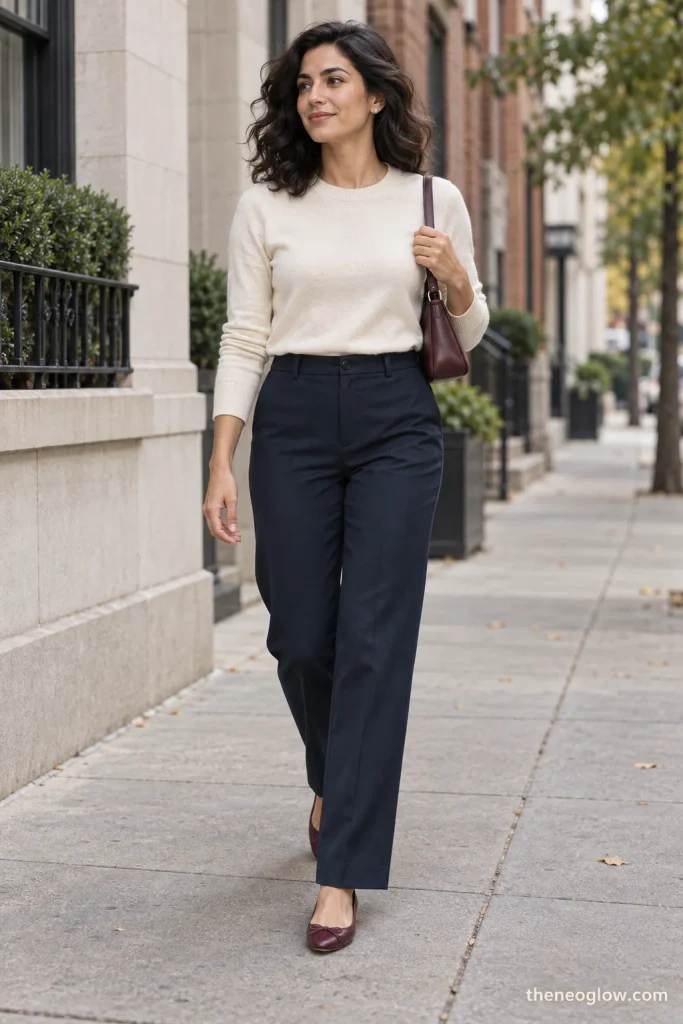
An old money color palette works best as a coordinated family, not a list of mandatory neutrals.
Start with two or three dependable anchors you already enjoy wearing. Navy, charcoal, chocolate, black, camel, tan, cream, ivory, white, and denim blue are easy foundations, but you do not need all of them. Then add controlled color: forest green, olive, burgundy, plum, pale blue, soft pink, butter cream, or a restrained red can make the wardrobe feel personal rather than copied.
A simple method is to use one anchor, one supporting neutral, and one optional accent. Navy trousers with an ivory knit and burgundy flats feel different from camel trousers with a black top and gold jewelry, yet both follow the same logic.
Your complexion does not ban you from a color. If a shade feels unflattering near your face, change its temperature, depth, or contrast, or wear it farther from your face in trousers, shoes, or a bag.
4. Keep Accessories Controlled, Not Invisible
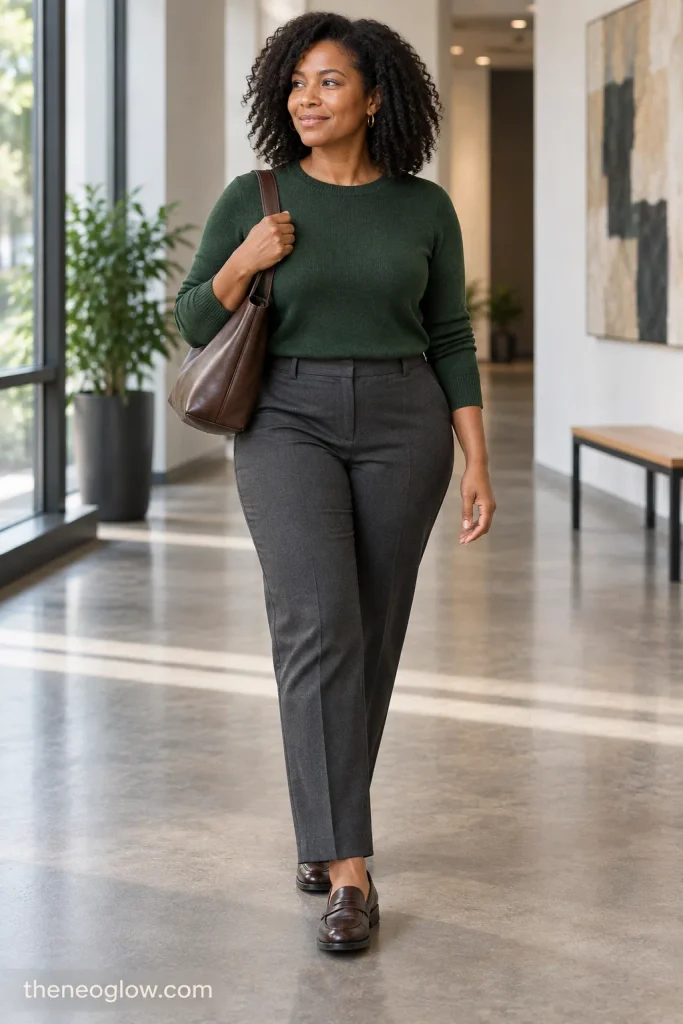
Accessories should finish the outfit, not prove how much it cost.
A structured tote, soft shoulder bag, simple crossbody, belt, scarf, watch, small hoops, studs, or one necklace can all work. The key is visual editing. If the bag has strong hardware, the jewelry can be quieter. If a patterned scarf is the focal point, the rest of the outfit can stay simpler.
Visible branding is not required. Neither are pearls, a silk scarf, or a luxury handbag. Repeating one or two accessory shapes across different outfits often looks more intentional than buying a new finishing piece for every look.
Shoes deserve the same practicality. Loafers, ballet flats, clean minimal sneakers, low boots, sandals, or a stable low heel can all fit the aesthetic when they suit the weather, walking distance, surface, and formality of the day.
5. Dress for Context Before Aesthetic
A wardrobe formula only works if you can actually wear it.
For hot, humid weather, a heavy blazer may be less useful than an unlined cotton layer, linen-blend trouser, breathable shirt, or simple dress. In a cold climate, fine knitwear, wool trousers, a substantial coat, and weather-appropriate boots can create the same restrained effect. For a long commute, choose shoes you can walk in rather than a delicate pair selected only for the photograph.
The aesthetic should adapt to your life, not force your life to adapt to the aesthetic.
Build an Old Money Wardrobe by Function
A pillar wardrobe does not need a fixed number of pieces. Start by checking whether you have enough options in four functions.
Foundation tops: shirts, tees, polos, blouses, or fine knits that can sit under a layer or work alone.
Bottoms and one-piece options: trousers, dark or medium-wash denim, skirts, and dresses in shapes you can repeat.
Framing layers: a blazer, cardigan, trench, short jacket, coat, or structured knit that changes the outline of the outfit.
Finishing pieces: practical shoes, one or two useful bags, a belt if you wear one, and jewelry or scarves that coordinate with several looks.
This method keeps you from buying a stereotypical checklist. If your closet already has strong bottoms but every outfit lacks a useful outer layer, your next gap is probably a layer, not another pair of beige trousers.
Before shopping, make three piles: pieces that already fit the style, pieces that could work with a small alteration or different styling, and genuine gaps. That keeps the wardrobe closet-first and gives every new purchase a job.
Choose One of Three Practical Outfit Routes
You do not need dozens of formulas to start. Pick the route that matches the way you actually dress most often.
| Route | Start With | Add Structure | Finish With | Best For |
|---|---|---|---|---|
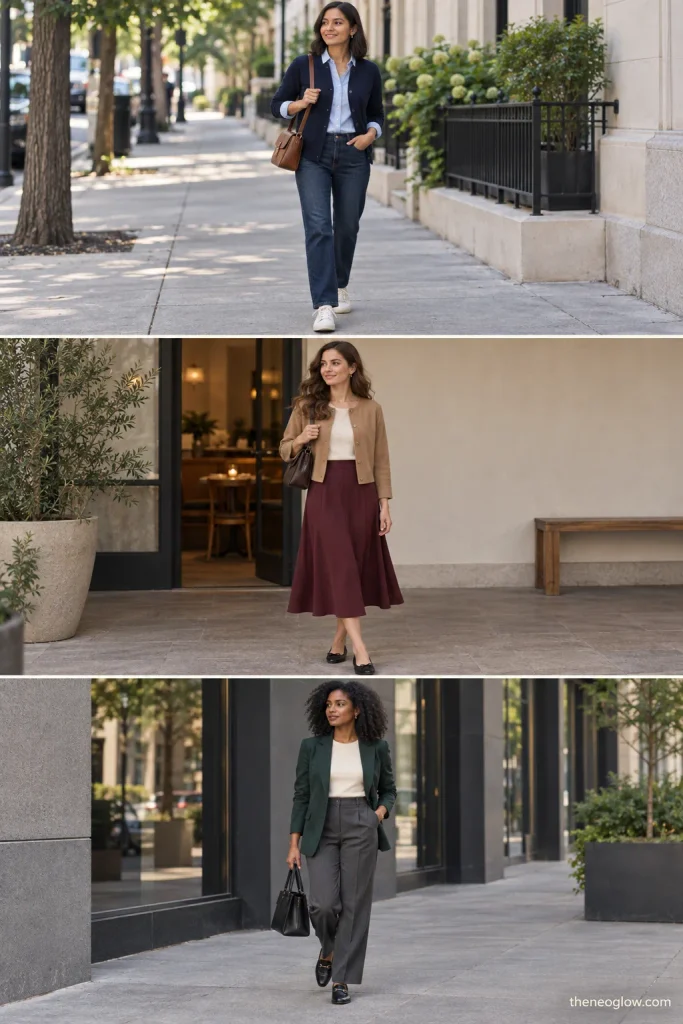
| Easy everyday | Straight trouser or dark denim + shirt or fine knit | Cardigan, trench, or short jacket | Loafers, flats, or clean sneakers + simple bag | Errands, casual office days, travel, weekends |
| Soft and feminine | Midi skirt or simple dress + fine knit or blouse | Cropped jacket, cardigan, or light coat | Ballet flats, low boots, or sandals + restrained jewelry | Lunch, dates, events without a formal dress code |
| Structured | Tailored trouser or streamlined midi dress + refined top | Blazer or coat | Loafers or stable low heel + structured bag | Work, dinner, meetings, polished city dressing |
These are routes, not uniforms. Swap the fabrics for climate, change the contrast level for your coloring and preference, and adjust the hem or rise for your proportions.
If you save only one formula, save the one that solves your most frequent dressing problem. A repeatable weekday outfit is usually more valuable than a highly styled look you wear twice a year.
Fit Checks That Matter More Than a Label
Try the garment in the positions you will actually use it: sitting, reaching, walking, carrying a bag, and wearing the layer underneath it.
For jackets, check the shoulder line, armhole comfort, sleeve length, and whether the front closes without pulling. For shirts, watch for strain at the bust and buttons. For trousers, look at the rise, hip ease, inseam, and break at the shoe. For skirts and dresses, check whether the waist sits where you want it and whether the hem stays comfortable when you move.
Small alterations can improve hems, sleeve length, and some waist or side-seam issues. Major shoulder reconstruction, a badly mismatched rise, or complex relining may cost more than the garment is worth. Tailoring is a tool, not a promise that every piece can be rescued.
The best fit is not the one that makes your body look like somebody else’s. It is the one that gives the silhouette you want without fighting your movement.
Use Climate to Choose the Fabric Weight
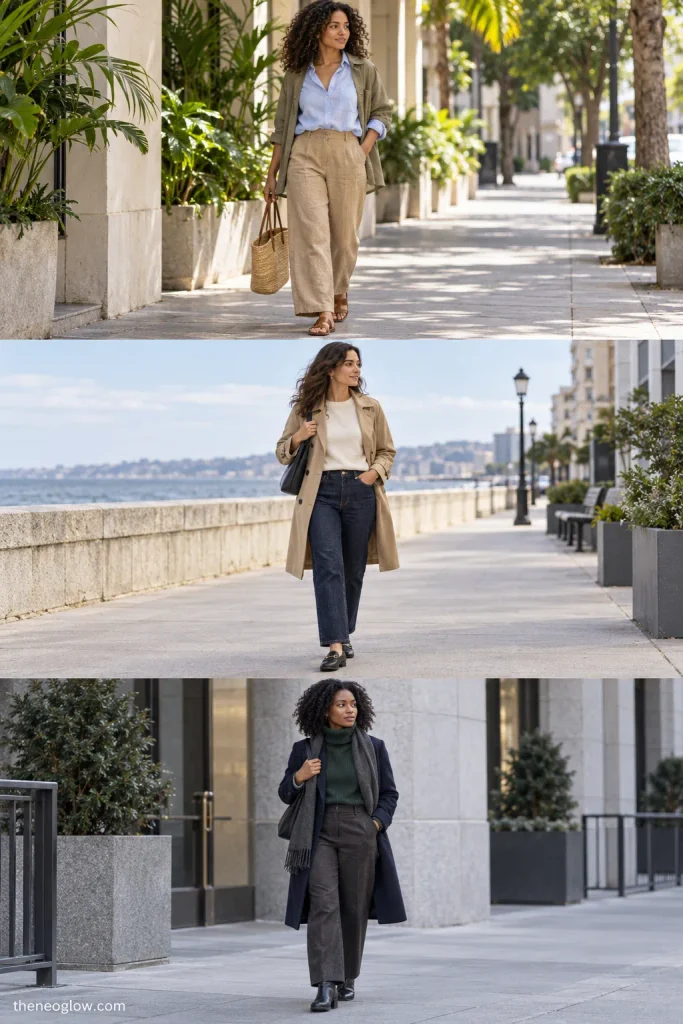
Old-money-inspired dressing can look consistent across the United States even when the actual garments change.
| Climate or Setting | Useful Direction | Practical Swap |
|---|---|---|
| Hot and humid | Cotton poplin, linen blends, chambray, light dresses, fine cotton knits | Replace a lined blazer with a lighter overshirt or unlined layer |
| Hot and dry | Lightweight woven fabrics, longer sun-friendly shapes, breathable layers | Keep the palette but reduce fabric weight |
| Mild or coastal | Twill, denim, fine merino, trench-weight layers | Add a light outer layer for wind or evening temperature changes |
| Cool and rainy | Wool blends, denser knits, trench or rain-appropriate outerwear | Choose shoes with useful traction rather than delicate soles |
| Cold | Wool, merino, flannel, corduroy, substantial coats | Build the color story through layers instead of relying on one visible outfit |
Fabric name alone does not guarantee comfort. Weight, weave, lining, fit, humidity, and indoor heating or air conditioning can change how a garment feels.
Care Is Part of the Style System
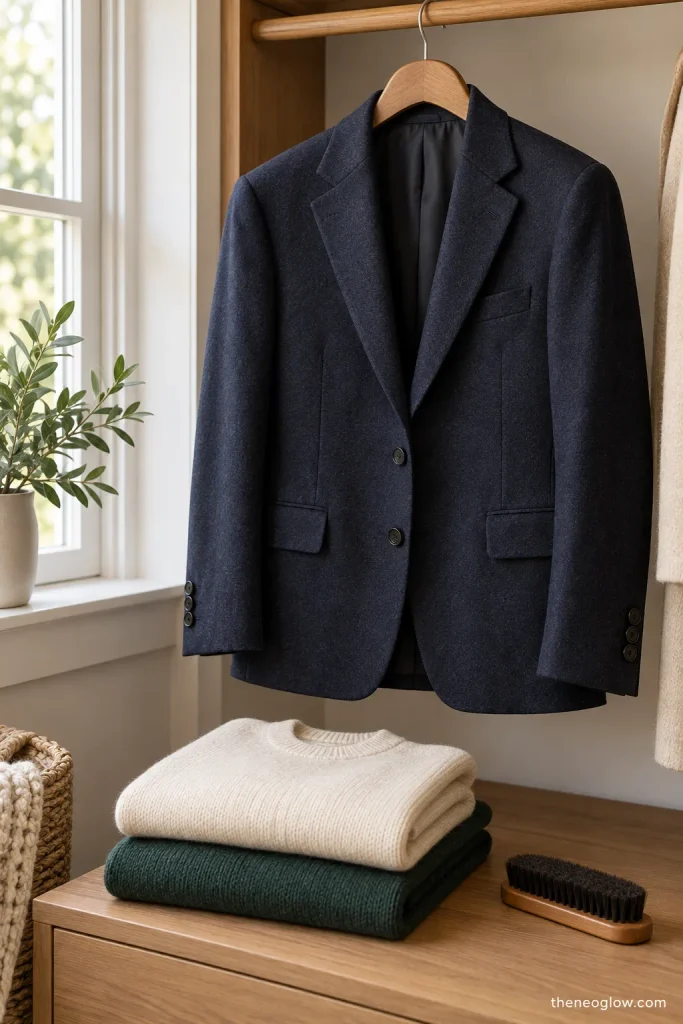
A well-kept garment often contributes more to this aesthetic than another new purchase.
Start with the individual care label. Clean stains promptly using methods appropriate to the fabric, repair loose buttons and small seams, brush or lint-roll outerwear when needed, and store garments in a way that preserves their shape.
For wool specifically, Woolmark’s wool-care guidance recommends hanging woven wool garments on suitable shaped or padded hangers while folding knitted garments for storage. It also gives guidance on airing, drying, and pressing wool. Follow the label on your individual garment first, especially when it contains a blend, special finish, lining, or trim.
A closet becomes more useful when the pieces stay wearable. Care, repair, rotation, and rewear are part of the look because they reduce the pressure to keep replacing the wardrobe.
How to Build the Look Without Overspending
Start with what you own. Put together three outfits using your current trousers, jeans, skirts, shirts, knits, jackets, dresses, and shoes before you make a shopping list.
Then identify the bottleneck. Maybe your trousers work but none of your tops layer cleanly. Maybe your clothes coordinate but your only everyday shoes are uncomfortable. Maybe the problem is not the wardrobe at all; a hem adjustment, replacement button, sweater de-pilling, or better storage could make existing pieces feel more finished.
When you do shop, compare measurements, fiber content, construction, condition, and care requirements. Secondhand and vintage can be useful because the aesthetic does not depend on owning the newest release. New pieces can be equally sensible when they fill a repeated need.
Price is not proof of quality, and a budget is not a barrier to dressing with restraint. The strongest purchase is the one that closes a real wardrobe gap and works with several pieces you already have.
Old Money Style vs. Quiet Luxury vs. Classic Style
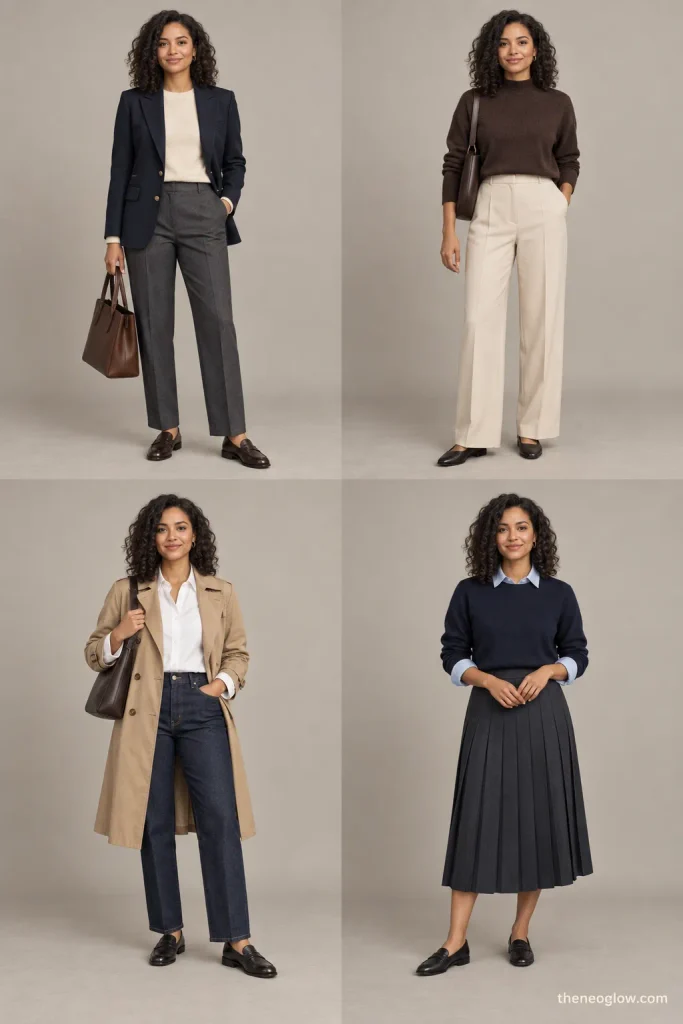
These terms overlap, but keeping them separate makes wardrobe decisions easier.
| Style Family | Main Idea | Common Visual Cues | What It Does Not Require |
|---|---|---|---|
| Old money style | Heritage-influenced, restrained, rewearable wardrobe logic | Tailoring, prep or coastal references, controlled accessories, coordinated colors | Wealth, designer labels, class performance |
| Quiet luxury | Understated design with focus on fabric, construction, fit, and tonal coordination | Minimal branding, clean lines, refined texture | Heritage or preppy references |
| Classic style | Broad, reliable dressing that resists rapid trend turnover | Simple silhouettes, familiar staples, repeatable combinations | Luxury coding or a narrow neutral palette |
| Preppy style | Collegiate, nautical, tennis, rugby, and structured-casual influence | Stripes, knits, collars, pleats, sporty structure | Minimalism or muted color only |
You can borrow from more than one family. A navy knit with straight jeans and loafers may feel classic and preppy; a softly tailored wool coat over a monochrome outfit may lean quiet luxury. The label matters less than whether the pieces suit your life and work together.
A Simple Way to Start This Week
Choose one of the three outfit routes, build it once from your own closet, and photograph it. Then note what made it work: the silhouette, the color relationship, the fabric weight, the shoes, and the finishing detail.
Repeat the formula with one change next time instead of rebuilding the entire outfit. That is how the aesthetic becomes a usable personal style rather than a saved Pinterest image.
The most convincing version of old money style is not a shopping haul. It is a wardrobe that looks coordinated, feels comfortable, and gets worn again.