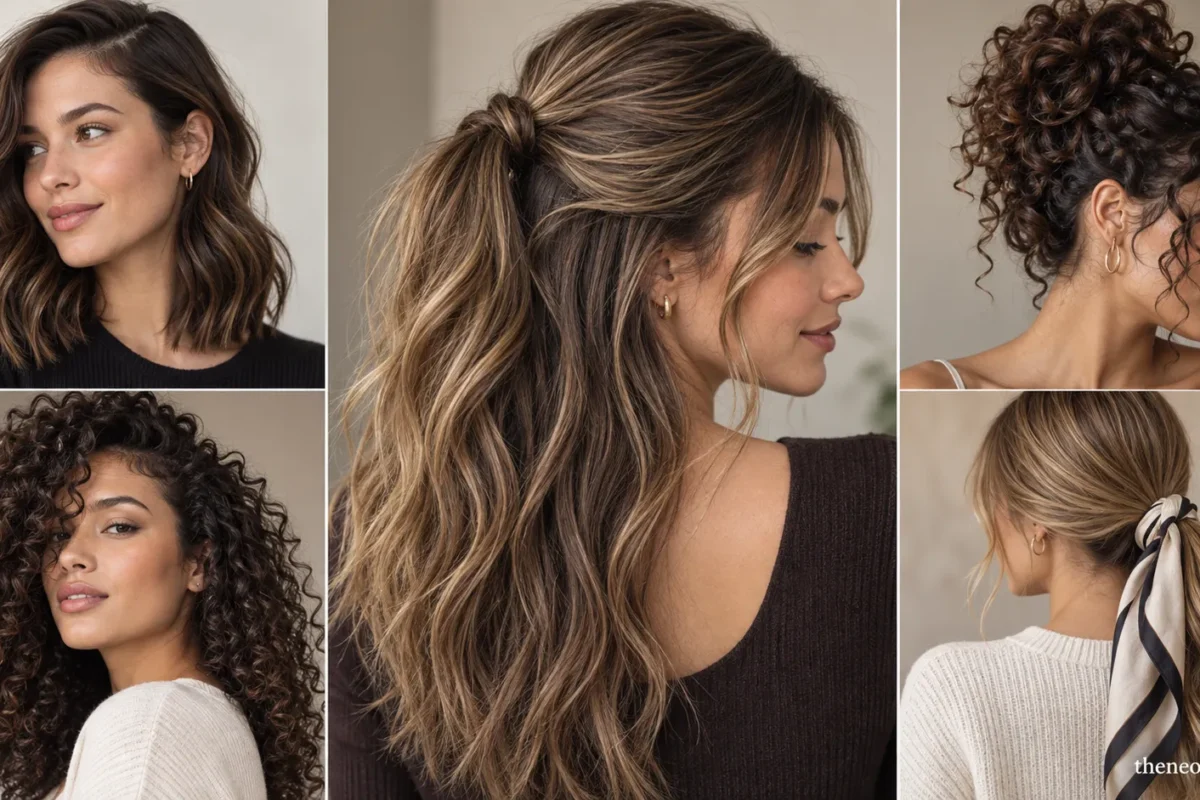
A good hairstyle can make you feel finished without looking overdone. The most useful hairstyles are the ones you can picture in real life: at work, at dinner, on a weekend, or whenever you want your hair to look intentional.
This guide brings together 27 hairstyles for women across short, medium, and long hair, with options for straight, wavy, curly, and coily textures. Some rely mostly on parting or placement; others use a braid, bun, twist, ponytail, or accessory. The goal is to help you choose a structure that works with the hair you have.
Choose Your Route First
| If you want… | Start with… | Best starting length | Texture notes | Effort |
|---|---|---|---|---|
| The fastest visible change | Deep side-part tuck | Short to long | Works with many textures; preserve natural volume | Low |
| Hair mostly down | Soft bend or defined natural texture | Medium to long | Adapt the finish to your pattern | Low to medium |
| Hair off your face | Low ponytail or claw-clip twist | Medium to long | Adjust hold and tension to density | Low |
| A softer updo | Loose bun or French twist | Medium to long | Pins and texture can add grip | Medium |
| A short-hair option | Tucked bob, sculpted crop, or barrette sweep | Short | Let the cut and natural pattern lead | Low to medium |
| A texture-forward option | Defined waves, sculptural curls, high puff, or mini twists | Varies | Avoid treating straightness as the goal | Low to medium |
Use the table as a filter, not a rule. Density, shrinkage, layers, fringe, and personal preference can change how much length or hold a style needs.
Loose Hairstyles That Still Look Finished
1. Deep Side-Part Tuck
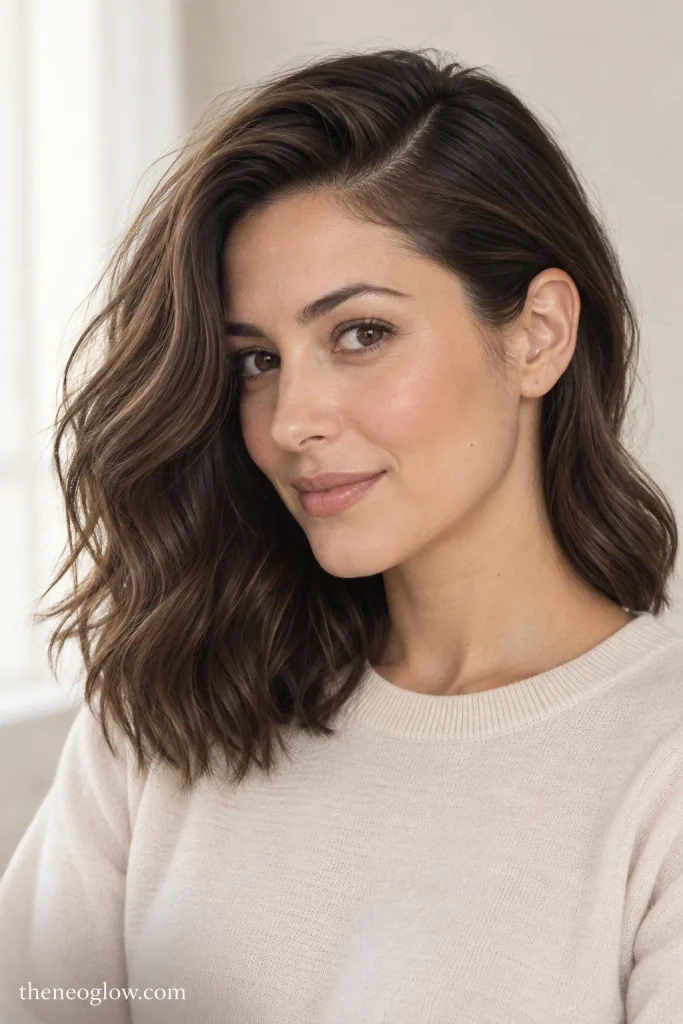
Move your part to one side, then tuck the lighter side behind the ear. That small shift changes the balance without requiring a new cut and works on short or long hair.
Keep the rest of the texture natural rather than flattening everything. A soft wave, curl pattern, or smooth finish can all work.
2. Center-Part Soft Bend
A center part with one broad bend through the mid-lengths gives medium or long hair shape without becoming a full curled style. Create the bend with your preferred heatless or heated method, then loosen it so the result reads as movement rather than individual curls.
3. Air-Dried Defined Waves
If your hair naturally forms waves, definition can be the hairstyle. Work with your existing pattern, keep the part clean, and arrange the front pieces deliberately once dry.
The polished element comes from shape and separation, not from forcing every strand into the same wave.
4. Sculptural Natural Curls
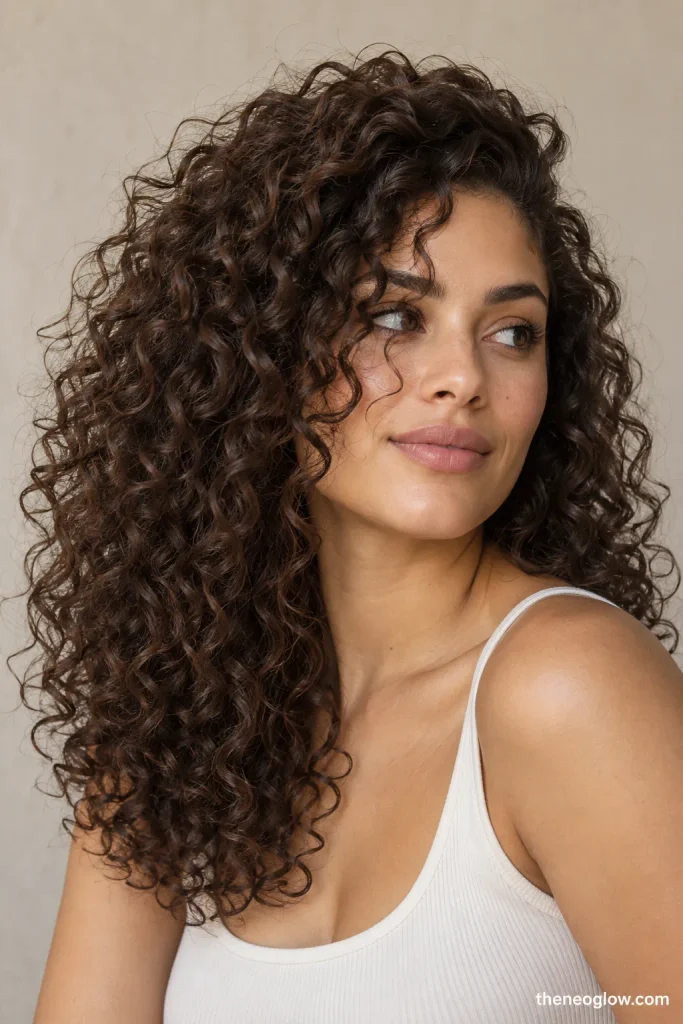
Let curls remain full while making the silhouette intentional. Direct more volume to one side, define the front section, or choose a clean center part while leaving the rest soft.
The goal is placement, not making curls smaller, straighter, or more controlled.
5. Soft Midi Blowout
A soft blowout can sit between straight hair and full, round-brush bounce: root lift, a smooth surface, and ends that move without forming obvious curls.
On medium or long hair, it creates an understated finish for work, dinners, or events. Keep the movement airy rather than stiff.
6. Sleek Lengths With Turned-Under Ends
Straight or stretched hair looks more considered when the ends curve gently inward, creating a finished perimeter without a full curl.
It can work on a bob, lob, or longer cut. If you use heat, follow your tool’s directions rather than assuming one temperature suits every hair type or condition.
7. Tucked Textured Bob
A bob does not need to be perfectly smooth to look polished. Keep its natural bend, wave, or curl, then tuck one side behind the ear.
This is one of the easiest hairstyles for short hair because the cut still does most of the work.
8. Finger-Shaped Short Crop
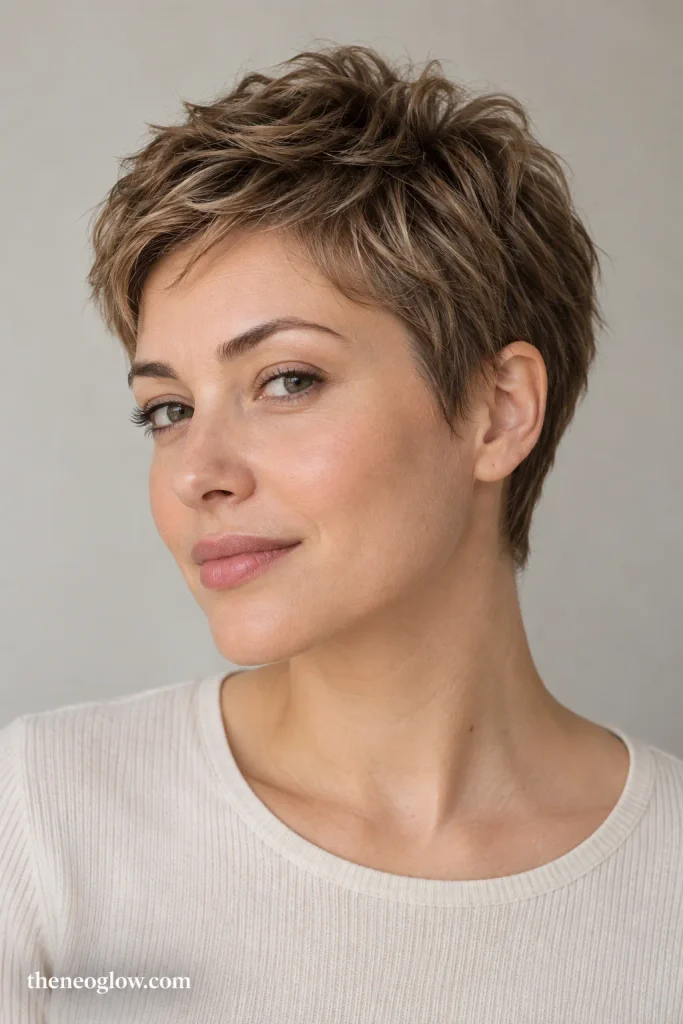
On a pixie, cropped cut, or short natural style, use your fingers to direct the front and sides into a deliberate shape. Choose one feature—a curved fringe, defined wave, or softly lifted crown—to carry the look.
Ponytails and Half-Up Hairstyles
9. Low Soft Ponytail
Gather the hair at the nape without pulling every section rigidly flat. A center or side part gives the front structure, while natural texture through the ponytail keeps the style relaxed.
It is an easy everyday choice for medium or long hair and can be smooth, wavy, curly, coily, or lightly tousled.
10. Wrapped Low Ponytail
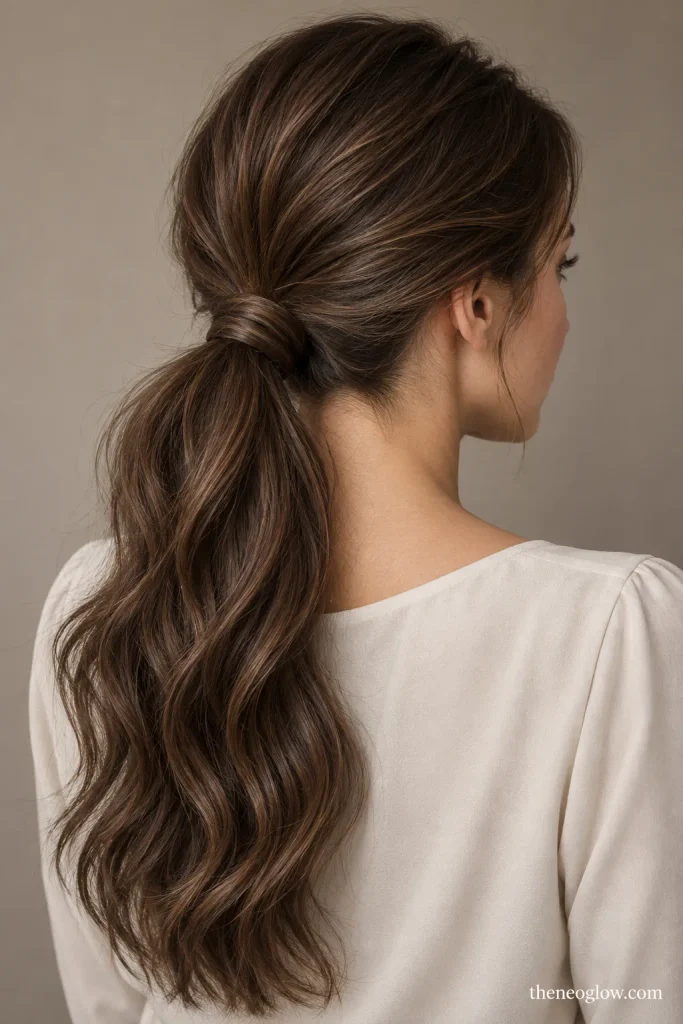
Start with a low ponytail, then wrap a small section of hair around the elastic and pin it underneath. Hiding the band makes the style feel more deliberate while natural movement through the lengths keeps it from becoming formal.
11. High Soft Ponytail
A high ponytail can look lifted without being pulled painfully tight. Position it high enough to change the silhouette, then let the tail keep its natural body. Straight, wavy, curly, and coily textures can each create a different version.
12. High Puff
For curly and coily hair with enough length, a high puff creates a clear shape while keeping the natural texture central to the style. The base should feel secure, not painful.
You can leave the hairline natural, refine only the part or front section, or add a soft scarf at the base. The point is definition through placement—not excessive tension.
13. Bubble Ponytail
Secure a ponytail, add spaced elastics down the length, then gently expand each section. Wide spacing feels softer; closer spacing creates more structure. Long hair gives you the most room, though medium lengths can work too.
14. Half-Up Ponytail
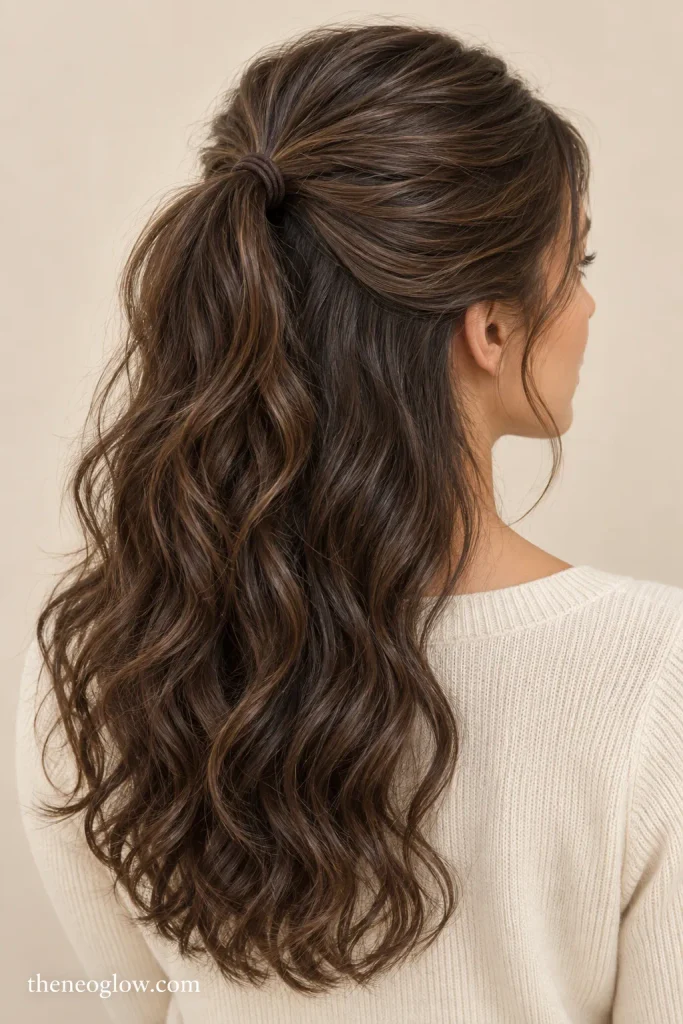
Take the top section from the temples or crown and secure it into a small ponytail, leaving the rest down. Keep the section fairly narrow and let the lower hair retain its natural wave, curl, coil, or straight texture.
15. Half-Up Mini Knot
Twist the half-up section into a small knot instead of a ponytail. It adds shape at the crown without becoming a full updo and works well when front layers need somewhere to go.
Buns, Twists, and Updos
16. Claw-Clip Twist
Gather the hair as if you were making a low ponytail, twist the length upward, and secure it with a claw clip. Let the ends fall, fan out, or tuck them depending on your length.
This style is defined by vertical shape rather than perfect smoothness. It can look polished with a clean part, but it also works beautifully with visible wave, curl, and texture.
17. Low Loose Bun
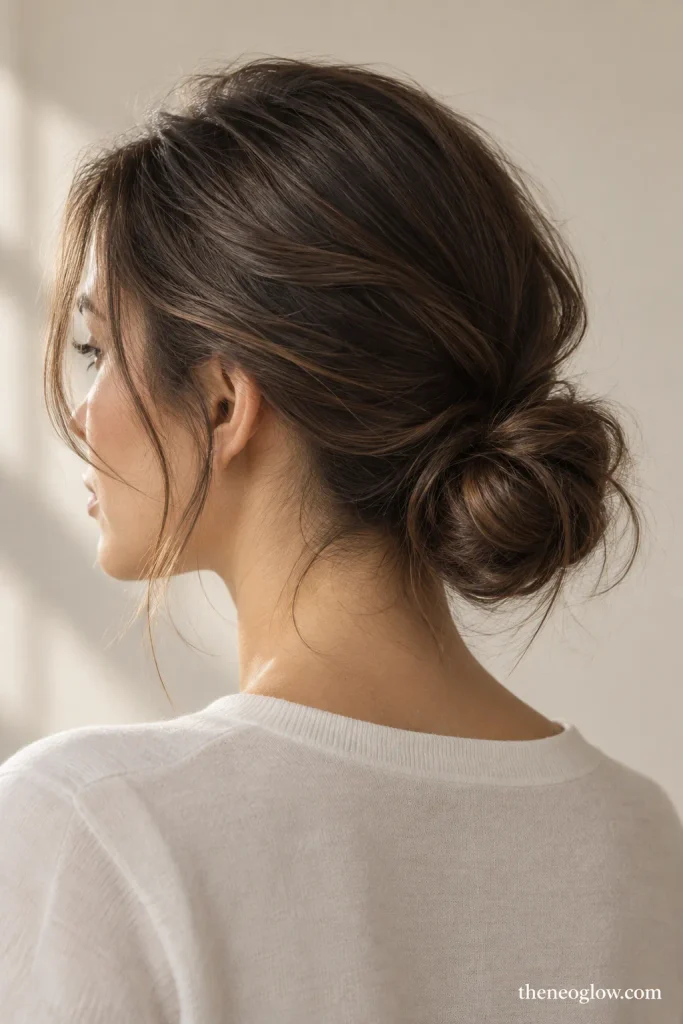
A low bun feels softer when the base is secure but the surface is not shellacked flat. Place it at the nape, then allow a little movement at the crown or around the face.
The bun itself can be twisted, looped, or softly coiled. This is a strong choice when you need hair contained but do not want a severe finish.
18. Center-Part Chignon
Create a center part, bring the hair low, and form a compact chignon at the nape. Compared with a loose bun, this version has a clearer silhouette and a more dressed-up feel.
You can still keep it modern by avoiding excessive volume and leaving the front smooth rather than heavily teased. It is a useful bridge between everyday hair and an occasion updo.
19. Soft French Twist
A French twist does not have to look formal or rigid. Gather the hair low, twist it upward, and pin the fold while allowing the surface to retain a little natural texture.
Medium and long hair usually give you more material to work with. Layers may need extra pins, but they can also make the finished shape feel softer and less architectural.
20. Pinned Curly Updo
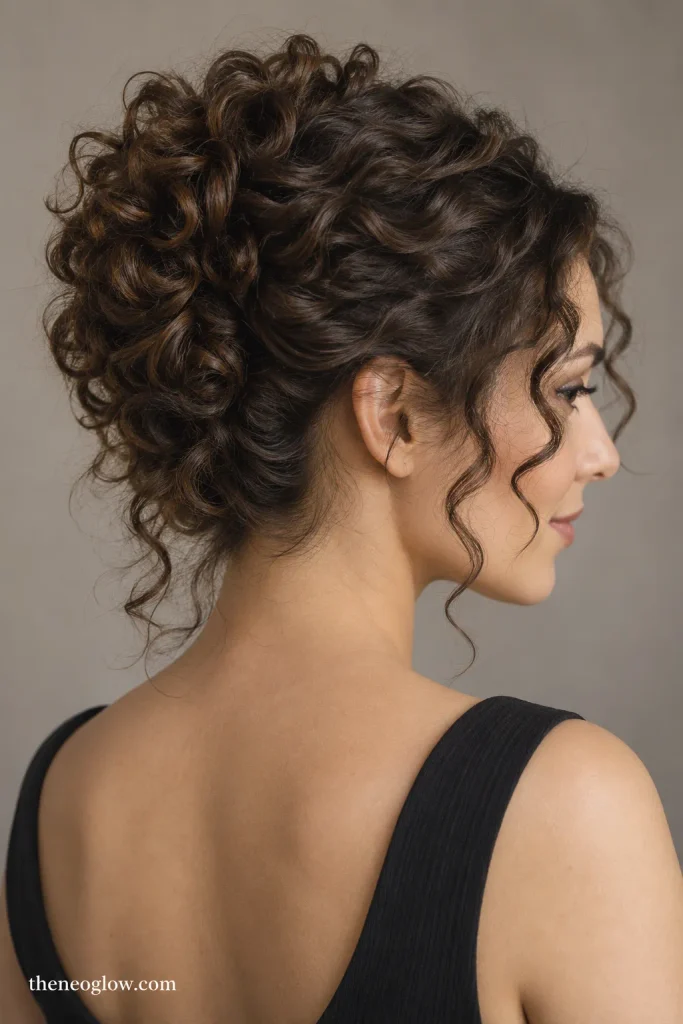
Rather than brushing curls into one uniform bun, pin sections upward while preserving visible curl shape. Leave a few curls where they naturally frame the face or soften the outline.
This approach lets the texture remain part of the design. It can be adapted for different curl patterns, lengths, and densities by changing how many sections are pinned and where the volume sits.
Braids, Twists, and Small Details
21. Loose Crown Braid
A crown braid can feel relaxed when the braid has a little width and softness rather than a very tight, sculpted finish. Depending on your length and skill, you can braid around the head or create two braids and pin them across the crown.
Keep the tension comfortable, and let the braid’s shape—not tightness—provide the structure.
22. Simple Side Braid
Move the hair over one shoulder and braid it loosely, allowing the front to keep its natural part and volume. The asymmetry makes even a basic three-strand braid feel intentional.
This is particularly useful for long hair when you want control without a bun or ponytail. For layered hair, a few shorter pieces slipping out can soften the style rather than ruin it.
23. Braided Low Bun
Create one braid, coil it into a low bun, and pin it at the nape. The braid gives the bun visible texture, so the style can look detailed without needing several separate techniques.
It works best when you have enough length for the braid to wrap at least once. If your hair is shorter, a smaller braided knot may be more realistic than forcing a large bun.
24. Mini Twists With a Natural Finish
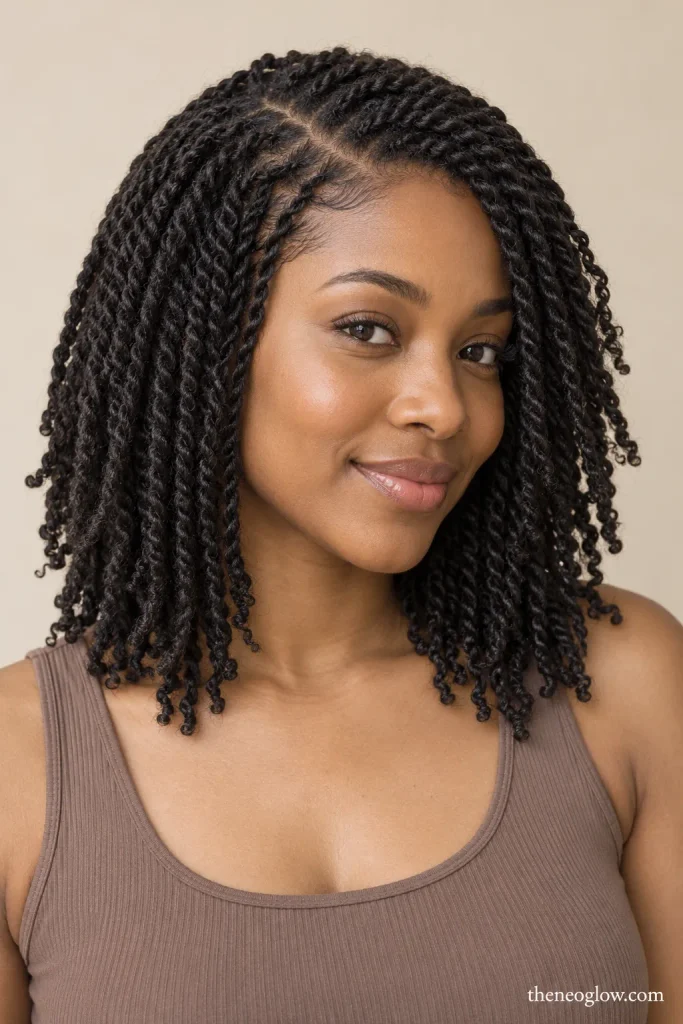
Mini twists can be a complete hairstyle rather than a base that has to be transformed again. Wear them down, part them to one side, or gather a few at the crown while keeping the overall finish soft.
Technique, installation, and maintenance can vary significantly by hair texture and whether added hair is used, so this broad guide keeps the focus on the finished styling direction rather than pretending there is one universal method.
25. Micro Accent Braids Through Loose Hair
Add one or several very small braids through otherwise loose hair. They create a point of detail while the majority of your length keeps its natural texture.
You can place them near the temples, around a part, or through the lower lengths. Think of them as accents rather than as a claim that every braid is automatically a protective style.
26. Side Sweep With One Statement Barrette
Sweep one side back and secure it with a single barrette or decorative pin. This works across many lengths because the accessory supplies the focal point even when there is not enough hair for a ponytail or bun.
Keep the rest of the styling simple. A defined curl pattern, soft wave, smooth bob, or straight finish gives the clip enough contrast to stand out.
27. Scarf-Tied Low Ponytail or Braid
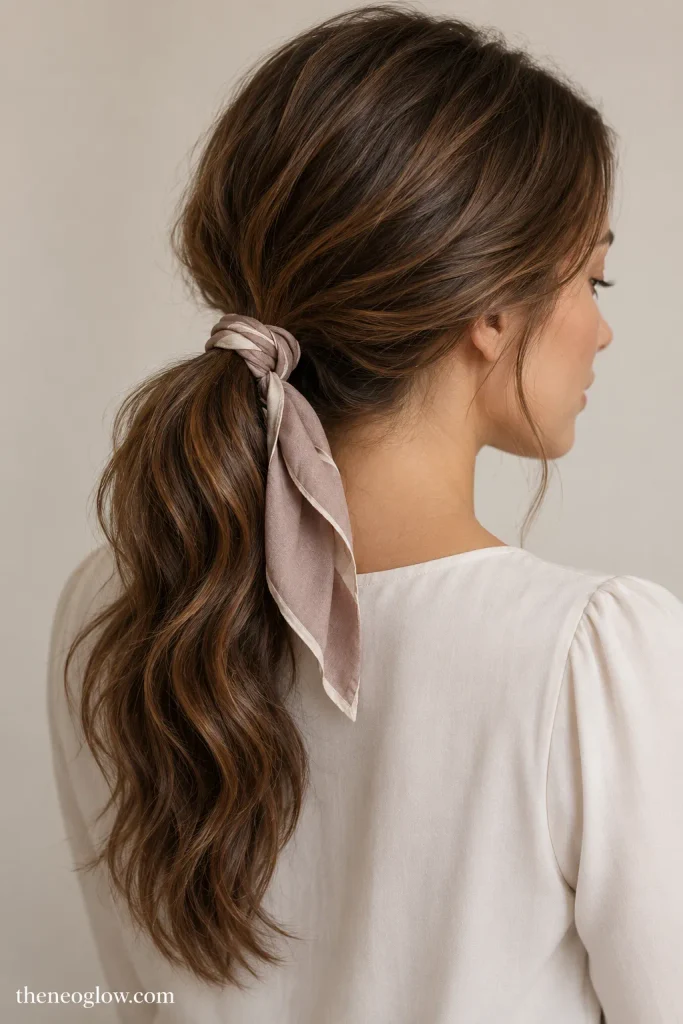
Tie a small scarf around the base of a low ponytail or at the end of a braid. The scarf adds color and movement without requiring a more complicated hairstyle.
Choose a scale that suits your hair volume: a narrow scarf keeps fine or short-to-medium hair from being overwhelmed, while fuller hair can carry a slightly larger piece.
Keep “Polished” From Meaning Painfully Tight
A hairstyle should not need discomfort to look finished. The American Academy of Dermatology notes that repeatedly wearing styles that pull—such as tight braids, ponytails, and extensions—can create tension and breakage, and ongoing tension can contribute to permanent hair loss. Its guidance also cautions that excessive heat can damage hair.
If a ponytail, puff, braid, or updo feels painful or creates persistent pulling, loosen it rather than treating discomfort as part of the look. If you use hot tools, follow the specific tool instructions and adapt the technique to your hair’s condition instead of chasing a universal temperature. See the AAD’s hair-styling safety guidance for deeper dermatologist-backed advice.
Which Hairstyle Should You Save First?
Start with the hairstyle that solves today’s problem, not the one that looks most complicated. If you have five minutes, change the part, tuck one side, or add a barrette. If you want your hair up, choose a low ponytail, claw-clip twist, or loose bun. If you want your natural texture to lead, try defined waves, sculptural curls, a high puff, or mini twists.
Then save the exact wording that will help you recreate it—“low soft ponytail with a center part” is more useful later than “cute hair.” That small bit of specificity makes a Pinterest reference, mirror check, or stylist conversation much easier to use.
The best hairstyle is not the one that makes your hair look like someone else’s. It is the one that gives your own length, texture, density, and routine a clear shape without asking you to overwork it.