Teacher nails need to look polished while still working through real school-day tasks: typing, grading, opening supplies, washing hands, sanitizing, and handling paper or classroom materials. The most practical choices are usually short, smoothly shaped, and free from raised decorations that can catch or feel distracting.
This guide keeps the focus on classroom-friendly length, finish, color, and upkeep. It includes quiet neutrals, muted color, minimal linework, and one restrained school motif. Because workplace expectations differ by district, school, role, and assignment, treat these ideas as adaptable options rather than a universal dress-code rule.
Choose the Nail Structure Before the Color
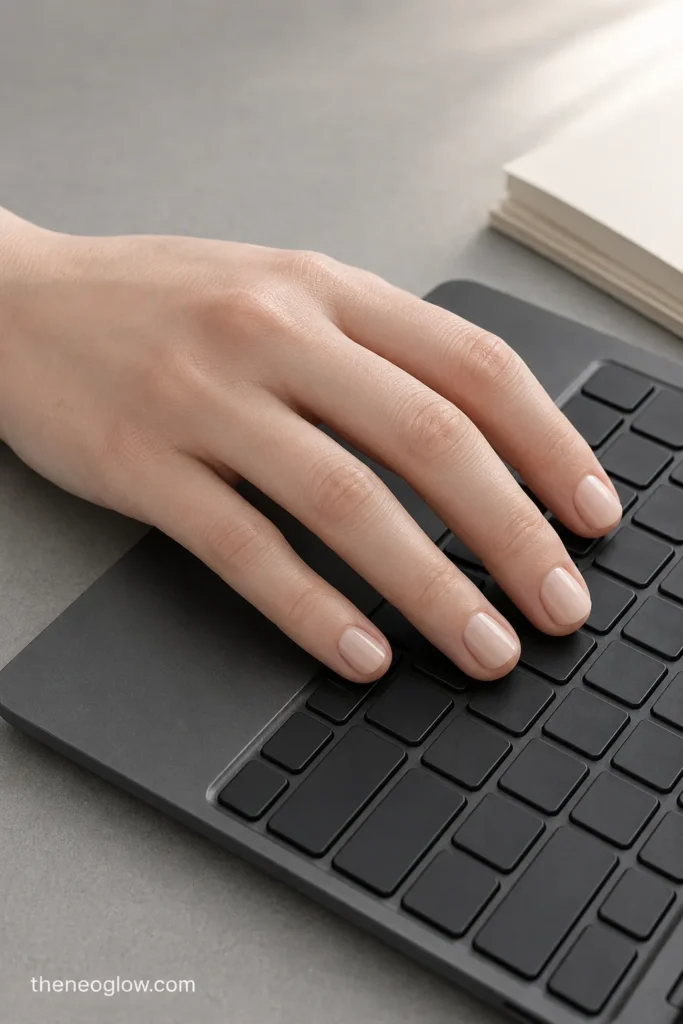
A practical teacher manicure starts with the way you use your hands. Short squoval nails give a broad, stable edge for typing. Short ovals reduce sharp corners that may catch on paper, fabric, gloves, or classroom tools. Softly rounded squares offer a crisp look while remaining compact.
| Classroom need | Practical starting point | Finish that hides wear well |
| Heavy typing and grading | Very short squoval | Sheer nude, jelly, or micro French |
| Early-childhood, art, lab, or materials handling | Short oval with smooth edges | Translucent neutral or muted cream |
| Formal meetings or stricter workplace expectations | Short squoval or oval | Beige, blush, taupe, mocha, or fine pearl |
| Frequent washing and sanitizing | Minimal art with sealed edges | Glossy sheer base or simple solid |
Check your employee handbook, supervisor guidance, safety requirements, and assignment-specific rules before choosing length or decoration. No single teacher nail policy applies to every U.S. school.
18 Short and Classroom-Friendly Teacher Nails
1. Sheer Rosy Soap-Gloss Squovals
Use a transparent rosy-pink veil on very short squoval nails, finished with controlled shine. The natural nail remains visible, so small chips and regrowth are less obvious than they are on an opaque color. This is a strong option for teachers who want polished hands without visible nail art.
2. Milky Beige Short Ovals
Choose a semi-sheer beige that softens the nail line without looking chalky. Short oval edges feel smooth when turning pages, handling folders, or reaching into supply bins. Adjust the beige toward pink, honey, caramel, or cocoa so it creates the amount of contrast you prefer.
3. Soft Taupe Cream Squares
A gray-brown taupe gives short softly squared nails clear definition while remaining quieter than black or deep burgundy. Ask for rounded corners and a thin, even cream finish. Because opaque taupe shows growth more than jelly polish, plan a small base touch-up or removal when the gap becomes distracting.
4. Cocoa Jelly Rounded Nails
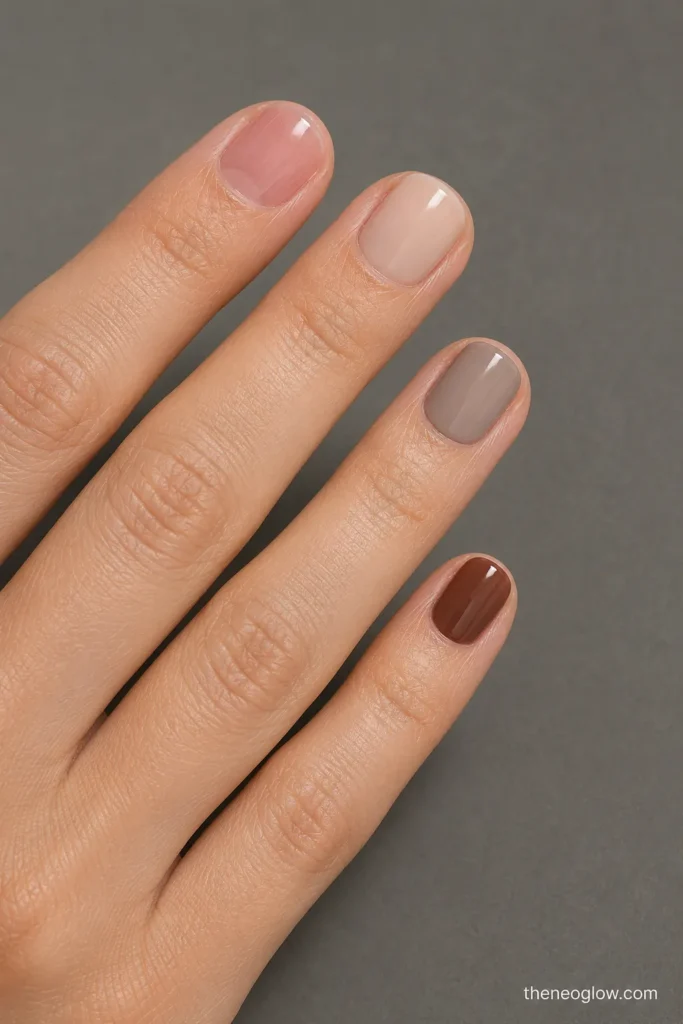
Translucent cocoa adds depth without creating a heavy solid block of color. It works across skin tones by shifting from light latte to richer chocolate-brown. Keep the nails rounded and compact, then use one or two thin color layers so the finish stays glossy, flexible-looking, and easy to coordinate.
5. Muted Mauve Squovals
Dusty mauve sits between rose, plum, and taupe, making it useful when beige feels too plain. A short squoval shape keeps the color modern and task-friendly. Choose a medium-depth mauve rather than a very pale formula if you want the shade to remain visible against your skin.
6. Dusty Blue Short Ovals
A softened blue-gray introduces color without looking bright or heavily themed. Use it as a clean solid on short ovals with no extra decoration. The muted tone pairs easily with navy, charcoal, cream, denim, and many staff-dress palettes while still feeling more distinctive than a neutral nude.
7. Sage-Gray Cream Nails
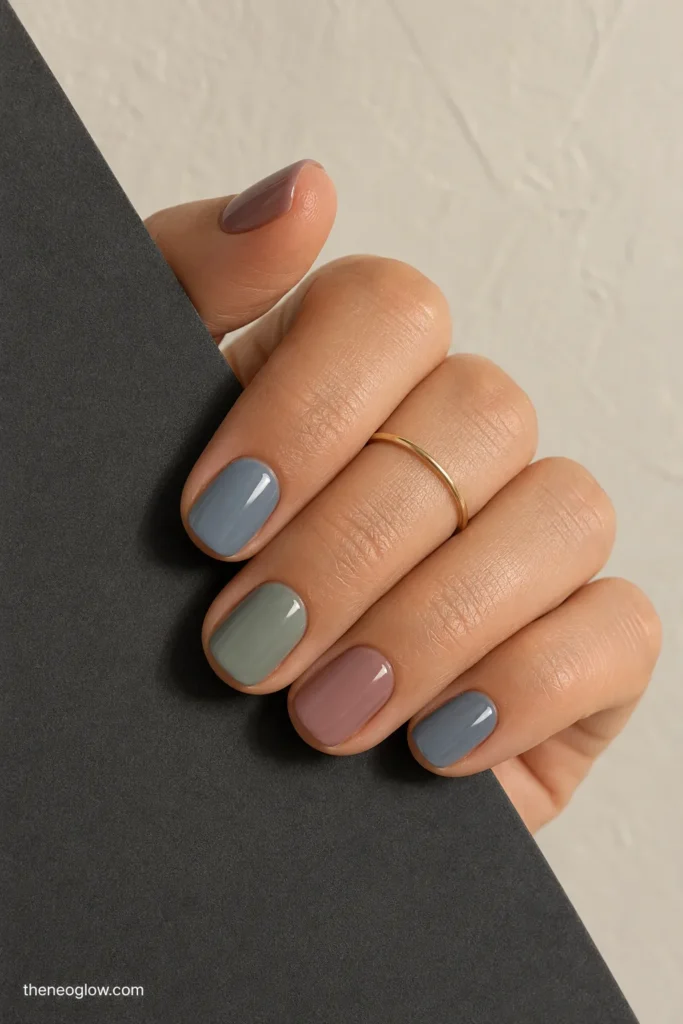
Pick a restrained sage with a gray undertone instead of a vivid mint. Short rounded squares make the color feel neat and contemporary. This route suits teachers who want a subtle seasonal shift for back-to-school planning without using literal classroom symbols or a multicolor novelty set.
8. Burgundy Hairline French Tips
Place an ultra-thin burgundy edge over a sheer pink-beige base. The deep color appears only at the free edge, so it feels more controlled than a full burgundy manicure. Keep the line consistent and narrow; a deep traditional French band can make very short nails look visually compressed.
9. Classic White Micro French
A transparent nude base with a hairline white tip gives short teacher nails a crisp finish. Follow the existing free edge rather than building a thick smile line. This works well for meetings, conferences, and daily classroom wear, although the pale tip may need quick correction if one edge chips.
10. Tonal Pink Micro French
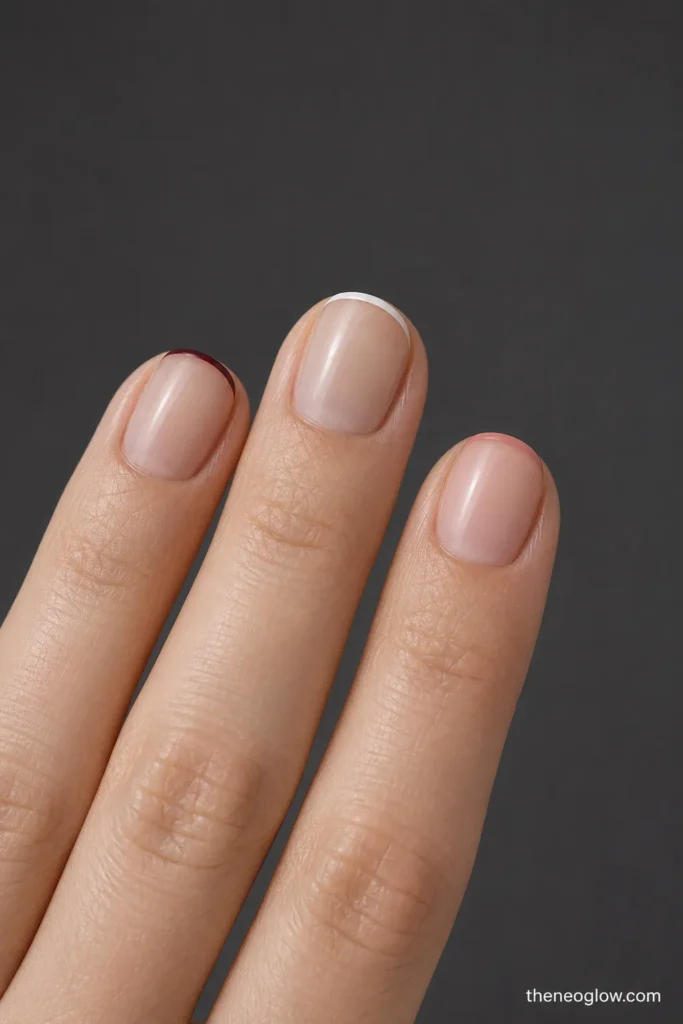
Use a blush base and a tip only one or two shades deeper. The low contrast makes the design softer than white French tips and helps minor edge wear blend in. On extremely short nails, keep the tip almost thread-thin so most of the nail plate remains open and natural-looking.
11. Clear Half-Moons With Dusty Rose
Leave a small clear crescent near the cuticle and cover the rest of each short nail with dusty rose. The negative-space base gives new growth a less abrupt boundary. Use rounded guides for consistency, and keep the half-moons shallow so the manicure remains simple rather than graphic or retro-heavy.
12. Matte Taupe With Glossy Tips
Apply a muted taupe solid, add matte topcoat, then trace a narrow glossy strip across the tip using clear topcoat. The contrast appears mainly when light moves across the nails. It creates detail without glitter, decals, or extra color, but smooth application is important because matte surfaces reveal uneven polish.
13. Fine Pearl Veil
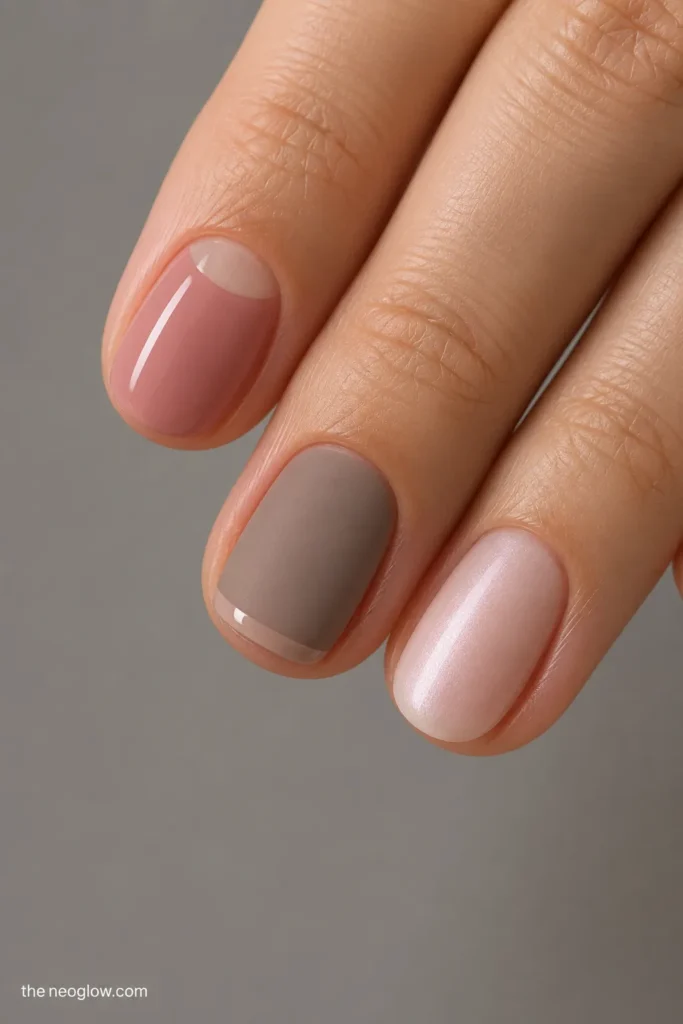
Layer a very light pearl topcoat over milky pink, beige, or cocoa nude. The reflection should look soft rather than metallic or mirror-like. Fine pearl gives a dressier finish for parent nights or presentations while staying flat and smooth enough for typing, grading, and daily material handling.
14. One Slim Vertical Line
Add one narrow white, brown, navy, or muted-gold line to two accent nails over a sheer base. Position it slightly off-center and leave the other nails plain. This gives the hand a deliberate focal point without repeating a complex pattern across all ten nails or requiring raised embellishments.
15. Single Cuticle Dot Accents
Place one tiny dot near the cuticle of each ring finger over blush, beige, or milky polish. Navy, burgundy, white, or muted gold all work. The design is easy to scale to very short nails and can be recreated with a dotting tool, toothpick, sticker, or printed press-on.
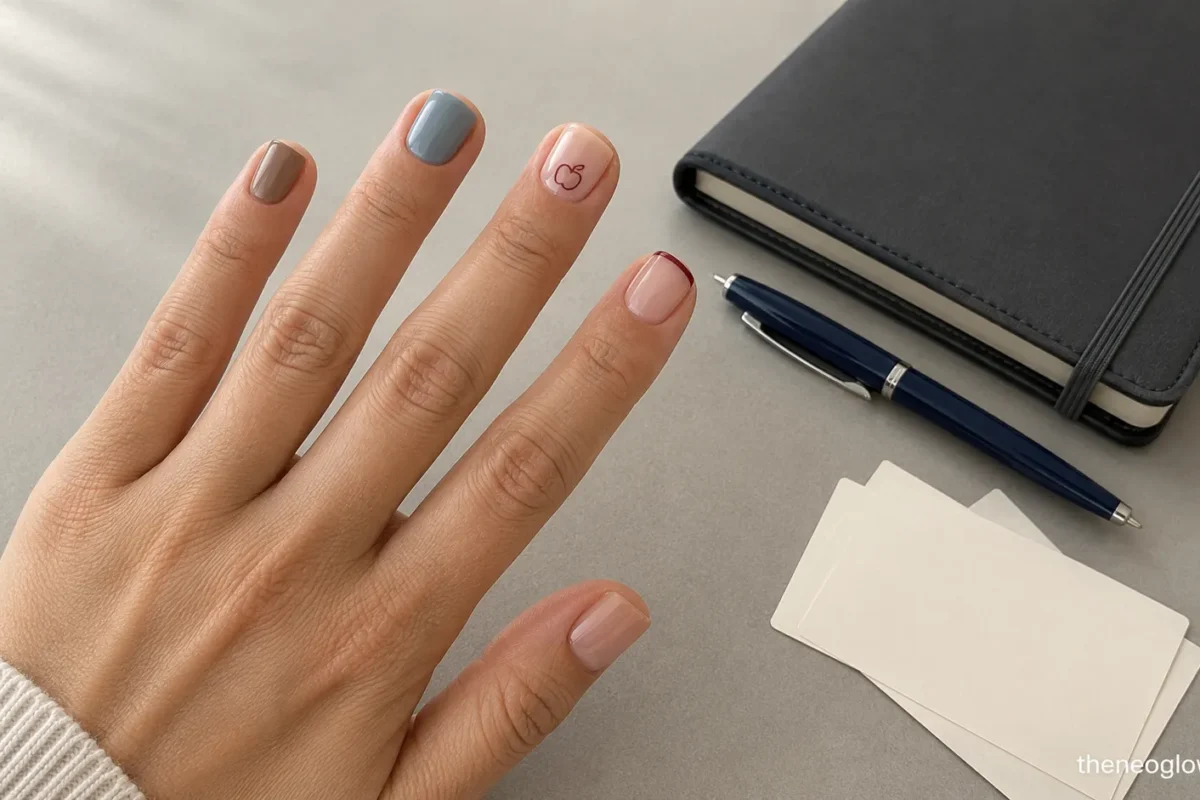
16. One Tiny Apple-Outline Accent
For a subtle school motif, use one miniature apple outline on a single sheer-nude ring finger and keep every other nail solid rosy beige or muted red. Avoid adding pencils, letters, rulers, and multiple icons. One small motif communicates the season without turning the manicure into a classroom collage.
17. Neutral Five-Shade Mix
Use one related neutral on each nail: blush, beige, taupe, mocha, and cocoa. Keep the opacity, finish, and depth balanced so the set reads as coordinated rather than random. This design offers variety without brushwork and can be assembled with regular polish or a carefully matched short press-on set.
18. Dusty Rose Diagonal Corners
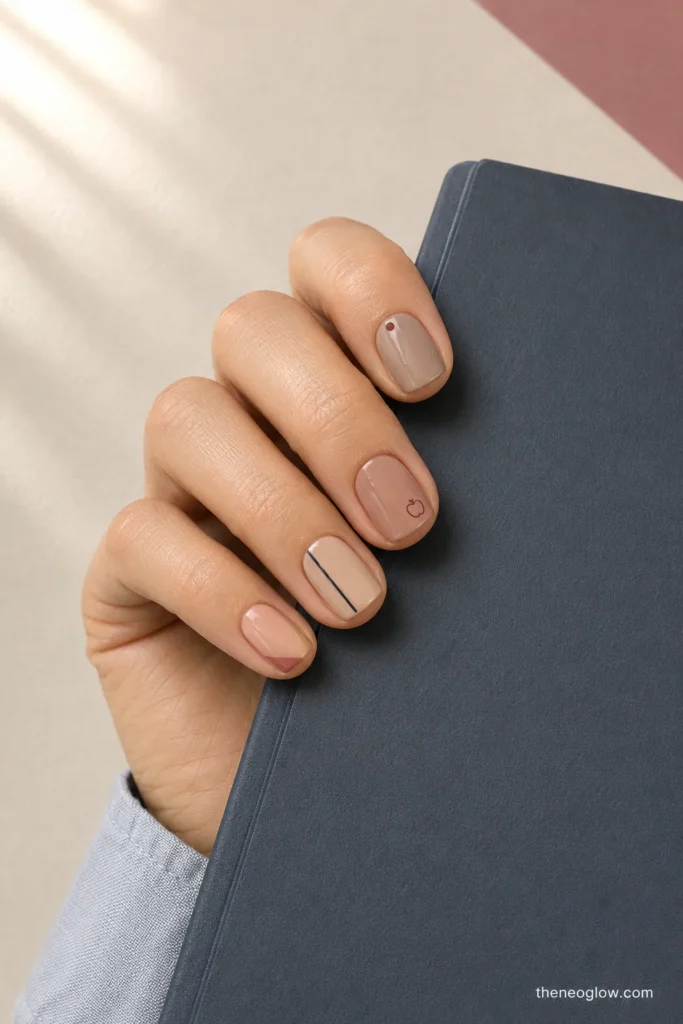
Start with a transparent pink-beige base and add a small dusty-rose block to one corner of each short square nail. Repeat the same direction across the hand. The open base softens regrowth, while the flat geometric placement adds interest without charms, textured art, or a deep color covering every nail.
For wider short-nail proportions and non-work-specific color options, compare these short summer nail ideas. Readers who prefer translucent neutrals can explore the separate natural summer nails guide, while simple nail designs covers broader dots, lines, stickers, and beginner techniques.
A Low-Maintenance Routine for the School Week
At the start of the week, check the free edges for rough spots and file only what needs smoothing. Dermatologists recommend keeping nails clean and dry, smoothing snags, avoiding the use of nails as tools, and moisturizing after handwashing; the American Academy of Dermatology provides a useful set of healthy-nail care tips.
During the school day, do not reduce necessary hand hygiene to protect polish. CDC guidance for schools explains when soap and water are preferred and when sanitizer with at least 60% alcohol can be used if soap and water are unavailable. Use the CDC school hand-hygiene guidance for the hygiene decision, then choose a manicure that fits that routine.
Keep a small file and hand cream in a desk drawer or work bag. File a snag before it catches on paper or fabric, and moisturize the surrounding skin after washing when practical. Do not use the nail edge to open cans, scrape labels, separate staples, or pry apart packaging.
Follow the instructions and warnings for your exact polish, gel, adhesive, or remover. The FDA’s nail-product safety guidance explains why label directions, ventilation, and attention to reactions matter. Stop using a product that causes a concerning reaction and seek appropriate professional care for persistent pain, swelling, discoloration, or other unusual nail changes.
Frequently Asked Questions
What nail length is most practical for teachers?
Very short to short is the easiest starting point for frequent typing, page turning, cleaning, and supply handling. Squoval, short oval, and softly rounded square shapes reduce sharp corners. Personal comfort and assignment-specific safety rules should guide the final length.
Can teachers wear color instead of neutral polish?
Often, yes, but expectations vary. Muted mauve, dusty blue, sage-gray, soft burgundy, and dusty rose provide visible color without creating a highly decorative set. Review your workplace guidance rather than assuming another school’s policy applies to yours.
Which finish is lowest maintenance?
Sheer nude, jelly, milky neutral, tonal French, and clear half-moon designs generally make growth less abrupt than opaque dark color. A simple solid can also be low effort if you are comfortable removing or refreshing it when chips become noticeable.
Choose One Look That Fits Your Actual Classroom
The best teacher nails are not simply the most neutral option. They are the length, shape, color, and finish you can wear comfortably through your real schedule. Start with a short structure, choose one low-profile design, and save the maintenance notes that match your handwashing, typing, and classroom tasks.