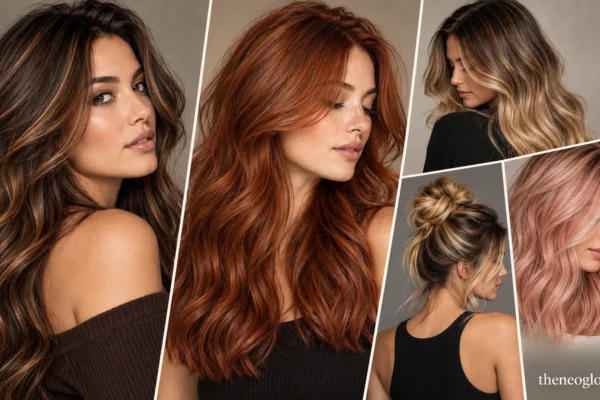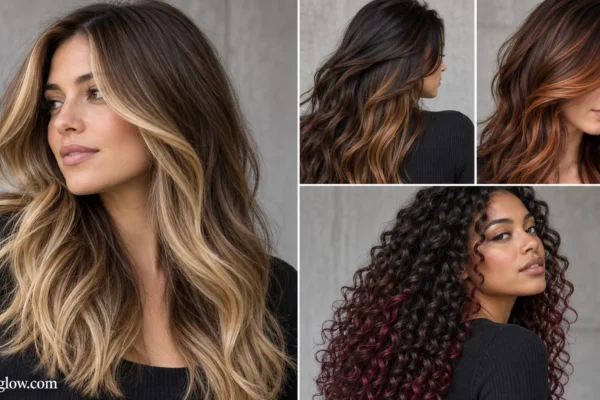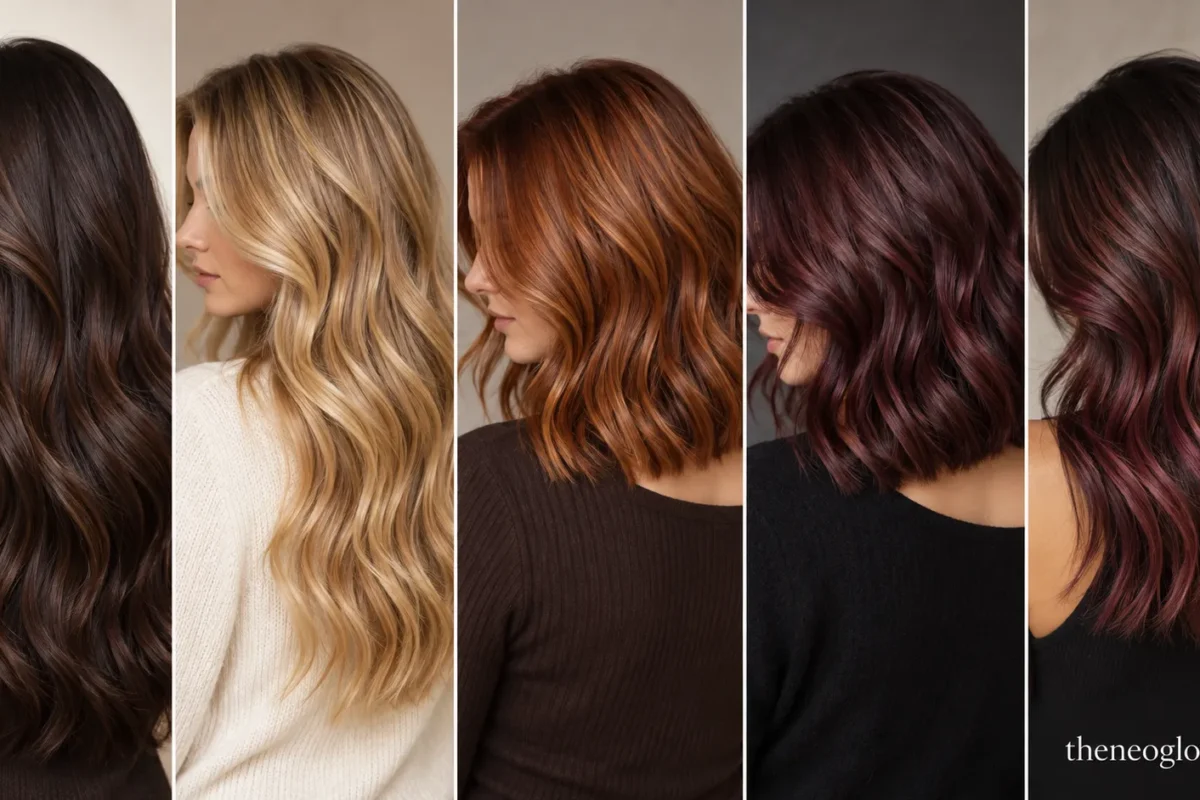
Fall hair color is easier to choose when you start with your current base instead of a seasonal color name. A deep brunette may need only a shift in warmth or reflection, while a blonde may want a rooted beige finish, and a reader considering copper or burgundy may need to think about how much lightening, red pigment, or maintenance the change could involve.
Current 2026 color reporting supports richer brunettes, warm reds, and softer, more lived-in blondes rather than one single “fall shade.” Vogue’s 2026 hair-color trend report Use the 24 ideas below as routes, then narrow them by starting color, contrast, and how visible you want the grow-out to be.
Choose Your Fall Color Route by Starting Base
| Starting Point | Lower-Change Direction | More Noticeable Direction | Main Question to Ask |
|---|---|---|---|
| Deep brunette or black | chocolate, espresso, wine-brown reflection | caramel or copper dimension | How much lightening is needed to make the contrast visible? |
| Medium brunette | walnut, chestnut, maple brown | auburn, copper, balayage | Do you want warmth all over or only through selected pieces? |
| Light brown or dark blonde | bronde, honey, cinnamon | brighter blonde or copper | How much root contrast do you want as it grows? |
| Medium to light blonde | beige, champagne, toasted almond | strawberry copper or deeper root melt | Do you want to preserve brightness or make the color feel deeper? |
Maintenance is not only about the shade name. Root contrast, amount of lightening, placement, previous color, and how quickly you notice fading can matter just as much. Bring your current hair history to a color consultation rather than choosing from a photo alone.
Rich Brunette Fall Hair Colors
1. Dark Chocolate Gloss
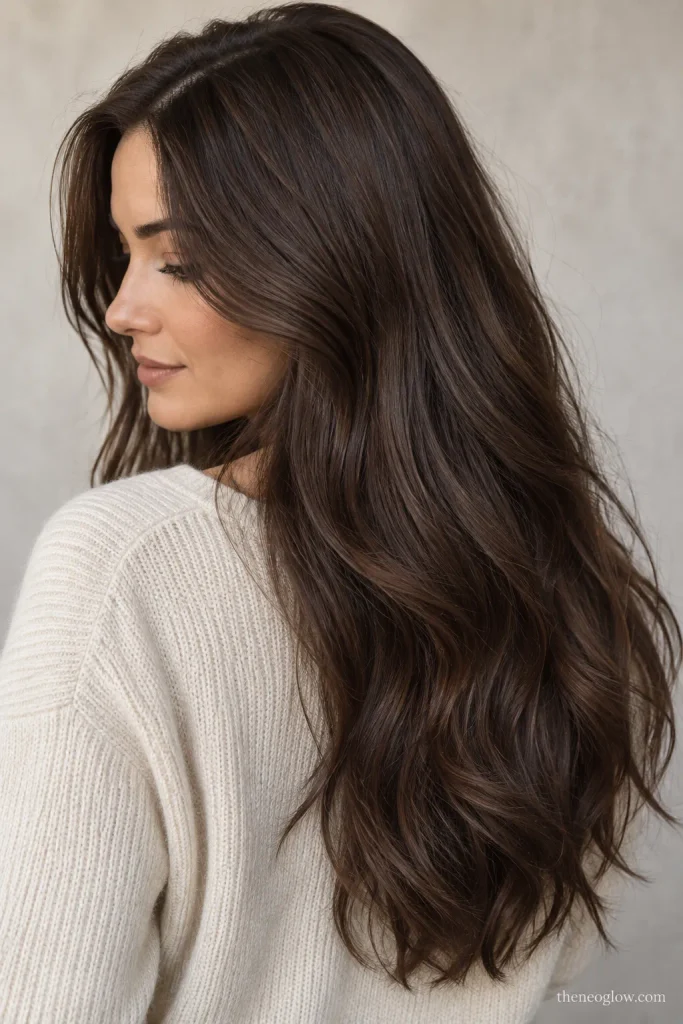
Keep a naturally deep brunette base and shift the finish toward a richer chocolate reflection instead of making the hair visibly lighter. This route is strongest when you want fall depth with minimal contrast. Ask for a glossy, dimensional brown rather than a flat near-black result.
2. Golden Walnut Brunette
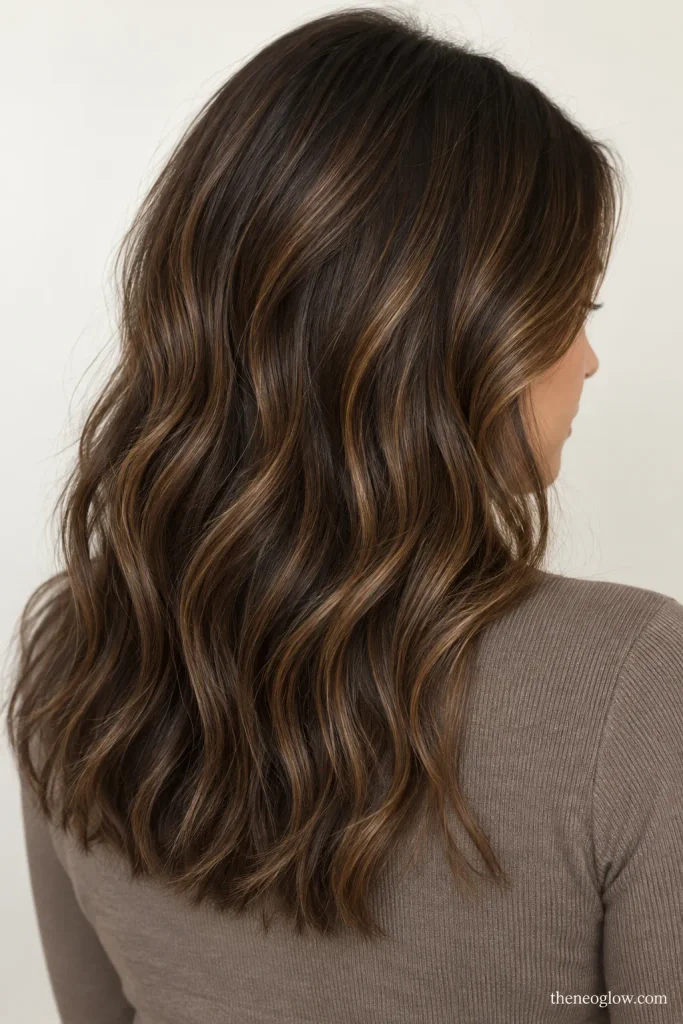
Golden walnut sits between neutral brown and obvious caramel. Use a medium-to-deep brunette base with fine warm ribbons that become visible in movement. The color reads warmer than chocolate but quieter than full highlights, making it a useful option if you want dimension without a dramatic blonde effect.
3. Espresso With Cocoa Ribbons
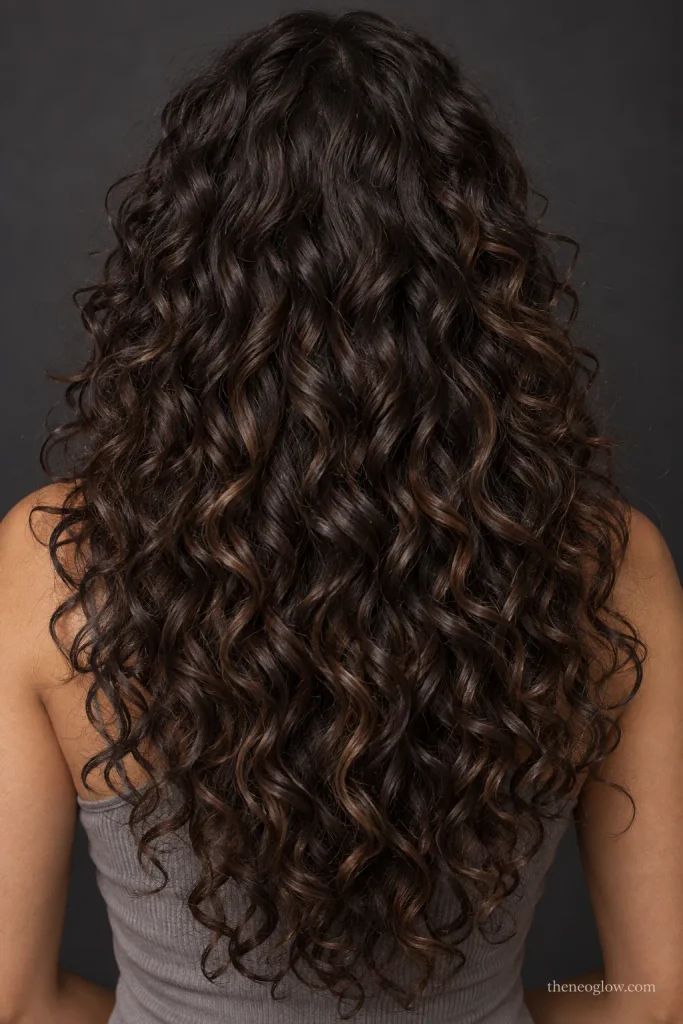
Start with espresso depth, then add narrow cocoa-brown pieces through the mid-lengths and ends. The difference should be subtle enough that the base still reads dark. This works well when you want visible dimension in curls, waves, layers, or a blowout without pushing into caramel.
4. Soft Chestnut Brown
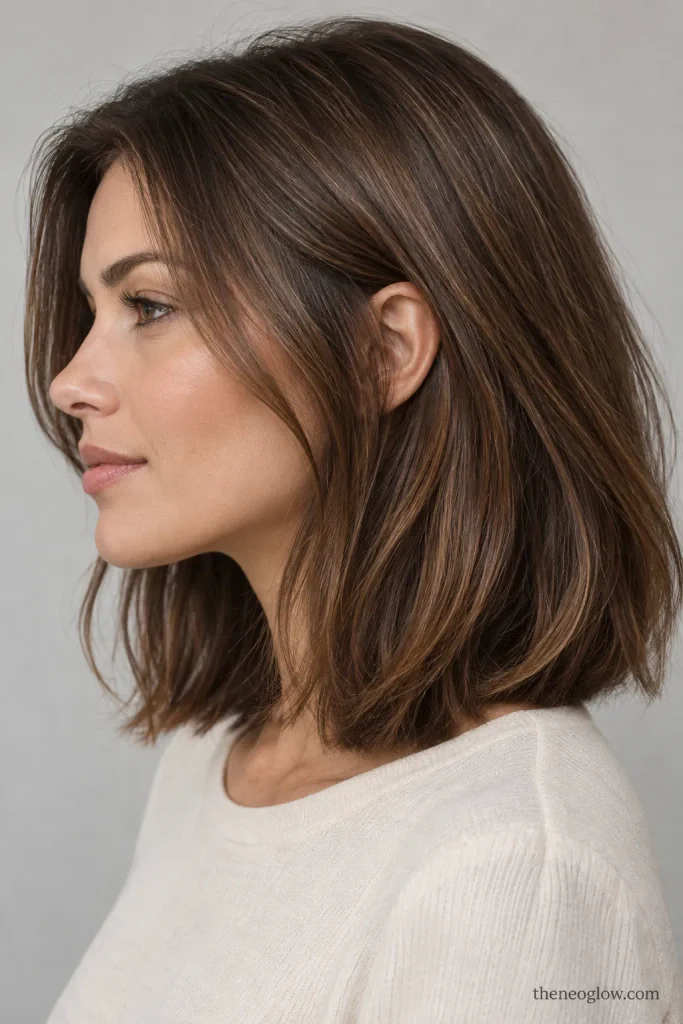
Chestnut adds a restrained red-gold cast to brunette without becoming copper. It can be worn as an all-over brown or concentrated through selected sections. If you already have warm brown hair, this may be a smaller seasonal adjustment than moving to a much lighter or redder shade.
5. Maple Brown Balayage
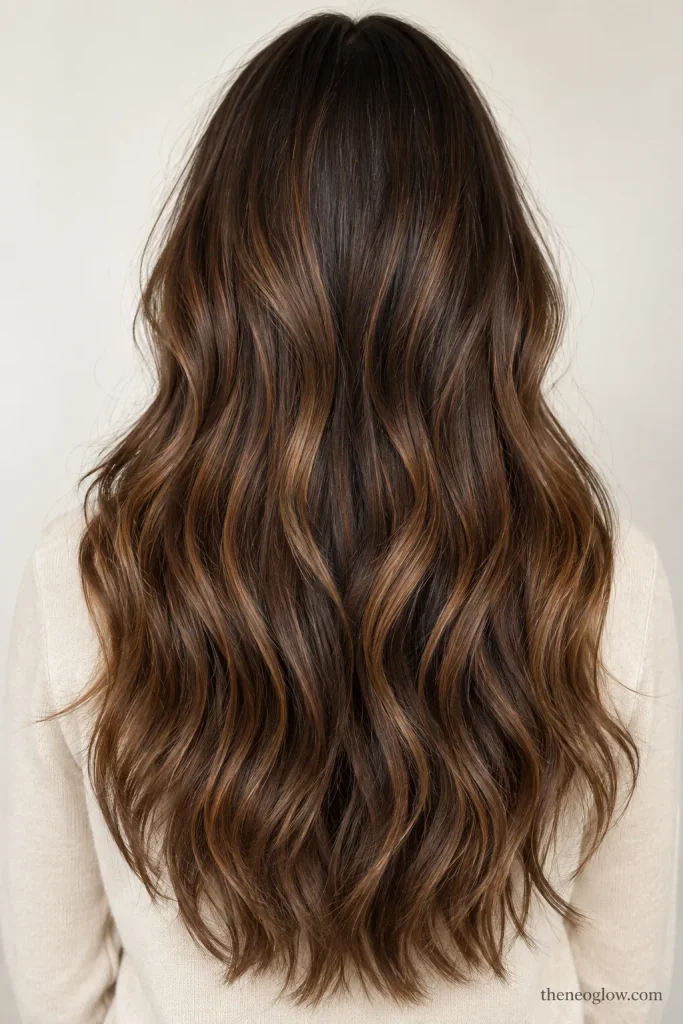
Use a brunette base with hand-painted maple-brown brightness through the lengths, keeping the root deeper. The fall effect comes from warm brown-on-brown contrast rather than blonde streaks. A blended placement can make regrowth feel softer than a high-contrast highlight pattern.
6. Caramel Face-Framing Brunette
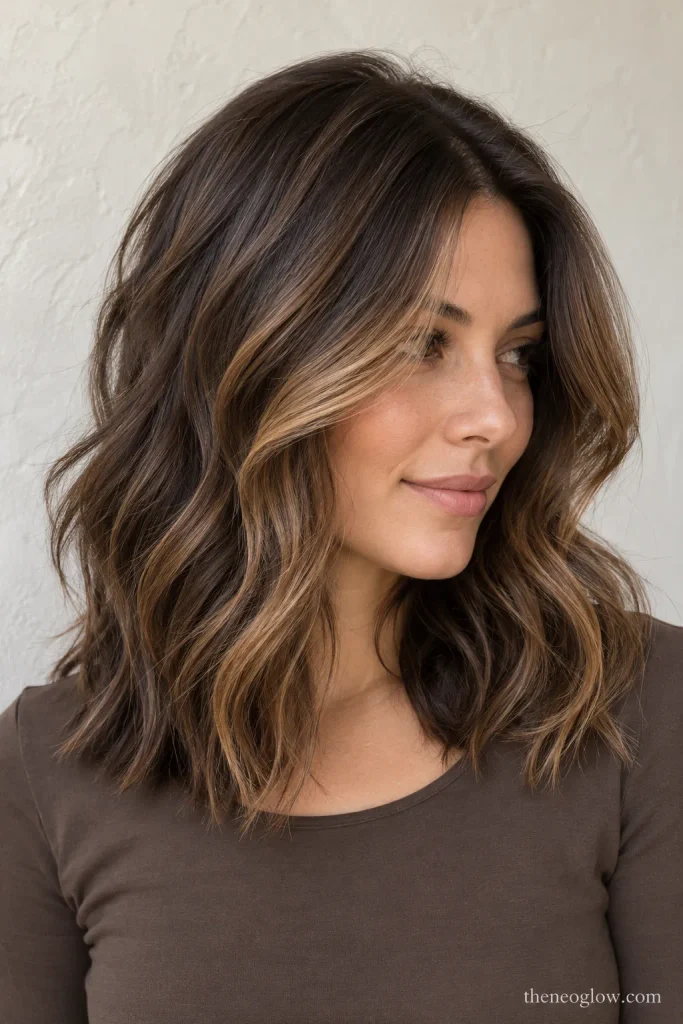
Keep most of the hair brunette and place caramel brightness around the face and in a few connected pieces. This gives more visible contrast than walnut or chestnut while preserving a darker overall base. Ask how bright the front pieces can realistically become from your current color and condition.
Fall Blonde and Bronde Hair Colors
7. Creamy Beige Blonde
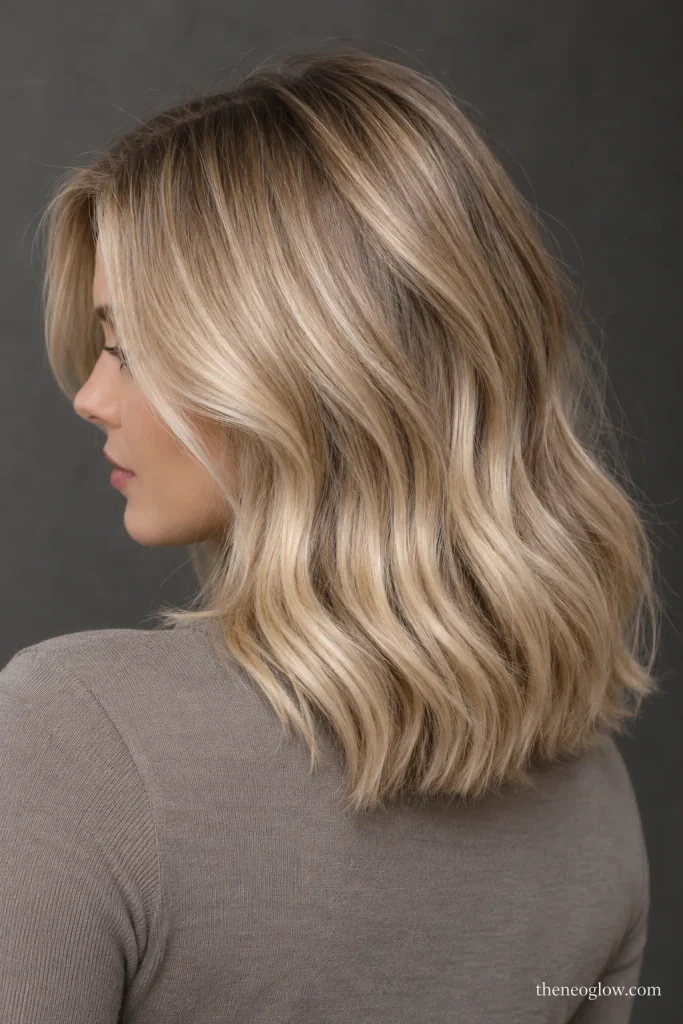
Creamy beige blonde balances warmth and softness without reading icy or strongly golden. It can make a bright summer blonde feel calmer for fall while keeping the overall result light. Root treatment matters here: a softly shadowed base creates a different grow-out from an all-over bright blonde.
8. Honey Wheat Blonde
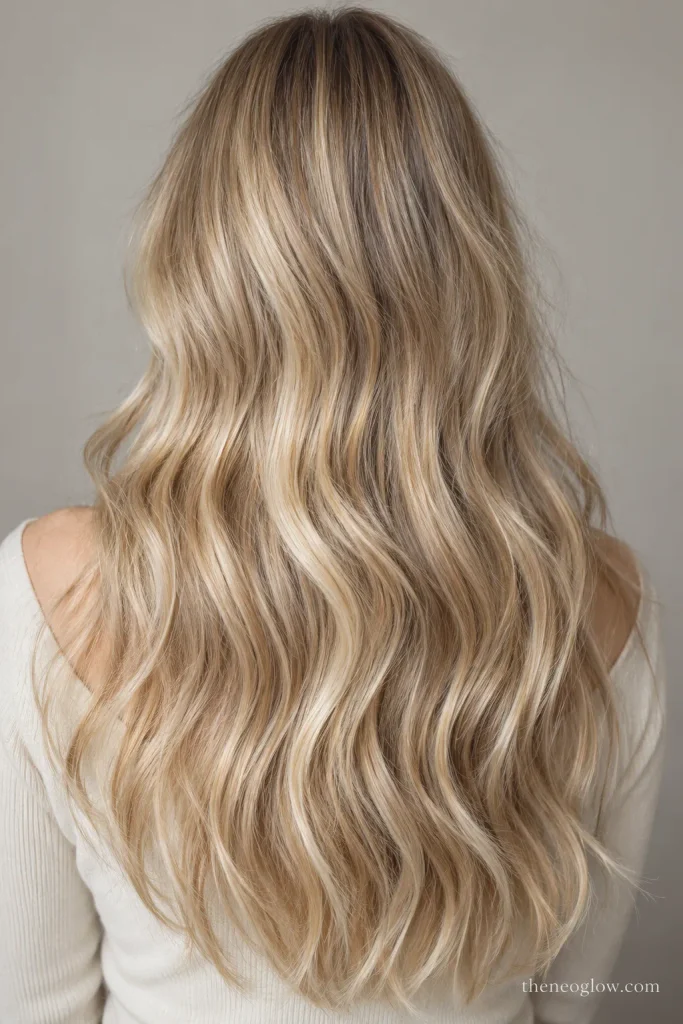
Honey wheat combines golden warmth with a slightly muted finish. It works especially well when you want fall blonde hair that still looks clearly blonde instead of moving into brunette. Keep the highlights blended and ask for enough tonal variation that the result does not become one solid yellow-gold shade.
9. Rooted Champagne Blonde
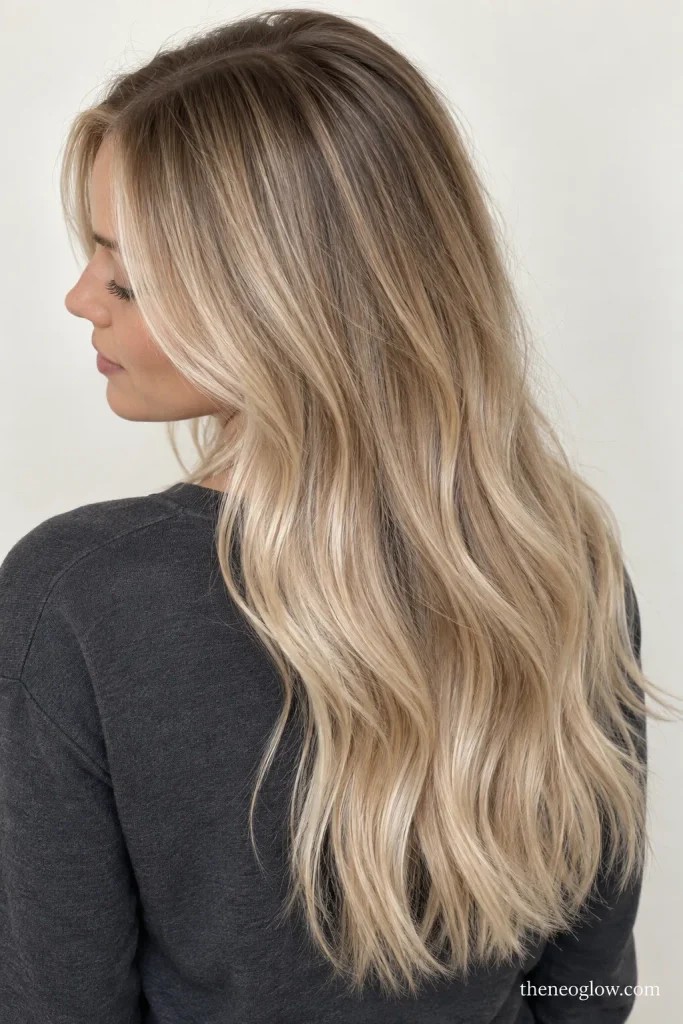
Keep champagne-beige brightness through the lengths but deepen the root area for a more lived-in transition. This is useful if you like blonde around the face but want less obvious contrast as new growth appears. The root should connect to the mids rather than look like a separate dark band.
10. Greige Bronde
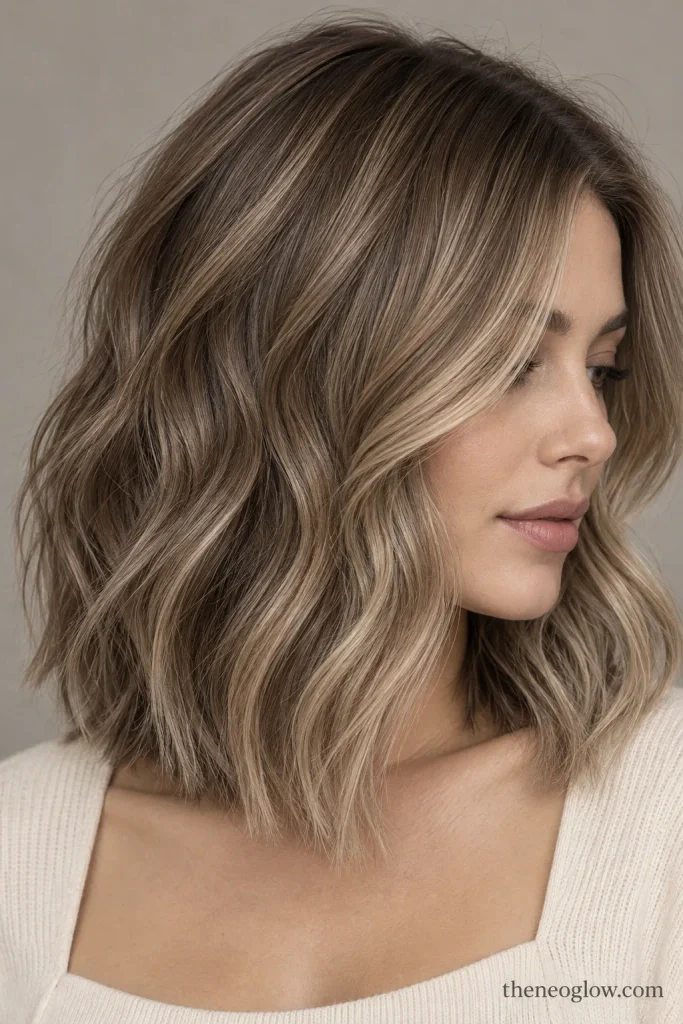
Greige bronde blends beige, taupe, and muted brown for a cooler fall route. It is a strong counterpoint to copper-heavy seasonal palettes and can work when you prefer understated color. The effect depends on balance: too gray can look flat, while too warm can shift it back toward caramel.
11. Caramel Bronde Melt
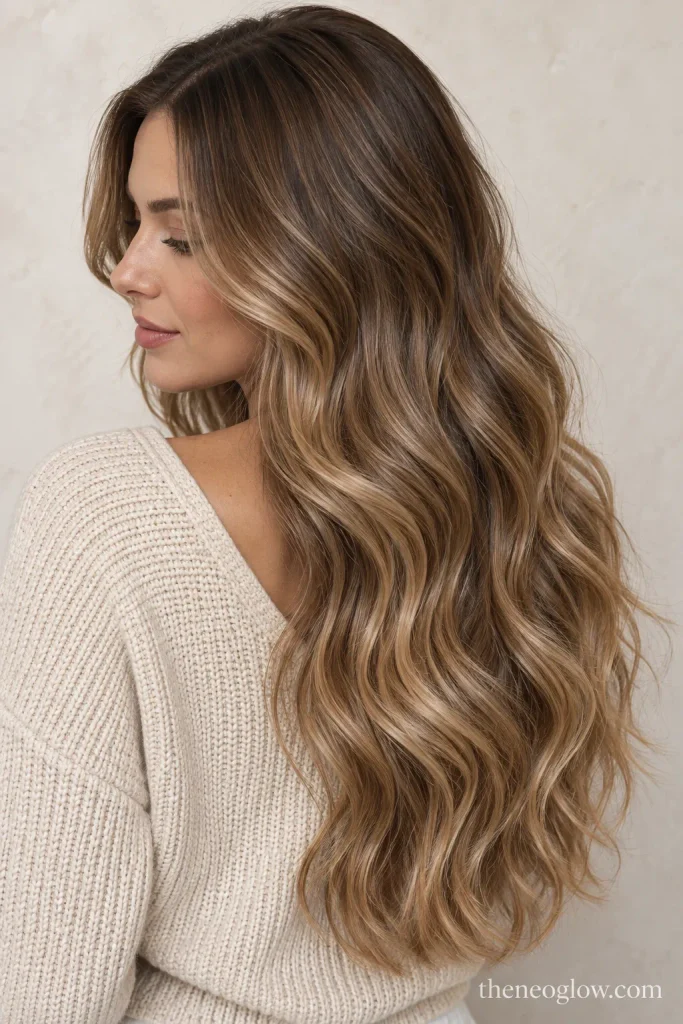
A caramel bronde melt moves from a deeper brown or dark-blonde root into warm, blended lighter lengths. It is more dimensional than an all-over blonde but softer than obvious contrasting highlights. Ask for a connected transition from root to mids so the color reads melted rather than striped.
12. Toasted Almond Balayage
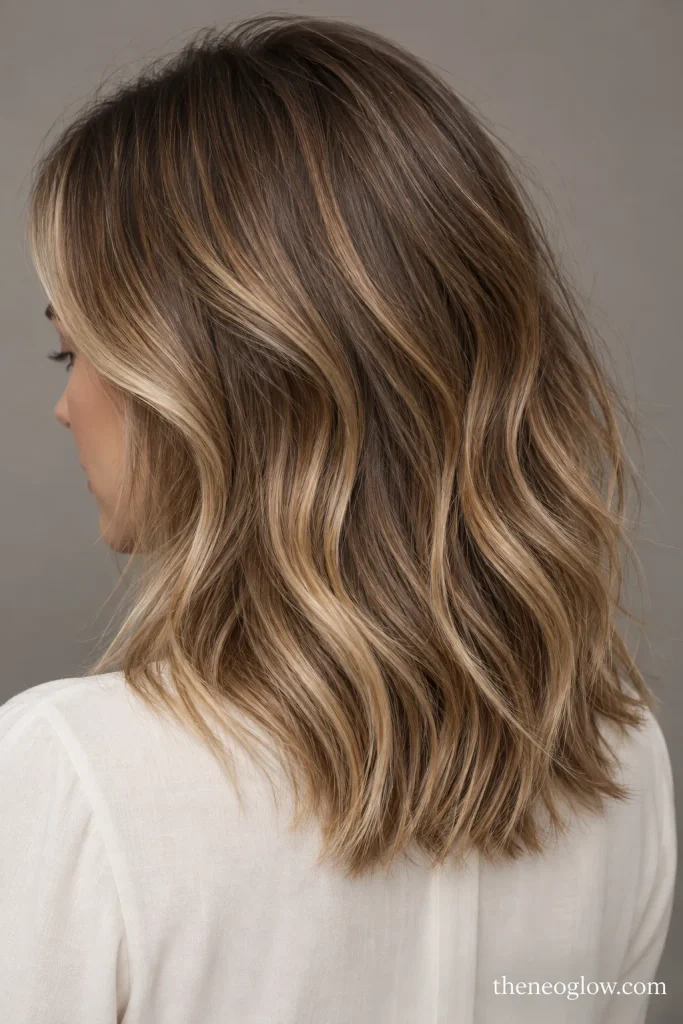
Use beige-gold almond pieces over a dark-blonde or light-brown base, concentrating brightness where the hair naturally moves. This fall balayage route keeps warmth controlled and can be adapted from subtle to bright depending on how much lightening your starting color can support.
Copper, Auburn, and Warm Red Routes
13. Cinnamon Copper
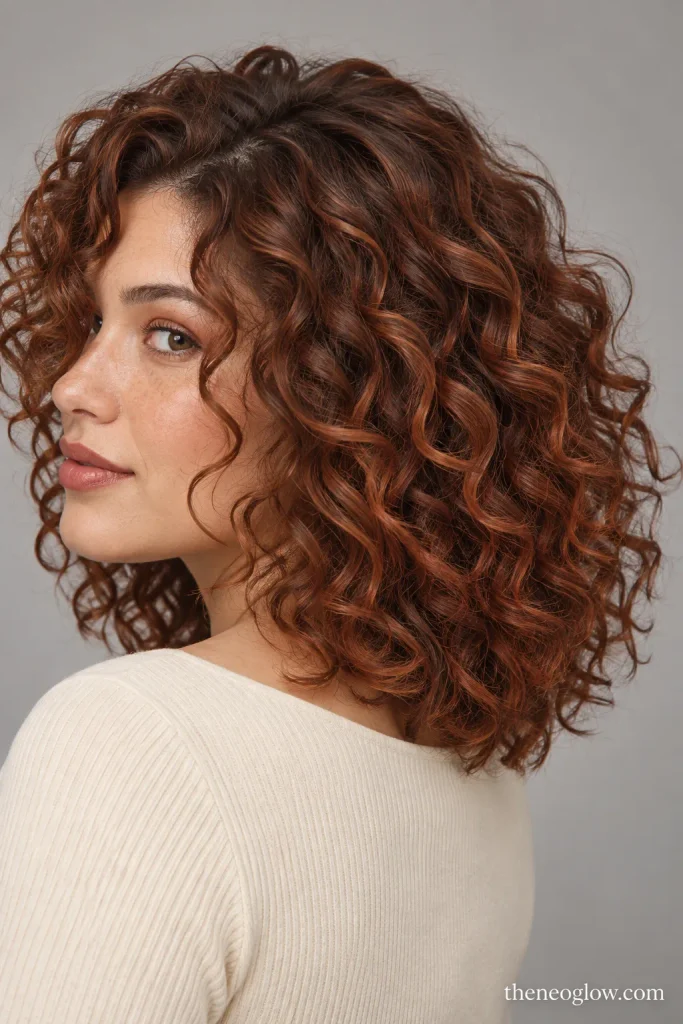
Cinnamon copper is warm but not neon: think copper mixed with brown and a soft red undertone. It can work as an all-over shade or as a tonal shift on lighter brown hair. If your starting base is dark, ask what level of lightening would be required before expecting visible copper.
14. Burnt Copper
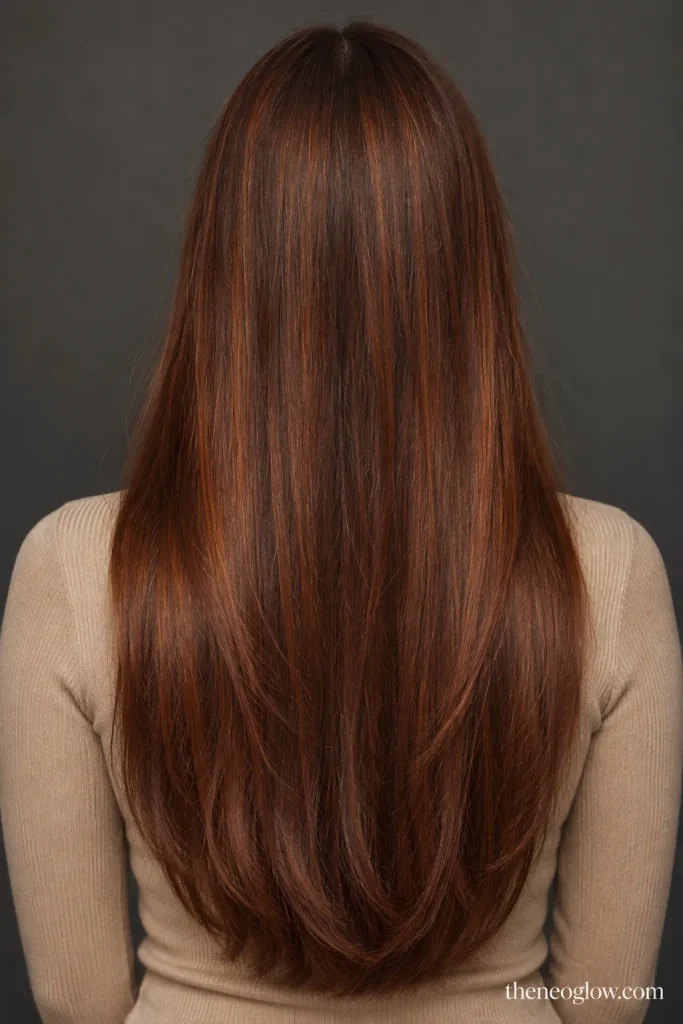
Burnt copper is deeper and browner than a bright orange copper. The extra depth gives it a distinctly autumnal feel while keeping the red family visible. This shade can look very different on blonde, brunette, and previously colored hair, so use the name as a direction rather than a guaranteed formula.
15. Auburn Brown
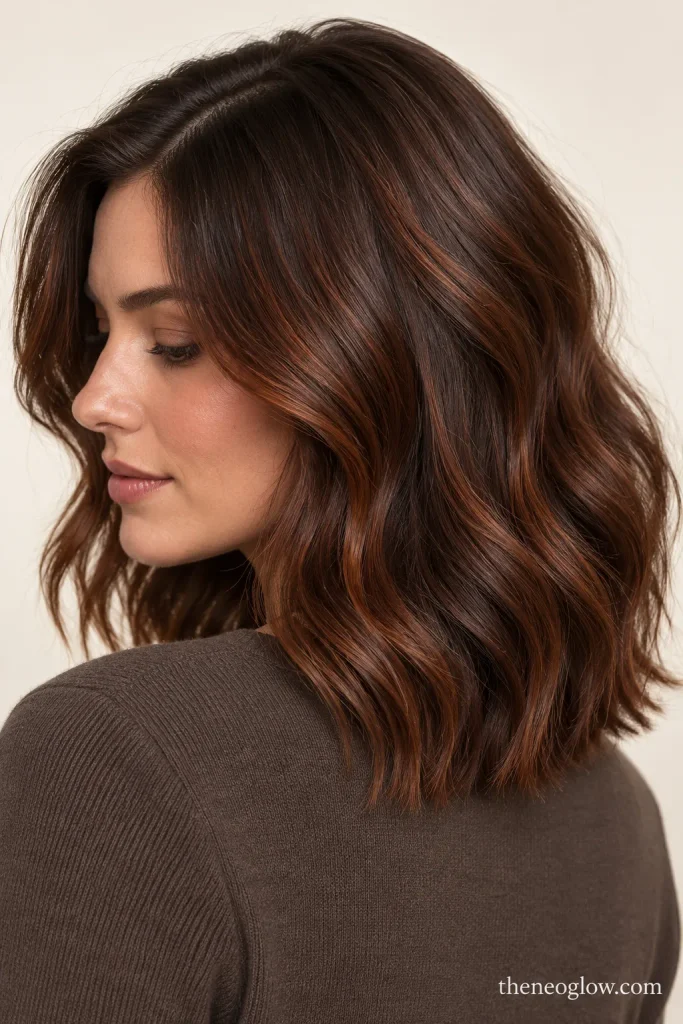
Auburn brown keeps brunette depth at the center and adds red-copper reflection through the surface. It is a practical bridge for someone who wants warmer fall hair without going fully red. Ask for the brown-to-red balance you prefer because “auburn” can range from subtle to very saturated.
16. Amber Copper Highlights
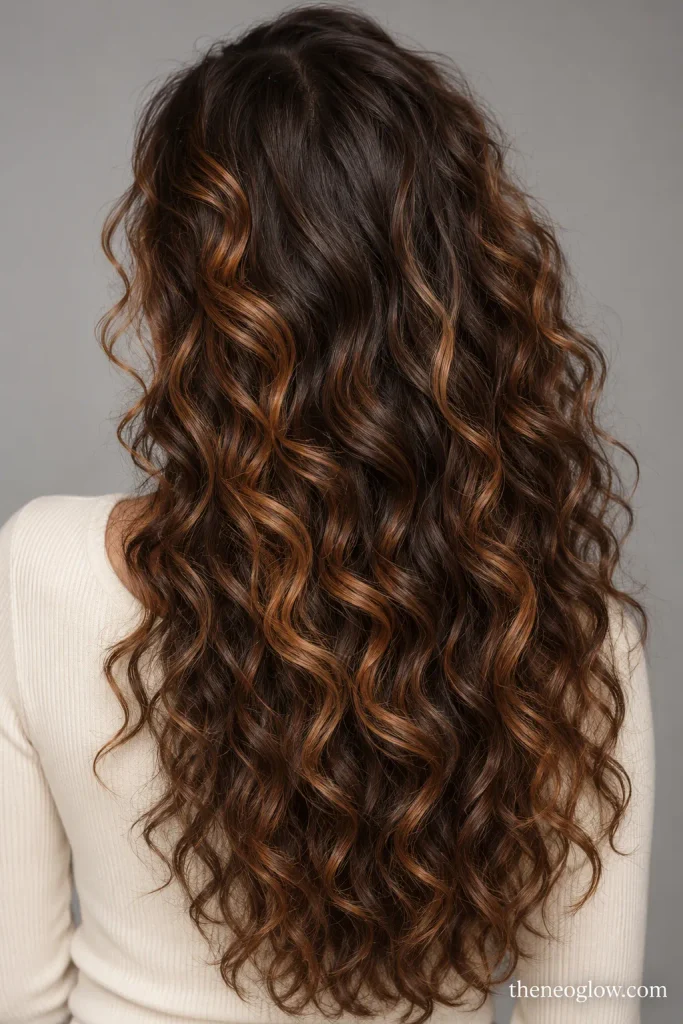
Instead of coloring the entire head copper, place amber-copper ribbons through a brunette or dark-blonde base. This lets the warm tone show most strongly in movement and around the face. It is a useful route when you want red-family color but still want your natural or existing base to remain visible.
17. Strawberry Copper Blonde
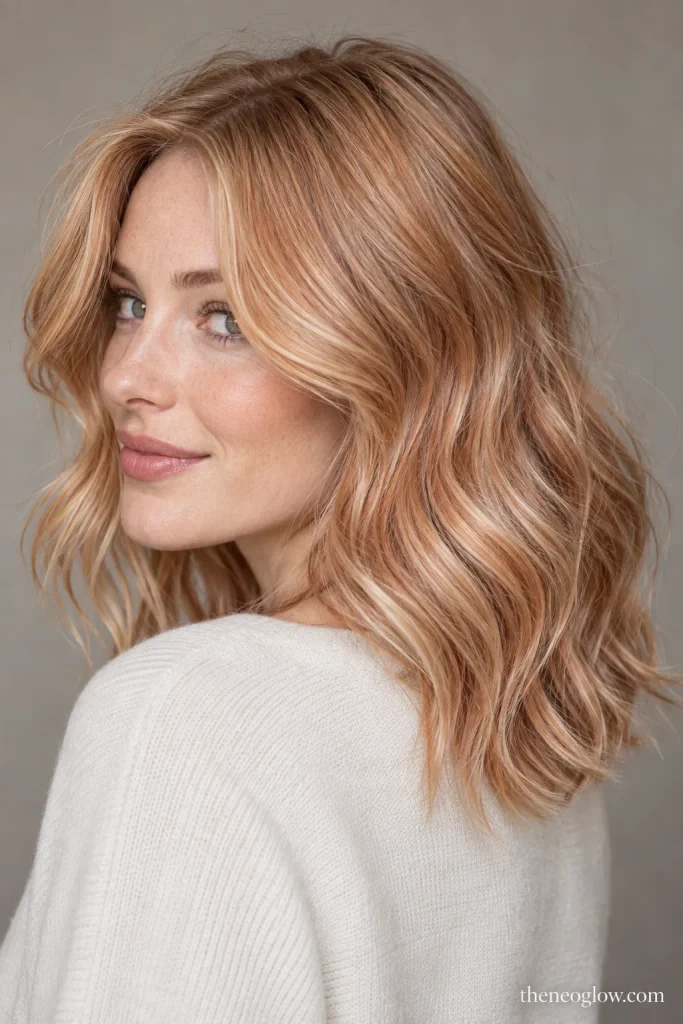
For a blonde base, strawberry copper adds peachy-red warmth without taking the hair as deep as auburn. The result can stay light and luminous while reading more seasonal. If you want an easy return to a cooler blonde later, discuss that future goal before committing to a more saturated red deposit.
18. Copper Balayage on Brunette
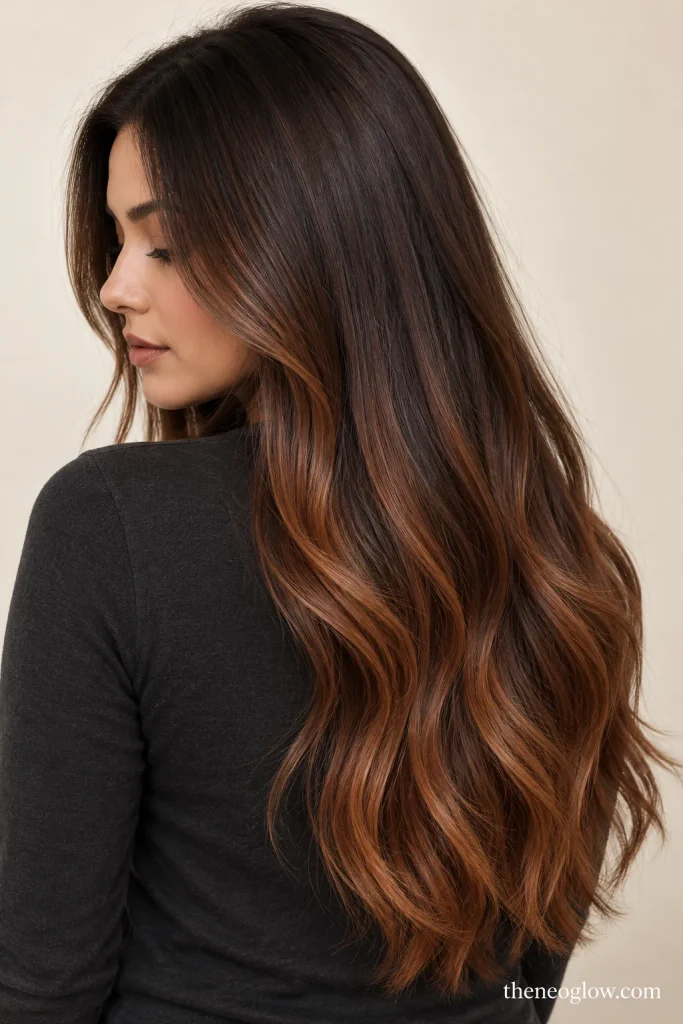
Keep the roots brunette and paint copper through selected mid-lengths and ends. This creates stronger color separation than maple brown balayage while avoiding a full copper transformation. Placement should follow the haircut and natural movement so the copper appears intentional rather than scattered.
Burgundy, Cherry, and Deep Red-Brown Colors
19. Wine Brunette
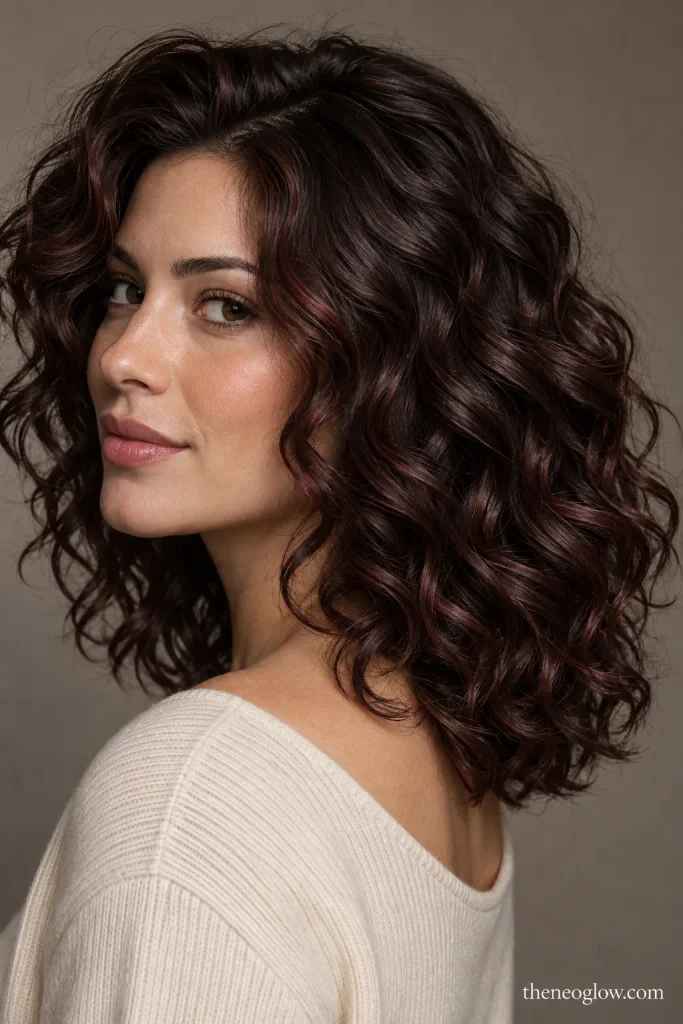
Wine brunette starts with a dark brown base and adds a muted wine-red reflection. In indoor light it can still read brunette; in brighter light the red becomes more visible. This is a good fall route if you want red depth without the brightness of classic copper.
20. Black Cherry Brown
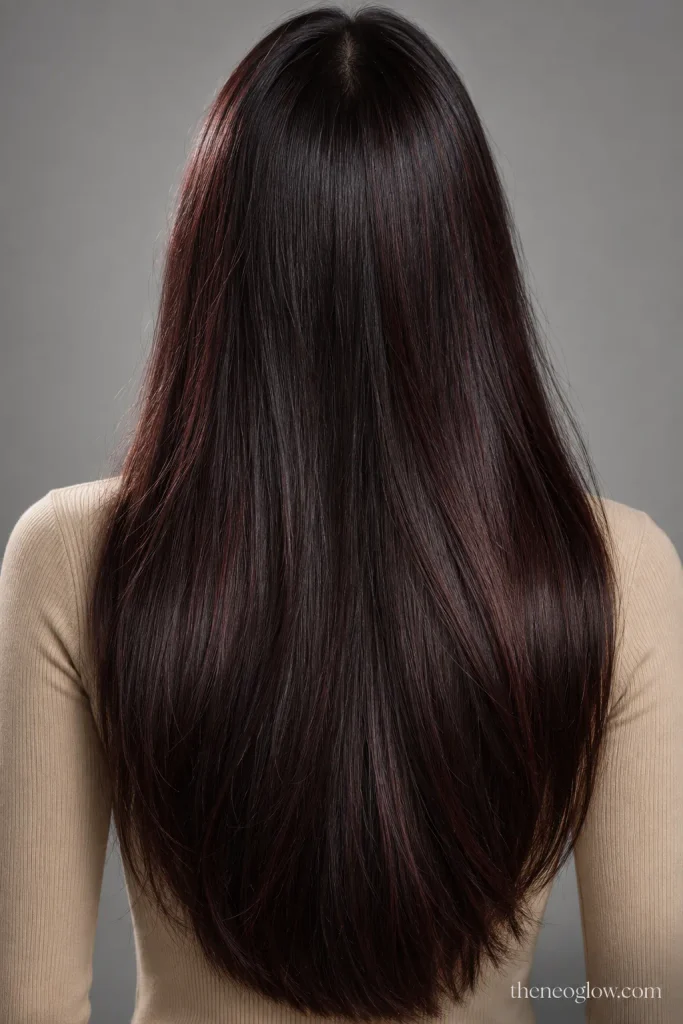
Black cherry is deeper and cooler than copper, with dark brown or near-black depth carrying a cherry-red cast. It creates a dramatic seasonal shift with relatively low lightness contrast. Because deep red pigments can look different on previously colored hair, bring a clear reference and discuss your history.
21. Burgundy Balayage
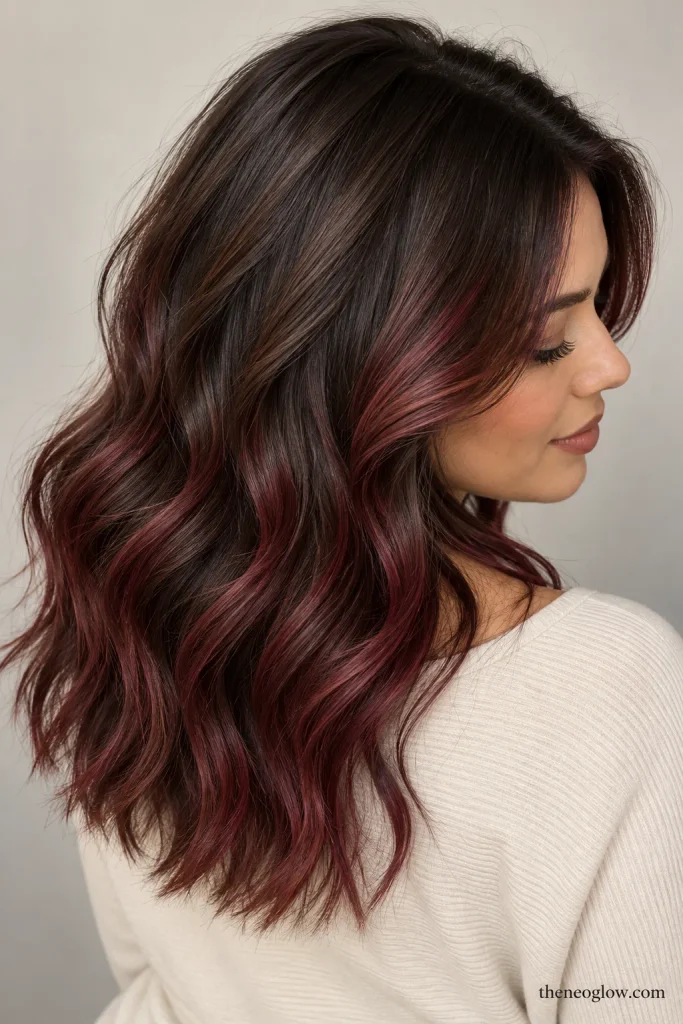
Paint burgundy through a brunette base while keeping the root and some interior depth dark. The technique gives the color more movement than an all-over burgundy and can be concentrated on the ends, face frame, or selected panels. Decide whether you want the red visible indoors or mainly in brighter light.
22. Plum-Brown Gloss
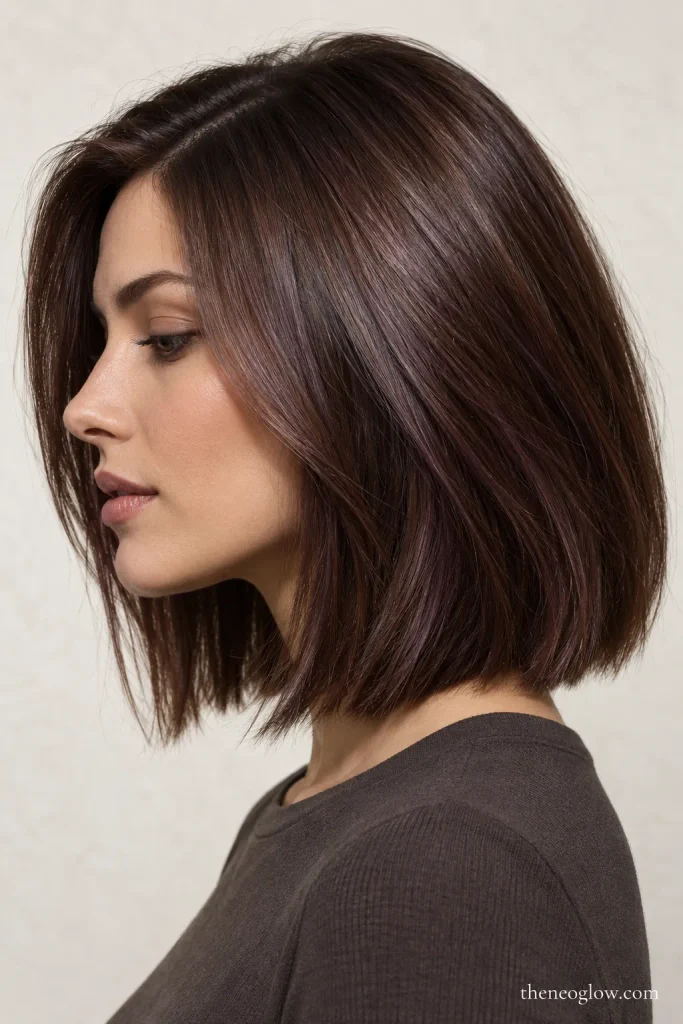
Plum-brown sits between cool red, violet, and brunette. Keep it subtle by using the plum tone as a reflective finish over brown rather than a vivid purple result. This is a useful option when copper feels too orange but you still want a seasonal shift away from neutral brunette.
23. Mahogany Red-Brown
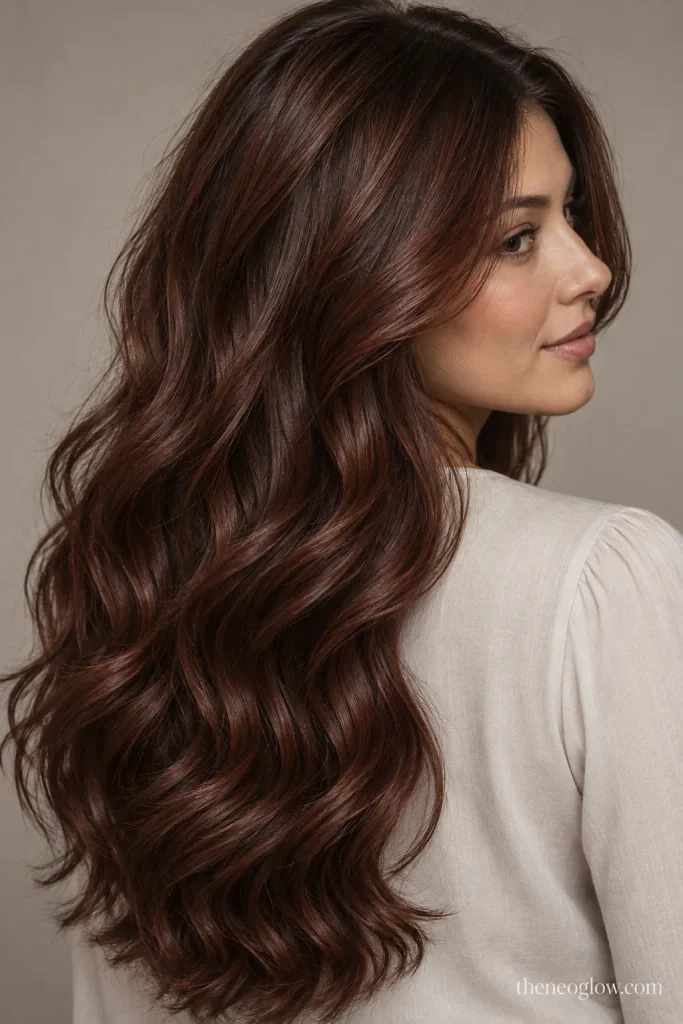
Mahogany combines brown depth with a polished red undertone. Compared with wine brunette, it can lean warmer and woodier; compared with auburn, it usually reads deeper. Ask for the red to stay integrated into the brown base if you want a sophisticated, lower-contrast finish.
24. Cherry Face Frame on Deep Brunette
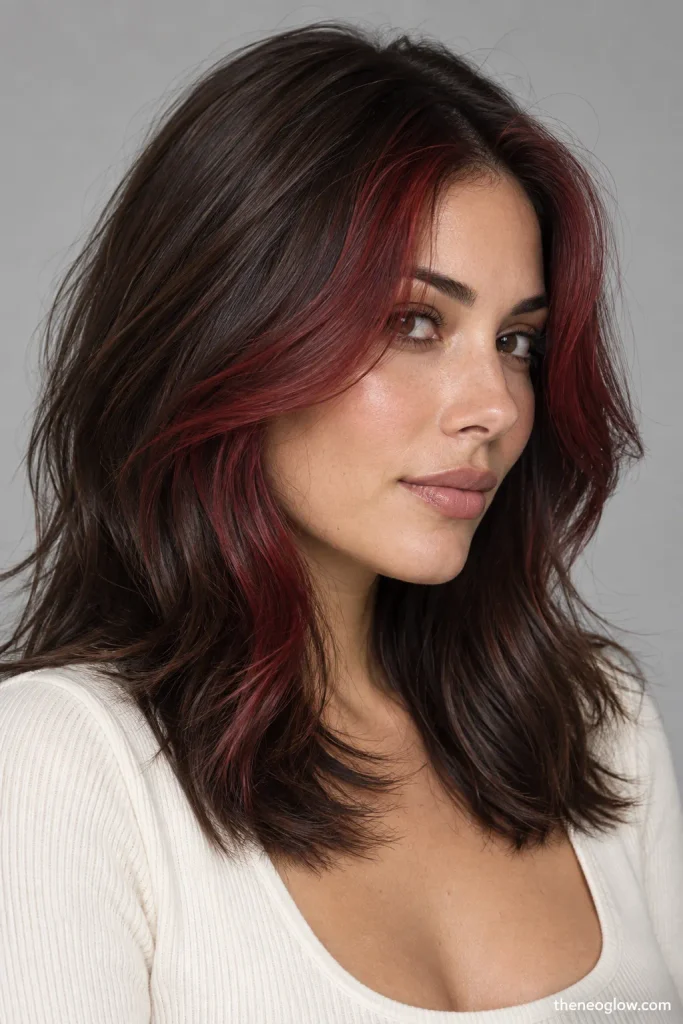
Keep the majority of the hair deep brunette and concentrate cherry-red color through the face frame and a few connected interior pieces. This gives you a higher-impact fall accent without turning every section red. It also creates a clear visual reference for a future salon refresh or change.
How to Compare Maintenance Before You Commit
Use four questions before you save a final reference:
- How far is this from my current base? A tonal brunette shift may require less lightening than a bright caramel or blonde result on dark hair.
- Where will the contrast sit? Rooted color, balayage, face-framing pieces, and all-over color grow out differently.
- How important is preserving lightness? A blonde moving into copper or a deep red may have a different return path than someone staying within the blonde family.
- What is my previous chemical history? Old permanent color, lightener, straightening services, and other processing can change what is realistic in one appointment.
The American Academy of Dermatology notes that lightening hair more substantially can involve more damaging peroxide exposure, and it recommends following product directions and stopping if you develop signs of an allergic reaction. AAD’s coloring and perming guidance That is a good reason to treat “low maintenance” as more than a trend label: the safest, simplest route may be the one that asks less of your current hair.
What to Say at a Color Consultation
A useful reference is more specific than “make me fall brunette.” Save the shade plus the structure.
Try wording such as: “I want a medium brunette with golden-walnut ribbons, low root contrast, and no bright blonde pieces,” or “I want a deep brown base with copper balayage through the mids and ends, but I want the brunette to remain dominant.”
Also mention your current color, natural root, previous permanent color or lightening, how often you use heat, and whether you want to grow the color out softly. A colorist can then translate the inspiration into a plan for your actual starting point.
If You Are Coloring at Home
Do not copy a salon formula from a photo or combine products to chase a shade name. Follow the directions supplied with the exact dye you are using. The U.S. Food and Drug Administration advises consumers to follow package warnings, perform the instructed patch test each time, wear gloves, rinse the scalp well, and never mix different hair-dye products. FDA hair-dye safety guidance
A strand test and an allergy test answer different questions: one helps show how the color may develop on your hair, while the other checks for a potential skin reaction according to the product or regulatory instructions. Do not use one as a substitute for the other.
Choose the Color You Can Still Like in November
The most useful fall hair color is not necessarily the deepest or warmest option. It is the one that fits your starting base, the amount of change you want, and the maintenance you are willing to keep up with after the first week.
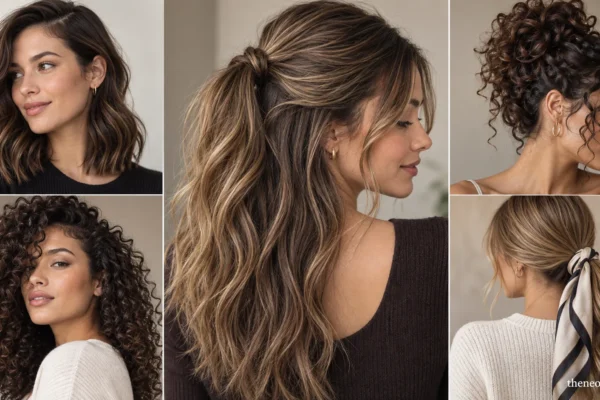
If you want to change the shape or styling after you choose your color, NeoGlow’s 27 Hairstyles for Women That Look Polished Without Feeling Overdone can help you compare ways to wear short, medium, and long hair across different textures. Save the exact shade wording from this guide, then bring one or two realistic references to your next color conversation.